Australia signals greater defense investment, but is urgency still lacking?澳大利亚表示将加大国防投入,但紧迫感是否仍然不足?
“All the things are positive, but I think what we’ll need to do is move faster and acquire capability more quickly," one analyst commented.
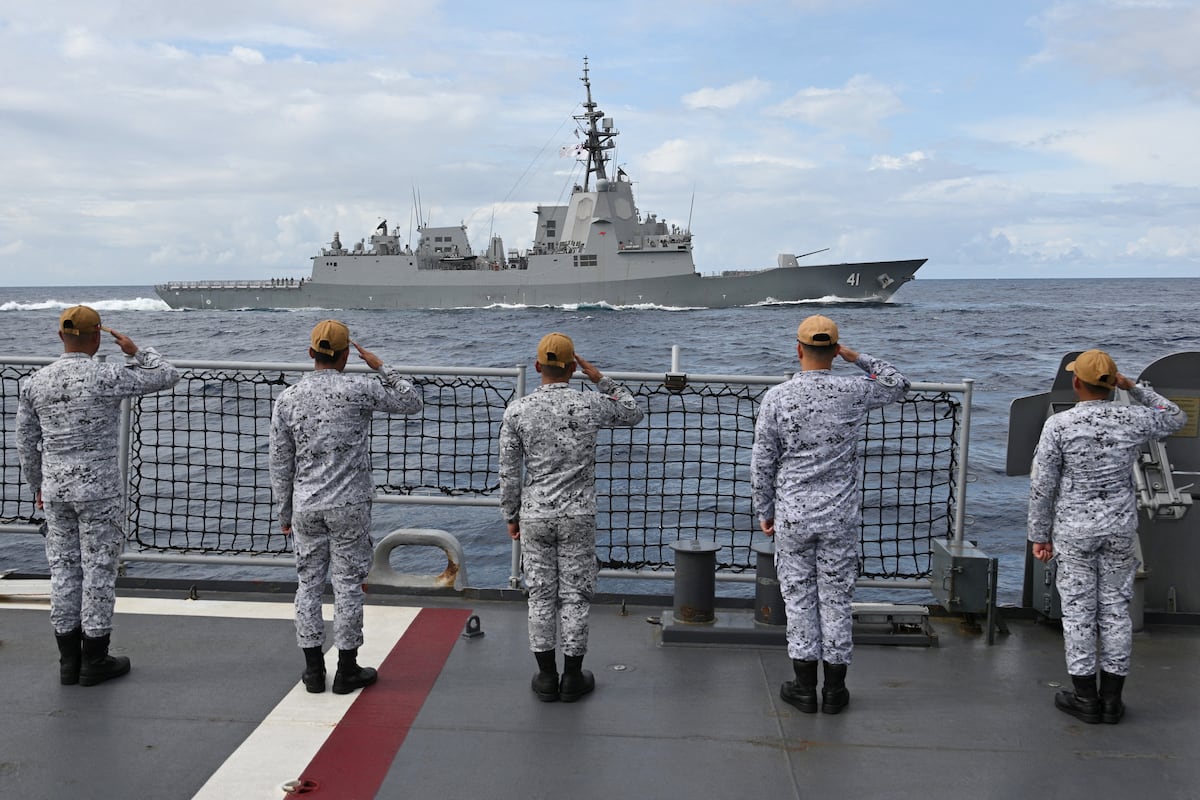
KUALA LUMPUR, Malaysia — Australia’s revised National Defence Strategy, released last week , promises increased defense spending and greater self-reliance, but no dramatic change in approach commensurate with a changing security situation, according to analysts.
Malcolm Davis, senior analyst at the Australian Strategic Policy Institute (ASPI), told Defense News the NDS has many positives, as does the Integrated Investment Program (IIP) released simultaneously, but the foundational documents lack urgency.
Given the China threat looming over Taiwan, for example, “I don’t think we have a ten-year warning period anymore. That’s clearly gone, and I suspect we maybe have one or two years to really get ready.”
Nonetheless, Davis believes the strategy is “broadly heading in the right direction.” He said the strategy “strengthens our ability to project power and presence, which is great, and also strengthens resilience, including defense industrial capacity.”
The IIP allocated A$425 billion (US$307 billion) from 2026-2036 to accelerate capability improvements. Some 41% of these funds go on maritime capabilities, 22% on enterprise and enabling (e.g. infrastructure and information technology), 17% on land, 14% on air, 5% on cyber and 2% on space.
However, Davis asked: “I suppose the big takeaway with the IIP, how quickly can it deliver capability?”
He continued: “All the things are positive, but I think what we’ll need to do is move faster and acquire capability more quickly, build up resilience and sustainability more rapidly.”
Little changes materially for the Australian Army. The service receives money for littoral maneuver – particularly medium and heavy landing craft – so it can better move new assets like Redback infantry fighting vehicles, M1A2 Abrams tanks, AS9 self-propelled howitzers and Boxer 8x8 vehicles around north of Australia.
The Royal Australian Navy is the biggest recipient of funds, as the service receives eleven new Mogami-class frigates from Japan and six Hunter-class frigates. It reaffirms interest in six large optionally crewed surface vessels armed with up to 32 missile cells.
The tiger’s share – up to A$96 billion – goes on nuclear-powered attack submarines, representing Australia’s largest ever defense allocation.
Responding to naysayers questioning the AUKUS submarine program, Minister for Defence Industry Pat Conroy said, “I’ve got complete confidence in the Australian industry’s ability to do the work. I was in the U.K. in February, and I saw the first parts of the reactor modules for our first two submarines being built right before my eyes. So this project is on track.”
Turning to the Royal Australian Air Force, incoming is a fleet of 20 C-130J-30 Hercules transport aircraft, but the RAAF is going to get rid of its C-27J Spartans because of their cost to sustain.
F-35A fighters will receive new long-range missiles like the LRASM and JSM, plus Super Hornets and Growlers will undergo upgrades to keep them operational until 2040. Up to A$8.1 billion will go on unmanned aircraft like the MQ-28A Ghost Bat.
Significantly, the government is committing A$21 billion to A$30 billion over the decade to “deliver a layered, integrated air and missile defense capability to detect, track, counter, withstand and recover from missile attacks.”
Belatedly learning lessons from modern conflicts, the IIP stated a medium-range air defense “program will commence as a priority from 2026.” Western stocks of interceptors are drained because of current conflicts, so this could represent opportunities for suppliers like South Korea offering local production.
The NDS laid out how funding would swell to 3% of gross domestic product (GDP) by 2033/2034. Conroy trumpeted that current defense spending of 2.8% of GDP “puts us ahead of all like-minded countries in the Indo-Pacific. It puts us ahead of almost every NATO country except for the United States, and countries on the frontline against Russia, like Poland.”
In the latest promises, Canberra promised an additional A$14 billion in spending over the next four years, and an extra A$53 billion over the decade, compared to previous estimates.
According to these figures, this breaks down to just A$3.5 billion extra annually for the next four years, and an average of A$6.5 billion yearly after that.
Nonetheless, cumulative defense expenditure over the coming decade is projected to reach A$887 billion, including A$112.1 billion for 2035-2036 alone. The government highlighted a 7.6% annual average growth rate in the defense budget over the coming decade.
Davis was pleased about the government’s willingness to increase the defense budget, but questioned whether it is sufficient and soon enough. “I suspect, given the rapid deterioration and the strategic outlook, they’ll probably need to boost that even further than what they’re planning.”
He noted, given events like the Iran war, that “the strategic environment is deteriorating faster than their financial planning cycles are assuming.”
Mick Ryan, Senior Fellow for Military Studies in the Lowy Institute, concurred. He wrote, “The spending increases contained in the National Defence Strategy and its accompanying Integrated Investment Program are relatively modest compared to the scale of the security challenges now faced by Australia.”
Discussing greater self-reliance, Defence Minister Richard Marles remarked at the document launch: “We’ll work with all our likeminded partners to better shape our region’s strategic trajectory. We’ll double down on middle-power cooperation. But let’s also be clear: There’s no effective balance of power in the Indo-Pacific absent the continued presence of the United States.”
Richard Gray, a resident senior fellow at ASPI, also wrote, “We couldn’t easily replace the U.S. even if we wanted to, and in practical terms it remains an indispensable security partner. It has capabilities that Australia can’t or won’t replace.”
Davis highlighted that self-reliance is interlinked with the U.S. relationship. “By investing in greater self-reliance capability, we can burden share with the U.S. to a greater degree, and thus ensure the U.S. remains engaged in the region,” he said. “I think that’s crucial.”
Gordon Arthur is an Asia correspondent for Defense News. After a 20-year stint working in Hong Kong, he now resides in New Zealand. He has attended military exercises and defense exhibitions in about 20 countries around the Asia-Pacific region.
马来西亚吉隆坡——分析人士称,澳大利亚上周发布的修订版《国防战略》承诺增加国防开支,提高国防自力更生能力,但并未在应对不断变化的安全形势方面做出相应的重大改变。
澳大利亚战略政策研究所 (ASPI) 高级分析师马尔科姆·戴维斯 (Malcolm Davis) 告诉《防务新闻》,《国家发展战略》(NDS) 和同时发布的《综合投资计划》(IIP) 都有很多积极方面,但这些基础文件缺乏紧迫感。
例如,鉴于中国对台湾构成的威胁,“我认为我们已经没有十年的预警期了。那段时间显然已经过去了,我怀疑我们可能只有一到两年的时间来真正做好准备。”
尽管如此,戴维斯认为该战略“总体上朝着正确的方向发展”。他说,该战略“增强了我们投射力量和存在的能力,这很好,同时也增强了韧性,包括国防工业能力。”
2026年至2036年间,国际一体化计划(IIP)拨款4250亿澳元(3070亿美元),用于加速能力提升。其中约41%的资金用于海上能力建设,22%用于企业和辅助能力建设(例如基础设施和信息技术),17%用于陆地能力建设,14%用于空中能力建设,5%用于网络安全,2%用于太空能力建设。
然而,戴维斯问道:“我认为IIP最大的意义在于,它能多快地交付能力?”
他继续说道:“一切都是积极的,但我认为我们需要做的是加快步伐,更快地获得能力,更快地建立韧性和可持续性。”
对澳大利亚陆军而言,实质性变化不大。该军种获得了近岸机动方面的资金——特别是中型和重型登陆艇——以便更好地在澳大利亚北部地区调动诸如“红背蜘蛛”步兵战车、M1A2“艾布拉姆斯”主战坦克、AS9自行榴弹炮和“拳击手”8x8轮式装甲车等新型装备。
澳大利亚皇家海军是最大的资金受益者,该军种将从日本接收11艘新的最上级护卫舰和6艘猎人级护卫舰。此外,澳大利亚皇家海军还重申了对6艘大型可选乘员水面舰艇的兴趣,这些舰艇最多可配备32个导弹发射单元。
其中最大的一笔——高达 960 亿澳元——将用于建造核动力攻击潜艇,这是澳大利亚有史以来最大的国防拨款。
针对质疑“海鸥”潜艇项目的反对者,国防工业部长帕特·康罗伊回应道:“我对澳大利亚工业完成这项工作的能力充满信心。今年二月我在英国,亲眼目睹了我们首批两艘潜艇反应堆模块的首批部件的建造过程。因此,这个项目进展顺利。”
再来看看澳大利亚皇家空军,他们即将接收 20 架 C-130J-30 大力神运输机,但由于维护成本高昂,澳大利亚皇家空军将淘汰其 C-27J 斯巴达运输机。
F-35A战斗机将配备LRASM和JSM等新型远程导弹,此外,超级大黄蜂和咆哮者战斗机也将进行升级,以确保其服役至2040年。高达81亿澳元将用于MQ-28A幽灵蝙蝠等无人机。
值得注意的是,政府承诺在未来十年内投入 210 亿至 300 亿澳元,以“提供分层、一体化的防空和导弹防御能力,用于探测、跟踪、反制、抵御和从导弹袭击中恢复”。
鉴于近期冲突中吸取了教训,国际情报局(IIP)表示,中程防空“计划将从2026年起作为优先事项启动”。由于当前冲突,西方拦截导弹库存告罄,这可能为韩国等提供本地生产的供应商带来机遇。
《国防战略》阐述了到2033/2034年国防开支将如何增长至国内生产总值(GDP)的3%。康罗伊宣称,目前占GDP 2.8%的国防开支“使我们领先于印太地区所有志同道合的国家。这使我们领先于除美国以外的几乎所有北约国家,以及像波兰这样与俄罗斯处于前线的国家。”
在最新的承诺中,堪培拉承诺在未来四年内增加 140 亿澳元的支出,并在未来十年内增加 530 亿澳元的支出,比之前的估计要多。
根据这些数据,未来四年每年只需额外支出 35 亿澳元,之后每年平均需要额外支出 65 亿澳元。
尽管如此,预计未来十年国防累计支出将达到8870亿澳元,仅2035-2036财年就将达到1121亿澳元。政府强调,未来十年国防预算的年均增长率将达到7.6%。
戴维斯对政府愿意增加国防预算表示欢迎,但他质疑这笔预算是否足够,是否来得及。“鉴于局势的迅速恶化和当前的战略前景,我怀疑他们可能需要比计划的进一步增加国防预算。”
他指出,鉴于伊朗战争等事件,“战略环境的恶化速度比他们的财务规划周期所预期的要快。”
洛伊研究所军事研究高级研究员米克·瑞安对此表示赞同。他写道:“与澳大利亚目前面临的安全挑战规模相比,《国防战略》及其配套的《综合投资计划》中所包含的支出增长幅度相对较小。”
在谈到增强自主能力时,国防部长理查德·马尔斯在文件发布会上表示:“我们将与所有志同道合的伙伴合作,更好地塑造我们地区的战略走向。我们将加倍加强中等强国合作。但我们也要明确一点:如果没有美国的持续存在,印太地区就不可能存在有效的权力平衡。”
澳大利亚战略政策研究所(ASPI)常驻高级研究员理查德·格雷也写道:“即使我们想,也无法轻易取代美国,而且实际上,美国仍然是不可或缺的安全伙伴。它拥有澳大利亚无法或不愿取代的能力。”
戴维斯强调,自力更生与美伊关系息息相关。“通过投资提升自力更生能力,我们可以在更大程度上与美国分担责任,从而确保美国继续参与该地区事务,”他说。“我认为这至关重要。”
戈登·阿瑟是《防务新闻》的亚洲特派记者。在香港工作20年后,他现居新西兰。他曾到访亚太地区约20个国家,参加过军事演习和防务展览。