On eve of visit, Europe braces for new defense demands from team Trump在特朗普访问前夕,欧洲严阵以待,准备应对特朗普团队提出的新防务要求。
The U.S. president’s insistence that Europe is underpaying for U.S. protection is likely to come up during meetings across Europe next week.
ROME — Donald Trump’s demand that European states spend 5% of GDP on defense could spur arms shopping in Europe to the detriment of U.S. companies, analysts have told Defense News.
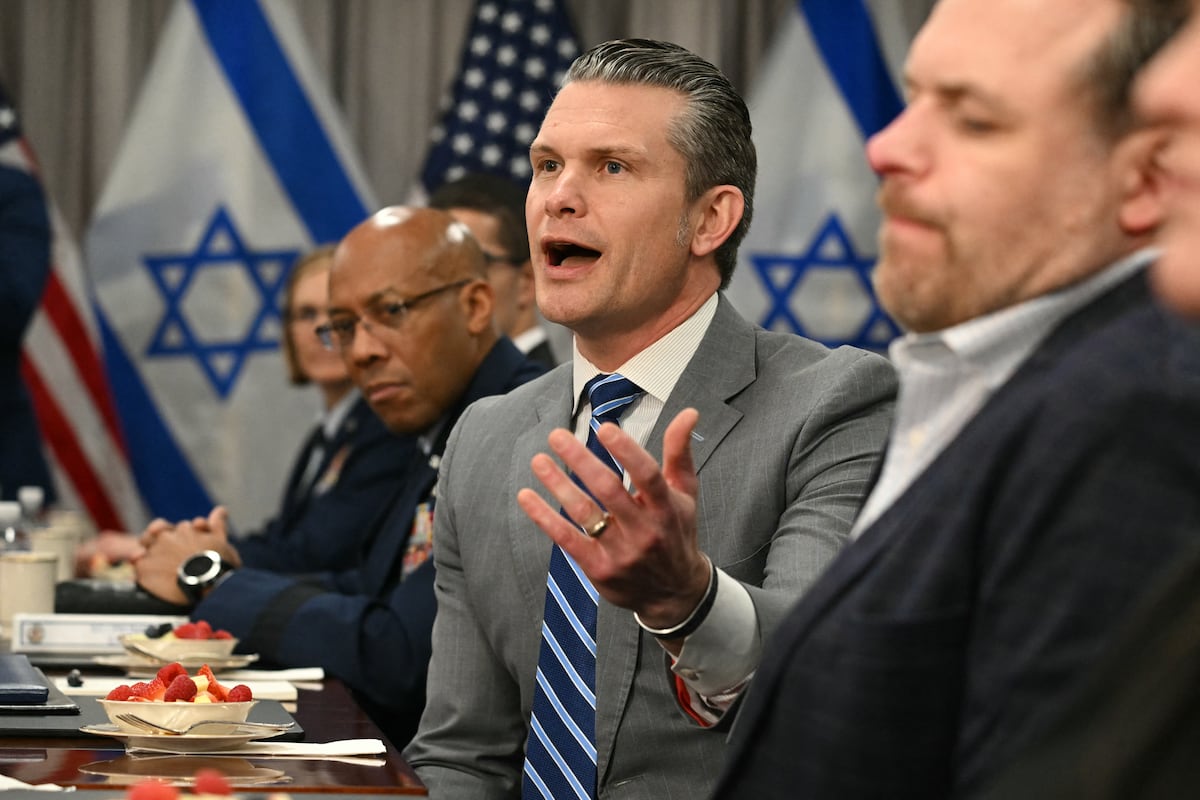
The U.S. president’s insistence that Europe is underpaying for U.S. protection is likely to come up next week during the first visit to the continent by his new defense secretary, Pete Hegseth.
Pushing up defense spending to 5% of GDP will be an impossible task across NATO as a whole, with around eight of 32 members yet to achieve the alliance’s current 2% target.
Analysts told Defense News NATO members are instead likely to discuss a new target of 3% when they meet in The Hague in June – a compromise aimed at keeping Trump at bay.
On paper, that is good news for American firms since around 60 percent of European defense orders are placed in the United States. Hopes in Europe of more orders being placed in the EU after the start of the Ukraine war were dashed when states found the quick purchases they needed were available only across the Atlantic, starting with F-35s.
“The subtext of Trump’s demands for more spending is that purchases will be made in the U.S. to help his re-industrialization plan,” said Lucio Caracciolo, the editor of Italian geopolitics publication Limes.
“Poland’s leap in spending is based on U.S. weaponry,” he added.
Furthermore, some states falling short of spending targets may seek to appease the Trump administration by agreeing to do more shopping in the U.S.
But Yohann Michel, an analyst with the French IESD think tank, said there would be a need for more purchasing at home. “When everyone is buying the same thing at the same time, prices go up. The answer is wiser spending which means cooperation and joint purchasing,” he said.
The likely consequence? More spending in Europe and less in the U.S., he said. “That will require more investment in European industry, which is not something Trump had in mind,” he added.
NATO chief Mark Rutte urged European members to do more joint purchasing during a Jan. 13 speech to the European parliament.
He claimed EU states would risk needing to push spending up to 3.7% of GDP to hit capability targets if they did not enter more joint programs to make spending go further.
That is music to the ears of the European Union, which is currently hard at work boosting ways for member states to club together to invest in European programs.
“The trend is for increased spending and there is a new energy in collaborative programs in Europe,” said an EU official, who declined to be named because he was not authorized to speak on the record.
Analysts said that Trump’s aggressive approach to European states was also set to have another consequence: seriously weakening the trans-Atlantic alliance.
“Europe hears what Trump says, it tries not to overreact, it buys time to see what the negotiation is actually about - after all not even the U.S. is spending five percent,” said Michel. “But many are afraid he is asking for the impossible as he seeks excuses to no longer protect Europe,” he added.
Christian Mölling, director of the Europe Program at the Bertelsmann Foundation Germany, recalled how Trump threatened to stop defending Europe during his first term as president.
“Deterrence is a mind game. You need to give the impression you would use nuclear weapons and lead your allies into a war with Russia. But what if there is a question mark over that? Once the genie is out of the bottle it never goes back in,” he said.
“There is also a rationale for cheating. In a moment of truth, would the U.S. leave us even if we’ve paid the money?” he added.
Michel said that Europe might decide to spend more on defense not in the hope that Trump will continue to promise protection, but because it believes Trump will renege on that promise.
“Europe may get to 3-4 percent of GDP because it estimates it cannot rely on Article 5 of NATO. It may spend more – not because it wants to be friends with Trump but because it assumes it will be alone,” he said.
“What happens if the US does not allow Europe to use its F-35s against Russia to defend Poland or Latvia? The example has already been established by how the use of Starlink in Ukraine was controlled,” he said.
“And to give an even more outlandish example: What if Denmark needs its F-35s to defend Greenland against the U.S.?” he said.
Tom Kington is the Italy correspondent for Defense News.
罗马——分析人士告诉《防务新闻》,唐纳德·特朗普要求欧洲各国将国内生产总值的 5% 用于国防开支,可能会刺激欧洲的军火采购,从而损害美国公司的利益。
美国总统坚称欧洲为美国的保护付出的代价过低,这一问题很可能在下周新任国防部长皮特·赫格塞斯首次访问欧洲大陆时被提及。
北约整体而言,将国防开支提高到GDP的5%将是一项不可能完成的任务,因为32个成员国中约有8个尚未达到该联盟目前2%的目标。
分析人士告诉《防务新闻》,北约成员国可能会在 6 月于海牙举行的会议上讨论 3% 的新目标——这是一项旨在阻止特朗普的妥协方案。
从表面上看,这对美国公司来说是个好消息,因为大约60%的欧洲国防订单都下给了美国。乌克兰战争爆发后,欧洲曾寄希望于欧盟内部能有更多订单下给美国,但各国发现,他们需要的快速采购只能从大西洋彼岸获得,首先是F-35战斗机,这使得他们的希望破灭了。
意大利地缘政治刊物《Limes》的编辑卢西奥·卡拉乔洛表示:“特朗普要求增加支出的潜台词是,这些采购将在美国进行,以帮助他的再工业化计划。”
“波兰军费开支的激增是基于对美国武器的依赖,”他补充道。
此外,一些支出未达标的州可能会为了安抚特朗普政府而同意增加在美国的采购。
但法国智库IESD的分析师约翰·米歇尔表示,需要增加国内采购。“当每个人都同时购买同样的东西时,价格就会上涨。解决办法是更明智地消费,这意味着合作和联合采购。”他说道。
他表示,可能的后果是什么?欧洲的支出将会增加,而美国的支出将会减少。“这将需要对欧洲工业进行更多投资,而这并非特朗普的初衷,”他补充道。
北约秘书长马克·吕特在1月13日向欧洲议会发表讲话时,敦促欧洲成员国加强联合采购。
他声称,如果欧盟各国不开展更多联合项目来更有效地利用支出,那么为了达到能力目标,它们可能需要将支出提高到GDP的3.7%。
这对于欧盟来说无疑是个好消息,欧盟目前正努力促进成员国联合起来投资欧洲项目。
一位欧盟官员表示:“目前的趋势是支出增加,欧洲的合作项目也焕发出了新的活力。”这位官员拒绝透露姓名,因为他没有被授权公开谈论此事。
分析人士表示,特朗普对欧洲国家的咄咄逼人态度还会带来另一个后果:严重削弱跨大西洋联盟。
米歇尔说:“欧洲听到了特朗普的言论,尽量不做出过激反应,争取时间看看谈判的真正目的是什么——毕竟,就连美国也只承担了5%的军费开支。” 他补充道:“但许多人担心,特朗普的要求根本不可能实现,他只是在寻找不再保护欧洲的借口。”
德国贝塔斯曼基金会欧洲项目主任克里斯蒂安·莫林回忆说,特朗普在其第一任总统任期内曾威胁要停止捍卫欧洲。
“威慑是一种心理战。你需要给人一种你会使用核武器并诱使盟友与俄罗斯开战的印象。但如果这一点存在疑问呢?一旦潘多拉的魔盒打开,就再也关不回去了,”他说。
“作弊也有其合理性。在关键时刻,即使我们付了钱,美国也会抛弃我们吗?”他补充道。
米歇尔表示,欧洲可能会决定增加国防开支,不是希望特朗普继续承诺提供保护,而是因为欧洲认为特朗普会违背这一承诺。
他说:“欧洲可能会将国防开支提高到GDP的3%到4%,因为它估计自己无法依赖北约第五条。它可能会增加开支——不是因为它想和特朗普交朋友,而是因为它认为自己将会孤立无援。”
“如果美国不允许欧洲使用F-35战机对抗俄罗斯来保卫波兰或拉脱维亚,会发生什么?乌克兰使用星链网络受到的控制就是一个例证,”他说道。
“再举一个更离奇的例子:如果丹麦需要用F-35战机保卫格陵兰岛免受美国的攻击呢?”他说道。
汤姆·金顿是《防务新闻》驻意大利记者。