'Singapore's perpetual karma is to be relevant': Tommy Koh looks back on 55 years in global diplomacy“新加坡的永恒宿命就是保持影响力”:许通美回顾其55年的全球外交生涯
Retiring after five decades at the Ministry of Foreign Affairs, Tommy Koh reflects on ASEAN's rise, Singapore's foreign policy and the state of the international order.
Retiring after five decades at the Ministry of Foreign Affairs, Tommy Koh reflects on ASEAN's rise, Singapore's foreign policy and the state of the international order.
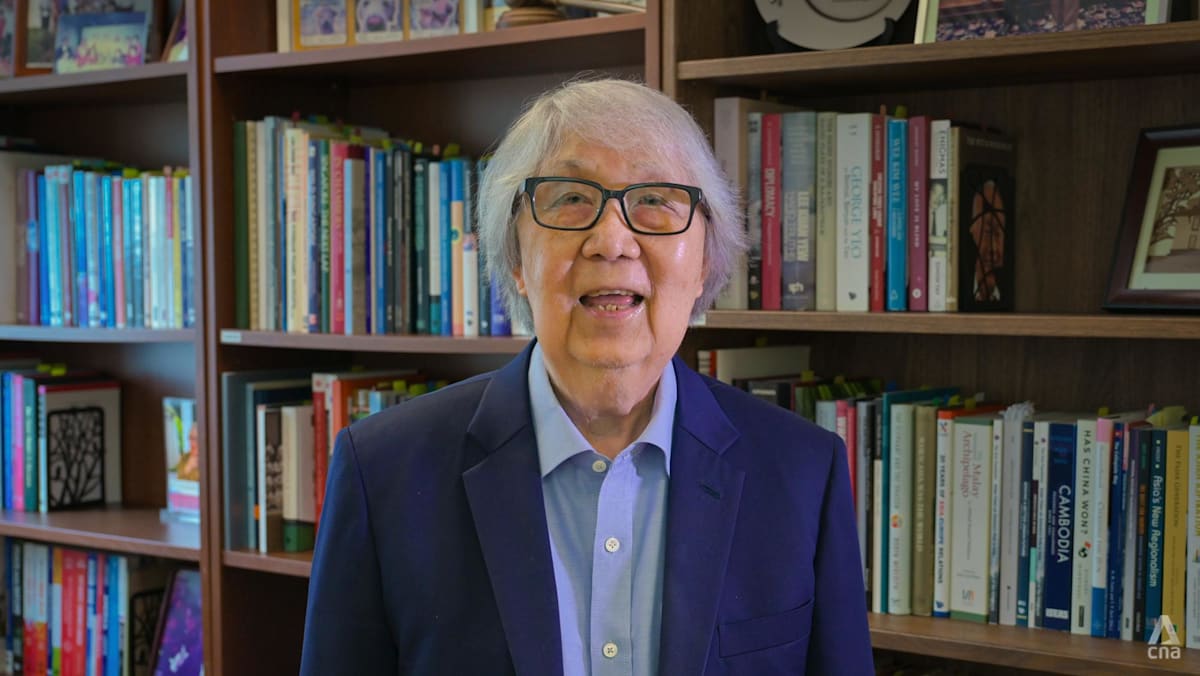
Professor Tommy Koh in his NUS office on Sep 2, 2026. (Photo: CNA/Syamil Sapari)
This audio is generated by an AI tool.
SINGAPORE: Singapore gained independence in 1965 but only set up a formal foreign service in 1972, after founding prime minister Lee Kuan Yew doubted enough people would want to join, said former diplomatic stalwart Professor Tommy Koh .
It took him a year to convince Mr Lee of the need for a professional foreign service to manage international relations and deliver consular services, rather than seconding staff from other ministries.
“We had no foreign service when I joined. When I came back from the UN in 1971, we still had no foreign service,” said Prof Koh, who was Singapore’s permanent representative to the United Nations from 1968 to 1971.
The 88-year-old retired from the Ministry of Foreign Affairs (MFA) last month after 55 years, during which he served as Singapore's permanent representative to the UN, ambassador to the United States and, most recently, ambassador-at-large.
CNA Games Guess Word Crack the word, one row at a time Buzzword Create words using the given letters Mini Sudoku Tiny puzzle, mighty brain teaser Mini Crossword Small grid, big challenge Word Search Spot as many words as you can Show More Show Less In an interview with CNA at the National University of Singapore's Centre for International Law, where he is board chairman, Prof Koh recounted his exchange with Mr Lee. “He said: ‘Tommy, which ambitious young man or woman would join such a small service? You join the civil service, admin service, you have many opportunities,’” recalled Prof Koh. He replied that "there are some people who are attracted to this kind of life", stressing that "every country needs a foreign service, we need institutional memory, we need intellectual capacity". Mr Lee was eventually convinced. Singapore was "never prepared for independence", and its first generation of ambassadors were "borrowed from various parts of Singapore" and thrown into the deep end, said Prof Koh. He himself was 30 years old and teaching law when he left for the UN as ambassador. "We learnt on the job, and we collectively contributed to the founding principle of our foreign policy,” he said. Prof Koh has worked with every foreign minister in Singapore’s history, and said the one who left the deepest mark on him was the first, S Rajaratnam, who held the role from 1965 to 1980. “He had the greatest impact on my thinking, practice of diplomacy. But every subsequent minister brought something to the table, and I learnt from every one of them,” said Prof Koh. Another principle Prof Koh took from his encounters with Mr Lee is that “small countries have no inherent relevance to the world”. “So it is Singapore's perpetual karma to be relevant and useful to other countries and to the world,” he said. This is among the core principles guiding Singapore's foreign policy: protecting its sovereignty and territorial integrity, expanding its economic and political space, making the maximum number of friends and fewest enemies, and that it is not without agency despite being a small country, said Prof Koh. “We mustn't adopt the attitude that we have no choice but to submit to the great powers and to bigger countries,” he said. These guiding principles have stood the test of time, said Prof Koh. “Of course, over time, the role we play in the world differs. In the beginning, we were learning, observing, trying to understand how the world worked, how the international system worked,” he said. “Later on, as we became more mature, we were able to contribute back to the system. And now, I would say Singapore is highly respected at the UN and in the world, and we give a lot back to the world.” LOOKING BACK ON 55 YEARS Prof Koh said he feels well and happy, and looks back on his time in the foreign service with great satisfaction. One key trait foreign service officers must have, he said, is to "believe in Singapore". “We believe in defending Singapore's national interest. But at the same time, we want Singapore to be a good citizen of the world,” said Prof Koh. This means Singapore steps up whenever called upon to be a neutral chairman, facilitator or special envoy, to the extent it can. Prof Koh recalled that when the UN asked him to be a special envoy to make peace between Russia and Estonia, Latvia and Lithuania in 1993, the Singapore government was supportive of the decision. “My government said ‘please do it’, although it took me to a part of the world I was completely not familiar (with),” he said. He also recalled chairing two World Trade Organization dispute panels, despite not being a trade lawyer. In these ways, Singapore tries to give back to the system, said Prof Koh. Prof Koh's greatest challenge in moving from academia to diplomacy was reconciling theory with practice. “You may believe that international law is the most important thing in the world. But when you’re at the UN and you saw how the Soviet Union completely ignored international law, invaded Czechoslovakia, overthrew the government, then you realise the world is more complicated than we taught our students in law school,” he said. “So the challenge for me in the last 55 years is: how do I reconcile theory and practice? Not to give up and be cynical, but to be pragmatic and idealistic at the same time.” Despite a storied career, Prof Koh counts something more personal as a highlight of his life: marrying his wife, Dr Poh Siew Aing. “I will be eternally grateful to her for being willing to sacrifice a medical career to support me and to support the children,” said Prof Koh. They have two sons.
In an interview with CNA at the National University of Singapore's Centre for International Law, where he is board chairman, Prof Koh recounted his exchange with Mr Lee.
“He said: ‘Tommy, which ambitious young man or woman would join such a small service? You join the civil service, admin service, you have many opportunities,’” recalled Prof Koh.
He replied that "there are some people who are attracted to this kind of life", stressing that "every country needs a foreign service, we need institutional memory, we need intellectual capacity". Mr Lee was eventually convinced.
Singapore was "never prepared for independence", and its first generation of ambassadors were "borrowed from various parts of Singapore" and thrown into the deep end, said Prof Koh.
He himself was 30 years old and teaching law when he left for the UN as ambassador. "We learnt on the job, and we collectively contributed to the founding principle of our foreign policy,” he said.
Prof Koh has worked with every foreign minister in Singapore’s history, and said the one who left the deepest mark on him was the first, S Rajaratnam, who held the role from 1965 to 1980.
“He had the greatest impact on my thinking, practice of diplomacy. But every subsequent minister brought something to the table, and I learnt from every one of them,” said Prof Koh.
Another principle Prof Koh took from his encounters with Mr Lee is that “small countries have no inherent relevance to the world”.
“So it is Singapore's perpetual karma to be relevant and useful to other countries and to the world,” he said.
This is among the core principles guiding Singapore's foreign policy: protecting its sovereignty and territorial integrity, expanding its economic and political space, making the maximum number of friends and fewest enemies, and that it is not without agency despite being a small country, said Prof Koh.
“We mustn't adopt the attitude that we have no choice but to submit to the great powers and to bigger countries,” he said.
These guiding principles have stood the test of time, said Prof Koh.
“Of course, over time, the role we play in the world differs. In the beginning, we were learning, observing, trying to understand how the world worked, how the international system worked,” he said.
“Later on, as we became more mature, we were able to contribute back to the system. And now, I would say Singapore is highly respected at the UN and in the world, and we give a lot back to the world.”
LOOKING BACK ON 55 YEARS
Prof Koh said he feels well and happy, and looks back on his time in the foreign service with great satisfaction.
One key trait foreign service officers must have, he said, is to "believe in Singapore".
“We believe in defending Singapore's national interest. But at the same time, we want Singapore to be a good citizen of the world,” said Prof Koh.
This means Singapore steps up whenever called upon to be a neutral chairman, facilitator or special envoy, to the extent it can.
Prof Koh recalled that when the UN asked him to be a special envoy to make peace between Russia and Estonia, Latvia and Lithuania in 1993, the Singapore government was supportive of the decision.
“My government said ‘please do it’, although it took me to a part of the world I was completely not familiar (with),” he said.
He also recalled chairing two World Trade Organization dispute panels, despite not being a trade lawyer. In these ways, Singapore tries to give back to the system, said Prof Koh.
Prof Koh's greatest challenge in moving from academia to diplomacy was reconciling theory with practice.
“You may believe that international law is the most important thing in the world. But when you’re at the UN and you saw how the Soviet Union completely ignored international law, invaded Czechoslovakia, overthrew the government, then you realise the world is more complicated than we taught our students in law school,” he said.
“So the challenge for me in the last 55 years is: how do I reconcile theory and practice? Not to give up and be cynical, but to be pragmatic and idealistic at the same time.”
Despite a storied career, Prof Koh counts something more personal as a highlight of his life: marrying his wife, Dr Poh Siew Aing.
“I will be eternally grateful to her for being willing to sacrifice a medical career to support me and to support the children,” said Prof Koh. They have two sons.
SINGAPORE AS ASEAN CHAIR IN 2027
With Singapore taking over the ASEAN chairmanship next year, Prof Koh noted much has changed since it last held the role in 2018.
Economically, the bloc has made significant progress, collectively becoming the world's fifth largest economy and soon to be fourth, said Prof Koh.
“It’s tremendous progress. We remain united. We are a force of peace. We develop a culture of consultation, mutual accommodation, a spirit of give and take, and this growing sense of an ASEAN identity among the people. So I think the last 10 years have been very good years,” he said.
However, the external environment is less favourable now, with some major countries turning inward and away from free trade, said Prof Koh.
Still, others continue pursuing free trade, he said, citing Singapore's two new free trade agreements with eight Latin American countries: the Mercosur bloc, signed in December 2023, and the Pacific Alliance grouping, in force since May last year.
Holding the chairmanship is a big deal and the world has high expectations of Singapore, he said.
“So we will make our chairmanship next year meaningful and fruitful. I can't tell you yet what are our most important deliverables, but there will be several,” said Prof Koh.
Prof Koh said that ASEAN’s biggest asset is trust: it can convene regional forums precisely because the great powers do not trust each other.
“The only group of countries that can convene these conferences and be a neutral chairman is ASEAN. So we are so-called driving the bus, not because we are the biggest, but because we are acceptable. Everybody trusts us.”
LONG-RUNNING NEGOTIATIONS
The Vietnamese invasion of Cambodia in 1978 was “the most important challenge” the original five ASEAN countries faced, he recalled.
Prof Koh said the invasion frightened Thailand, since Vietnamese troops sat on its border with Cambodia.
“They appealed to the rest of us to support them, which we did. We also wanted to free Cambodia from Vietnamese control and hegemony,” he said.
“It was a 10-year campaign … concluded in 1991 with the Paris Peace Agreements. So that was one of the longest periods of my life.”
Another long negotiation was the 1982 UN Convention on the Law of the Sea (UNCLOS), which took about nine years. In the final year of talks, Prof Koh was elected president of the UN Conference on the Law of the Sea, and guided over 150 countries to agree on the landmark piece of international law.
Other highlights, he said, included the free trade agreement with the US, concluded in 2003, and forging diplomatic relations with China in 1990. He also represented Singapore in two legal disputes with Malaysia, including over Pedra Branca.
Asked if he ever disagreed with Singapore's foreign policy, Prof Koh said "there were maybe one or two occasions when I did not agree with some proposal and I made my views known".
“Fortunately, they were abandoned, otherwise I would have to resign,” he quipped. He declined to reveal which were the policies in question.
UPHOLDING INTERNATIONAL RULE OF LAW
During the debate on MFA's budget in parliament in February, Foreign Minister Vivian Balakrishnan called the current state of the international order "a moment of rupture".
Prof Koh said this is not the first time international law has been abused, citing the Cold War era and the Soviet Union's disregard for it.
“So do we give up? Not at all. We continue to build a coalition of like-minded countries. We continue to believe we want to build a world governed by law rather than by force,” he said.
“Whether it is Russia, whether it's Israel, whether it's any other country, we must hold countries that violate international law and the rule of law accountable.”
Prof Koh said international law can still protect small states to a large extent, but little can be done if a great power insists on using military force. The international community can, however, hold violators accountable through existing institutions, he said.
“And even in the current situation when a major country has gone rogue, I would say: but the rest of us have not. The rest of us continue to believe in international law, in the rule of law, in the courts, tribunals and so on.
“It is not a moment to despair. On the contrary, it must be a moment when we reaffirm our faith in international law and the rule of law.”
Get our pick of top stories and thought-provoking articles in your inbox
Stay updated with notifications for breaking news and our best stories
Join our channel for the top reads for the day on your preferred chat app
在外交部工作五十年后退休的许通美反思了东盟的崛起、新加坡的外交政策以及国际秩序的现状。
2026年9月2日,Tommy Koh教授在其新加坡国立大学办公室。(图片:CNA/Syamil Sapari)
这段音频由人工智能工具生成。
新加坡:前外交界中坚人物许通美教授表示,新加坡于 1965 年获得独立,但直到 1972 年才正式成立外交部门,因为建国总理李光耀怀疑是否会有足够多的人愿意加入。
他花了一年时间才说服李先生,让他相信需要一个专业的外交部门来管理国际关系和提供领事服务,而不是从其他部门借调人员。
“我加入时,我们还没有外交部门。1971年我从联合国回来时,我们仍然没有外交部门,”许教授说道。他曾于1968年至1971年担任新加坡常驻联合国代表。
这位 88 岁的老人在外交部工作了 55 年后,于上个月退休。在此期间,他曾担任新加坡常驻联合国代表、驻美国大使,以及最近的无任所大使。
CNA游戏 猜词游戏 逐行破解单词 流行词游戏 用给定的字母组成单词 迷你数独 小小的谜题,强大的脑力挑战 迷你填字游戏 小方格,大挑战 单词搜索 尽可能多地找出单词 显示更多 显示更少 在新加坡国立大学国际法中心接受CNA采访时,许教授(他是该中心的董事会主席)回忆了他与李光耀先生的对话。“他说:‘汤米,哪个有抱负的年轻人会加入这么小的部门?你加入公务员、行政部门,你会有很多机会,’”许教授回忆道。他回答说,“有些人就是喜欢这种生活”,并强调“每个国家都需要外交部门,我们需要机构记忆,我们需要智力资源”。李光耀先生最终被说服了。许教授说,新加坡“从未做好独立准备”,其第一代大使“是从新加坡各地借调过来的”,直接被推上了风口浪尖。他本人30岁时还是一名法学教授,就以大使身份出任联合国代表。“我们边做边学,共同为新加坡外交政策的奠基原则做出了贡献,”他说。许教授曾与新加坡历史上每一位外交部长共事,他表示,对他影响最深的是首任外交部长拉惹勒南,后者于1965年至1980年担任此职。“他对我的外交思想和实践影响最大。但之后的每一位部长都各有所长,我从他们每个人身上都学到了东西,”许教授说。许教授从与李光耀先生的交往中领悟到的另一个原则是,“小国本身对世界没有固有的重要性”。“因此,新加坡的使命就是对其他国家和世界保持重要性和贡献,”他说。许教授表示,新加坡外交政策的核心原则之一是:维护国家主权和领土完整,拓展经济和政治空间,广交朋友,尽可能减少敌人,即便国土面积不大,也并非没有自主权。“我们绝不能抱持着只能屈从于大国和强国的态度,”他说道。许教授指出,这些指导原则经受住了时间的考验。“当然,随着时间的推移,我们在世界上扮演的角色也会发生变化。起初,我们学习、观察,努力理解世界的运作方式和国际体系的运作方式,”他说道。“后来,随着我们日趋成熟,我们能够为国际体系做出贡献。如今,我认为新加坡在联合国和世界范围内都享有很高的声誉,我们也为世界做出了诸多贡献。” 回顾55年的外交生涯,许教授表示他现在感觉良好,心情愉快,并对自己的外交生涯感到非常满意。他表示,外交官必须具备的一个关键特质是“相信新加坡”。“我们相信捍卫新加坡的国家利益。但与此同时,我们也希望新加坡成为一个优秀的国际公民,”许教授说道。这意味着,每当需要新加坡担任中立的主席、调解人或特使时,新加坡都会尽其所能地挺身而出。许教授回忆说,1993年联合国邀请他担任特使,斡旋俄罗斯与爱沙尼亚、拉脱维亚和立陶宛之间的和平,新加坡政府对此表示支持。“我的政府说‘请接受我的邀请’,尽管这让我前往了一个我完全不熟悉的地区,”他说道。他还回忆起自己曾担任过两次世界贸易组织争端解决小组的主席,尽管他并非贸易律师。许教授表示,新加坡正是通过这些方式回馈国际体系。许教授认为,从学术界转向外交界的最大挑战在于如何将理论与实践相结合。 “你或许认为国际法是世界上最重要的事。但当你身处联合国,亲眼目睹苏联如何彻底无视国际法,入侵捷克斯洛伐克,推翻其政府时,你就会意识到,世界远比我们在法学院教给学生的要复杂得多,”他说道。“因此,过去55年来,我面临的挑战是:如何调和理论与实践?不是放弃,也不是愤世嫉俗,而是要同时兼顾务实与理想。”尽管职业生涯辉煌,许教授却认为人生中最难忘的莫过于与妻子傅秀英博士的婚姻。“我将永远感激她,为了支持我和孩子们,她甘愿放弃自己的医学事业,”许教授说道。他们育有两个儿子。
在新加坡国立大学国际法中心接受亚洲新闻台采访时,许教授(他是该中心的董事会主席)讲述了他与李光耀先生的交流。
“他说:‘汤米,哪个有抱负的年轻人会加入这么小的部门?你去加入公务员部门、行政部门,你会有很多机会,’”许教授回忆道。
他回答说:“有些人喜欢这种生活”,并强调“每个国家都需要外交部门,我们需要机构记忆,我们需要智力资源”。李先生最终被说服了。
许教授表示,新加坡“从未做好独立准备”,其第一代大使“是从新加坡各地借调而来”,直接被推入了深水区。
他本人30岁时还是一名法律教师,就以大使身份出任联合国官员。“我们边做边学,共同为我们外交政策的奠基原则做出了贡献,”他说。
许教授曾与新加坡历史上每一位外交部长共事,他说,给他留下最深刻印象的是第一任外交部长拉惹勒南,他于 1965 年至 1980 年担任该职务。
“他对我的思想和外交实践影响最大。但后来的每一位部长都带来了各自的见解,我从他们每个人身上都学到了东西,”许教授说。
Koh教授从与李光耀先生的交往中得到的另一个原则是,“小国对世界没有内在的重要性”。
“因此,对其他国家和世界保持相关性和实用性,是新加坡永恒的宿命,”他说。
许教授表示,这是新加坡外交政策的核心原则之一:保护国家主权和领土完整,扩大经济和政治空间,尽可能多地结交朋友,尽可能少地树敌,尽管新加坡是一个小国,但它并非没有自主权。
他说:“我们绝不能抱持着别无选择只能屈服于大国和强国的态度。”
许教授表示,这些指导原则经受住了时间的考验。
“当然,随着时间的推移,我们在世界上扮演的角色也会发生变化。起初,我们是在学习、观察,试图了解世界是如何运作的,国际体系是如何运作的,”他说。
“后来,随着我们日趋成熟,我们能够回馈这个体系。现在,我认为新加坡在联合国和世界上都备受尊重,我们也为世界做出了很多贡献。”
回顾55年
许教授表示他感觉身体健康,心情愉快,并对自己在外交部的工作经历感到非常满意。
他说,外交官必须具备的一个关键特质是“相信新加坡”。
“我们相信应该捍卫新加坡的国家利益。但与此同时,我们也希望新加坡成为一个优秀的国际公民,”许教授说。
这意味着,每当需要新加坡担任中立的主席、协调人或特使时,新加坡都会尽其所能地挺身而出。
许教授回忆说,1993年联合国邀请他担任特使,促成俄罗斯与爱沙尼亚、拉脱维亚和立陶宛之间的和平,当时新加坡政府对此决定表示支持。
他说:“我的政府说‘请去做吧’,尽管这把我带到了一个我完全不熟悉的世界角落。”
他还回忆起自己曾担任过两次世界贸易组织争端解决小组的主席,尽管他并非贸易律师。许教授表示,新加坡正是通过这些方式回馈世界贸易体系。
Koh教授从学术界转行到外交界的最大挑战是如何将理论与实践相结合。
“你可能认为国际法是世界上最重要的事。但是当你身处联合国,亲眼目睹苏联如何完全无视国际法,入侵捷克斯洛伐克,推翻其政府时,你就会意识到,世界远比我们在法学院教给学生的要复杂得多,”他说。
“因此,过去55年来我面临的挑战是:如何调和理论与实践?不是放弃和愤世嫉俗,而是同时做到务实和理想主义。”
尽管职业生涯辉煌,但许教授认为他人生中最难忘的还是与妻子傅秀英博士的婚姻。
“我将永远感激她为了支持我和孩子们而牺牲自己的医学事业,”许教授说。他们有两个儿子。
新加坡将于2027年担任东盟轮值主席国
许教授指出,随着新加坡明年接任东盟轮值主席国,自2018年新加坡上次担任该职务以来,情况已经发生了很大变化。
Koh教授表示,从经济角度来看,该集团取得了显著进展,整体已成为世界第五大经济体,并很快将成为第四大经济体。
“这是巨大的进步。我们保持团结。我们是和平的力量。我们发展出协商、互惠、互利共赢的文化,东盟人民的认同感也在不断增强。所以我认为过去十年是非常好的十年,”他说。
许教授表示,然而,目前的外部环境不太有利,一些主要国家正在转向内向型经济,远离自由贸易。
他表示,尽管如此,仍有一些国家继续追求自由贸易,并列举了新加坡与八个拉丁美洲国家签署的两项新的自由贸易协定:2023 年 12 月签署的南方共同市场协定和自去年 5 月起生效的太平洋联盟协定。
他说,担任主席一职意义重大,世界对新加坡寄予厚望。
“因此,我们将确保明年的主席任期富有成效。我现在还不能告诉你们我们最重要的成果是什么,但肯定有好几项,”许教授说。
许教授表示,东盟最大的资产是信任:正是因为大国之间互不信任,东盟才能召开区域论坛。
“唯一能够召开这些会议并担任中立主席国的国家集团是东盟。所以我们之所以能主导会议,不是因为我们是最大的成员国,而是因为我们被广泛接受。大家都信任我们。”
旷日持久的谈判
他回忆说,1978 年越南入侵柬埔寨是最初的五个东盟国家面临的“最重要挑战”。
Koh教授表示,越南军队驻扎在泰国与柬埔寨的边境,因此这次入侵令泰国感到恐慌。
他说:“他们呼吁我们其他人支持他们,我们也支持他们。我们也希望将柬埔寨从越南的控制和霸权中解放出来。”
“这是一场持续了十年的运动……于1991年以《巴黎和平协定》的签署而告终。那是我一生中最漫长的时期之一。”
另一项耗时漫长的谈判是1982年的《联合国海洋法公约》(UNCLOS),历时约九年。在谈判的最后一年,许通美教授当选为联合国海洋法会议主席,并引导150多个国家就这项具有里程碑意义的国际法达成一致。
他还提到,其他亮点包括2003年与美国达成的自由贸易协定,以及1990年与中国建立外交关系。他还代表新加坡处理了与马来西亚的两起法律纠纷,其中包括白礁岛事件。
当被问及是否曾对新加坡的外交政策表示异议时,许教授表示:“或许有一两次我不同意某些提议,我也表达过我的看法。”
“幸好这些政策被放弃了,否则我就得辞职了,”他打趣道。但他拒绝透露具体是哪些政策。
维护国际法治
今年二月,在国会就外交部预算进行辩论时,外交部长维文·巴拉克里希南称当前的国际秩序是“一个断裂的时刻”。
Koh教授表示,这并非国际法首次遭到滥用,他以冷战时期苏联对国际法的漠视为例。
“所以我们就放弃了吗?当然不是。我们将继续努力,建立一个由志同道合的国家组成的联盟。我们仍然坚信,我们想要建立一个由法治而非武力统治的世界,”他说道。
“无论是俄罗斯、以色列,还是其他任何国家,我们都必须追究违反国际法和法治的国家的责任。”
许教授表示,国际法在很大程度上仍能保护小国,但如果大国坚持动用武力,则能采取的措施十分有限。不过,他指出,国际社会可以通过现有机构追究违法者的责任。
“即使在当前一个大国已经背离国际法的情况下,我也会说:但我们其他国家没有。我们其他国家仍然相信国际法、法治、法院、法庭等等。”
“现在不是绝望的时刻。相反,我们应该在此刻重申我们对国际法和法治的信念。”
订阅我们的邮件,即可获取精选热点新闻和引人深思的文章。
订阅通知,第一时间获取突发新闻和精彩报道。
加入我们的频道,即可在您常用的聊天应用上获取当日热门文章。