Malaysia’s chip ambitions: From assembly hub to semiconductor powerhouse马来西亚的芯片雄心:从组装中心到半导体强国
KUALA LUMPUR, Sept 4 — Semiconductors are behind much of the technology people use every day, from smartphones and cars to bank cards, air-conditioners and the data centres...
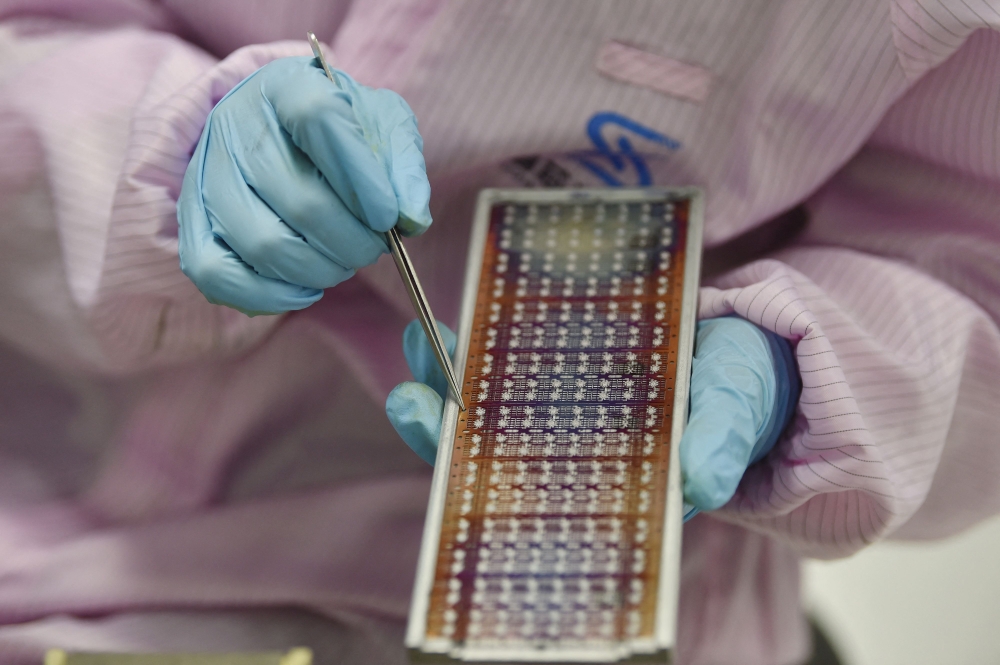
Malaysia, a longstanding player in the global semiconductor industry, is looking to enhance its capabilities beyond assembly, packaging, and testing, and advance into higher-value activities such as chip design, semiconductor equipment, and research and development.
The government's National Semiconductor Strategy aims to attract RM500 billion in semiconductor investment by 2030, while training 60,000 high-skilled engineers.
Despite its significant progress, the industry still faces challenges like heavy reliance on foreign investment, competition from other countries, and the need for local talent development.
KUALA LUMPUR, Sept 4 — Semiconductors are behind much of the technology people use every day, from smartphones and cars to bank cards, air-conditioners and the data centres powering artificial intelligence (AI).
Malaysia has been part of the global semiconductor industry for more than five decades and is now looking to move beyond its traditional strengths.
The country is particularly strong in the back end of the semiconductor supply chain — assembly, packaging and testing — but is seeking a bigger role in higher-value activities such as chip design, advanced packaging, semiconductor equipment and research and development.
So where does Malaysia stand today, and how is it trying to move up the value chain?
First, what exactly is a semiconductor?
A semiconductor is a material that can be used to control the flow of electricity.
Silicon is the most widely used semiconductor material.
Tiny electronic devices known as integrated circuits (ICs) — or simply “chips” — are built on pieces of semiconductor material.
These chips contain interconnected electronic components, including microscopic transistors that process electrical signals.
Different chips perform different functions.
Central processing units (CPUs) handle general computing in computers and servers, while graphics processing units (GPUs) perform large numbers of calculations simultaneously and are increasingly important for AI and data centres.
Memory chips store information in smartphones, computers and other devices, while microcontrollers control functions in products such as cars, washing machines and air-conditioners.
In other words, semiconductors are building blocks of the modern digital economy.
Smartphones use chips for processing, cameras and communications; cars use them for batteries, sensors and braking systems; while bank cards use them for secure transactions.
Where is Malaysia now?
Malaysia’s semiconductor industry began developing in the 1970s and has since grown into a large ecosystem involving multinational companies, local suppliers, engineers and technicians.
The country is particularly strong in the back end of the semiconductor supply chain — assembly, packaging and testing.
The Malaysian Investment Development Authority (Mida) estimates Malaysia accounts for about 13 per cent of global back-end semiconductor assembly, testing and packaging and about 7 per cent of global semiconductor trade.
In 2024, exports of semiconductor devices, integrated circuits, transistors and valves amounted to RM387.98 billion, accounting for 64.5 per cent of Malaysia’s RM601.21 billion in E&E exports, according to the Malaysia External Trade Development Corporation (Matrade).
Investment data also shows continued interest in the broader semiconductor ecosystem.
According to Mida, Malaysia’s electronic components subsector recorded RM16.9 billion in approved investments in 2025, involving 59 projects expected to create 12,461 jobs.
Foreign investment accounted for RM14.6 billion, or 86.3 per cent, while domestic investment made up RM2.3 billion.
The momentum has continued into 2026, with Mida reporting RM218.5 billion in total approved investments in the first half of the year, including RM51.3 billion in manufacturing.
Of the manufacturing total, the E&E industry attracted RM16.6 billion, making it the largest category.
Why is the industry growing?
One major reason is the rapid expansion of AI, which requires enormous computing power and increasingly sophisticated chips.
Demand is also being driven by data centres, electric vehicles and advanced electronics.
Malaysia’s semiconductor exports rose from RM141.23 billion in January-April 2025 to RM212.12 billion in the same period of 2026, according to figures cited in a parliamentary reply by the Investment, Trade and Industry Ministry (MITI).
The increase reflects stronger global demand for semiconductors, including for AI-related applications, data centres and automotive and industrial sectors.
But attracting investment is only part of Malaysia’s semiconductor ambitions.
How is Malaysia trying to move up the value chain?
A simplified semiconductor supply chain runs from design to wafer fabrication, packaging, testing and eventually the finished product.
Malaysia has traditionally been strongest towards the back end, but the government now wants to develop greater capabilities in integrated-circuit design, advanced packaging, semiconductor manufacturing equipment and research and development.
Its goals are set out in the National Semiconductor Strategy (NSS), launched in 2024.
The NSS targets RM500 billion in combined domestic and foreign semiconductor investment by 2030, the development of Malaysian semiconductor companies capable of becoming global champions and the training of 60,000 high-skilled Malaysian engineers.
It also includes initiatives involving advanced packaging, IC design start-ups and a semiconductor park.
The strategy is therefore not simply about attracting more factories, but expanding Malaysia’s role across more parts of the semiconductor value chain.
From manufacturing to chip design
The shift towards higher-value activities can be seen in Malaysia’s partnership with British semiconductor technology company ARM Limited.
Under a four-year national partnership announced in 2025, the programme aims to train 10,000 semiconductor professionals and give selected Malaysian companies access to ARM technology and intellectual property.
On August 21, Economy Minister Akmal Nasrullah Mohd Nasir said four companies had entered the design and IP-evaluation stage, while eight ARM technology access packages had been offered to five Malaysian companies.
The government is targeting locally manufactured chips developed through the ARM collaboration to enter production by 2030.
Akmal had said companies receiving the technology access could take about three years to develop their chip designs before production.
This illustrates the difference between attracting a manufacturing facility and developing semiconductor technology.
The government is also expanding into advanced packaging, building on Malaysia’s existing strength in assembly and testing while moving into more sophisticated technologies increasingly needed for AI and high-performance computing.
What does this mean for jobs?
The shift towards higher-value semiconductor activities could create greater demand for engineers, chip designers, researchers and skilled technicians, while giving Malaysian companies opportunities to develop and own more intellectual property.
Mida has also said its latest investment figures show a shift in semiconductor investment from back-end assembly towards front-end design and equipment, which it described as part of the operationalisation of the NSS.
For students considering a career in the industry, the pathway can begin with a strong Science, Technology, Engineering and Mathematics (STEM) foundation at school, particularly in mathematics, physics, chemistry and computer science.
At university level, relevant courses include electrical and electronic engineering, electronic engineering, microelectronics, semiconductor and integrated-circuit design, computer engineering, mechatronics, materials science and physics.
Students can also enter the industry through polytechnics, community colleges and technical and vocational education and training (TVET) programmes, which can provide more hands-on training for roles such as semiconductor technicians, equipment technicians and manufacturing and testing specialists.
Depending on their interests, students could pursue chip design through backgrounds such as microelectronics or integrated-circuit design, while manufacturing, testing and equipment roles offer opportunities for engineering and TVET graduates.
These pathways could lead to careers ranging from technicians and engineers to chip designers, researchers and semiconductor equipment specialists.
What are the challenges?
Malaysia’s electronic components sub-sector also remains heavily reliant on foreign investment, which accounted for 86.3 per cent of approved investment in 2025.
The country also faces competition from other economies seeking the same investments and talent, while the semiconductor industry remains vulnerable to global economic cycles, trade restrictions and geopolitical tensions.
Training enough engineers — and retaining them in Malaysia — will also be crucial as the country tries to move from being a major semiconductor manufacturing base to a bigger player in chip technology and other higher-value activities.
Serian records hazardous API 391, four other Sarawak areas at very unhealthy levels
Malaysia probes claim subsidised padi fertiliser smuggled into Thailand for bomb-making
Contractor: Muhyiddin’s Bersatu donation request wasn’t my imagination, I didn’t report it fearing abetment accusations
Increase to 22 special draws was a collective responsibility of previous government, says Tengku Zafrul
马来西亚作为全球半导体行业的长期参与者,正寻求提升其在组装、封装和测试之外的能力,并向芯片设计、半导体设备以及研发等更高价值的活动发展。
政府的国家半导体战略旨在到 2030 年吸引 5000 亿令吉的半导体投资,同时培养 6 万名高技能工程师。
尽管取得了显著进展,但该行业仍然面临着对外国投资的严重依赖、来自其他国家的竞争以及本地人才培养的需要等挑战。
吉隆坡,9 月 4 日讯——从智能手机、汽车到银行卡、空调以及为人工智能 (AI) 提供支持的数据中心,人们每天使用的许多技术都离不开半导体。
马来西亚参与全球半导体产业已有五十余年,如今正寻求超越其传统优势。
该国在半导体供应链的后端——组装、封装和测试——实力尤为强大,但正在寻求在芯片设计、先进封装、半导体设备以及研发等高价值活动中发挥更大的作用。
那么,马来西亚目前处于什么位置?它又是如何努力提升自身在价值链中的地位的?
首先,半导体究竟是什么?
半导体是一种可以用来控制电流的材料。
硅是应用最广泛的半导体材料。
被称为集成电路(IC)——或简称“芯片”——的微型电子设备,是由半导体材料制成的。
这些芯片包含相互连接的电子元件,包括处理电信号的微型晶体管。
不同的芯片执行不同的功能。
中央处理器 (CPU) 处理计算机和服务器中的通用计算,而图形处理器 (GPU) 可同时执行大量计算,并且对人工智能和数据中心越来越重要。
存储芯片用于在智能手机、电脑和其他设备中存储信息,而微控制器则控制汽车、洗衣机和空调等产品的功能。
换句话说,半导体是现代数字经济的基石。
智能手机使用芯片进行处理、拍照和通信;汽车使用芯片进行电池、传感器和制动系统;银行卡使用芯片进行安全交易。
马来西亚现在在哪里?
马来西亚的半导体产业始于 20 世纪 70 年代,此后发展成为一个庞大的生态系统,其中包括跨国公司、本地供应商、工程师和技术人员。
该国在半导体供应链的后端——组装、封装和测试方面实力尤为强大。
马来西亚投资发展局 (MIDA) 估计,马来西亚约占全球后端半导体组装、测试和封装的 13%,约占全球半导体贸易的 7%。
根据马来西亚对外贸易发展局(MATRADE)的数据,2024年,半导体器件、集成电路、晶体管和电子管的出口额达到3879.8亿令吉,占马来西亚电子电气产品出口额6012.1亿令吉的64.5%。
投资数据也显示,投资者对更广泛的半导体生态系统持续保持着浓厚的兴趣。
据马来西亚投资发展局 (MIDA) 称,马来西亚电子元件子行业在 2025 年获得了 169 亿令吉的批准投资,涉及 59 个项目,预计将创造 12461 个就业岗位。
外国投资额为146亿令吉,占86.3%,而国内投资额为23亿令吉。
这一势头延续到了 2026 年,马来西亚投资发展局 (MIDA) 报告称,今年上半年共批准投资 2185 亿令吉,其中包括制造业投资 513 亿令吉。
在制造业总产值中,电子电气行业吸引了166亿令吉,成为最大的类别。
为什么这个行业在增长?
其中一个主要原因是人工智能的快速发展,这需要巨大的计算能力和日益复杂的芯片。
数据中心、电动汽车和先进电子产品也推动了需求增长。
根据马来西亚投资、贸易和工业部 (MITI) 在国会答复中引用的数据,马来西亚半导体出口额从 2025 年 1 月至 4 月的 1412.3 亿令吉增至 2026 年同期的 2121.2 亿令吉。
这一增长反映了全球对半导体的需求日益强劲,包括人工智能相关应用、数据中心以及汽车和工业领域的需求。
但吸引投资只是马来西亚半导体产业雄心的一部分。
马来西亚是如何努力提升自身价值链的?
简化的半导体供应链涵盖从设计到晶圆制造、封装、测试,最终到成品的整个过程。
马来西亚历来在后端领域实力较强,但政府现在希望在集成电路设计、先进封装、半导体制造设备以及研发方面发展更大的能力。
其目标在2024年启动的《国家半导体战略》(NSS)中制定。
国家半导体战略的目标是到 2030 年实现国内外半导体投资总额 5000 亿令吉,发展能够成为全球冠军的马来西亚半导体公司,并培训 6 万名高技能的马来西亚工程师。
它还包括先进封装、集成电路设计初创企业和半导体园区等相关举措。
因此,该战略不仅仅是吸引更多工厂,而是要扩大马来西亚在半导体价值链更多环节中的作用。
从制造到芯片设计
马来西亚与英国半导体技术公司 ARM Limited 的合作,体现了向高价值活动转型的趋势。
根据 2025 年宣布的一项为期四年的全国合作计划,该计划旨在培训 10,000 名半导体专业人才,并使选定的马来西亚公司获得 ARM 技术和知识产权。
8月21日,经济部长阿克马尔·纳斯鲁拉·莫哈末·纳西尔表示,已有四家公司进入设计和知识产权评估阶段,同时向五家马来西亚公司提供了八项ARM技术访问方案。
政府的目标是到 2030 年,通过与 ARM 合作开发的本地制造芯片投入生产。
阿克马尔曾表示,获得该技术的公司可能需要大约三年时间来开发芯片设计,然后才能投入生产。
这说明了吸引制造工厂和开发半导体技术之间的区别。
政府也在向先进封装领域扩张,以马来西亚在组装和测试方面现有的优势为基础,同时向人工智能和高性能计算日益需要的更复杂的技术迈进。
这对就业意味着什么?
向更高价值的半导体活动转型可能会创造对工程师、芯片设计师、研究人员和熟练技术人员的更大需求,同时也会为马来西亚公司提供开发和拥有更多知识产权的机会。
Mida 还表示,其最新的投资数据显示,半导体投资正从后端组装转向前端设计和设备,该公司称这是 NSS 运营的一部分。
对于考虑从事该行业的学生来说,这条道路可以从在学校打下扎实的科学、技术、工程和数学 (STEM) 基础开始,尤其是在数学、物理、化学和计算机科学方面。
大学相关课程包括电气与电子工程、电子工程、微电子学、半导体与集成电路设计、计算机工程、机电一体化、材料科学和物理学。
学生还可以通过理工学院、社区学院以及技术和职业教育培训 (TVET) 课程进入该行业,这些课程可以为半导体技术员、设备技术员以及制造和测试专家等职位提供更多实践培训。
根据兴趣,学生可以通过微电子或集成电路设计等背景从事芯片设计,而制造、测试和设备方面的工作则为工程和职业技术教育专业的毕业生提供了机会。
这些途径可以通往从技术员和工程师到芯片设计师、研究人员和半导体设备专家等各种职业。
面临哪些挑战?
马来西亚的电子元件子行业仍然严重依赖外国投资,2025 年外国投资占批准投资的 86.3%。
该国还面临着来自其他经济体的竞争,这些经济体也在寻求同样的投资和人才;同时,半导体行业仍然容易受到全球经济周期、贸易限制和地缘政治紧张局势的影响。
培养足够的工程师,并将他们留在马来西亚,对于马来西亚来说至关重要,因为该国正努力从主要的半导体制造基地转型为芯片技术和其他高价值活动中更大的参与者。
西连地区API 391指数达到危险水平,砂拉越其他四个地区的API 391指数也处于极不健康水平。
马来西亚调查称,有补贴稻米肥料被走私到泰国用于制造炸弹。
承包商:穆希丁向土著团结党提出的捐款请求并非我的臆想,我没有举报是因为害怕被指控教唆犯罪。
东姑扎夫鲁表示,将特别抽奖次数增加到22次是前政府的集体责任。