Singapore factory activity expands in August, even as supply chain crisis from Iran war deepens尽管伊朗战争导致的供应链危机加剧,新加坡工厂活动在8月份仍有所扩张。
Singapore’s factory activity grew in August, driven by AI demand and electronics, despite supply chain challenges from the Middle East conflict and rising energy costs. Read more at straitstimes.com.
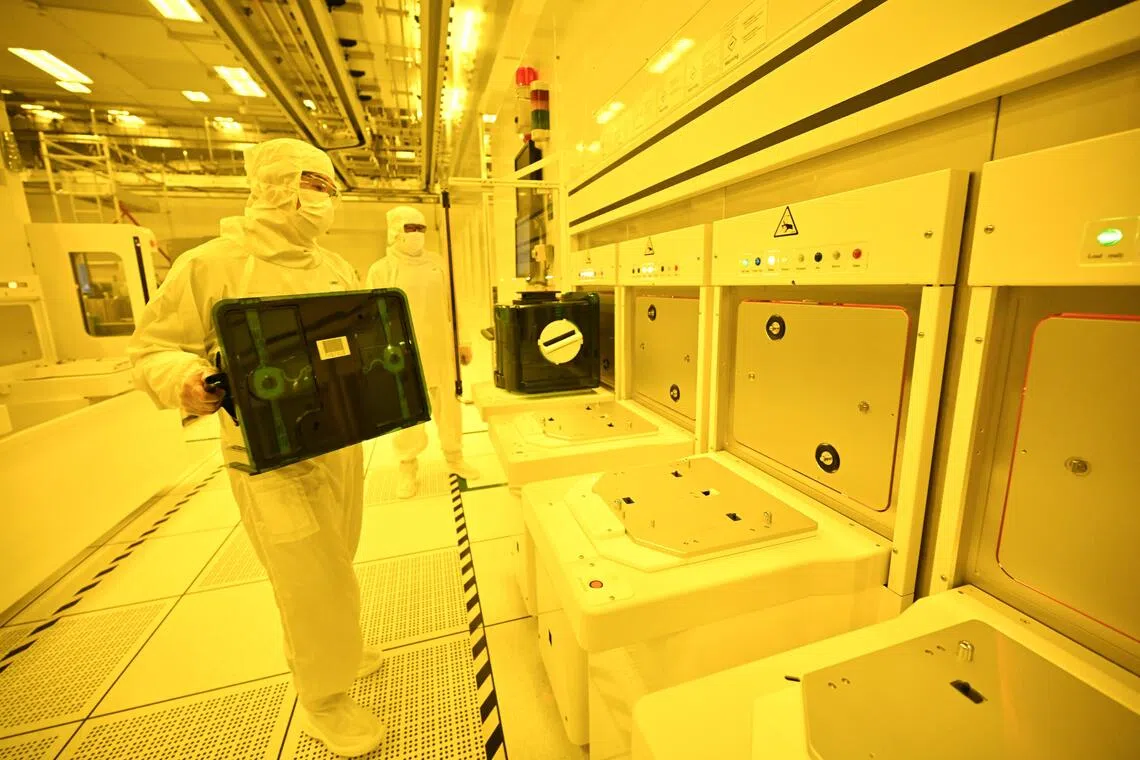
Singapore’s purchasing managers’ index, a barometer of the manufacturing industry’s overall health, rose to 51.5 points in August.
ST PHOTO: LIM YAOHUI
Published Sep 02, 2026, 09:01 PM
Updated Sep 02, 2026, 09:01 PM
Singapore's factory activity grew for the 13th straight month in August, driven by strong demand for AI-related products.
Supply chain disruptions due to the Middle East conflict worsened, causing longer delivery times and higher input costs.
Despite challenges, manufacturer confidence remains high with continued growth expected.
SINGAPORE – Lifted by artificial intelligence demand, Singapore’s factory activity expanded in August for the 13th consecutive month, reaching its highest level in nearly eight years.
This is despite US and Iran peace talks remaining at a standstill, with negotiators yet to restore normal traffic in the Strait of Hormuz waterway, through which around a fifth of the world’s oil and natural gas supplies are usually transported.
The Republic’s purchasing managers’ index (PMI) – a barometer of the manufacturing industry’s overall health – rose to 51.5 points in August, from 51.4 points in July. This was its highest reading since November 2018.
A purchasing managers’ index reading above 50 indicates growth, while one below that signals contraction.
The electronics sector, which accounts for 40 per cent of Singapore’s manufacturing output, recorded a PMI of 52.6 points in its 15th straight month of expansion.
“The latest PMI readings indicate that Singapore’s manufacturing sector remains turbocharged by the AI-driven semiconductor super-cycle, driving record order backlogs and robust employment,” said Stephen Poh, executive director at the Singapore Institute of Purchasing and Materials Management, which compiles the monthly survey.
The survey released on Sept 2 noted that the manufacturing sector also posted stronger growth in new orders, new exports, factory output and input purchases.
Surging purchases of hardware powering artificial intelligence also drove regional factory activity.
Private surveys in China, Japan and South Korea showed that factory activity expanded in August on a solid demand for chips, computers and other AI-related products, offsetting cost pressures stemming from the conflict in the Middle East.
Over in Japan, new business grew at the fastest pace since January 2018 on the strong demand for semiconductors and AI-related products.
But Poh said Singapore’s manufacturing industry continues to be weighed by supply chain disruptions, which have surfaced because of the war.
He said: “The deepening Middle East supply chain crisis continues to severely cripple supplier delivery times and send input prices, particularly energy costs, soaring.”
The supplier deliveries index contracted for the eighth consecutive month and at a faster pace, reflecting severely prolonged lead times and escalating global supply chain constraints.
The indexes of input prices and order backlogs recorded growth, while the finished goods index contracted at a faster rate.
UOB associate economist Jester Koh said lead times have grown because some cargo shipments were likely taking a longer route around the Cape of Good Hope in South Africa to avoid the Strait of Hormuz.
He noted that the input price sub-index for both the overall and electronics PMI rose, reflecting the surge in energy prices in August.
“The increase was more pronounced in the latter, likely reflecting ‘techflation’ pressures associated with the global chip shortage,” he said.
DBS senior economist Chua Han Teng said higher energy prices have continued to pose challenges for energy-intensive manufacturers, as seen in the continued contraction in the supplier deliveries sub-index.
The chemical and general manufacturing clusters face a comparatively weaker outlook than other manufacturers, he said.
Despite this, the future business index expanded for the 10th straight month, reflecting the continued confidence of manufacturers in operating conditions.
Chua expects the electronics sector to remain the primary driver of overall manufacturing activity because of its continued outperformance.
He said: “Strong external demand for Singapore’s electronics goods continues to be supercharged by substantial AI infrastructure investment, particularly by major US hyperscalers, although with supply constraints.
“These dynamics were observed in continued inventory drawdown, as reflected by the fourth consecutive month of contraction in the electronics finished goods sub-index, at a time when new export orders and order backlogs continued to expand.”
OCBC Bank chief economist Selena Ling pointed to the latest Monetary Authority of Singapore quarterly survey of professional forecasters, also released on Sept 2 , which showed an upgrade in the manufacturing growth forecast from 5 per cent to 8.4 per cent in 2026 .
She maintained a slightly higher forecast of around 9 per cent.
“While a moderation in the growth pace may materialise in the remaining months, we do not anticipate a sharp correction at this juncture,” Ling said.
Annabelle Liang is a business correspondent at The Straits Times, where she specialises in trade and macroeconomics.
Artificial Intelligence
AI/artificial intelligence
新加坡采购经理人指数(衡量制造业整体健康状况的晴雨表)8月份升至51.5点。
ST 照片:林耀辉
发布于 2026 年 9 月 2 日 晚上 9:01
更新于2026年9月2日晚上9:01
受人工智能相关产品强劲需求的推动,新加坡8月份工厂活动连续第13个月增长。
中东冲突导致供应链中断加剧,造成交货时间延长和投入成本上升。
尽管面临挑战,但制造商信心依然高涨,预计将继续增长。
新加坡——受人工智能需求的提振,新加坡工厂活动在8月份连续第13个月扩张,达到近8年来的最高水平。
尽管美国和伊朗的和平谈判仍然陷入僵局,谈判代表尚未恢复霍尔木兹海峡的正常交通,而世界上大约五分之一的石油和天然气供应通常都要经过该海峡运输,但这种情况依然存在。
爱尔兰共和国的采购经理人指数(PMI)——衡量制造业整体健康状况的晴雨表——8月份升至51.5点,高于7月份的51.4点。这是自2018年11月以来的最高读数。
采购经理人指数高于 50 表示经济增长,低于 50 则表示经济萎缩。
占新加坡制造业产出 40% 的电子行业,其采购经理人指数 (PMI) 连续第 15 个月扩张,达到 52.6 点。
“最新的采购经理人指数(PMI)读数表明,新加坡制造业仍然受到人工智能驱动的半导体超级周期的强劲推动,订单积压量创历史新高,就业形势稳健,”新加坡采购与材料管理协会执行董事Stephen Poh表示,该协会负责编制每月调查报告。
9月2日发布的调查显示,制造业的新订单、新出口、工厂产出和投入品采购也实现了更强劲的增长。
人工智能所需硬件的激增采购也推动了区域工厂的生产活动。
中国、日本和韩国的私人调查显示,8 月份工厂活动扩大,这得益于对芯片、计算机和其他人工智能相关产品的强劲需求,抵消了中东冲突带来的成本压力。
在日本,由于对半导体和人工智能相关产品的强劲需求,新业务以自 2018 年 1 月以来最快的速度增长。
但 Poh 表示,新加坡制造业继续受到供应链中断的影响,而供应链中断是由于战争造成的。
他表示:“中东供应链危机不断加深,严重阻碍了供应商的交货时间,并导致投入价格,特别是能源成本飙升。”
供应商交付指数连续第八个月收缩,且收缩速度加快,反映出交货周期严重延长和全球供应链限制加剧。
投入价格指数和订单积压指数均录得增长,而成品指数收缩速度更快。
大华银行副经济学家许杰斯特表示,由于一些货物运输可能绕道南非好望角以避开霍尔木兹海峡,导致运输时间延长。
他指出,8 月份整体采购经理人指数和电子产品采购经理人指数的投入价格分项指数均有所上升,反映出能源价格的飙升。
“后者的增幅更为明显,这可能反映了与全球芯片短缺相关的‘技术通胀’压力,”他说。
星展银行高级经济学家蔡汉腾表示,能源价格上涨持续给能源密集型制造商带来挑战,供应商交付分项指数的持续收缩就证明了这一点。
他表示,化工和一般制造业集群的前景比其他制造业集群要疲软。
尽管如此,未来商业指数连续第十个月扩张,反映出制造商对经营状况的持续信心。
蔡先生预计,由于电子行业持续表现优异,该行业仍将是整体制造业活动的主要驱动力。
他表示:“尽管存在供应限制,但新加坡电子产品的强劲外部需求仍然受到大量人工智能基础设施投资的推动,尤其是来自美国大型超大规模企业的投资。”
“这些动态体现在库存持续下降上,电子产品成品分项指数连续第四个月收缩,与此同时,新的出口订单和订单积压却持续扩大。”
华侨银行首席经济学家林思琳指出,新加坡金融管理局于9月2日发布的最新季度专业预测调查显示,2026年制造业增长预测从5%上调至8.4%。
她维持了略高的预测值,约为9%。
“虽然未来几个月增速可能会放缓,但我们预计目前不会出现大幅回调,”凌说。
梁安娜贝尔是《海峡时报》的商业记者,专门报道贸易和宏观经济。
人工智能
人工智能