New $3.3m Dementia Singapore-Lien Foundation initiative offers early palliative care, home support新加坡痴呆症协会与连氏基金会联合推出一项耗资330万新元的计划,旨在提供早期临终关怀和居家支持服务。
A new $3.3 million initiative launched in Singapore to extend early palliative support to dementia patients and their families. Read more at straitstimes.com.
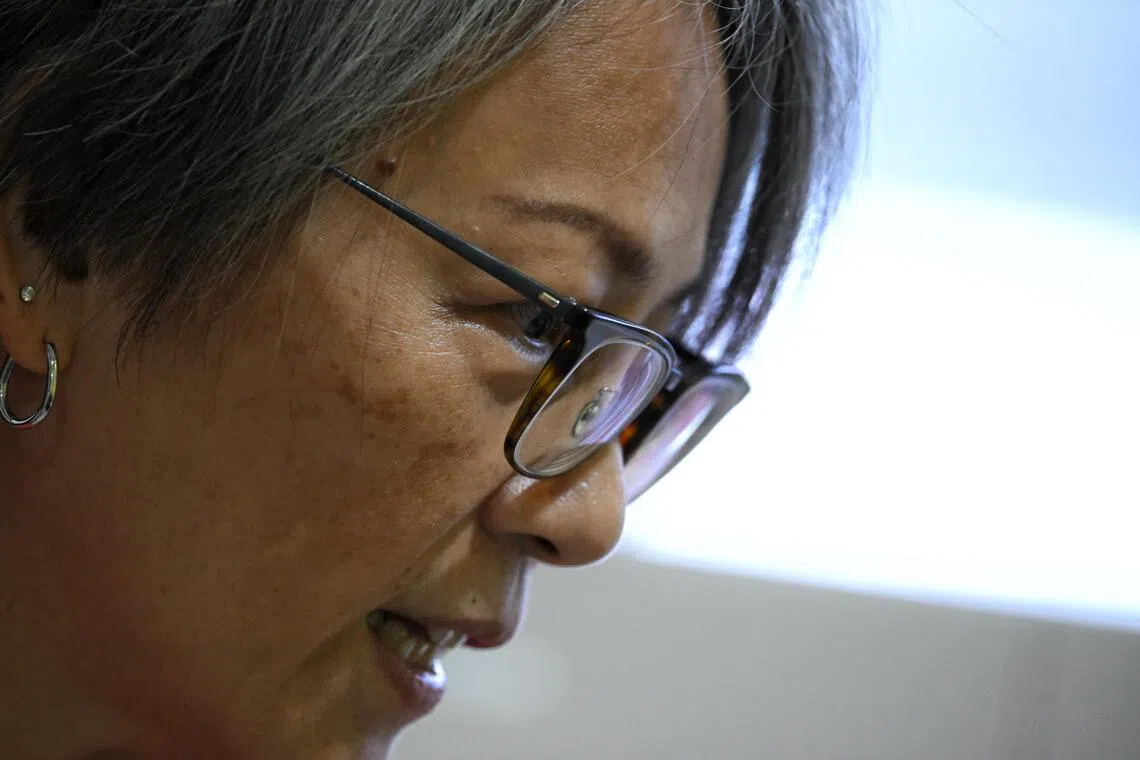
Lyn Leng, the wife and caregiver to her husband with advanced young onset dementia, pictured after the launch of Post Diagnostic Support Plus (PDS ) held at Dementia Singapore - New Horizon Centre on Sept 15, 2026.
Published Sep 16, 2026, 04:26 PM
Updated Sep 16, 2026, 04:26 PM
A new $3.3 million initiative, Post Diagnostic Support Plus (PDS+), provides early palliative care and home support for dementia patients transitioning from day care to home.
PDS+ helps families with physical, emotional, and decision-making challenges, including an AI tool "ACP GO!" for advance care planning to reduce future care uncertainties.
The programme aims to train staff, benefit over 280 families in two years, and address the growing dementia population and complex care needs in Singapore.
SINGAPORE - Lyn Leng, 55, has spent the past decade caring for her 56-year-old husband, George, who was diagnosed with young-onset dementia. However, his care needs have intensified as his condition has advanced to the late stage .
In mid-2025, George started attending day care at a New Horizon Centre, which provided him with routine and gave Lyn much-needed respite. That support ended in October when he was discharged following a seizure. The health episode left him unable to stand independently, requiring more care.
At home, the physical toll mounted. Lyn developed knee and lower back issues from constantly transferring her 1.83-metre-tall husband between the bed, sofa, and bathroom, even with aid from her domestic helper.
Relief finally arrived when she met Esther Vanessa Chua, the senior manager of palliative care at Dementia Singapore.
Through Chua, Lyn discovered that George was eligible for a new initiative, called Post Diagnostic Support Plus (PDS+), that offers early palliative care and home support for persons living with dementia and their caregivers.
Launched on Sept 15, PDS+ is developed by Dementia Singapore and Lien Foundation, with a $3.3 million four-year grant from the latter.
The service is currently being piloted at the four New Horizon Centres that provide day care services for people with dementia. These centres, located in Bukit Batok, Jurong Point, Tampines and Toa Payoh , are managed by Dementia Singapore.
“I was very anxious about every blister that he had,” said Lyn, recalling how much it helped when Chua arranged for a physiotherapist to visit her home.
Lyn also hired a second domestic helper to share the load of caring.
PDS+ builds on an earlier Post Diagnostic Support (PDS) programme that Dementia Singapore and the Lien Foundation launched in 2020 to address the immediate post-diagnosis adjustment period. The PDS initiative has since been scaled nationally across other care providers, said the programme director at the foundation, Gabriel Lim.
PDS+ will help persons at the late stage of dementia transit from centre-based to home-based care for up to one year. It plugs a gap as traditional palliative care is typically reserved for patients with a prognosis of under one year and is usually introduced near the end of life.
PDS+ has serviced 64 families since late November 2024, when the first advance care planning conversation was done.
At least 80 frontline Dementia Singapore staff are expected to be trained and more than 280 persons living with dementia and their families are expected to benefit directly over the next two years.
“Ultimately, we want to mainstream this programme,” said Dementia Singapore’s chairman Dr Phillip Yap.
Based on the second Well-being of the Singapore Elderly Study by the Institute of Mental Health, there were about 74,000 persons living with dementia in 2023. This number is estimated to grow to 152,000 by 2030.
“When a person has dementia, it often comes with many other chronic, long-term illnesses. So care cannot be focused only on the mental health issues of dementia,” Yap said.
Furthermore, over time , the condition will also affect the person’s physical function and their ability to upkeep daily activities, such as walking, dressing and toileting, he said.
Through an interactive AI tool called ACP GO!, PDS+ hopes to help persons living with dementia indicate their care preferences earlier in the dementia journey, before decision-making capacities decline .
These advance care planning conversations, which start when they are still at the centres, helps to avoid the distressing guesswork and conflict that often arise in families when making difficult decisions as dementia progresses .
Dementia Singapore CEO Bryan Tan said PDS+ provides critical support for families struggling to initiate these conversations. He experienced this firsthand when he tried to speak to his father, who was diagnosed with dementia in 2025.
“Every day he fights to regain his identity, his dignity, and even his independence,” he said. “Every conversation I had with him just ends up really bad because he didn’t want to talk about it.”
Dementia Singapore said it will be scaling its ACP Toolkit training and sharing the ACP GO! tool with other healthcare providers.
While PDS+ officially offers up to one year of support following the transition to home care, Yap said the programme will continue to offer help even after that. With PDS+, one care worker will be the main point of contact.
For Lyn, PDS+ has been a godsend. “I feel very supported,” she said.
2026 年 9 月 15 日,在新加坡痴呆症协会 - 新视野中心举行的“诊断后支持加强计划 (PDS)”启动仪式后,妻子兼照顾患有晚期早发性痴呆症的丈夫的 Lyn Leng 出席了活动。
发布于 2026 年 9 月 16 日下午 4:26
更新于2026年9月16日下午4:26
一项耗资 330 万美元的新计划“诊断后支持加强计划 (PDS+)”为从日间护理过渡到家庭护理的痴呆症患者提供早期姑息治疗和家庭支持。
PDS+ 帮助家庭应对身体、情感和决策方面的挑战,包括一款名为“ACP GO!”的 AI 工具,用于预先护理计划,以减少未来护理的不确定性。
该计划旨在培训员工,在两年内惠及超过 280 个家庭,并解决新加坡日益增长的痴呆症患者群体和复杂的护理需求。
新加坡——55岁的林玲在过去的十年里一直照顾着她56岁的丈夫乔治,乔治被诊断出患有早发性痴呆症。然而,随着乔治的病情发展到晚期,他的护理需求也日益增加。
2025年年中,乔治开始在新视野中心接受日托服务,这让他有了规律的生活,也让琳得以喘息。但这项服务在10月份因他癫痫发作而终止,他不得不出院。这次健康问题导致他无法独立站立,需要更多照护。
在家中,身体上的负担越来越重。琳因为要不断地将身高1.83米的丈夫从床上、沙发里搬到浴室,即使有家政阿姨帮忙,也出现了膝盖和腰部问题。
当她遇到新加坡痴呆症协会的临终关怀高级经理 Esther Vanessa Chua 时,她终于松了一口气。
通过蔡女士,琳发现乔治符合一项名为“诊断后支持加强计划 (PDS+)”的新计划的资格,该计划为患有痴呆症的人及其照顾者提供早期姑息治疗和家庭支持。
PDS+ 于 9 月 15 日推出,由新加坡痴呆症协会和连氏基金会共同开发,后者提供了为期四年、金额达 330 万美元的资助。
这项服务目前正在四个为失智症患者提供日间照护服务的新视野中心进行试点。这些中心分别位于武吉巴督、裕廊坊、淡滨尼和大巴窑,由新加坡失智症协会管理。
“他身上的每一个水泡都让我非常焦虑,”琳回忆起蔡医生安排理疗师到她家为她治疗时,她感到非常安心。
琳还雇佣了第二名家政帮手来分担照顾孩子的重担。
PDS+是在新加坡痴呆症协会和连氏基金会于2020年联合推出的早期诊断后支持(PDS)项目的基础上发展而来,旨在帮助患者应对确诊后的适应期。连氏基金会的项目主管林嘉宝表示,PDS项目此后已推广至全国其他护理机构。
PDS+ 将帮助晚期痴呆症患者从中心式护理过渡到居家护理,最长可达一年。它填补了传统姑息治疗的空白,因为传统姑息治疗通常仅适用于预期寿命不足一年的患者,且通常在生命末期才开始实施。
自 2024 年 11 月下旬首次进行预先护理计划对话以来,PDS+ 已为 64 个家庭提供服务。
预计至少有 80 名新加坡痴呆症协会一线工作人员将接受培训,未来两年内将有超过 280 名痴呆症患者及其家人直接受益。
“最终,我们希望将这个项目推广到主流社会,”新加坡痴呆症协会主席菲利普·叶博士说。
根据新加坡心理卫生学院进行的第二次新加坡老年人福祉研究,2023年新加坡约有74,000人患有痴呆症。预计到2030年,这一数字将增长到152,000人。
“当一个人患有痴呆症时,往往还会伴有许多其他慢性、长期疾病。因此,护理不能只关注痴呆症的精神健康问题,”叶医生说。
此外,他还表示,随着时间的推移,这种情况还会影响患者的身体机能以及他们进行日常活动的能力,例如行走、穿衣和如厕。
PDS+ 希望通过名为 ACP GO! 的交互式人工智能工具,帮助患有痴呆症的人在痴呆症病程早期,也就是在决策能力下降之前,表达他们的护理偏好。
这些从他们还在中心时就开始的预先护理计划对话,有助于避免随着痴呆症的进展,家庭在做出艰难决定时经常出现的令人痛苦的猜测和冲突。
新加坡失智症协会首席执行官陈文杰表示,PDS+ 为那些难以与孩子展开对话的家庭提供了至关重要的支持。他本人就曾有过这样的经历,当时他试图与2025年被诊断出患有失智症的父亲沟通。
“他每天都在努力重拾自我、尊严,甚至是独立,”他说。“我和他每次谈话都以糟糕的结局告终,因为他根本不想谈这件事。”
新加坡痴呆症协会表示,将扩大其 ACP 工具包培训规模,并与其他医疗保健提供者分享 ACP GO! 工具。
PDS+项目官方提供的居家护理过渡期最长为一年,但Yap表示,即使过渡期结束后,该项目仍将继续提供帮助。PDS+项目会安排一名护理人员作为主要联系人。
对琳来说,PDS+简直是天赐之物。“我感觉自己得到了很好的支持,”她说。