On Top Gun‘s 30th Anniversary, We Talk to a Topgun Instructor Who Worked on the ’80s Masterpiece在《壮志凌云》上映30周年之际,我们采访了一位曾参与制作这部80年代经典之作的《壮志凌云》教官。
The myth of Mav and Goose lives on, and F-14 RIO Dave “Bio” Baranek explains how the film's scenes didn't crash and burn.
By Dave “Bio” Baranek and Tyler Rogoway
Updated Jul 2, 2020 2:51 PM EDT
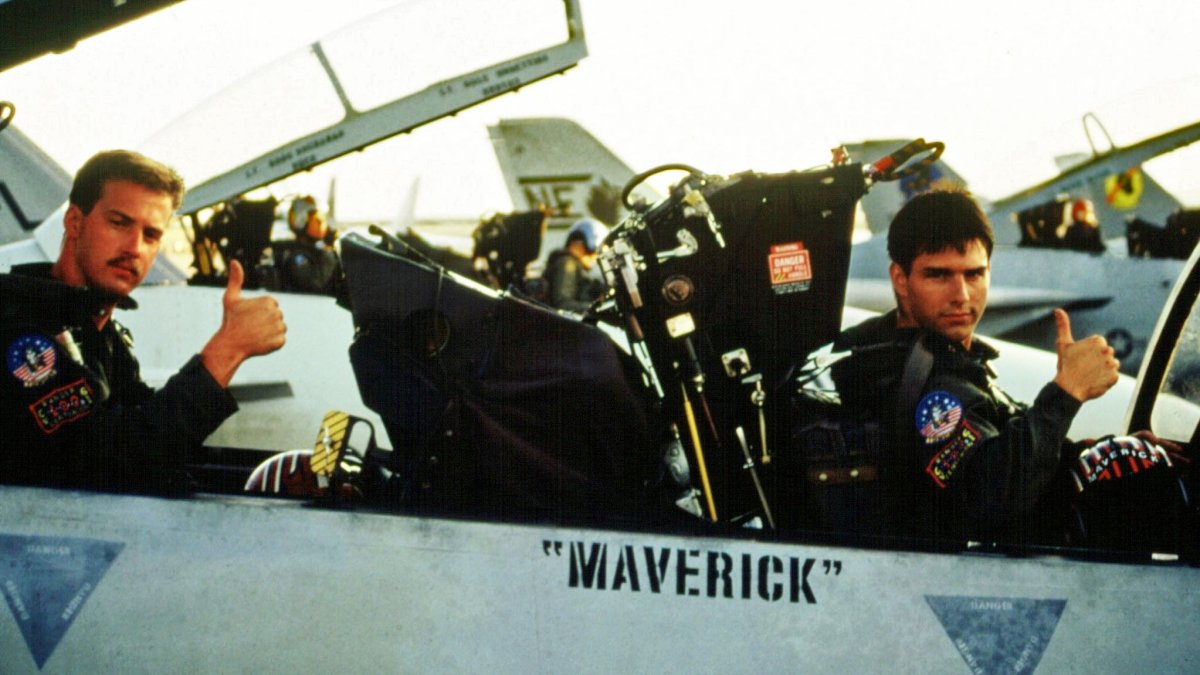
The War Zone recently talked with good friend Dave “Bio” Baranek, who was a F-14 Radar Intercept Officer and a real Topgun instructor during the filming of Top Gun . He actually flew on several flights to film scenes for the movie’s aerial jousts and spent days at Paramount Studios helping to write the jargon-filled dialogue and edit the flying scenes. He recounted all this and more in his must-read memoir, Topgun Days , and offers an insider’s take of the blockbuster Tony Scott film that blasted onto the big screen 30 years ago today:
I think producers Don Simpson and Jerry Bruckheimer immediately saw the makings of a hit movie. The Tomcat’s pilot and RIO crew was a natural set-up for a “buddy movie.” The naval aviation setting and Topgun class would provide action, danger, and stunning visuals, along with personal challenges. The producers also planned a love interest for the star, and that took an interesting turn.
This goes back to the origin of the Top Gun movie. The producers saw an article in California magazine about an F-14 crew going through the Topgun class. They had already made several flashy hits, like Flashdance and Beverly Hills Cop , so that was their style: fast pace, rock music, and the striking visuals. The guy who really made them aware of the eye-catching power of Navy fighters (the F-14 in particular) was Chuck “Heater” Heatley, himself an F-14 pilot, former Topgun instructor, and very talented photographer [see the game-changing coffee table book, The Cutting Edge, from the same era]. His photos in that magazine article deserve much of the credit for inspiring the movie.
Simpson and Bruckheimer did their homework, sketched out a contemporary story line, and got to work. I have to say that just coming up with the idea was genius, but it took a lot of talent to actually make a great movie.
When they came to Naval Air Station Miramar to prepare for filming, they met real-life analyst Christine Fox. Christine is an attractive woman who was known around Miramar for her insightful and relevant work for the Center for Naval Analyses, and while she wasn’t a Topgun instructor, she often worked with aircrews. She inspired the Kelly McGillis character in the movie.
Let’s start with the opening, where Tomcats intercept enemy fighters. This happened in the real world often, and continues today. In the 1980s, a lot of intercepts were off the coast of Libya, where Navy fighters parried with Libyan MiGs—and whatever else came up. Pacific Fleet Tomcats intercepted fighters from the Soviet Union, Vietnam, and other countries. We all intercepted bombers and patrol planes from a variety of countries around the world. Really, these events were welcome breaks from the routine flying of a Cold War carrier deployment. They usually incited some apprehension until the situation stabilized.
US Navy fighters occasionally encountered aggressive aircrews, and most people remember the two Libyan shoot-down incidents involving Tomcats . Most of the time, the intercepts led to benign escorts and even humorous “cultural exchanges,” like Soviet bomber crews showing us bottles of Pepsi through the windows of their aircraft.
The movie also captured the stress and danger associated with landing on a carrier—although I should add that we weren’t dripping sweat every minute of every flight. It takes a lot of training and skill for pilots to put the jet down in that small area, and for the Naval Flight Officer (NFO) to function as an effective crew member. I’ve got about 650 carrier landings and one of them ended in a split-second ejection when the arresting gear machinery broke. It was just a few months after joining my first squadron and it happened with no warning: Suddenly, we had to make a life-or-death decision. Check out the video.
As for the Topgun class, the movie captured many of the essentials. Students are challenged and evaluated by instructors, and when Goose says, “Viper’s up here? Great,” that shows the students’ competitiveness, looking for any intel on their opponents. When I went through the class we listened for any instructor on the radio and we could tell who was flying. In most cases we only heard one voice out of four or more opponents, but it was some insight. Later, when I went back as an instructor, I realized that the exceptional flight discipline resulted in few transmissions on frequencies the students used, which made it hard for the students to put together a picture of who they were facing, including names and numbers of adversaries.
There is also some mentoring of students by Topgun instructors, which is shown throughout the movie. The instructors realize they have an important responsibility not only to teach friendly and threat weapons and tactics, but in many cases to mentor the young aircrews.
The makers of Top Gun spent a lot of time at Miramar asking for stories. At least one RIO actually used to say, “Do some pilot shit!” When I heard about it, it was said by Tom “Sobs” Sobieck, one of the more colorful and talented RIOs, who was also a Topgun instructor and later commanded an F-14 squadron. One of my contributions to the movie was, “Watch the mountains!” Maybe not as memorable as Sobs’ quote but something I actually said on a low-altitude bugout (exiting the fight, usually at high-speed).
The producers got a lot of help—check the credits and you’ll see many Navy people—and they actually listened when we made suggestions.
Lots of people point out all the flaws or unrealistic elements in the movie. They’re there, and I’m not going to list them all, but let’s be candid— Top Gun is not a documentary. Regardless, a few that stick out:
“Never leave your wingman.” Actually, we used a concept called “mutual support,” where one aircraft should be able to come to the assistance of the other if required during an engagement. This would be difficult if the two friendly fighters are outnumbered and engaged—as often happened in the old days—but it was one of the tactical concepts. Mutual support, however, didn’t mean that the aircraft should maneuver in formation. In fact, if a section of fighters were engaged, both fighters should not be in the same piece of sky in order to complicate the enemy’s targeting problem. The way it was shown in Top Gun was more dramatic, and it looked better on screen.
In basically every scene, we had to fly closer to each other for the cameras than we would in real life. When we were filming the head-on passes, it took quite a few passes to get it right [detailed in awesome fashion in Topgun Days ]. In our dogfight training, when we had a head-on pass we were required to stay 500 feet away from the other jet for safety. That was a distance we were all comfortable with, even if we were closing at Mach 1! But when we tried it for the movie the other jets looked too small, so the director wanted us to get closer than 500 feet. We talked about it and reasoned that under the controlled filming conditions we could close the distance. It still took several passes to refine the formations and other things, and we eventually passed close enough to hear the other jets—a rarity.
That got the shot we were looking for.
A trio of Topgun F-5E’s painted black for their role as the enemy MiG-28. Clay Lacy’s modified Learjet cameraship was used to shoot some of the movie’s most exciting aerial scenes.r , Dave “Bio” Baranek
The flight leads and all the aircrew kept it professional, in the briefings and during the flights. The main flight lead for the F-14s was Lloyd “Bozo” Abel, while Bob “Rat” Willard and Ray “Secks” Seckinger took turns leading the Topgun jets. From the Navy’s safety-conscious culture, we knew that unusual flights such as air shows present high risk because it’s not the way we normally fly. So the movie crew would tell us what they wanted and the flight leads would work out how we could safely accomplish it. Then the briefings were very thorough. No one wanted to mess up while filming a Hollywood movie.
Real-life Topgun instructors Sunshine, Rat, and Hollywood strike a pose after filming scenes for the movie Top Gun , David “Bio” Baranek
So now Top Gun 2 is finally a go . I’m not involved with it, but that’s fine with me—I enjoyed working on the original, let the guys flying now have their own awesome Hollywood experience.
You can read more of Bio’s unique perspective on the filming of Top Gun and his time as a Topgun instructor here as well as his incredible insight of watching the F-14 Tomcat, a strictly air-to-air fighter, turn into a “Bombcat” in the 1990s here . He has just come out with a new book that recounts his flying experiences before arriving at Topgun in the memoir Before Topgun Days which you really need to read. Bio’s author site, which is packed with awesome content is www.topgunbio.com .
Contact Tyler at Tyler@thedrive.com
Comments couldn’t be loaded. Please refresh the page.
作者:戴夫·“比奥”·巴拉内克和泰勒·罗戈威
更新于美国东部时间2020年7月2日下午2:51
《战区》杂志最近采访了我的好友戴夫·“比奥”·巴拉内克,他曾是F-14雷达拦截官,也是电影《壮志凌云》拍摄期间的真正教官。他曾多次驾驶战机拍摄影片中的空中交锋场景,并在派拉蒙影业公司待了数日,参与编写充满专业术语的对白和剪辑飞行镜头。他在自己必读的回忆录《壮志凌云岁月》中详细记述了这一切以及更多内容,并从内部人士的角度解读了这部托尼·斯科特执导的30年前上映的轰动一时的巨作:
我认为制片人唐·辛普森和杰瑞·布鲁克海默一眼就看出这部电影会大获成功。“雄猫”战斗机的飞行员和后勤保障人员的组合,简直就是一部“搭档电影”的完美素材。海军航空兵的背景和“壮志凌云”级别的训练,能够带来精彩的动作场面、惊险刺激的情节和震撼的视觉效果,以及人物面临的挑战。制片人还计划为男主角安排一段爱情线,而剧情也出现了意想不到的转折。
这要追溯到《壮志凌云》的起源。制片人看到《加州》杂志上的一篇文章,讲述的是一支F-14机组正在参加“壮志凌云”飞行训练营。他们之前已经制作过几部炫目的热门影片,比如《闪电舞》和《比佛利山警探》,所以这就是他们的风格:快节奏、摇滚乐和震撼的视觉效果。真正让他们意识到海军战斗机(尤其是F-14)强大威力的人是查克·“希特”·希特利,他本人就是一名F-14飞行员、前“壮志凌云”飞行训练营教官,也是一位才华横溢的摄影师(参见同一时期出版的具有里程碑意义的摄影集《锋芒毕露》)。他在那篇杂志文章中的照片对这部电影的创作起到了至关重要的作用。
辛普森和布鲁克海默做了充分的准备工作,勾勒出一个当代故事梗概,然后就开始动工。我必须说,光是想到这个创意就堪称天才之举,但真正拍出一部伟大的电影则需要极高的才华。
当剧组来到米拉马尔海军航空站为拍摄做准备时,他们遇到了现实生活中的分析师克里斯汀·福克斯。克里斯汀是一位魅力十足的女性,她在米拉马尔海军分析中心的工作见解独到、切合实际,因此小有名气。虽然她并非“壮志凌云”的教官,但她经常与机组人员合作。电影中凯莉·麦吉利斯这个角色的原型就是她。
让我们从开头说起,雄猫战斗机拦截敌方战斗机的场景。这种事在现实世界中屡见不鲜,而且至今仍在发生。上世纪80年代,许多拦截行动都发生在利比亚沿海,海军战斗机与利比亚的米格战机——以及其他各种敌机——展开激战。太平洋舰队的雄猫战斗机拦截了来自苏联、越南和其他国家的战斗机。我们都曾拦截过来自世界各地不同国家的轰炸机和巡逻机。实际上,这些事件对于冷战时期航母部署的日常飞行来说,无疑是令人欣慰的喘息机会。它们通常会引发一些紧张情绪,直到局势稳定下来。
美国海军战斗机偶尔会遭遇敌方敌机,大多数人记得的都是两起利比亚战机被击落的事件,其中就包括F-14“雄猫”战斗机。大多数情况下,拦截行动最终都以友好的护航告终,甚至还会出现一些有趣的“文化交流”,比如苏联轰炸机机组人员透过机窗向我们展示百事可乐瓶。
这部电影也展现了航母着陆的压力和危险——当然,我得补充一句,我们并非每次飞行都汗流浃背。飞行员需要大量的训练和高超的技巧才能将飞机降落在航母上那狭小的区域,海军飞行军官(NFO)也需要作为一名高效的机组成员才能发挥作用。我大约有650次航母着陆经验,其中一次因为阻拦装置故障,我瞬间弹射逃生。那是我加入第一个飞行中队几个月后,而且毫无预兆:突然之间,我们必须做出一个生死攸关的决定。看看这段视频吧。
至于“壮志凌云”飞行训练课,电影捕捉到了许多精髓。学员们接受教官的挑战和评估,当“鹅”(Goose)说“毒蛇(Viper)在这儿?太好了!”时,这展现了学员们的竞争精神,他们竭尽全力搜寻对手的情报。我当年参加训练课时,会仔细监听无线电,通过无线电就能判断出是谁在驾驶飞机。大多数情况下,我们只能听到四架或更多对手飞机中的一个声音,但这仍然能提供一些有用的信息。后来,当我以教官的身份重返训练课时,我意识到,学员们严谨的飞行纪律使得他们在使用的无线电频率上很少收到信号,这使得学员们很难拼凑出对手的全貌,包括他们的姓名和编号。
影片中也展现了“壮志凌云”教官对学员的指导。教官们意识到,他们不仅肩负着教授友军和敌军武器战术的重要责任,而且在很多情况下,还要指导年轻的飞行员。
《壮志凌云》的制片人花了很多时间在米拉马尔空军基地收集故事。至少有一位后座拦截官(RIO)曾经说过:“做点飞行员该做的事!” 我听说这句话时,是汤姆·“索布斯”·索别克说的,他是当时最有个性、最有才华的后座拦截官之一,也是《壮志凌云》的教官,后来还指挥过一个F-14中队。我为这部电影贡献的一句话是:“注意山脉!” 也许不如索布斯的那句那么令人印象深刻,但这是我在一次低空脱离战斗(通常是高速脱离)时确实说过的话。
制片方得到了很多帮助——看看演职人员名单,你会发现很多海军人员——而且当我们提出建议时,他们也认真听取了。
很多人都指出了这部电影的各种缺陷或不切实际之处。它们确实存在,我不会一一列举,但坦白说——《壮志凌云》不是纪录片。不过,以下几点比较突出:
“永远不要抛弃你的僚机。”实际上,我们当时采用的是一种叫做“相互支援”的概念,即在交战过程中,一架飞机应能够在必要时支援另一架飞机。如果两架友军战斗机数量处于劣势且正在交战——这种情况在过去经常发生——那么相互支援就会变得困难,但这仍然是战术概念之一。然而,相互支援并不意味着飞机必须编队飞行。事实上,如果一个战斗机编队正在交战,为了增加敌方瞄准的难度,两架战斗机不应该出现在同一片空域。电影《壮志凌云》中对此的展现方式更具戏剧性,也更适合银幕呈现。
基本上每个场景,为了拍摄需要,我们都必须比现实中更近距离地飞行。拍摄迎头交锋的镜头时,我们反复尝试了很多次才达到理想效果(《壮志凌云》中有精彩的详细描述)。在我们的空战训练中,为了安全起见,迎头交锋时,我们必须与另一架飞机保持500英尺的距离。即使我们以1马赫的速度接近,这个距离对我们来说也很舒适!但当我们在电影拍摄中尝试时,其他飞机看起来太小了,所以导演要求我们缩短距离。我们讨论后认为,在可控的拍摄环境下,我们可以缩短距离。尽管如此,我们还是反复尝试了很多次来完善编队和其他细节,最终我们近到可以听到对方飞机的声音——这可是难得一见的景象。
这样就拍到了我们想要的照片。
三架《壮志凌云》的F-5E战斗机被涂成黑色,扮演敌方的米格-28战斗机。克莱·莱西改装的里尔喷气式摄影机被用来拍摄影片中一些最精彩的空中场景。——戴夫·“比奥”·巴拉内克
无论是飞行简报还是飞行过程中,领队和所有机组人员都保持着专业的态度。F-14战斗机的主领队是劳埃德·“博佐”·阿贝尔,而鲍勃·“老鼠”·威拉德和雷·“塞克斯”·塞金格则轮流领队“壮志凌云”战斗机。海军一贯注重安全,我们知道像航展这样的特殊飞行任务风险很高,因为这并非我们通常的飞行方式。所以,电影摄制组会告诉我们他们的需求,然后由领队制定安全完成任务的方案。之后的飞行简报非常详尽。谁也不想在拍摄好莱坞电影时出错。
现实生活中的“壮志凌云”教官“阳光”、“老鼠”和“好莱坞”在拍摄完电影《壮志凌云》的场景后摆姿势拍照。(大卫·“比奥”·巴拉内克摄)
所以《壮志凌云2》终于要开拍了。我没有参与其中,不过我并不介意——我很享受参与第一部的制作,就让现在这些飞行员们去体验他们自己的好莱坞之旅吧。
您可以在这里阅读更多关于Bio对《壮志凌云》拍摄以及他担任《壮志凌云》教官的独特见解,以及他对F-14“雄猫”战斗机(一款纯粹的空对空战斗机)在20世纪90年代如何演变为“轰炸猫”的精彩观察(点击此处)。他刚刚出版了一本新书,名为《壮志凌云之前的日子》,讲述了他在加入《壮志凌云》之前积累的飞行经验,这本书非常值得一读。Bio的个人网站www.topgunbio.com内容丰富精彩。
请联系Tyler,邮箱地址是Tyler@thedrive.com
评论加载失败,请刷新页面。