Austria flaunts air power, considers purchasing new trainer jets奥地利炫耀空中力量,考虑购买新型教练机
The country's recent Zeltweg air show has brought an impending decision back into focus.
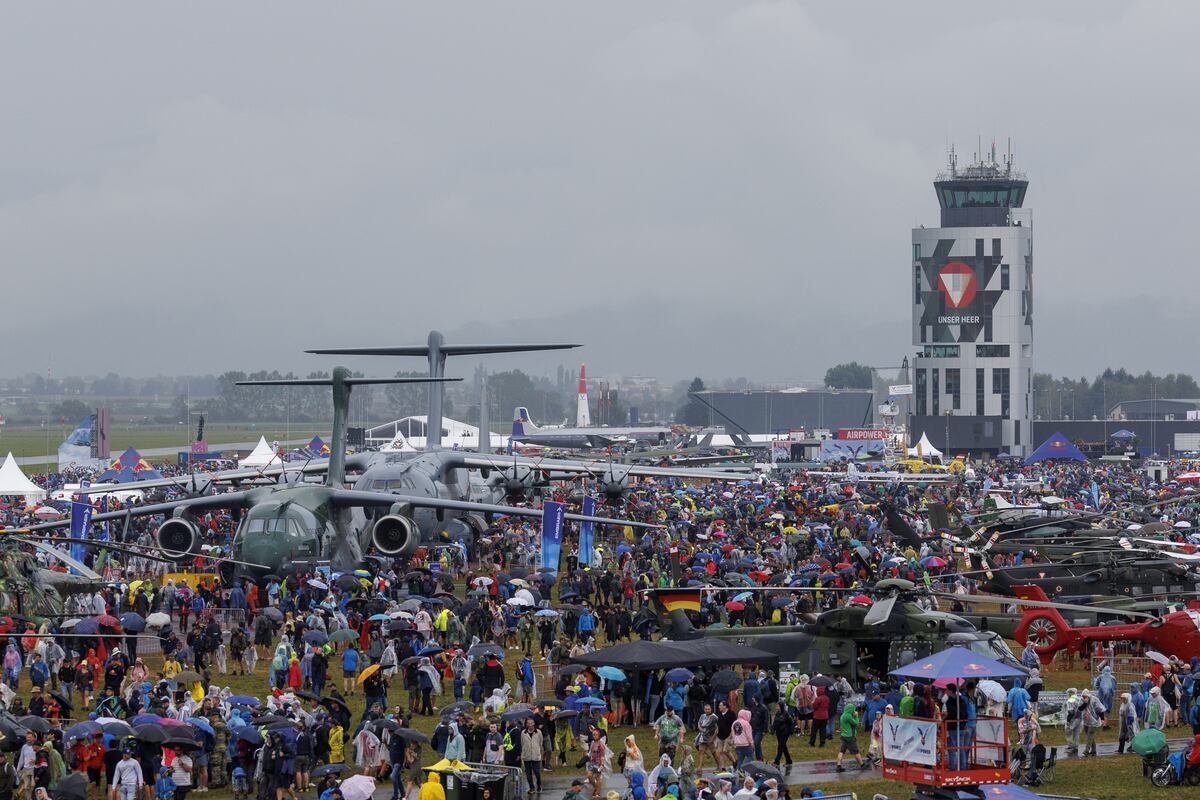
GRAZ, Austria — Austria is trying to decide on a successor for its recently retired fleet of jet trainers. A leading contender showed off its aerobatic skills at the Airpower show at the Zeltweg air base this month, reinvigorating speculation on whether Vienna will turn to Czechia or Italy for a purchase.
Austria decided in recent years to withdraw its fleet of Saab 105 OE jet trainers — a variant purpose-built for the country by the Swedish manufacturer — after five decades in service. A plan for a replacement was not initially announced.
But in the past year, the tune has changed, with the country’s military leadership suggesting that plans were being prepared to find a successor after all. Last month, Austrian defense minister Klaudia Tanner said she had received an “interesting” proposal from her Italian counterparts for the joint procurement of the Leonardo M-346 advanced jet trainer.
Under Tanner, the country’s defense forces have gone on a spending spree, procuring new helicopters, aircraft, land vehicles and air defense systems.
This latest possible purchase would fit into the recent trend of Austria buying expensive new military equipment in cooperation with other countries.
Vienna has taken a similar route in getting a successor for its C-130 Hercules large, fixed-wing transport aircraft in the form of the Brazilian C-390, bought together with the Netherlands. Similarly, 18 Leonardo AW169 helicopters are being procured jointly with Italy to replace the ancient Alouette III, which has been in service since 1967.
The M-346 played a prominent role at this year’s Airpower show, where the Italian Air Force presented the jet’s aerobatic abilities to an audience of up to 250,000 people, including representatives from Austria’s military.
Austrian pilots are already familiar with the aircraft type. Since the retirement of the Saab 105, the country’s pilots have been training on the Leonardo jet at the International Flight Training School in Sardinia, Italy.
Other training has taken place on the Eurofighter, a costly endeavor and likely driving force behind the decision to buy new dedicated trainers. In early September, the Vermont Air National Guard temporarily moved four F-35 fighters to Zeltweg to train with their Austrian counterparts through the State Partnership Program.
While the M-346 appears to be the frontrunner, officials have yet to announce a decision. Its main competitor seems to be the Czech-origin Aero L-39NG. The jet appeared in the static display at the previous Airpower show in 2022, where Filip Kulštrunk, a company vice president, pitched directly to Austrian decision-makers.
“In the case of Austria, the Czech Ministry of Defense fully supports the project and offers full government-to-government sale,” he said.
There was also talk of involving Austrian companies directly in the manufacturing process, forging longer-term industrial cooperation between the countries. Kulštrunk further relayed that Czechia was open to joint pilot training, “therefore sharing logistics and operational costs.”
Austria’s armed forces, particularly its air force, have long been plagued by insufficient funding. Cost considerations have been a driving factor behind the recently favored model of joint procurements under Defense Minister Tanner.
Similarly, budgetary constraints are also exerting pressure on its fleet of 15 Eurofighter Typhoon jets. In 2017, the country announced it would phase out older versions by 2020, though those plans appear to have been dropped indefinitely. Intermittently, there were media reports that the country might be unable to afford flying all 15 jets at once.
Last year, the government announced a €1.6 billion ($1.77 billion) upgrade package, which includes procuring new jet trainers and upgrading the Eurofighter fleet.
Linus Höller is Defense News' Europe correspondent and OSINT investigator. He reports on the arms deals, sanctions, and geopolitics shaping Europe and the world. He holds master’s degrees in WMD nonproliferation, terrorism studies, and international relations, and works in four languages: English, German, Russian, and Spanish.
奥地利格拉茨——奥地利正试图为其近期退役的喷气式教练机机队选择替代机型。本月,一架领先的候选机型在泽尔特韦格空军基地举行的空军力量展上展示了其特技飞行性能,这再次引发了人们对维也纳最终会选择捷克还是意大利采购的猜测。
奥地利近年来决定退役其服役五十年的萨博105 OE喷气式教练机队——该机型是瑞典制造商萨博公司专门为奥地利定制的。最初并未公布替代机型的计划。
但过去一年来,风向发生了转变,该国军方领导层暗示,他们最终还是决定寻找继任者。上个月,奥地利国防部长克劳迪娅·坦纳表示,她收到了意大利方面提出的“有趣的”联合采购莱昂纳多M-346高级喷气式教练机的方案。
在坦纳的领导下,该国国防部队大肆挥霍,采购了新的直升机、飞机、陆地车辆和防空系统。
奥地利此次可能的采购符合奥地利近期与其他国家合作购买昂贵新军事装备的趋势。
维也纳在为其C-130“大力神”大型固定翼运输机寻找继任者时也采取了类似的策略,最终与荷兰联合采购了巴西的C-390运输机。同样,奥地利也与意大利联合采购了18架莱昂纳多AW169直升机,以替换自1967年以来一直在服役的老旧云雀III型直升机。
在今年的空军力量展上,M-346 扮演了重要角色。意大利空军向多达 25 万名观众(包括奥地利军方代表)展示了该喷气式飞机的特技飞行能力。
奥地利飞行员对这种机型已经很熟悉了。自从萨博105退役后,该国飞行员一直在意大利撒丁岛的国际飞行训练学校接受莱昂纳多喷气式飞机的训练。
其他训练也曾在欧洲战斗机上进行,这是一项耗资巨大的工程,很可能是促使当局决定购买新型专用教练机的主要原因。9月初,佛蒙特州空中国民警卫队临时将四架F-35战斗机调往泽尔特韦格,通过州际合作计划与奥地利同行进行联合训练。
尽管M-346目前看来处于领先地位,但官方尚未宣布最终决定。其主要竞争对手似乎是捷克制造的Aero L-39NG。这款战机曾在2022年的上一届奥地利空军展上进行静态展示,当时该公司副总裁菲利普·库尔什特伦克(Filip Kulštrunk)直接向奥地利决策者推介了该机型。
他说:“就奥地利而言,捷克国防部全力支持该项目,并提供全面的政府间销售。”
双方还讨论了让奥地利公司直接参与生产过程,从而建立两国间更长期的产业合作。库尔什特伦克进一步表示,捷克愿意开展联合试点培训,“从而分担物流和运营成本”。
奥地利武装部队,尤其是空军,长期以来一直面临资金不足的问题。成本方面的考虑是国防部长坦纳近期推行联合采购模式的主要原因。
同样,预算限制也给该国15架台风战斗机机队带来了压力。2017年,该国宣布将在2020年前逐步淘汰老旧型号,但这些计划似乎已被无限期搁置。不时有媒体报道称,该国可能无力同时承担所有15架战机的运营费用。
去年,政府宣布了一项价值 16 亿欧元(17.7 亿美元)的升级计划,其中包括采购新的喷气式教练机和升级欧洲战斗机机队。
林努斯·霍勒是《防务新闻》的欧洲记者和开源情报调查员。他报道影响欧洲乃至全球的军火交易、制裁和地缘政治。他拥有大规模杀伤性武器不扩散、恐怖主义研究和国际关系三个硕士学位,并精通英语、德语、俄语和西班牙语四种语言。