Israel Is Bringing SPICE 1000 Standoff Weapon To The F-35以色列将为F-35战斗机配备SPICE 1000远程武器
The standoff weapon could eventually give other F-35 operators a new path to a long-range precision strike capability. The standoff weapon could eventually give other F-35 operators a faster path to a long-range precision strike capability.
新闻视频
Published Sep 16, 2026 12:29 PM EDT
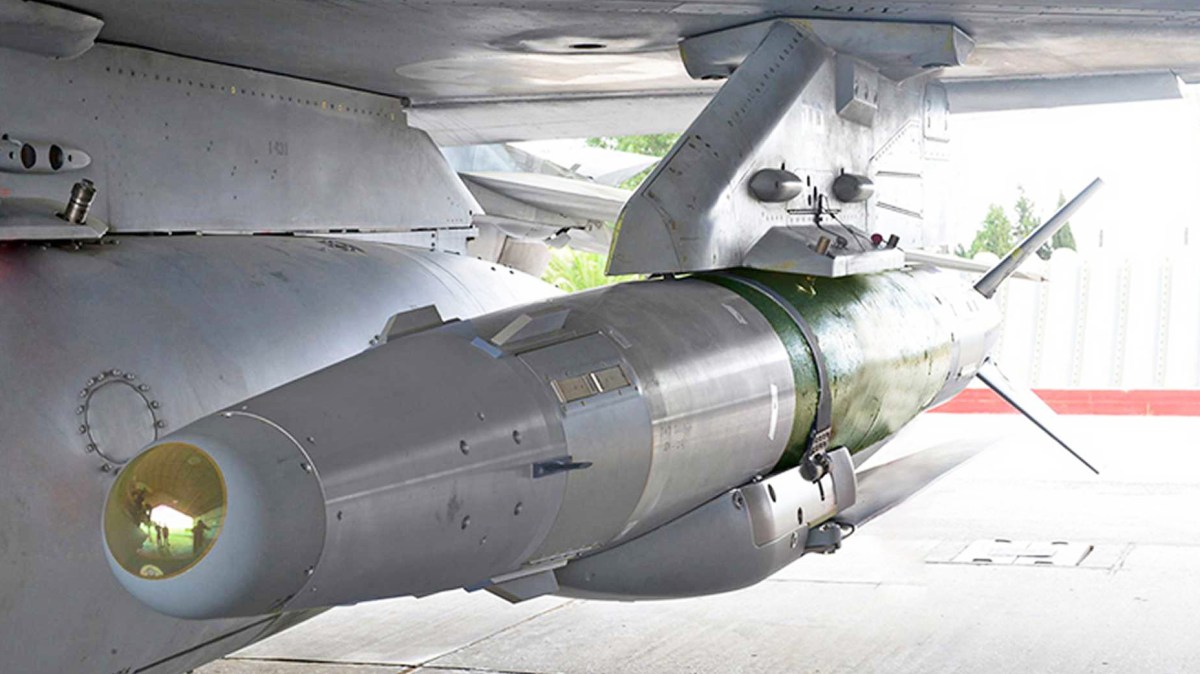
Israel’s Rafael and Lockheed Martin are working to accelerate integration of the 1,000-pound-class SPICE standoff weapon with the Israeli Air Force’s F-35I Adir . The development could potentially open the door for the precision-guided munition to be offered to other Joint Strike Fighter operators.
Rafael Advanced Defense Systems announced the effort September 15 during the Air & Space Forces Air, Space and Cyber Symposium that TWZ is attending. The work is being conducted as a joint project with Lockheed Martin at the U.S. contractor’s facilities in the United States and is expected to take several months.
AFA 2026: For the first time, Rafael's SPICE 1000 is being integrated on the F-35 Rafael Advanced Defense Systems Ltd. is integrating its SPICE 1000 air-to-surface munition on the F-35 Adir fighter aircraft. SPICE 1000 is an advanced air-to-surface munition capable of striking… pic.twitter.com/QOeNISGKFE — Rafael Advanced Defense Systems (@RAFAELdefense) September 15, 2026
AFA 2026: For the first time, Rafael's SPICE 1000 is being integrated on the F-35 Rafael Advanced Defense Systems Ltd. is integrating its SPICE 1000 air-to-surface munition on the F-35 Adir fighter aircraft. SPICE 1000 is an advanced air-to-surface munition capable of striking… pic.twitter.com/QOeNISGKFE
Rafael says the effort could eventually make the weapon available to other F-35 operators. “At a later stage, F-35 operators worldwide will be able to field SPICE 1000,” the company said.
The effort was previously referenced in U.S. government documentation before Rafael’s announcement. Published in August, the Pentagon F-35 Modernized Selected Acquisition Report identified the weapon as the “Israel-unique Smart, Precise Impact, Cost-Effective 1000B,” or SPICE 1000B, and said its integration was progressing “with a strategy to accelerate the implementation via a SPICE Lite process.”
The report does not explain what the “SPICE Lite” process entails.
SPICE — which stands for Smart, Precise Impact, and Cost-Effective — is a family of electro-optically guided standoff weapons developed by Rafael. The family includes SPICE 2000, SPICE 1000, and SPICE 250, with the numbers corresponding broadly to the weight class of the underlying warheads.
Based around a 1,000-pound-class bomb, SPICE 1000 uses pop-out wings to achieve a manufacturer-stated range of approximately 125 kilometers, or 78 miles. Rafael gives the weapon a claimed circular error probable of around three meters.
The glide bomb combines inertial and satellite-aided navigation with an electro-optical seeker. During the terminal phase, its seeker can compare the observed target area with stored imagery using scene-matching algorithms, allowing the weapon to continue its attack without relying exclusively on GPS. That feature allows it to engage targets autonomously, offering the launch aircraft a true ‘fire and forget’ capability, and provides resilience in GPS-denied or GPS-degraded environments.
SPICE can also be programmed to approach a target from a particular azimuth and impact angle. This provides flexibility in selecting the terminal attack geometry and can support steep attack profiles against targets where penetration from above is desirable.
SPICE 1000 is not a new Israeli capability. It has been operational with the Israel Air Force since 2017 and is already integrated with Israeli F-16I Sufa , F-16C/D Barak , F-15I Ra’am , and F-15 Baz fighters.
An F-15 Baz configured for precision strike, with a pair of 2,000-pound Rafael SPICE standoff weapons on the underwing pylons. Amit Agronov
“SPICE 1000 has been sold to several countries and is in operational service with a number of air forces worldwide,” Rafael said. “It has served as a primary munition of the Israeli Air Force for several years, including extensive use in recent long-range operations flown from F-15 and F-16 aircraft.”
The Israeli Air Force has released footage showing SPICE weapons being used during recent operations, including imagery from the weapon’s own perspective during its terminal attack.
Israeli Air Force F-15 Bazs preparing for a strike on Iran, each carrying a pair of Spice 1000 glide bombs. Notably, one of the F-15s, tail no. 450, took part in Operation Wooden Leg exactly 40 years ago, striking PLO targets in Tunisia. pic.twitter.com/FEy6PiDkdU — OSINTtechnical (@Osinttechnical) June 15, 2025
Israeli Air Force F-15 Bazs preparing for a strike on Iran, each carrying a pair of Spice 1000 glide bombs. Notably, one of the F-15s, tail no. 450, took part in Operation Wooden Leg exactly 40 years ago, striking PLO targets in Tunisia. pic.twitter.com/FEy6PiDkdU
Combat validated. The stand-off strike capability air forces are asking about. SPICE 250 at Farnborough. Pinpoint accuracy against high-value targets. Real operational results. Full details in our exhibition press release: https://t.co/FWYYvcM0Vw pic.twitter.com/lQV8sw32zN — Rafael Advanced Defense Systems (@RAFAELdefense) July 22, 2026
Combat validated. The stand-off strike capability air forces are asking about. SPICE 250 at Farnborough. Pinpoint accuracy against high-value targets. Real operational results. Full details in our exhibition press release: https://t.co/FWYYvcM0Vw pic.twitter.com/lQV8sw32zN
Israel’s F-35I is already unusual within the international Joint Strike Fighter fleet. The IDF has developed and demonstrated an external Joint Direct Attack Munition (JDAM) carriage capability, and said in March 2025 that the Israeli Adir was the only F-35 to have conducted operational strikes with an external weapons configuration. You can read more about that here .
The unique instrumented F-35I assigned to the Israeli Flight Test Center carrying four external 2,000-pound class GBU-31 JDAMs. A single AIM-120 AMRAAM air-to-air missile can be seen in one of the internal weapons bays, which may also house another internal JDAM. Israeli Air Force
However, according to The Jerusalem Post , the SPICE weapon is expected to be carried internally by F-35Is equipped with Technology Refresh 3 , or TR-3, hardware, which would maintain its low-observable configuration. Neither Rafael nor Lockheed Martin has publicly detailed the specific carriage configuration, aircraft modifications or software associated with the current integration effort.
The long-delayed TR-3 is a major upgrade to the F-35’s computing architecture and provides the processing infrastructure required for subsequent Block 4 capabilities. Israel received its first three F-35Is equipped with TR-3 hardware in January of this year.
Lockheed Martin describes Block 4 as the F-35 program’s “most significant evolution of F-35 capabilities to date,” encompassing more than 70 major upgrades, including increased weapons capacity, advanced electronic warfare capabilities, and improved target recognition.
Some of the unclassified upgrades within Block 4. The exact configuration has not been publicly disclosed. U.S. Department of Defense
It remains unclear if the SPICE 1000 integration itself requires the full Block 4 configuration.
The potential significance of the Israeli integration extends beyond the Israel Air Force. If SPICE 1000 ultimately becomes available to other F-35 operators, the completed Israeli integration could provide those countries with another pathway toward fielding a precision standoff weapon rather than requiring them to begin an integration effort entirely from scratch.
Integrating national weapons onto the F-35 can be a lengthy process. It involves not only the weapon itself, but aircraft software, interfaces, weapons-bay compatibility, flight testing, mission-system integration and certification within the U.S.-led F-35 program.
The United Kingdom’s experience with MBDA’s SPEAR 3 provides a good example of the challenges.
In 2022, the U.K. Ministry of Defence said that scheduled delivery dates for SPEAR 3 had been delayed because of “prioritisation in the overall F-35 development programme,” which is managed by the U.S.-led F-35 Joint Program Office.
An artist’s impression of an F-35 armed with SPEAR 3 and Meteor missiles. MBDA
The program has continued to progress, including F-35B integration work and flight testing. But in June 2026, the U.K. government said that completion of mission-systems integration and jettison trials remained part of a wider weapons-integration program and that SPEAR 3 integration and subsequent release to service would occur in the early 2030s.
The United Kingdom has consequently approved the acquisition of the GBU-53/B Small Diameter Bomb II as an interim standoff weapon for the F-35B until SPEAR 3 enters service.
Nevertheless, another F-35 operator would not be able to adopt the Israeli SPICE integration without additional work. National configurations, software baselines, certification requirements, weapons procurement, and export approvals would still have to be addressed.
Already, however, aided by its uniquely configured test jet , Israel has demonstrated an unusual ability to integrate nationally developed capabilities onto its F-35I. This has been aided by privileged access to the Joint Strike Fighter’s closely guarded software codes.
The Israeli Air Force F-35I test jet on the flight line together with an F-15I strike fighter. Amit Agronov/Israeli Air Force
A U.K. parliamentary report noted delays in integrating British weapons onto the F-35B while contrasting that with Israel’s ability to integrate domestic electronic warfare systems, sensors, and communications technology onto its Adir.
Meanwhile, Rafael and Lockheed Martin already have experience working together on the SPICE family.
The companies signed a teaming agreement in 2019 covering the joint development, marketing and manufacture of SPICE guidance kits for the U.S. market. In 2021, they expanded the agreement to include SPICE 250, including development for potential sales to the United States and Poland . With some unque capabilities, SPICE could be of particular interst to the U.S. military, especially as it seeks to leverage multiple sources of precision munitions.
The SPICE family also extends beyond the 1,000-pound-class weapon now being integrated with the F-35.
At the other end of the family is SPICE 250, a much smaller weapon designed around a 250-pound-class payload. It incorporates a man-in-the-loop capability that allows an operator to redirect the weapon during its flight and abort the attack if necessary.
Its smaller dimensions also allow substantially greater weapon carriage. Rafael has marketed configurations in which a fighter can carry as many as 16 SPICE 250 weapons.
SPICE 1000, by comparison, is a substantially heavier weapon intended to provide longer-range precision attack capability with a larger warhead.
The SPICE effort is taking place alongside several other Israeli initiatives aimed at extending the F-35I’s range and weapons capabilities.
The Pentagon’s F-35 documentation has referenced ongoing work on extended-range fuel tanks and electronic warfare pods for the Israeli Air Force, although it did not provide fielding dates.
In May 2026, Israel’s defense ministry awarded an extended-range capability development contract for the F-35I to Elbit Systems subsidiary Cyclone. The capability is intended to increase the aircraft’s radius of action and reduce its reliance on aerial refueling during long-range missions.
Israel has also announced a major expansion of its F-35I fleet, with plans to increase the number of aircraft from 50 to 100 . The country is simultaneously expanding its forthcoming F-15IA fleet from 25 to 50 aircraft.
A rendering of the F-15IA for Israel. Boeing
For the F-35I, SPICE 1000 adds a long-range strike option that pairs the aircraft’s low observability with substantial standoff range and a relatively heavy warhead. This offers a survivability advantage in increasingly contested environments, allowing attacks from farther outside capable air defense systems and under heavy electronic warfare conditions. This factor will only become more important as integrated air defense systems become more capable and the F-35 more detectable.
Exactly how the weapon will be integrated remains undisclosed. Rafael and Lockheed Martin have not announced the final carriage configuration, aircraft software requirements, flight-test schedule, or expected date for operational clearance.
At the same time, Rafael is explicitly positioning the effort as a potential pathway for SPICE 1000 to become available to the wider F-35 community. This would potentially give other operators another option at a time when integrating a new standoff weapon onto the fighter can take years.
Contact the author: thomas@thewarzone.com
Comments couldn’t be loaded. Please refresh the page.
发布于美国东部时间2026年9月16日下午12:29
以色列的拉斐尔公司和洛克希德·马丁公司正在努力加快将1000磅级SPICE防区外武器与以色列空军的F-35I“阿迪尔”战斗机进行整合。这项研发成果有可能为其他联合攻击战斗机用户提供这种精确制导武器铺平道路。
拉斐尔先进防御系统公司于9月15日在TWZ出席的空军与太空部队空中、太空和网络研讨会上宣布了这项计划。该项目是与洛克希德·马丁公司在美国境内的拉斐尔先进防御系统公司工厂联合开展的,预计耗时数月。
AFA 2026:拉斐尔公司的SPICE 1000弹药首次集成到F-35战斗机上。拉斐尔先进防御系统有限公司正在将其SPICE 1000空对地弹药集成到F-35“阿迪尔”战斗机上。SPICE 1000是一种先进的空对地弹药,能够打击…… pic.twitter.com/QOeNISGKFE — 拉斐尔先进防御系统 (@RAFAELdefense) 2026年9月15日
AFA 2026:拉斐尔公司的SPICE 1000弹药首次集成到F-35战斗机上。拉斐尔先进防御系统有限公司正在将其SPICE 1000空地弹药集成到F-35“阿迪尔”战斗机上。SPICE 1000是一种先进的空地弹药,能够打击…… pic.twitter.com/QOeNISGKFE
拉斐尔公司表示,这项工作最终可能使其他F-35用户也能使用这种武器。“在后期阶段,全球各地的F-35用户都将能够部署SPICE 1000,”该公司表示。
在拉斐尔公司宣布之前,美国政府文件中就曾提及过这项工作。五角大楼8月份发布的《F-35现代化选定采购报告》将该武器称为“以色列独有的智能、精确打击、低成本1000B”(SPICE 1000B),并表示其集成工作正在推进,“并制定了通过SPICE Lite流程加速实施的战略”。
该报告没有解释“SPICE Lite”流程的具体内容。
SPICE——全称为“智能、精确、经济高效”——是由拉斐尔公司开发的一系列光电制导防区外武器。该系列包括SPICE 2000、SPICE 1000和SPICE 250,数字大致对应于其弹头的重量等级。
SPICE 1000 以 1000 磅级炸弹为基础,采用弹出式机翼,据制造商称其射程约为 125 公里(78 英里)。拉斐尔公司声称该武器的圆概率误差约为 3 米。
这种滑翔炸弹结合了惯性导航和卫星辅助导航以及光电导引头。在末段飞行阶段,其导引头可以利用场景匹配算法将观测到的目标区域与存储的图像进行比对,从而使武器能够在不完全依赖GPS的情况下继续攻击。这一特性使其能够自主攻击目标,为发射飞机提供真正的“发射后不管”能力,并使其在GPS信号受限或减弱的环境中仍能保持作战能力。
SPICE还可以被编程为从特定的方位角和入射角接近目标。这为选择末端攻击几何形状提供了灵活性,并且可以支持对目标进行陡峭的攻击剖面,尤其是在需要从上方穿透目标的情况下。
SPICE 1000 并非以色列的新技术。它自 2017 年以来一直在以色列空军服役,并且已经与以色列的 F-16I Sufa、F-16C/D Barak、F-15I Ra'am 和 F-15 Baz 战斗机整合。
一架改装用于精确打击的F-15“巴兹”战斗机,机翼下挂架挂载了两枚2000磅重的拉斐尔SPICE防区外武器。阿米特·阿格罗诺夫
拉斐尔表示:“SPICE 1000已售往多个国家,并在世界多支空军中服役。多年来,它一直是以色列空军的主要弹药,包括在最近的远程作战行动中广泛使用,由F-15和F-16战机执行。”
以色列空军公布了 SPICE 武器在近期行动中使用的视频,其中包括该武器在进行末端攻击时从自身视角拍摄的画面。
以色列空军的F-15“巴兹”战斗机正在准备对伊朗发动袭击,每架飞机都携带两枚“香料1000”滑翔炸弹。值得注意的是,其中一架F-15,尾号450,曾参与40年前的“木腿行动”,袭击了突尼斯境内的巴解组织目标。pic.twitter.com/FEy6PiDkdU — OSINTtechnical (@Osinttechnical) June 15, 2025
以色列空军的F-15“巴兹”战斗机正在准备对伊朗发动袭击,每架飞机都携带两枚“香料1000”滑翔炸弹。值得注意的是,其中一架F-15,尾号450,曾参与40年前的“木腿行动”,袭击了突尼斯境内的巴解组织目标。pic.twitter.com/FEy6PiDkdU
实战验证。空军所寻求的远程打击能力。SPICE 250 范堡罗航展。对高价值目标实现精准打击。真实作战成果。详情请见展会新闻稿:https://t.co/FWYYvcM0Vw pic.twitter.com/lQV8sw32zN — Rafael Advanced Defense Systems (@RAFAELdefense) July 22, 2026
实战验证。空军们翘首以盼的远程打击能力。SPICE 250 范堡罗航展。精准打击高价值目标。真实作战成果。详情请见展会新闻稿:https://t.co/FWYYvcM0Vw pic.twitter.com/lQV8sw32zN
以色列的F-35I在国际联合攻击战斗机机队中已属特例。以色列国防军已研发并演示了其外挂联合直接攻击弹药(JDAM)的能力,并在2025年3月表示,以色列的“阿迪尔”(Adir)是唯一一架已执行过外挂武器作战配置的F-35战机。您可以在这里阅读更多相关信息。
这架独特的F-35I战斗机隶属于以色列飞行试验中心,机身配备仪器,可携带四枚2000磅级GBU-31联合直接攻击弹药(JDAM)。机身内部弹舱内可见一枚AIM-120先进中程空空导弹(AMRAAM),该弹舱可能还存放着另一枚JDAM。以色列空军
然而,据《耶路撒冷邮报》报道,SPICE武器预计将由配备第三代技术升级(TR-3)硬件的F-35I战斗机内置携带,这将使其保持低可探测性。拉斐尔公司和洛克希德·马丁公司均未公开详细说明具体的携带配置、飞机改装或与当前集成工作相关的软件。
姗姗来迟的TR-3系统是对F-35计算架构的一次重大升级,并为后续Block 4版本的能力提供了必要的处理基础架构。以色列于今年1月接收了首批三架配备TR-3硬件的F-35I战斗机。
洛克希德·马丁公司将 Block 4 描述为 F-35 项目“迄今为止 F-35 能力的最重大发展”,其中包括 70 多项重大升级,包括增加武器容量、先进的电子战能力和改进的目标识别能力。
Block 4 中的一些非机密升级。具体配置尚未公开。美国国防部
目前还不清楚 SPICE 1000 集成本身是否需要完整的 Block 4 配置。
以色列此次整合的潜在意义远不止于以色列空军。如果SPICE 1000最终能够提供给其他F-35用户,以色列完成的整合将为这些国家提供一条部署精确防区外武器的新途径,而无需从零开始进行整合工作。
将本国武器整合到F-35战机上可能是一个漫长的过程。这不仅涉及武器本身,还包括飞机软件、接口、武器舱兼容性、飞行测试、任务系统集成以及在美国主导的F-35项目框架内的认证。
英国在使用 MBDA 的 SPEAR 3 时所遇到的挑战,就是一个很好的例子。
2022 年,英国国防部表示,由于“F-35 整体开发计划的优先性调整”,SPEAR 3 的预定交付日期被推迟,该计划由美国主导的 F-35 联合项目办公室管理。
艺术家绘制的F-35战斗机装备SPEAR 3和Meteor导弹的示意图。MBDA
该项目持续推进,包括F-35B的集成工作和飞行测试。但英国政府在2026年6月表示,任务系统集成和抛弃试验的完成仍是更广泛的武器集成项目的一部分,SPEAR 3的集成和后续服役将在2030年代初进行。
因此,英国已批准采购 GBU-53/B 小直径炸弹 II 作为 F-35B 的临时防区外武器,直到 SPEAR 3 投入使用。
然而,其他F-35用户若想直接采用以色列的SPICE集成方案,还需要进行额外的工作。国家配置、软件基线、认证要求、武器采购和出口审批等问题仍需解决。
然而,凭借其独特配置的测试飞机,以色列已经展现出将自主研发的能力整合到F-35I战斗机上的非凡能力。这得益于以色列获得了联合攻击战斗机高度保密的软件代码的特权。
以色列空军的F-35I测试机与一架F-15I攻击战斗机停在飞行线上。(图片来源:Amit Agronov/以色列空军)
英国议会的一份报告指出,英国武器在F-35B战斗机上整合方面存在延误,而以色列则能够将国产电子战系统、传感器和通信技术整合到其Adir战斗机上。
与此同时,拉斐尔和洛克希德·马丁公司在 SPICE 系列火箭方面已经有过合作经验。
2019年,两家公司签署了一项合作协议,涵盖面向美国市场的SPICE制导组件的联合开发、营销和生产。2021年,双方扩大了合作范围,将SPICE 250纳入其中,包括为潜在销售至美国和波兰而进行的开发。SPICE拥有一些独特的功能,可能对美国军方具有特别重要的意义,尤其是在美国军方寻求利用多种精确制导武器来源的情况下。
SPICE 系列武器的规模也不仅仅局限于目前正在与 F-35 集成的 1000 磅级武器。
该系列武器的另一端是SPICE 250,这是一款体积小得多的武器,其有效载荷约为250磅。它具备人机回路控制功能,允许操作员在武器飞行过程中改变其飞行方向,并在必要时中止攻击。
其较小的尺寸也使其能够携带更多的武器。拉斐尔公司已经推出了多种配置方案,其中一架战斗机最多可携带16枚SPICE 250武器。
相比之下,SPICE 1000 是一种重量级更大的武器,旨在通过更大的弹头提供更远距离的精确打击能力。
SPICE 项目与以色列其他几项旨在扩展 F-35I 航程和武器能力的计划同时进行。
五角大楼的 F-35 文件提到了正在为以色列空军研发远程油箱和电子战吊舱,但没有提供部署日期。
2026年5月,以色列国防部将F-35I战斗机的远程作战能力开发合同授予埃尔比特系统公司旗下的旋风公司。该能力旨在扩大战机的作战半径,并减少其在远程任务中对空中加油的依赖。
以色列也宣布将大幅扩充其F-35I机队,计划将飞机数量从50架增加到100架。与此同时,该国还将即将交付的F-15IA机队从25架增加到50架。
波音公司为以色列设计的F-15IA战斗机效果图。
对于F-35I而言,SPICE 1000增加了一项远程打击选项,该选项结合了飞机的低可探测性、可观的防区外射程以及相对较重的弹头。这在日益激烈的对抗环境中提供了生存优势,使其能够在防空系统有效范围之外以及在高强度电子战条件下发起攻击。随着一体化防空系统能力的提升和F-35更容易被探测到,这一优势将变得更加重要。
该武器的具体集成方式尚未公开。拉斐尔公司和洛克希德·马丁公司均未公布最终的挂载配置、飞机软件要求、飞行测试计划或预计的作战许可日期。
与此同时,拉斐尔公司明确表示,此举有望成为SPICE 1000导弹向更广泛的F-35用户群体推广的途径。在目前将新型防区外武器集成到战斗机上可能需要数年时间的情况下,这将为其他用户提供另一种选择。
联系作者:thomas@thewarzone.com
评论加载失败,请刷新页面。