French vision for an autonomous Europe proves elusive法国对欧洲自治的愿景难以实现
Russia's war against Ukraine has led to some fresh soul-searching in Europe about the continent's reliance on the United States for security.
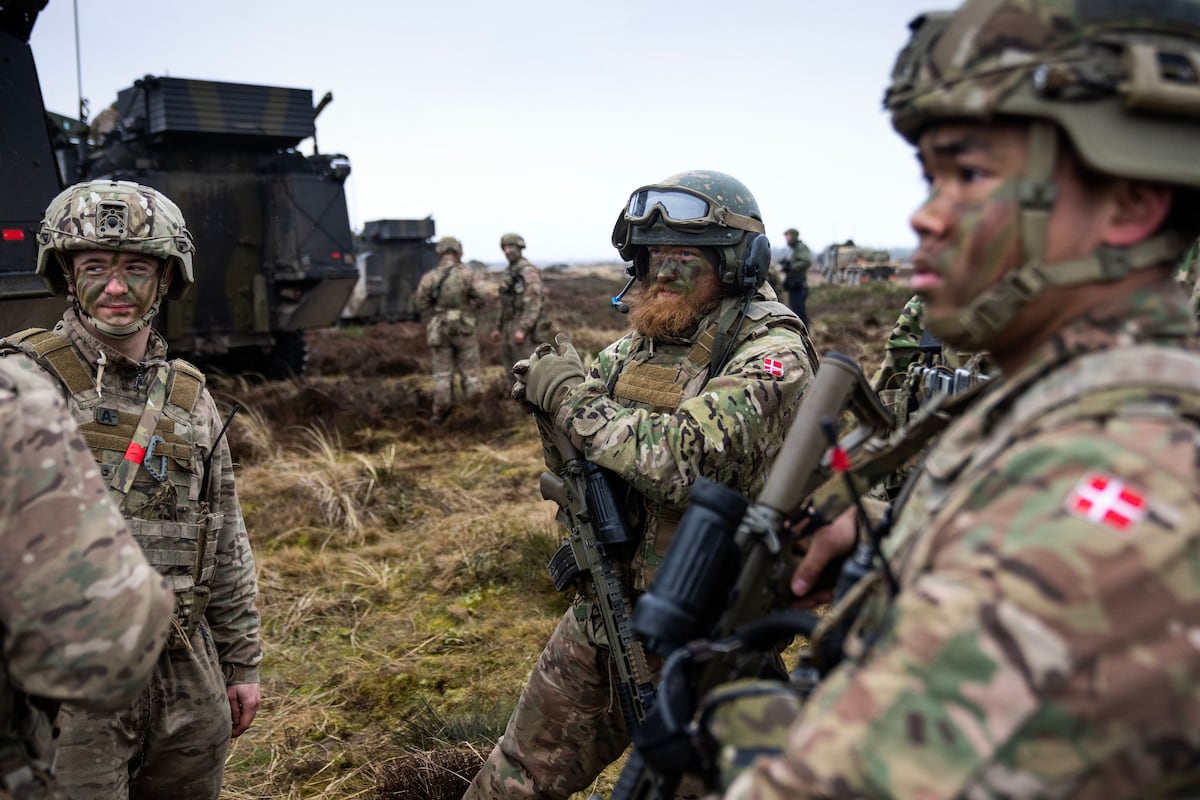
EUROPE and WASHINGTON — After Russia unleashed the largest land war in Europe since the end of World War II, exposing European defense capabilities as lacking, now may not be the best time to fantasize about the continent standing alone militarily.
But French President Emmanuel Macron is doing just that, sparking a fresh debate in Europe about where the continent is headed in the grand squeeze among the United States, China and Russia.
Strategic autonomy — the ability to provide for one’s own security, he told journalists aboard the plane flying him home from a visit with Chinese President Xi Jinping in April — must become Europe’s organizing principle. Without it, Macron said, Europe risks becoming a “vassal” to other powers, including the United States, which could be on a collision course with China over Taiwan’s independence .
The problem, according to analysts, is strategic autonomy means different things to different governments in Europe, and there’s no defined end state of when it might be realized. While there is a shared understanding that a new beefiness in defense matters is vital, the degree of continued reliance on the United States — with its atomic weapons and troop deployments across Europe — as the ultimate security guarantor is where opinions collide.
There is a widening gap now between Eastern and Western European countries along those lines. In Romania, for example, any military measures to protect the eastern front are perceived as having limited value unless they involve American boots on the ground, ideally stationed there forever.
In Western European governments, some still expect the bloc’s economic prowess and mere proclamations about Europe’s own defense ambitions to insulate them from Russian aggression.
U.S. President Joe Biden, left, is seen with French President Emmanuel Macron at a working session during the G7 summit in Carbis Bay, Cornwall, on June 12, 2021. (Brendan Smialowski/AFP via Getty Images)
Christian Mölling, who leads the Center for Security and Defense at the Berlin-based German Council on Foreign Relations, said Macron’s insistence on the term strategic autonomy is something of an anomaly among European leaders because it conveys a desire to be autonomous from others, namely Washington.
Macron, Mölling explained, “was mainly speaking for himself,” projecting France’s national vision onto the rest of Europe.
Germany prefers softer terms, like European sovereignty, that simply express an ambition to act independently during crises, according to Sophia Besch, a Europe analyst at the Washington-based Carnegie Endowment for International Peace.
“There is too much scorched earth associated with the term ‘ strategic autonomy ,’ ” she said, referring to the years of futile discussions about the term by think tanks and politicians that suddenly shifted from academic to concrete when Russia invaded Ukraine last year.
Definitions aside, Russia’s assault has highlighted Europe’s dependence on not just U.S. military capabilities but also American leadership in orchestrating a trans-Atlantic response, Besch added.
Nevertheless, Europeans sense the writing on the wall calling for a greater degree of autonomy, driven by a mixture of increased defense spending and improved trust in the collective; that’s because America’s focus may shift to competition with China.
Also possible is a scenario in which a future U.S. president could simply stop caring about Europe’s security, or actively sabotage key institutions like the European Union or NATO.
“I do not think the idea of strategic autonomy is dead,” said Bastian Giegerich, the director of defense and military analysis at the International Institute for Strategic Studies, a think tank based in London. “One of the main drivers of it remains intact: the sense that the U.S. in the long run will be drawn away from Europe and will focus on the Indo-Pacific.”
“For the time being, however, for many European capitals — though not all — strategic autonomy takes a back seat, quite rightly in my view, to defeating Russia,” Giegerich added.
Arturo Varvelli, who leads Rome’s division of the European Council on Foreign Relations think tank, said strategic autonomy must remain a goal, despite Ukraine.
“We must reduce Europe’s dependencies when it comes to technology and energy as well as defense. All these elements are still on the table,” he said.
“If we give up, we will depend on China for green technology and the U.S. for defense,” Varvelli added. “Believing we can lean on the U.S. is a bigger illusion than saying we can be autonomous.”
German Foreign Minister Annalena Baerbock, left, and Chinese Foreign Minister Qin Gang attend a press conference in Beijing on April 14, 2023. (Suo Takekuma/AP)
But building the muscles to create strategic autonomy — or whatever term one prefers — remains a long-term effort despite attempts by the EU to raise its defensive profile.
The objective is “at this moment very far away,” said Ester Sabatino, a research analyst at IISS’ office in Berlin.
Only now are countries like Germany, which for decades considered Russia a partner, starting to spend more on defense; however, it appears unlikely Germany will reach the NATO target to spend 2% of gross domestic product on defense in the foreseeable future.
The peace dividend following the collapse of the Soviet Union has left skeletal combat formations in place in many nations. The main problem has been a lack of a common threat perception, as well as the requirement for unanimity for EU decision-making for initiatives such as capability development planning, Sabatino told Defense News.
“If there is no common perception of the threat, then how are you supposed to organize the security architecture to respond to [those threats]?” she asked.
The EU is struggling against a “legacy of the past” where members along the eastern and northern borders, for example, saw Russia as a much more existential threat than did France or Germany. While the war in Ukraine has served as a reality check that Russia is today’s main threat, there remains a prioritization issue.
“In their pool of national threats, they continue to have other threats, like terrorism or instability in the Sahel,” Sabatino said. “That’s the case of France, or migration when it comes to Italy. There is a kind of recalibration [occurring], but the legacy of the past is there.”
To be sure, the EU and its member states have made financial and materiel contributions to Ukraine’s defense that were previously unthinkable.
Josep Borrell, the bloc’s defense and foreign policy chief, used a recent forum to trumpet how far those security efforts have come.
The EU deployed its first collective military operations two decades ago, first in the Western Balkans and then in the Democratic Republic of the Congo, Borrell told representatives from all 27 EU member states and the more than 50 partner nations present at the first biennial Schuman Security and Defence Forum, hosted by the European Parliament in Brussels in March.
Since then, more than 40 military operations took place across all continents, he noted. That being said, “it is fair to say that our response to the war in Ukraine in particular has changed the way we, in Europe, regard our own security and defense agenda,” Borrell added.
The EU collectively has provided about €3.6 billion (U.S. $4 billion) worth of support to Ukraine’s military via the European Peace Facility, the union’s off-budget, military aid mechanism. On March 20, the bloc approved an additional €2 billion to spend via the EPF, split into two pots: one to gather up a million rounds of ammunition from national stockpiles to rapidly send to Ukraine’s front lines; and the other to begin the procurement of new ammunition of various types to replenish members’ stocks, while keeping up deliveries to Ukraine.
Ukrainian servicemen prepare to fire toward Russian positions with a 155mm M777 howitzer on the front line near the city of Bakhmut on March 11, 2023. (Aris Messinis/AFP via Getty Images)
While the world watches Russia’s ongoing attack on Ukraine, fears are growing in Moldova that it may be next in the firing line, after the country’s president announced Moscow-backed saboteurs were supporting a coup against the country’s pro-European government.
Sandwiched between Ukraine and Romania, the former Soviet republic is in line for European Union membership, hoping the bloc will keep it safe from Russian President Vladimir Putin’s ambitions.
But with Europe heavily dependent on U.S. cash and weaponry to back Ukraine, the question is: How useful a guardian angel can Europe be to countries now trembling on Russia’s flank?
Nathalie Tocci, the head of the Rome-based think tank IAI, said there is no doubt Europe’s hope of being able to tackle external threats alone was exposed by the Ukraine war, although not in the way one might expect.
“It’s not so much because the U.S. is doing the heavy lifting when it comes to supporting Kyiv, since the EU and U.K. are doing a lot when taken together, but it’s because Europe’s defense procurement dependency on the U.S. is increasing,” she said.
A man holds a poster reading "Who's next? Latvia? Lithuania? Austria Moldova Estonia? Poland Slovakia?" as demonstrators protest in Vienna, Austria, on Feb. 23, 2023. (Alex Halada/AFP via Getty Images)
When European defense budgets rose at the outbreak of the war, some envisaged a boom for common European programs. However, the opposite occurred, as nations opted for quick, off-the-shelf purchases, often from the U.S., including F-35 fighter jets for Germany and Abrams tanks for Poland.
“This is bad news for Europe, but also for the U.S., since in a world in which the U.S. is no longer the global hegemon, it would surely have an interest in having more capable rather than merely dependent partners,” Tocci said.
‘Wild growth’ of arms
Russia’s invasion of Ukraine last year sparked a wave of weapons purchases in Europe that were animated primarily by immediate, national needs. Poland, for example, bought not only American-made tanks but found a new and faster supplier for armor and artillery in South Korea.
Defense officials in Washington have admitted they see new export opportunities in restocking European armories depleted by donations to Ukraine, stoking fears among European arms companies they are missing out.
But that dynamic doesn’t have to be a bad thing, Mölling said. He noted the “wild growth” of weaponry, however uncoordinated, could serve as something of a “primordial soup” from which a more orderly arms mix could be shaped in the coming years.
A U.S. Army soldier signals the way to an M1A2 Abrams tank that will be used for military exercises. The equipment arrived in Poland as part of Operation Atlantic Resolve, augmenting military presence along NATO's eastern front. (Mateusz Slodkowski/AFP via Getty Images)
“We have reached a fork in the road,” Mölling told Defense News. Whereas the EU, with its limited defense mandate, has focused on the seams of national capabilities, essentially seeking gains by way of growing connective tissue, Europe now needs sheer mass, he added.
In that thinking, officials may need to reevaluate the long-standing EU push for defense industry consolidation. It hasn’t worked anyway, in part because Brussels cannot override national industrial jockeying, according to Mölling.
In the current phase, the origin of capabilities shouldn’t matter, he said. “We should take what we can get if it helps Europe’s defense.”
Meanwhile, Britain is going through its own reassessment of defense and security priorities. From its perch outside the EU, London has been a key player from the start in galvanizing support for Ukraine on both sides of the Atlantic.
And with its role in the massive AUKUS project — partly aimed at providing nuclear-powered submarines to Australia in tandem with the United States — an Asia-Pacific focus is set to become a major muscle movement in British defense priorities for decades, while defense ties with the EU are less pronounced than they once were.
The British government released its latest take on the country’s place in the world of defense, security and foreign policy on March 13 with what it termed a “ refresh ” of an integrated review published in 2021.
Much has changed in the two years since the government of then-Prime Minister Boris Johnson unveiled that review: Russia’s attack on Ukraine, post-Brexit politics (the U.K.’s departure from the EU) and an ailing economy have significantly affected the strategic autonomy landscape.
From a political perspective, the British government has been on a roller coaster, with the country now on its third prime minister in a year since Johnson exited No. 10 Downing Street under a cloud.
The change from Johnson to the incumbent, Rishi Sunak, altered how London defines strategic autonomy, said Dan Darling, the senior analyst at Forecast International covering Europe, Asia, Australia and the Pacific Rim.
“Under Johnson, strategic autonomy meant Brexit freeing the U.K. from the diktats of Brussels. It meant an untethered Britain free to follow its own course, chiefly through a ‘Global Britain’ ambition that would see London forge relationships through bilateral, multilateral and coalition means and bolster influence across the world,” he said. “Under Rishi Sunak, it appears to mean closer ties with the European Union, with an emphasis on continuing the Johnson Cabinet’s strong record of support for Ukraine, plus remaining vigilant about the looming challenge of China.”
But for all the talk of strategic autonomy ambitions and a review that seems to prioritize soft power over hard, the billion-pound question is whether Britain has the military wherewithal to achieve its goals.
Indeed, that question applies to all of Europe.
Germany’s “Zeitenwende” — Chancellor Olaf Scholz’s declaration of a renewed emphasis on defense last year that came with a €100 billion special fund — has become something of a harbinger on whether strategic autonomy will have teeth.
So far, critics have said, the money is flowing too slowly.
Sebastian Sprenger contributed to this report from Washington. Vivienne Machi reported from Stuttgart, Germany; Tom Kington from Rome; and Andrew Chuter from London.
Vivienne Machi is a reporter based in Stuttgart, Germany, contributing to Defense News' European coverage. She previously reported for National Defense Magazine, Defense Daily, Via Satellite, Foreign Policy and the Dayton Daily News. She was named the Defence Media Awards' best young defense journalist in 2020.
Tom Kington is the Italy correspondent for Defense News.
Andrew Chuter is the United Kingdom correspondent for Defense News.
欧洲与华盛顿——在俄罗斯发动二战结束以来欧洲规模最大的陆地战争,暴露出欧洲防御能力的不足之后,现在可能不是幻想欧洲大陆在军事上能够独立自主的最佳时机。
但法国总统埃马纽埃尔·马克龙正是这样做的,这在欧洲引发了一场新的辩论,即在美中俄三国激烈角逐中,欧洲大陆将走向何方。
马克龙在四月份访问中国国家主席习近平后乘飞机回国时告诉记者,战略自主——即保障自身安全的能力——必须成为欧洲的组织原则。他表示,如果没有战略自主,欧洲就有可能沦为其他大国的“附庸”,包括美国,而美国可能因台湾独立问题与中国发生冲突。
分析人士指出,问题在于战略自主对欧洲各国政府而言含义不一,而且何时才能实现也尚无定论。尽管各方普遍认为加强国防实力至关重要,但对于是否继续依赖美国——这个拥有核武器并在欧洲部署军队的国家——作为最终安全保障,各方意见却存在分歧。
如今,东西欧国家在这方面的分歧正在扩大。例如,在罗马尼亚,任何旨在保护东线的军事措施都被认为价值有限,除非美军能够驻扎在那里,最好是永久驻扎。
西欧各国政府中,有些人仍然期望凭借欧盟的经济实力和对欧洲自身防御雄心的宣言,就能使欧洲免受俄罗斯的侵略。
2021年6月12日,美国总统乔·拜登(左)与法国总统埃马纽埃尔·马克龙在康沃尔郡卡比斯湾举行的七国集团峰会工作会议上。(Brendan Smialowski/AFP via Getty Images)
柏林德国外交关系委员会安全与防务中心主任克里斯蒂安·默林表示,马克龙坚持使用“战略自主”一词在欧洲领导人中有些反常,因为它表达了一种希望摆脱对其他国家(尤其是华盛顿)的控制的愿望。
莫林解释说,马克龙“主要是在代表他自己发言”,将法国的国家愿景投射到欧洲其他国家。
据华盛顿卡内基国际和平基金会欧洲分析师索菲娅·贝施称,德国更倾向于使用“欧洲主权”等较为温和的措辞,这些措辞仅仅表达了在危机期间独立行动的愿望。
“‘战略自主’这个词与太多的焦土效应联系在一起,”她说道,指的是智库和政治家们多年来对这个术语的徒劳讨论,而随着俄罗斯去年入侵乌克兰,这些讨论突然从学术层面转向了实际层面。
贝施补充说,撇开定义不谈,俄罗斯的袭击凸显了欧洲不仅依赖美国的军事能力,而且还依赖美国在协调跨大西洋应对措施方面的领导作用。
然而,欧洲人已经感受到形势的转变,他们渴望获得更大的自主权,这主要是由于国防开支增加和对集体信任度提高所致;因为美国的重心可能会转移到与中国的竞争上。
还有一种可能性是,未来的美国总统可能不再关心欧洲的安全,或者积极破坏欧盟或北约等关键机构。
“我不认为战略自主的理念已经消亡,”总部位于伦敦的智库国际战略研究所国防与军事分析主任巴斯蒂安·吉格里希表示,“其主要驱动力之一依然存在:即人们普遍认为,从长远来看,美国将逐渐从欧洲撤离,转而关注印太地区。”
“然而,就目前而言,对于许多欧洲国家的首都——尽管并非所有国家——来说,战略自主性让位于击败俄罗斯,在我看来,这是完全正确的,”吉格里希补充道。
欧洲对外关系委员会罗马分会负责人阿图罗·瓦尔韦利表示,尽管发生了乌克兰事件,战略自主仍必须是一个目标。
他说:“我们必须减少欧洲在技术、能源和国防方面的依赖。所有这些议题仍在讨论之中。”
瓦尔韦利补充道:“如果我们放弃自主研发,我们将依赖中国提供绿色技术,依赖美国提供国防。认为我们可以依靠美国,比相信我们可以自主研发更是一种错觉。”
2023年4月14日,德国外交部长安娜莱娜·贝尔伯克(左)和中国外交部长秦刚在北京出席记者会。(Suo Takekuma/AP)
尽管欧盟努力提升其防御能力,但要增强自身实力以实现战略自主(或者无论你喜欢用什么术语)仍然是一项长期工作。
国际战略研究所柏林办事处的研究分析师埃斯特·萨巴蒂诺表示,这一目标“目前还遥不可及”。
直到现在,像德国这样几十年来一直将俄罗斯视为伙伴的国家才开始增加国防开支;然而,德国在可预见的未来似乎不太可能达到北约将国内生产总值 2% 用于国防的目标。
苏联解体带来的和平红利导致许多国家保留了精简的作战力量。萨巴蒂诺告诉《防务新闻》,主要问题在于缺乏共同的威胁认知,以及欧盟在能力发展规划等举措上需要一致同意才能做出决定。
她问道:“如果没有对威胁的共同认知,那么应该如何组织安全架构来应对这些威胁呢?”
欧盟正努力摆脱“历史遗留问题”,例如,东部和北部边境成员国过去认为俄罗斯比法国或德国更具生存威胁。尽管乌克兰战争使人们意识到俄罗斯才是当今的主要威胁,但优先事项的问题依然存在。
萨巴蒂诺说:“在他们所面临的国家威胁中,除了恐怖主义和萨赫勒地区的不稳定局势之外,他们还面临着其他威胁。法国的情况就是如此,意大利的情况则是移民问题。目前存在某种程度的调整,但历史遗留问题依然存在。”
可以肯定的是,欧盟及其成员国已经向乌克兰国防提供了以前难以想象的财政和物资援助。
欧盟国防和外交政策负责人何塞普·博雷尔利用最近的一个论坛,大肆宣扬这些安全努力已经取得了多大进展。
博雷利在3月份于布鲁塞尔举行的首届舒曼安全与防务论坛上告诉来自所有27个欧盟成员国和50多个伙伴国家的代表,欧盟在20年前首次部署了集体军事行动,先是在西巴尔干地区,然后是在刚果民主共和国。该论坛由欧洲议会主办。
他指出,自那以后,全球各大洲共开展了40多次军事行动。博雷利补充道:“尽管如此,可以说,我们对乌克兰战争的回应,尤其改变了欧洲看待自身安全和国防议程的方式。”
欧盟已通过欧洲和平基金(欧盟预算外军事援助机制)向乌克兰军队提供了约36亿欧元(40亿美元)的援助。3月20日,欧盟批准通过欧洲和平基金追加20亿欧元,分为两部分:一部分用于从成员国的库存中调集100万发子弹,迅速运往乌克兰前线;另一部分用于开始采购各种类型的新弹药,以补充成员国的库存,同时确保对乌克兰的援助不受影响。
2023年3月11日,在巴赫穆特市附近的前线,乌克兰军人准备用一门155毫米M777榴弹炮向俄军阵地开火。(Aris Messinis/AFP via Getty Images)
当全世界都在关注俄罗斯对乌克兰的持续攻击时,摩尔多瓦越来越担心自己可能成为下一个攻击目标。此前,该国总统宣布,莫斯科支持的破坏分子正在支持一场针对该国亲欧洲政府的政变。
这个位于乌克兰和罗马尼亚之间的前苏联加盟共和国正在申请加入欧盟,希望欧盟能够保护它免受俄罗斯总统弗拉基米尔·普京的野心所影响。
但由于欧洲严重依赖美国的资金和武器来支持乌克兰,问题是:对于现在在俄罗斯侧翼瑟瑟发抖的国家来说,欧洲作为守护天使能有多大用处?
总部位于罗马的智库 IAI 的负责人娜塔莉·托奇表示,毫无疑问,乌克兰战争暴露了欧洲独自应对外部威胁的希望,尽管这并非人们所预期的那样。
“这倒不是因为美国在支持基辅方面承担了太多责任,因为欧盟和英国加起来也做了很多,而是因为欧洲对美国的国防采购依赖性越来越强,”她说。
2023年2月23日,在奥地利维也纳,一名男子举着一张标语牌,上面写着:“下一个是谁?拉脱维亚?立陶宛?奥地利?摩尔多瓦?爱沙尼亚?波兰?斯洛伐克?”示威者们正在抗议。(Alex Halada/AFP via Getty Images)
战争爆发时,欧洲各国国防预算大幅增长,一些人曾设想欧洲共同军事项目将迎来蓬勃发展。然而,事与愿违,各国纷纷选择快速采购现成装备,其中许多来自美国,例如德国采购F-35战斗机,波兰采购艾布拉姆斯坦克。
托奇表示:“这对欧洲来说是坏消息,对美国来说也是如此,因为在一个美国不再是全球霸主的世界里,它肯定会更倾向于拥有更有能力而不是仅仅依赖它的伙伴。”
武器的“野生生长”
去年俄罗斯入侵乌克兰引发了欧洲一波武器采购浪潮,其主要驱动力是各国迫切的国内需求。例如,波兰不仅购买了美国制造的坦克,还在韩国找到了新的、更快捷的装甲和火炮供应商。
华盛顿的国防官员承认,他们看到了新的出口机会,即通过补充因向乌克兰捐赠而耗尽的欧洲军火库,这加剧了欧洲军火公司担心自己错失良机的担忧。
但莫林表示,这种动态未必是件坏事。他指出,武器的“野蛮增长”,无论多么缺乏协调,都可以作为一种“原始汤”,在未来几年里,可以从中塑造出更加有序的武器组合。
一名美国陆军士兵向一辆即将用于军事演习的M1A2艾布拉姆斯主战坦克发出信号。这批装备作为“大西洋决心行动”的一部分抵达波兰,旨在加强北约东线的军事部署。(图片来源:Mateusz Slodkowski/AFP via Getty Images)
“我们已经走到了一个十字路口,”莫林告诉《防务新闻》。他补充说,欧盟由于防务授权有限,一直以来都专注于弥补各国能力的不足,本质上是通过不断扩大联盟来寻求进步,而如今欧洲需要的是强大的整体实力。
基于这种思路,官员们或许需要重新评估欧盟长期以来推动国防工业整合的努力。无论如何,这项努力并未奏效,部分原因是布鲁塞尔无法左右各国之间的产业竞争,莫林表示。
他表示,在现阶段,能力的来源并不重要。“只要有助于欧洲的国防,我们就应该接受任何可以获得的能力。”
与此同时,英国也在重新评估其国防和安全优先事项。作为欧盟之外的英国,伦敦从一开始就扮演着关键角色,积极动员大西洋两岸的各方力量支持乌克兰。
英国参与了庞大的 AUKUS 项目(该项目部分目的是与美国合作向澳大利亚提供核动力潜艇),亚太地区的战略重点将在未来几十年成为英国国防优先事项中的一个重要力量,而与欧盟的防务关系则不如以往那么突出。
3月13日,英国政府发布了关于该国在世界国防、安全和外交政策领域地位的最新评估报告,并称之为对2021年发布的综合评估报告的“更新”。
自时任首相鲍里斯·约翰逊的政府公布该项审查以来的两年里,情况发生了很大变化:俄罗斯对乌克兰的袭击、英国脱欧后的政治局势(英国退出欧盟)以及疲软的经济都对战略自主格局产生了重大影响。
从政治角度来看,英国政府一直处于动荡之中,自约翰逊黯然离开唐宁街10号以来,英国一年内已经更换了三位首相。
Forecast International 负责欧洲、亚洲、澳大利亚和环太平洋地区的高级分析师 Dan Darling 表示,从约翰逊到现任总理里希·苏纳克的更迭改变了伦敦对战略自主的定义。
“在约翰逊执政时期,战略自主意味着脱欧使英国摆脱布鲁塞尔的指令。这意味着一个不受束缚的英国可以自由地走自己的路,主要途径是实现‘全球英国’的愿景,即通过双边、多边和联盟手段建立关系,并增强其在全球的影响力,”他说道。“在里希·苏纳克的领导下,战略自主似乎意味着与欧盟建立更紧密的联系,重点是延续约翰逊内阁对乌克兰的坚定支持,同时对中国日益逼近的挑战保持警惕。”
尽管英国一直在谈论战略自主的雄心壮志,并且似乎优先考虑软实力而非硬实力,但价值十亿英镑的问题是,英国是否拥有实现其目标所需的军事实力。
事实上,这个问题适用于整个欧洲。
德国的“时代转型”(Zeitenwende)——总理奥拉夫·朔尔茨去年宣布重新重视国防,并设立了 1000 亿欧元的专项基金——已经成为战略自主权能否真正发挥作用的先兆。
批评人士指出,到目前为止,资金流入速度太慢。
塞巴斯蒂安·斯普伦格从华盛顿对此报道亦有贡献。薇薇安·马奇从德国斯图加特报道;汤姆·金顿从罗马报道;安德鲁·丘特从伦敦报道。
薇薇安·马奇是驻德国斯图加特的一名记者,主要负责《防务新闻》的欧洲报道。她此前曾为《国家防务杂志》、《防务日报》、《卫星通讯》、《外交政策》和《代顿每日新闻》撰稿。2020年,她荣获防务媒体奖最佳青年防务记者称号。
汤姆·金顿是《防务新闻》驻意大利记者。
Andrew Chuter 是《防务新闻》的英国记者。