Saying sorry is not a competitive sport道歉不是竞技运动。
SEPT 17 — As if on cue for Malaysia Day, Umno’s General Assembly last weekend produced a furore over faith and sincerity in a divisive time. Sepang division chief Noorazli...
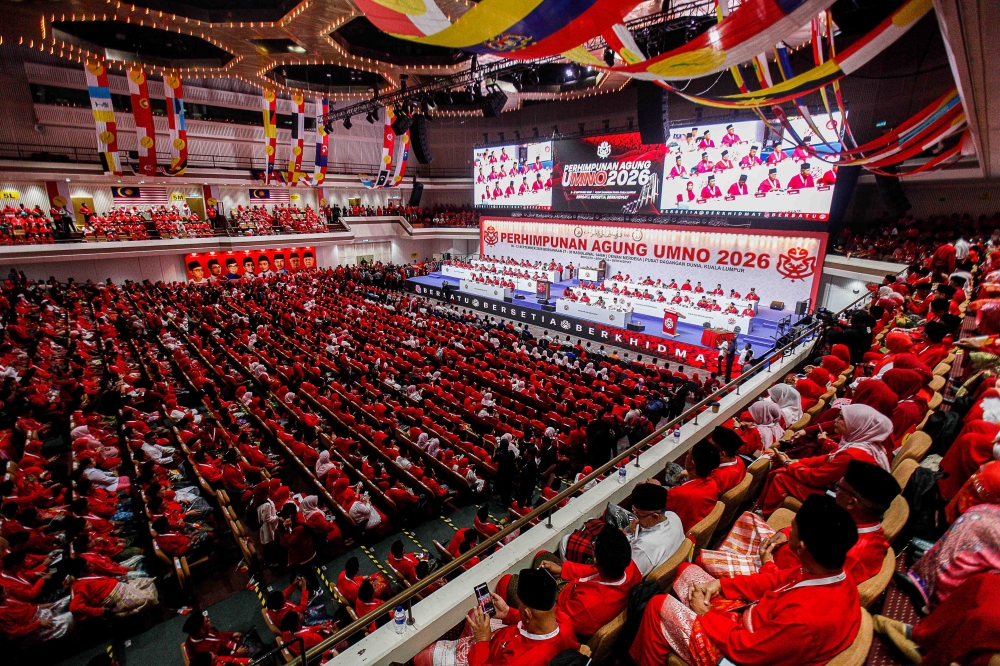
The recent Umno General Assembly, occurring around Malaysia Day, sparked controversy over faith and political sincerity.
Sepang division chief Noorazli Said's misguided joke aimed to bolster support for party president Zahid Hamidi's dealings but backfired amid the party's quest for Muslim unity.
Noorazli's subsequent apology was criticized for lacking sincerity, highlighting the challenges of political communication and the complexity of genuine contrition in an era where apologies are often seen as obligatory.
The incident underscores the importance of sincere apologies in addressing past grievances and shaping the future political discourse.
SEPT 17 — As if on cue for Malaysia Day, Umno’s General Assembly last weekend produced a furore over faith and sincerity in a divisive time.
Sepang division chief Noorazli Said took the pulpit to assure members that party president Zahid Hamidi was clever in his dealings with Prime Minister Anwar Ibrahim and Pakatan Harapan.
Almost no one pays attention to a minor division chief’s political sermon with no national presence, so Noorazli does the predictable, he opts for a salacious joke to wrap his point.
Poor decision, considering the party is in religious frenzy to up its credential among Muslim population parties with the intention to benefit from communalism and equally to lead the community.
Umno wants to gain from PAS’ base support but ultimately it wants to rule the said congregation.
In the middle of all of that, priest and nun gags are unnecessary distractions. They are tirelessly trying to show that Muslim unity is the holy grail of national power while lifting up the multiculturalism that they also defend.
Noorazli’s faux pas invited much criticism.
I’ll pass on the religious examination, but I do have much to add to the apology — or non-apology the situation has produced.
For within it lies the question of sincerity, and the political communication dominant in the country.
Sorry seems to be the easiest word
In the Internet age where immediacy is imminent, apologies are never far away.
When mistakes are quickly and widely known, remorse and guilt follow as relentlessly.
In a different time, Umno division chiefs are less worried about how minorities react to their jokes. State media filters content, curates comprehension accompanied by messaging, and clarifies to the people like they are children.
Not now, not in this market.
Grandparents born around World War Two are remembered by grandchildren worried about their own elderly care in 2040. Between the dead and aging, is the Malaysian public setting the tone.
This is who Noorazli and all other politicians face.
The Umno Sepang chief issued an apology on September 14, 2026. Two days after his assembly exhortation. The reactions were not to his liking because 16 hours later he posted a follow-up which was a bit rebuttal, remonstration and disgust.
There are dimensions in both statements worth examining.
In the initial output, he outlined that the controversial bit was just an analogy, and if it hurt anyone, he apologises. And promised to be careful next time.
Many accused him of being insincere. I’d accuse him of not actually delivering an apology since he prefaced it with “if I hurt anyone, then I’m sorry.” Which sounds a lot like, “I don’t want to upset you, the people who can vote for me and the party, so if an apology will make you feel better, then I will let you have an apology, so you feel better.”
It appears Noorazli was expecting for his effort to be praised, not ridiculed by so many. Which made him release his tirade about no one being in the position to judge sincerity. Political determinations should not evaluate his words.
Except, there is one thing. Did he actually apologise?
Not marking him out, or just his party. Even Prime Minister Anwar Ibrahim in July apologised for his “illegal temples” reference. Years back he made derogatory statements about Indians .
https://www.malaymail.com/news/opinion/2023/12/28/anwars-tanjung-malim-k-gaffe/109500
And currently, Zahid himself has been cast as a tad offensive speaking publicly about Umno Wanita Chief Noraini Ahmad’s slimmed down figure and ageing.
A good time to ask ourselves in a time where it is so super easy to say sorry, dissect its purpose.
When we say sorry, it’s not about us. It is about the person, community, party or minority the apology is directed to.
Recriminations can continue for a duration depending on the harm, the intention and reactions from the aggrieved.
At times, apologies require repetition due to the scale of the affront.
In a few cases, apologies are never accepted. That’s just how it goes.
I have yet to hear a Malaysian politician say sorry without qualification.
That is where the sincerity sits. Contrition is about regret, humility and restitution.
There are no rules to apologies. As in when a group or person apologises, the affected have to find it in themselves to accept the apology. As I said, apologies are about those hurt. Those who hurt are not owed a positive reaction.
Noorazli’s situation is bad, extremely bad in the Malaysian context. It’s a gaffe. It may not have the longstanding effects of things like forest fires, land clearing, or voter fraud or failing schools, but it is visceral.
A large assembly asked to laugh about examples which do not apply to those in the hall but do to many outside the trade centre.
When apologies are whole and not put out with technicalities, they do sound more sincere. When they are made in person, rather than in a social media post, they carry more weight.
This is a federation with a deep harrowing past, often buried.
The Internet unearths them one by one, and there is nothing those in power can do.
What is in their hands are choices. Either deflect, feign ignorance or water them down — which appear increasingly foolish as the machines gather momentum — or find the courage to confront them and own the past. And when mistakes and errors were made, acknowledge them and apologise.
Apologies do not solve the past, they shape the future.
They certainly are not quid pro quo.
Malaysia Day: We must be the Malaysians we wish we were
Always minus someone: WhatsApp’s side-chat/gossip
Adam Wingard returns to his trashy genre roots with ‘Onslaught’
Masked gang steals up to RM1m in second robbery at Kedah goldsmith
Perak worst hit as 28 areas nationwide turn unhealthy
Police probe 14-year-old driver after he crashes into two cars in Perai
最近在马来西亚日前后举行的巫统大会引发了关于信仰和政治诚意的争议。
雪邦区主席努拉兹利·赛义德开了一个玩笑,本意是想加强对党主席扎希德·哈米迪的支持,但在这个党寻求穆斯林团结的过程中却适得其反。
努拉兹利随后的道歉因缺乏诚意而受到批评,这凸显了政治沟通的挑战,以及在道歉往往被视为义务的时代,真正悔过之情的复杂性。
这一事件凸显了真诚道歉在解决过去的恩怨和塑造未来政治话语方面的重要性。
9月17日——仿佛是为了迎接马来西亚日,巫统上周末的全体大会在分裂的时代引发了关于信仰和真诚的激烈争论。
雪邦区部主席诺拉兹里赛义德在讲坛上向党员保证,该党主席扎希德·哈米迪在与总理安瓦尔·易卜拉欣和希盟打交道时很聪明。
几乎没有人会关注一个在全国范围内都没什么影响力的次要部门主管的政治说教,所以努拉兹利不出所料地选择用一个下流的笑话来总结他的观点。
考虑到该党正处于宗教狂热状态,试图提高其在穆斯林群体中的声望,意图从社群主义中获益并领导社群,这是一个糟糕的决定。
巫统希望从伊斯兰党的基本盘中获益,但最终目标是统治该党。
在这一切之中,关于神父和修女的笑话纯属不必要的干扰。他们不遗余力地试图表明,穆斯林团结是国家力量的圣杯,同时又在宣扬他们所捍卫的多元文化主义。
努拉兹利的失言招致了很多批评。
我不会接受宗教方面的考核,但对于这场风波所引发的道歉——或者说不道歉——我有很多话要补充。
因为这其中蕴含着真诚的问题,以及该国占主导地位的政治沟通方式。
抱歉似乎是最容易说出口的话。
在信息即时性至关重要的互联网时代,道歉也总是如影随形。
当错误很快被广泛知晓时,懊悔和内疚也会随之而来,挥之不去。
在过去,巫统区部主席们不必太在意少数族裔对他们玩笑的反应。官方媒体会筛选内容,精心策划解读,并配以特定的信息传递方式,像对待孩子一样向民众解释。
现在不行,在这个市场环境下不行。
二战前后出生的祖父母,在2040年被担心自己老年生活问题的孙辈们所铭记。在逝者和老龄化之间,马来西亚公众正在定下基调。
这就是努拉兹利和其他所有政治人物所要面对的。
巫统雪邦主席于2026年9月14日发表道歉声明,距离他在大会上的动员讲话仅两天。然而,公众的反应并不如他所愿,16小时后,他又发布了一篇后续声明,其中夹杂着反驳、抗议和厌恶之情。
这两个说法都包含值得探讨的层面。
在最初的声明中,他明确指出那段引发争议的内容只是一个比喻,如果冒犯了任何人,他深表歉意,并承诺下次会更加谨慎。
许多人指责他缺乏诚意。我认为他根本就没真正道歉,因为他先是说了句“如果我伤害了任何人,我很抱歉”。这听起来很像:“我不想让你们这些可能投票给我和我们党的人不高兴,所以如果道歉能让你们感觉好些,那我就道歉,让你们感觉好些。”
看来努拉兹利原本期望自己的努力能得到赞扬,而不是遭到这么多人的嘲笑。这让他发表了一番激烈的言论,声称没有人有资格评判真诚。政治因素不应左右他的言论。
但有一件事,他真的道歉了吗?
并非针对他本人,也并非针对他的政党。就连总理安瓦尔·易卜拉欣也在7月份为他关于“非法寺庙”的言论道歉。多年前,他也曾发表过贬低印度人的言论。
https://www.malaymail.com/news/opinion/2023/12/28/anwars-tanjung-malim-k-gaffe/109500
目前,扎希德本人也因公开谈论巫统妇女组主席诺莱妮·艾哈迈德的苗条身材和衰老而被认为有些冒犯。
在如今这个说“对不起”如此容易的时代,我们不妨好好反思一下“对不起”的意义。
当我们道歉时,这不是为了我们自己,而是为了我们所道歉的个人、群体、政党或少数群体。
相互指责可能会持续一段时间,具体取决于伤害的程度、意图以及受害人的反应。
有时,由于冒犯的程度,道歉需要重复多次。
有些情况下,道歉永远不会被接受。事情就是这样。
我至今还没听过哪个马来西亚政治人物毫无保留地说“对不起”。
真诚就在于此。忏悔包含着悔恨、谦卑和弥补。
道歉没有固定的规则。就像当一个团体或个人道歉时,受影响的人必须自己决定是否接受道歉。正如我所说,道歉是为了那些受到伤害的人。伤害他人的人并不理应得到积极的回应。
努拉兹利的处境很糟糕,在马来西亚的背景下,情况极其糟糕。这是个重大失误。它或许不会像森林火灾、土地开垦、选举舞弊或学校办学失败那样造成长期影响,但它的后果却触目惊心。
一大群人被要求对一些不适用于会场内的人,但适用于贸易中心外许多人的例子一笑置之。
真诚的道歉,如果内容完整,不拘泥于形式,听起来会更坦诚。当面道歉,而不是在社交媒体上发帖,也更有分量。
这是一个有着一段痛苦不堪的过往的联邦,这段过往往往被掩埋。
互联网将它们一一揭露出来,而当权者却无能为力。
他们面临的是选择。他们可以选择回避、装作不知情或淡化处理——但随着机器运转速度的加快,这些做法显得越来越愚蠢——或者鼓起勇气直面问题,承担起过去的责任。如果犯了错误,就应该承认并道歉。
道歉并不能解决过去的问题,但它可以塑造未来。
它们之间绝对不是利益交换。
马来西亚日:我们必须成为我们希望成为的那种马来西亚人
总是漏掉某人:WhatsApp 的闲聊/八卦
Adam Wingard携《Onslaught》回归其垃圾摇滚的根源
蒙面团伙在吉打州金匠铺第二次抢劫,劫走高达100万令吉。
霹雳州受灾最严重,全国28个地区健康状况恶化
警方正在调查一名14岁司机在北海撞上两辆汽车的案件。