In a world of drones, Ukraine’s artillerymen rushed to defend Kharkiv在无人机横行的世界里,乌克兰炮兵迅速赶赴哈尔科夫进行保卫战。
The tide is turning, thanks in no small part to donated Western arms like the venerable M777 towed howitzer, but their effectiveness has taken a hit.
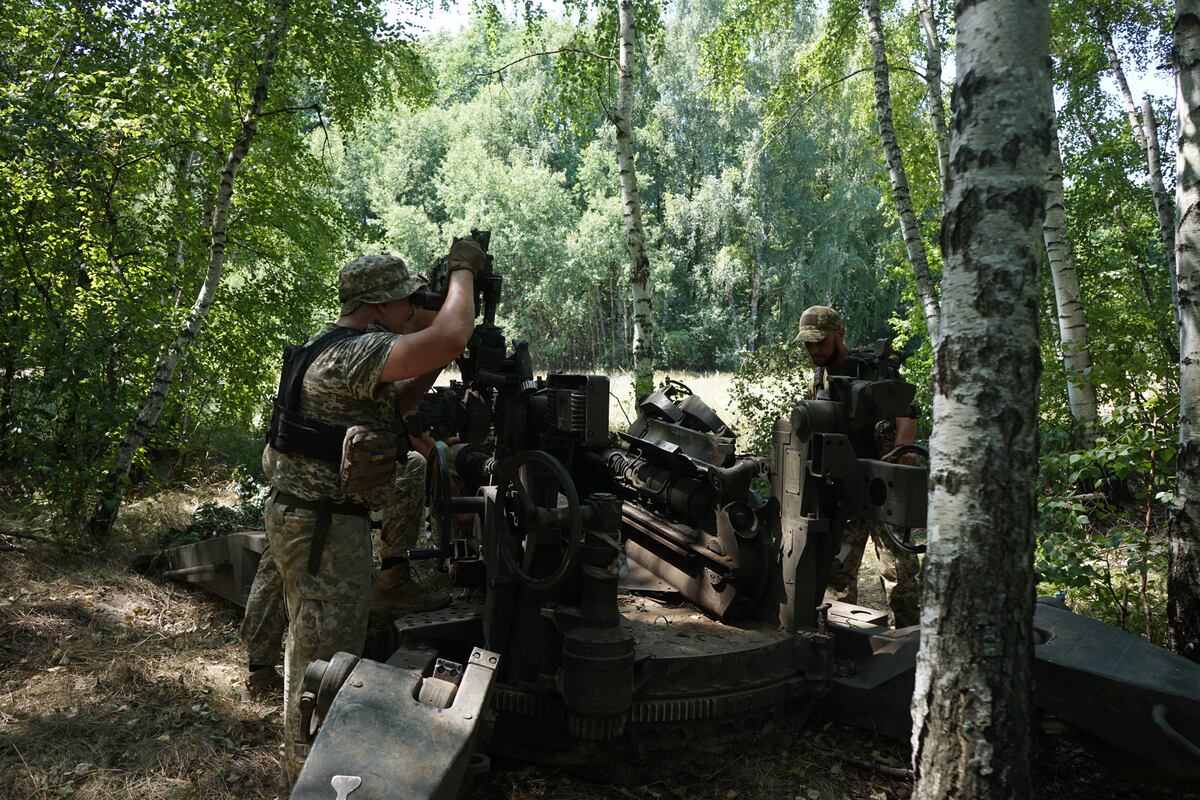
KHARKIV OBLAST, Ukraine — After tough months of fighting, Ukraine’s troops have been pushing Russian forces back in Kharkiv Oblast. “The situation is a little bit better … but we still fire one shell for every ten of theirs,” said Roman, an artillery gunner with the 406th Artillery Brigade, who gave only his first name in keeping with Kyiv’s military regulations.
A reporter visited troops at a staging base outside of Kharkiv city in late July, near where Russia’s military opened a new front line in May of this year. The assault caused near panic among Ukrainian forces, as Russian forces pushed over the border and steamrolled weak Ukrainian defenses.
A determined defense by some of Ukraine’s best troops halted the Russian advance at the towns of Vovchansk and Lyptsy. Now, the tide is turning, thanks in no small part to donated Western arms like the towed M777 howitzer, a weapon considered a relic of past wars just a few years ago.
The M777′s had their own special type of advanced ammunition that was initially used to great effect. Artillery units fired GPS-guided Excalibur shells with pinpoint accuracy, taking out crucial Russian nodes and complicating the invaders’ advances. Meanwhile, in Washington, U.S. officials loosened caveats that had previously prevented Ukrainian forces to target Russian units shooting across the border, lifting a key limitation on organizing defenses here.
Vitali Sarantsev, a Ukrainian military spokesperson, said: “It gave us the chance to hold them, and slow their advance. They don’t feel comfortable on border territories, so they can’t mass troops without big problems. Basically, it gives [us] an opportunity to destroy them deeply into their territory , so they can’t properly prepare.”
By now, however, Russians forces have managed to throw a wrench into the calculus of Western high-tech weaponry working its magic. Russian electronic warfare systems have vastly improved, and they are now able to jam technology like the one guiding Excalibur.
Without a satellite connection, the vaunted rounds amount to expensive pieces of metal. “It is firing but it is not exploding,” said Roman. “So, it lands, and it is like a dud.”
The M777′s still use standard, unguided explosive rounds, making them an important weapon. But they do not have the outsized impact they did when they were first introduced.
The wider significance of this is that Western assumptions about technological superiority have a limited shelf life here.
Recently introduced ATACMS missiles, supplied by the United States, are still working, but many analysts believe it is just a matter of time until the Russians discover countermeasures to these most advanced technologies.
“Warfare is about the speed of adaptation,” former Air Marshal Edward Stringer, a British Defense official, told the Wall Street Journal . “If you drip-feed an antibiotic weekly, you’ll actually train the pathogen — and we have trained the pathogen. … We didn’t need to give them that time, but we did.”
The NATO standard weapons still have an important advantage over their older, Soviet counterparts. For one, they are lighter, and more maneuverable – Ukrainian soldiers pack and unpack an M777 in and out of firing positions in about 90 seconds. When not firing, the equipment is meticulously camouflaged.
But the artillerymen here predict the days of their weapons are numbered. When Ukraine was suffering from a huge ammunition shortage, mainly due to a deadlock in the U.S. Congress and a reluctance by Republicans to approve additional military aid, Ukraine plugged the gaps in its artillery consumption with drones. Now the skies over the battlefield are saturated with Mavics, first-person-view drones, Vampyrs and all types of cheap gadgetry, many of them repurposed from civilian models that can be bought on Amazon.
Aerial drones have become so omnipresent on the battlefield that they match artillery in the amount of enemy armor destroyed and fighters killed. Crucially, they also don’t depend on the domestic political whims of Ukraine’s Western allies.
The soldiers here claim that there are still many advantages to artillery over drones. For example, artillery can hit targets much more quickly, and the shells have enough explosive power to crack armored vehicles. In addition, a hail of artillery is utterly terrifying, dealing a profoundly shocking effect on enemy morale that drones cannot yet match.
While the Ukrainians have stabilized the frontlines near Kharkiv, Russian forces are on the march elsewhere.
They have recently made territorial gains in the Donetsk region and have pushed close to the crucial logistics hub of Pokrovsk. Moscow’s forces have taken enormous casualties but appear to be able to afford them.
“As long as we have enough ammunition here, we will be fighting until the victory,” Roman, the artillery commander says.
It is a familiar refrain, repeated dozens of times on this battlefield. Every time, it is said more wearily, and slightly less hopefully than the last. When we ask the soldiers what they need from the West, the answer is the same all around: shells .
The soldiers here have accepted the logic of a bitter war of attrition, where one side will grind down the other. Despite that dynamic, none of the service members interviewed here are ready to entertain the thought of a peace deal that would cede Ukrainian territory to Russia – or at least nobody will admit to it.
A poll from the Kyiv International Institute of Sociology showed that more than 30% of Ukrainians were now willing to consider giving Ukrainian territory to Russia for an end to the fighting.
Roman’s soldiers were contemptuous of this idea. When asked what he thought of people who suggested ceding territory for peace, one of them grinned and said, “I want to punch those people in the face.”
Meanwhile, in Kharkiv city, urban Ukrainian life continues. A bridal party that had just celebrated a wedding – a half-hour affair for close friends and family so as to not present a target for Russian missiles – could be seen in the streets on a warm evening in late July, as the sounds of birdsong and casual conversation mixed with the wail of an air raid siren in the background.
These worries didn’t deter large crowds from packing into bars and clubs lining Kharkiv’s main streets. “If a bomb fell in the street next to us, people would turn their heads to have a look, and then go back to their partying,” one reveler said.
The fight for their right to party here is entirely down to men like Roman holding the frontline against a seemingly unending stream of Russian soldiers.
乌克兰哈尔科夫州——经过数月的艰苦战斗,乌克兰军队已将俄军在哈尔科夫州击退。“情况略有好转……但我们仍然只有对方十发炮弹的一半,”第406炮兵旅的一名炮兵罗曼说道。根据基辅的军事规定,他只透露了自己的名字。
7月下旬,一名记者走访了位于哈尔科夫市郊外一处集结地的部队。今年5月,俄罗斯军队在该地附近开辟了一条新的战线。俄军越过边境,迅速突破乌克兰薄弱的防线,这一进攻几乎令乌克兰军队陷入恐慌。
乌克兰精锐部队的顽强抵抗阻止了俄军在沃夫昌斯克和利普齐两座城镇的推进。如今,战局正在逆转,这在很大程度上要归功于西方捐赠的武器,例如M777牵引式榴弹炮——这种武器几年前还被认为是过去战争的遗物。
M777自行榴弹炮配备了特制的先进弹药,初期使用效果显著。炮兵部队发射的GPS制导“神剑”(Excalibur)炮弹精准无比,摧毁了俄军的关键据点,阻碍了入侵者的推进。与此同时,在华盛顿,美国官员放宽了此前限制乌克兰军队打击越境俄军的限制,解除了乌克兰境内防御组织的一个关键限制。
乌克兰军方发言人维塔利·萨兰采夫表示:“这给了我们阻挡他们、延缓他们推进的机会。他们在边境地区缺乏安全感,所以无法轻易集结兵力。基本上,这给了我们深入敌后消灭他们的机会,让他们无法做好充分的准备。”
然而,如今俄罗斯军队已经设法干扰了西方高科技武器发挥其威力的战略。俄罗斯的电子战系统已经大幅改进,现在能够干扰类似“神剑”导弹所采用的制导技术。
如果没有卫星连接,这些备受吹捧的炮弹就只是一堆昂贵的金属。“它能发射,但不会爆炸,”罗曼说。“所以,它落地后就跟哑弹一样了。”
M777型自行榴弹炮仍然使用标准的非制导爆炸弹,这使其成为一种重要的武器。但它们的影响已不如刚问世时那么巨大。
这件事更广泛的意义在于,西方关于技术优越性的假设在这里是有限的。
美国最近推出的ATACMS导弹目前仍在服役,但许多分析人士认为,俄罗斯人找到应对这些最先进技术的反制措施只是时间问题。
“战争的关键在于适应的速度,”英国国防官员、前空军元帅爱德华·斯特林格告诉《华尔街日报》。“如果你每周滴灌抗生素,实际上就是在训练病原体——而我们已经训练了病原体……我们本不必给它们那么多时间,但我们还是这么做了。”
北约制式武器相比老旧的苏联同类武器仍然具有显著优势。首先,它们更轻便、更灵活——乌克兰士兵只需约90秒即可将M777自行装卸至射击阵地。不使用时,这些装备会被精心伪装起来。
但这里的炮兵预言,他们的武器即将退出历史舞台。乌克兰曾因美国国会陷入僵局,共和党人不愿批准额外的军事援助,导致弹药严重短缺。为了弥补炮兵火力缺口,乌克兰转而使用无人机。如今,战场上空充斥着 Mavic 系列无人机、第一人称视角无人机、Vampyr 系列无人机以及各种廉价装备,其中许多都是从亚马逊上就能买到的民用机型改装而来。
无人机在战场上的应用已如此广泛,其摧毁敌方装甲车辆和击毙敌方人员的数量已与火炮不相上下。更重要的是,它们不受乌克兰西方盟友国内政治局势的影响。
这里的士兵声称,火炮相比无人机仍然有很多优势。例如,火炮可以更快地击中目标,而且炮弹的爆炸威力足以摧毁装甲车辆。此外,密集的炮火令人胆寒,对敌军士气造成的打击是无人机目前无法比拟的。
虽然乌克兰军队已经稳定了哈尔科夫附近的战线,但俄罗斯军队正在其他地区推进。
他们最近在顿涅茨克地区取得了领土进展,并已逼近重要的后勤枢纽波克罗夫斯克。莫斯科军队伤亡惨重,但似乎能够承受这些损失。
“只要我们这里弹药充足,我们就会战斗到胜利为止,”炮兵指挥官罗曼说道。
这句熟悉的口号在这片战场上重复了数十遍。每一次,都比上一次更加疲惫,也更加绝望。当我们问士兵们需要西方提供什么时,得到的答案千篇一律:炮弹。
这里的士兵已经接受了残酷消耗战的逻辑,即一方要将另一方彻底击垮。尽管如此,接受采访的军人中没有一个人愿意考虑任何将乌克兰领土割让给俄罗斯的和平协议——至少没有人会承认这一点。
基辅国际社会学研究所的一项民意调查显示,超过30%的乌克兰人现在愿意考虑将乌克兰领土割让给俄罗斯,以结束战斗。
罗马的士兵们对这种想法嗤之以鼻。当被问及对那些提议以割让领土换取和平的人有何看法时,其中一人咧嘴一笑,说道:“我真想揍那些人一顿。”
与此同时,在哈尔科夫市,乌克兰的城市生活仍在继续。七月下旬一个温暖的傍晚,街头可以看到一群刚刚庆祝完婚礼的新人——这场婚礼只邀请了亲朋好友参加,时长半小时,以免成为俄罗斯导弹的目标。鸟鸣声和人们的闲聊声与远处空袭警报的尖啸声交织在一起。
这些担忧并未阻止大批人群涌入哈尔科夫主要街道两旁的酒吧和夜总会。“如果炸弹落在我们旁边的街道上,人们只会回头看看,然后继续狂欢,”一位狂欢者说道。
他们在这里争取聚会权利的斗争,完全取决于像罗曼这样的人坚守前线,抵御看似无穷无尽的俄罗斯士兵。