How celebrated chef Prateek Sadhu turned Naar into India’s coolest restaurant名厨 Prateek Sadhu 如何将 Naar 打造成印度最酷的餐厅
Tucked in the Himalayan foothills, this gorgeous Indian eatery is celebrated chef Prateek Sadhu's heartfelt ode to Himalayan cuisine.
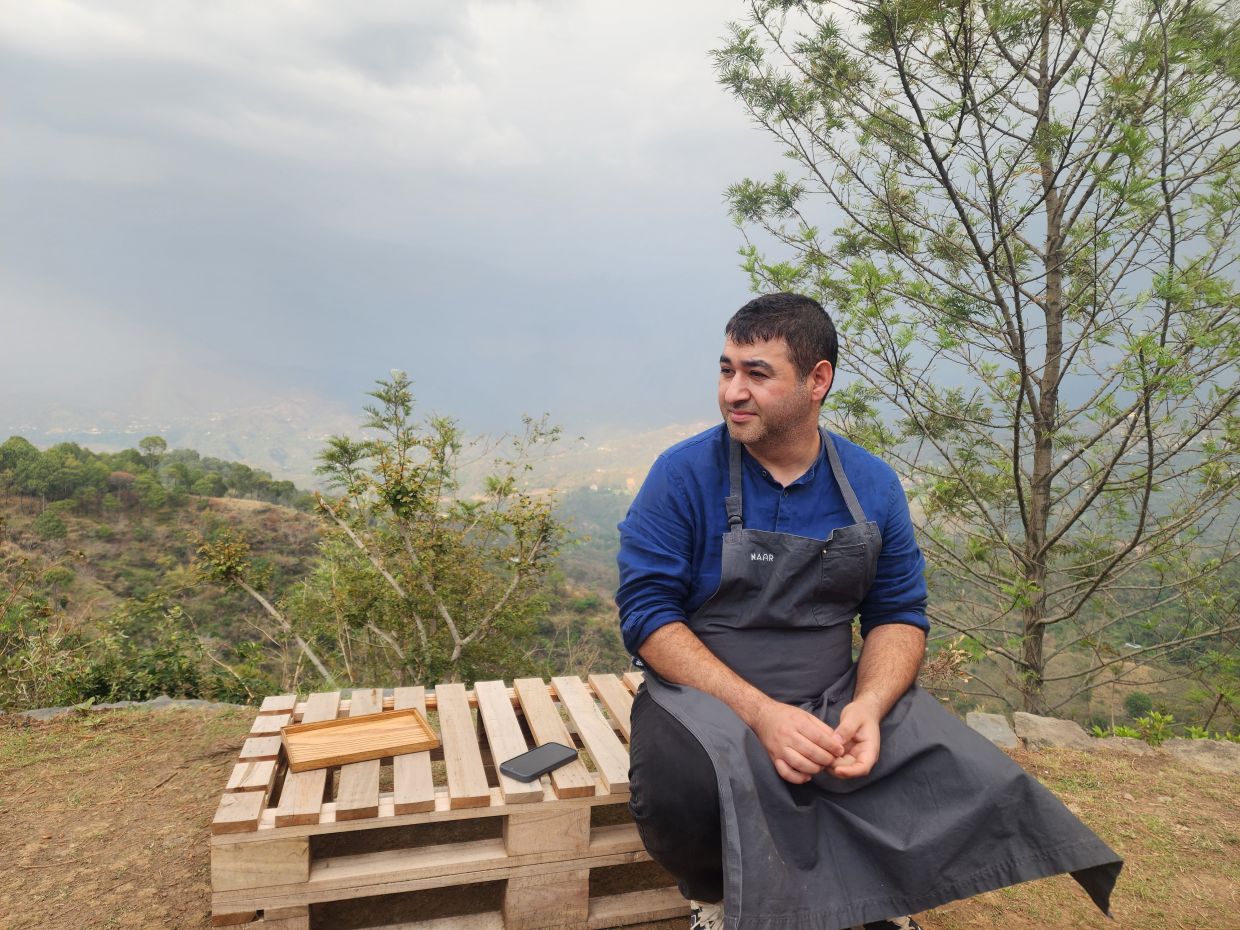
Perched in a gorgeous mountainous area, Naar is Prateek's ode to the micro-regional cuisine of the Himalayas.
There is destination dining and then there is Naar. Nestled in a tiny place called Kasauli on the Himalayan foothills in India’s Himachal Pradesh region, the restaurant is a good three-hour drive away from Chandigarh, the city that is closest to it.
To get there, you’ll have to drive through sloping mountain roads, encountering steep hairpin bends and increasingly wild, rugged terrain once you pass the two-hour mark.
It’s a soul-awakening, sensory journey – one filled with lush, panoramic vistas and charming scenes straight out of a Bollywood epic – fat-plaited children running down the hills, men in thick sweaters hunched over hot cuppas, tiny little shops selling all sorts of curious things – and the pinnacle of this visual feast: the 16-seater restaurant itself.
The stunning, panoramic view diners will encounter when they dine at Naar.
Naar is the brainchild of visionary chef Prateek Sadhu, who previously helmed Masque in Mumbai (now India’s highest-ranked restaurant on the Asia’s 50 Best Restaurants 2026 list).
Prateek hails from Kashmir in the northwestern part of the Himalaya mountain range and it is this strong connection to the Himalayas that fostered an interest in crafting a sustainability-driven restaurant nestled in a mountainous region with the Himalayas serving as both backdrop and canvas.
Prateek opened Naar alongside his wife Aashina Kaul, a former movie marketing specialist who worked with top Bollywood stars like Shah Rukh Khan before moving to the mountains to help run the restaurant’s operations. Rounding out the team is seasoned hospitality maven and Prateek’s long-time friend Akshay Tripathi as well as Deepak Gupta, the owner of the sustainable boutique lodge Amaya – where Naar is physically located.
Prateek grew up in Kashmir and created Naar out of a deep love and respect for the produce and cuisine of the Himalayas.
Naar has seen its star on the ascent since it first opened its doors in 2023. In 2024, it was named one of Time magazine’s ‘World’s Greatest Places’ and this year, it emerged at No 30 on the Asia’s 50 Best Restaurants 2026 list.
Naar’s charm is half-location, half-what-Prateek-has-done-with-the-location. The restaurant is perched on a little elevated enclave, surrounded by paradisiacal views of the lush green mountains, pristine waterways and hinterlands beyond. This magical aura is gilded by the cool, crisp mountain air that wends its way throughout the area.
The immediate surrounds are about 25 acres and part of this make-up is a working farm which cultivates 80% of the vegetables and fruits that appear on the menu, from turnips to cabbages, spinach, mustard leaves and different kinds of gourds and pumpkins, to name a few.
Nearly 80% of the fruits and vegetables on Naar's menu is grown on-site on a purpose-built farm.
The region is known for being the mushroom capital and fruit bowl of the country – wild mushrooms like lion’s mane, morel and shiitake can be found aplenty as well as various kinds of berries, apples and peaches.
Everything is harvested seasonally – in winter, there are citrus fruits, in summer, there are berries. Whatever cannot be grown on-site is sourced from local villages – like wheat, rice and chicken.
Every day before the start of service, the team also forages the surrounding areas like scavengers on a treasure hunt for native produce, like Himalayan golden raspberries as well as edible flowers and garnishes – many of which are scattered through the wild.
“This is sorrel fruit – it’s very sour so we make chutneys out of it,” says executive chef Kamlesh Negi, spotlighting a bright red calyx while walking through the area.
Every day, the team at Naar forages the surrounding areas for fresh seasonal ingredients.
Kamlesh has been Prateek’s right-hand man for the last 14 years – a relationship Prateek champions by fondly calling him his “work wife”.
Although the practice of foraging and farming has been around for thousands of years in Indian civilisation, it is relatively new (and rare) in terms of being the foundational force of a restaurant’s operations. Even on a global scale, only a handful of restaurants in the world operate this way.
“With restaurants, obviously in urban cities you do not find farms and stuff like that. It’s just concrete jungles. So here the intention was just to go back in terms of what has been happening for a long time and concurrently also showcase the cuisine of the Himalayan belt.
Prateek (left) is Naar’s culinary brainchild while Kamlesh (centre) is his right-hand man and Akshay (right) is his long-time friend and collaborator at Naar.
“Because unfortunately, the generalisation of Indian food is around only those 10 or 12 dishes from North and South India. And wherever you go, if you say, ‘I want to have Indian food’, the Indian food is either butter chicken or naan or dosa and idli and that kind of stuff. It’s just 10 dishes going round and round in the world,” says Prateek.
Prateek’s determined focus on micro-regional cuisine is also what has given Naar a huge point of differentiation. You won’t find anything on the restaurant’s menu anywhere else. In fact, there’s a pretty high chance you’ve never even heard of half the things on your plate.
And it isn’t just the food that is eye-opening; the restaurant’s incredibly talented in-house sommelier Sonakshi Soni also has a particular gift for uncovering Indian wines that pair remarkably well with Indian ingredients, providing an experience that deftly weaves together terroir and tipples in seamless harmony.
Sonakshi is a gifted sommelier with a particular talent for pairing Indian wines with Himalayan-forward cuisine.
As a result, you could indulge in a range of homegrown alcoholic beauties like Fratelli Wines Shiraz Rose, a fizzy, buzzy, happy introduction to what India has the capacity to produce.
The Source Chenin Blanc Reserve 2023 wine from India’s Nashik Valley meanwhile is a premium oak-aged white wine that has lively citrus elements juxtaposed against fruity pineapple-tinged nuances in what proves to be a rich, lush odyssey from which you’ll emerge thoroughly impressed.
The food menu meanwhile is built on the range of ingredients that grow wild in the area or are cultivated for the restaurant. So you might find all sorts of off-the-beaten-track Indian fare like Kachori or lamb brain with black pepper jam and yoghurt sauce; or Sharjen – a delicious pairing of duck and nettle leaves that leaves a lingering impression on the palate.
The menu at Naar is made up nearly entirely of the micro-regional produce and cuisine of the Himalayas.
Naar’s Dirty Toast has been on the menu since the restaurant’s inception and it isn’t hard to see why. Trout was introduced to the region by the Scottish and as a result, the fish has proliferated in the area and is widely consumed.
In this iteration, the trout on toast is accentuated by mustard emulsion, smoked apple chutney, wood oil and sea salt in what is likely to be one of the most decadent yet simultaneously hearty, wholesome toasts you’re likely to experience.
The Utterakhand staple of Sundarkala, or traditional hand-rolled wheat noodles features in a stand-out dish marrying lamb gyuma (traditional Tibetan blood sausage made using lamb intestines, blood and indigenous spices). The dish is deeply rooted in the culinary traditions of the Himalayas and in Prateek’s iteration, it is paired with a timru broth (a wild thorny shrub from the citrus family native to the Himalayas) in what results in a stand-out constellation of flavours and textures that marries acidity with heaty, meaty overtures and noodles to foster a closer bond.
Sundarkala or hand-rolled wheat noodles are paired with lamb gyuma and timru broth in what proves to be a mind-blowing dish of epic proportions.
A warm, homey shared meal is a key part of the savoury epilogue – using Swarna rice (Indian medium to short grain rice) alongside a morel dish that utilises morels sourced from the surrounds as well as a smoky, unctuous dish of barbecued pork.
It is a collaborative meal that displays Naar’s philosophy to fullest effect – drawing from the bounty of the region, paying respect to it and eking out the best flavours from each ingredient with the mastery of a captain leading his ship through uncharted waters only to discover treasure in the process.
The savoury part of the meal features Indian Swarna rice, morels and barbecued pork entirely sourced and inspired by the Himalayas.
Naar has rightfully gained a reputation for going where few have gone before and striking the right chord in showcasing what can be achieved when a kitchen is able to harness the bounty of its natural surrounds and marry this successfully with the cuisine that is intertwined with this rich treasure trove of ingredients.
“The real Indian food is in the regions and the micro-regions. If you go to people’s homes around here, this is some of what they will be eating.
“So we thought – let’s tell the story we want to tell about the Himalayas through our food,” concludes Prateek.
Thank you for your report!
Inflation picks up as food and transport prices rise
Too weak, too strict: India's food warning labels draw fire from all sides
Indonesian officials suspect food poisoning from free school meal after more than 500 fall ill
Naar餐厅坐落在风景秀丽的山区,是Prateek对喜马拉雅山脉微区域美食的颂歌。
有一种餐厅是目的地餐厅,而Naar餐厅则独树一帜。它坐落在印度喜马偕尔邦喜马拉雅山麓一个名为卡索利的小镇上,距离最近的城市昌迪加尔也有三个小时的车程。
要到达那里,你必须驾车穿过倾斜的山路,在超过两小时后,你会遇到陡峭的急弯和越来越崎岖的地形。
这是一次唤醒灵魂、感官的旅程——充满了郁郁葱葱的全景和迷人的场景,仿佛直接出自宝莱坞史诗——扎着胖辫子的孩子们从山上奔跑下来,穿着厚毛衣的男人们弓着身子喝着热茶,小商店里出售各种奇奇怪怪的东西——而这场视觉盛宴的巅峰之作:就是那家可容纳 16 人的餐厅本身。
在 Naar 用餐时,食客们将欣赏到令人惊叹的全景。
Naar 是富有远见的厨师 Prateek Sadhu 的心血之作,他之前曾掌管孟买的 Masque 餐厅(该餐厅目前是 2026 年亚洲 50 佳餐厅榜单中印度排名最高的餐厅)。
Prateek 来自喜马拉雅山脉西北部的克什米尔,正是这种与喜马拉雅山脉的紧密联系,促使他萌生了在山区打造一家以可持续发展为导向的餐厅的想法,让喜马拉雅山脉既是餐厅的背景,也是餐厅的画布。
Prateek 与妻子 Aashina Kaul 共同创立了 Naar 餐厅。Aashina Kaul 曾是一名电影营销专家,与 Shah Rukh Khan 等宝莱坞巨星合作过。之后,她搬到山区,协助餐厅的运营。Naar 团队的其他成员还包括经验丰富的酒店业专家、Prateek 的老朋友 Akshay Tripathi,以及可持续精品度假酒店 Amaya 的老板 Deepak Gupta——Naar 餐厅就坐落于 Amaya 酒店内。
Prateek 在克什米尔长大,出于对喜马拉雅山脉的物产和美食的深深热爱和尊重,创立了 Naar 品牌。
自 2023 年开业以来,Naar 的知名度一路飙升。2024 年,它被《时代》杂志评为“世界最佳场所”之一,今年,它又在 2026 年亚洲 50 佳餐厅榜单中位列第 30 位。
Naar餐厅的魅力一半在于其优越的地理位置,一半在于Prateek对这片土地的巧妙利用。餐厅坐落于一处地势较高的小山丘上,四周环绕着郁郁葱葱的青山、清澈见底的河流以及更远处的内陆地区,景色宛如人间仙境。清凉的山间空气更增添了这片土地的迷人氛围。
餐厅周围约有 25 英亩土地,其中一部分是一个正在运营的农场,种植了菜单上 80% 的蔬菜和水果,例如芜菁、卷心菜、菠菜、芥菜叶以及各种葫芦和南瓜等等。
Naar 菜单上近 80% 的水果和蔬菜都是在餐厅专门建造的农场里种植的。
该地区以盛产蘑菇和水果而闻名,是全国的“蘑菇之都”和“水果之乡”——这里盛产猴头菇、羊肚菌和香菇等野生蘑菇,以及各种浆果、苹果和桃子。
所有作物都按季节收获——冬天有柑橘类水果,夏天有浆果。任何无法在农场种植的作物,例如小麦、大米和鸡,都从当地村庄采购。
每天开始服务之前,团队还会像寻宝的拾荒者一样在周围地区搜寻当地特产,例如喜马拉雅金树莓以及可食用的花卉和装饰物——其中许多都散落在野外。
“这是酸模果——它非常酸,所以我们用它做酸辣酱,”行政总厨卡姆莱什·内吉一边说着,一边走在菜区,指着一个鲜红的花萼。
Naar 团队每天都会在周边地区寻找新鲜的时令食材。
在过去的 14 年里,Kamlesh 一直是 Prateek 的得力助手——Prateek 非常珍惜这段关系,亲切地称他为自己的“工作妻子”。
尽管采集和耕作在印度文明中已有数千年历史,但将其作为餐厅运营的基础却相对较新(也较为罕见)。即使在全球范围内,也只有极少数餐厅采用这种运营模式。
“很显然,在城市里,你找不到农场之类的东西。那里只有钢筋水泥的丛林。所以,我们在这里的目的是回归过去,同时展示喜马拉雅地区的特色美食。”
Prateek(左)是 Naar 的烹饪创意,Kamlesh(中)是他的得力助手,Akshay(右)是他在 Naar 的老朋友和合作伙伴。
“因为很遗憾,人们对印度菜的普遍印象仅限于南北印度那十来道菜。无论你走到哪里,如果你说‘我想吃印度菜’,得到的要么是黄油鸡,要么是烤饼,要么是薄饼,要么是蒸米糕之类的。全世界就只有这十来道菜,”普拉蒂克说道。
Prateek 对微区域美食的执着追求也正是 Naar 餐厅脱颖而出的关键所在。你绝对找不到这家餐厅菜单上的任何菜品。事实上,你盘子里一半的菜品很可能你闻所未闻。
令人眼前一亮的不仅仅是食物;餐厅才华横溢的侍酒师 Sonakshi Soni 还特别擅长发掘与印度食材完美搭配的印度葡萄酒,从而带来一种将风土与美酒巧妙融合的体验。
索纳克希是一位才华横溢的侍酒师,尤其擅长将印度葡萄酒与喜马拉雅风味菜肴搭配。
因此,您可以尽情享用一系列本土酿造的佳酿,例如 Fratelli Wines Shiraz Rose,这是一款气泡丰富、口感欢快的佳酿,让您初步了解印度的酿酒能力。
与此同时,来自印度纳西克山谷的 Source Chenin Blanc Reserve 2023 是一款优质的橡木桶陈酿白葡萄酒,它充满活力的柑橘元素与带有菠萝味的果香交织在一起,带来丰富而浓郁的味觉体验,定会让您印象深刻。
与此同时,餐厅的菜单以当地野生食材或餐厅特意种植的食材为基础。因此,您可能会发现各种不常见的印度特色菜,例如卡乔里(Kachori)或羊脑配黑胡椒果酱和酸奶酱;又或是沙尔金(Sharjen)——鸭肉与荨麻叶的美味搭配,令人回味无穷。
Naar 餐厅的菜单几乎完全由喜马拉雅山脉的微区域农产品和菜肴组成。
Naar's Dirty Toast 自餐厅开业以来就一直是菜单上的招牌菜,原因显而易见。鳟鱼是由苏格兰人引入该地区的,因此,这种鱼在当地大量繁殖,并广受欢迎。
在这个版本中,吐司上的鳟鱼配以芥末乳液、烟熏苹果酸辣酱、木油和海盐,这可能是你所能体验到的最奢华、同时也最丰盛、最健康的吐司之一。
北阿坎德邦的主食桑达卡拉(Sundarkala),即传统的手工小麦面条,在这道特色菜肴中与羊肉吉玛(gyuma,一种用羊肠、羊血和当地香料制成的藏式传统血肠)完美融合。这道菜深深植根于喜马拉雅山脉的烹饪传统,在普拉蒂克(Prateek)的改良版中,它搭配了蒂姆鲁(timru,一种原产于喜马拉雅山脉的柑橘科野生带刺灌木)汤汁,最终呈现出风味和口感的绝妙组合:酸爽的口感与辛辣浓郁的肉香和爽滑的面条完美结合,令人回味无穷。
Sundarkala(手工擀制的小麦面条)与羊肉 gyuma 和 timru 肉汤搭配,这道菜堪称惊艳绝伦,令人叹为观止。
一顿温暖、温馨的共享餐是美味尾声的关键部分——用 Swarna 米饭(印度中短粒米)搭配羊肚菌菜肴(羊肚菌产自周边地区)以及烟熏味浓郁的烤猪肉。
这是一顿合作餐,充分展现了纳尔的理念——充分利用当地的物产,尊重当地食材,并以船长带领船只穿越未知海域,最终发现宝藏的精湛技艺,从每一种食材中榨取最佳风味。
这顿饭的咸味部分以印度金米、羊肚菌和烤猪肉为特色,所有食材均来自喜马拉雅山脉,其灵感也源自喜马拉雅山脉。
Naar 餐厅因其勇于探索鲜有人涉足的领域,并成功地展现了当一个厨房能够利用其自然环境的丰富资源,并将其与融合了这些丰富食材的烹饪技艺相结合时所能取得的成就,而赢得了应有的声誉。
“真正的印度美食存在于各个地区和小区域。如果你去这附近的人们家里走走,就会发现他们吃的正是这些食物。”
“所以我们想——不如通过我们的食物来讲述我们想讲述的关于喜马拉雅山的故事,”普拉蒂克总结道。
感谢您的报告!
食品和交通价格上涨,通货膨胀加剧。
力度不够,力度又不够:印度的食品警告标签招致各方批评
印尼官员怀疑免费校餐引发食物中毒,此前已有超过500人患病。