Del Toro aims to reinvigorate US shipping to strengthen fleet德尔托罗的目标是重振美国航运业,以增强船队实力。
The U.S. Navy secretary is warning the service won’t be able to fulfill its mission without a strong commercial counterpart. Enter: “maritime statecraft.”
WASHINGTON — The U.S. commercial maritime industry has long been shrinking.
From 1953 to 2016, the number of shipyards capable of building large, oceangoing military and commercial vessels declined from 30 to six, and their annual output declined from 60 to seven, according to an analysis of U.S. shipbuilding records .
Now, Navy Secretary Carlos Del Toro is raising the alarm, warning that the service won’t be able to fulfill its mission without a strong commercial counterpart.
A thriving maritime industry would mean more trained builders and maintainers the Navy could tap in the event of a crisis; more dry docks and construction facilities the service could leverage; and more investments in innovative tooling, technology and processes to build ships faster and cheaper.
And, chiefly, it would mean a larger fleet of American-built ships the military could call into service if a war broke out.
Del Toro wants to see this commercial maritime might become a reality through an emerging initiative he’s calling “maritime statecraft.”
He introduced the idea in a September speech at Harvard University , saying it “encompasses not only naval diplomacy but a national, whole-of-government effort to build comprehensive U.S. and allied maritime power, both commercial and naval.”
Del Toro told Defense News in a Nov. 13 interview the decline in commercial maritime capability “has exposed ourselves, as a nation, to shipbuilding, sealift and economic trade vulnerabilities.”
According to 2022 CIA estimates, China has 7,362 merchant ships, or commercial vessels engaged in carrying goods. The United States has 178.
The Chinese Coast Guard and a suspected Chinese militia ship block a Philippine Coast Guard ship near the Second Thomas Shoal on Nov. 10, 2023. (Joeal Calupitan/AP)
If war broke out, the United States could call 60 American merchant ships into service through its Maritime Security Program to supplement about 100 government-owned merchant ships that were mothballed but could return to service. They would help move military vehicles and materiel into a theater.
But China, which the Pentagon considers the greatest threat to U.S. security, has a far greater ability to compel private companies to support the military, and it has a significantly larger fleet of commercial ships to lean on.
Del Toro said the United States can no longer afford this imbalance.
“Maritime statecraft, basically, is a Department of the Navy effort to drive not just our own initiatives but a whole-of-government awareness, advocacy and action to rebuild the comprehensive maritime power of the nation in order to meet the challenges and opportunities we’re going to face as a maritime nation in the 21st century,” the secretary said.
Rebuilding American shipping
After decades of fewer yards building fewer ships, the American maritime industry requires revitalization and modernization, Del Toro explained. To achieve this, he said he’s working with his counterparts across the government to identify what the shipbuilding industry needs and how government can help.
In mid-November, he called a meeting with several other entities at the first-ever Government Shipbuilders Council in Baltimore, Maryland. Participants included the Army, the Office of the Secretary of Defense, the Coast Guard, the Maritime Administration, and the National Oceanic and Atmospheric Administration.
Days before the meeting, Del Toro said he hoped it would be the start of a “conversation about a whole-of-government vision for maritime statecraft.”
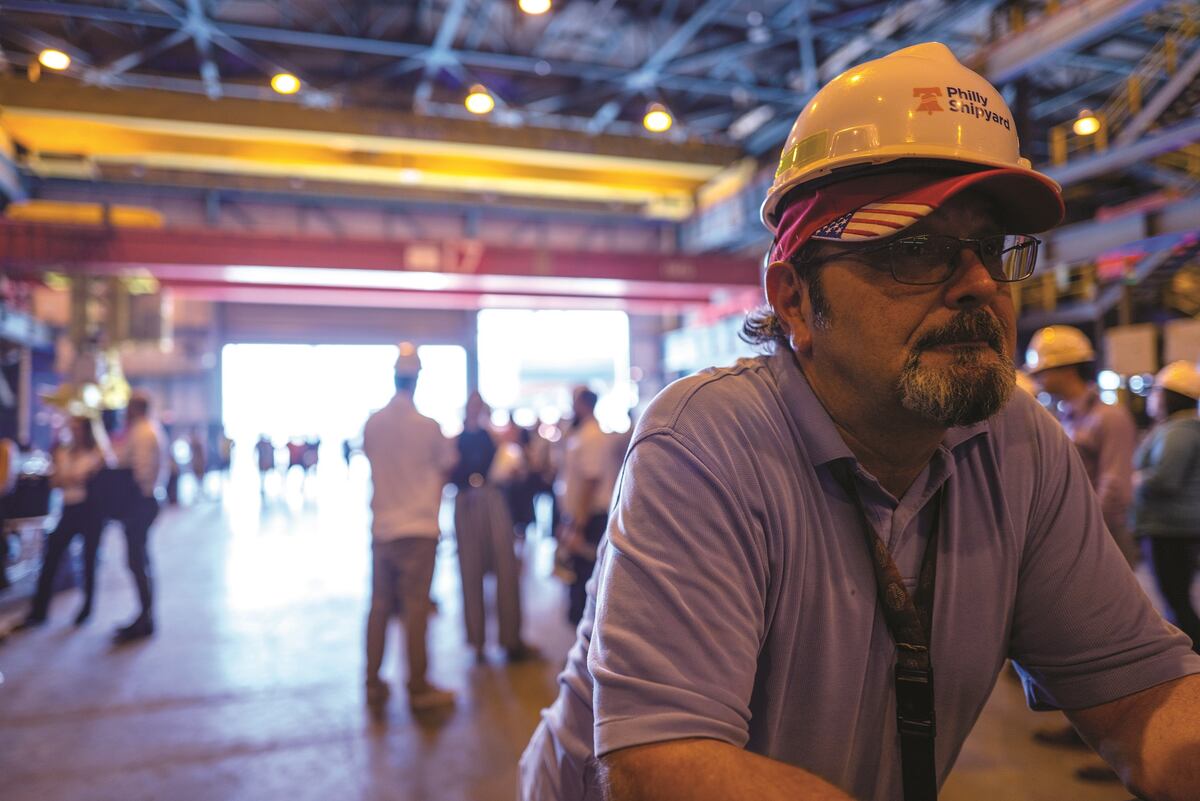
For example, he explained, the Maritime Administration successfully partnered with the Philly Shipyard to deliver the first national security multimission vessel on time and on cost in September.
Del Toro said other government agencies could leverage this program.
He also pointed to a tool left unused since the Reagan administration: “construction differential subsidies” to incentivize private companies to buy ships from American builders instead of cheaper foreign yards.
This provision of Title 46 of the U.S. Code, which allows the government to pay up to half the cost difference, hasn’t received funding since the early 1980s. But Del Toro said he and the Transportation Department’s secretary still have the authority to grant these subsidies, as long as he and the homeland security secretary certify there’s a national security need for a vessel.
“Initial funding, for example, for a single vessel — even if phased out over several years, since the accounts can be funded indefinitely — would send a powerful signal to shipbuilders that the program is being revived,” Del Toro said, though he did not address whether or how this might be incorporated into the fiscal 2025 budget.
The need for private capital
Del Toro, himself a businessman, has been encouraging private investors to spend money on small- and medium-sized shipyards and their suppliers.
His pitch: This is a worthwhile investment that would help the U.S. commercial shipbuilding sector assist the Coast Guard and the Navy in more rapidly building better and cheaper vessels.
While nothing concrete has come of these talks, Del Toro said he’s encouraged by the fact investors are “intrigued.”
Alabama shipbuilder Austal USA launched the expeditionary fast transport Newport into the Mobile River in 2020. (Courtesy of Austal USA)
He’s also looking for foreign investment in U.S. small- and medium-sized shipyards. As examples, he cited Australian company Austal’s purchase of its Austal USA yard in Alabama in 1999 and Italian company Fincantieri’s purchase of its Fincantieri Marinette Marine shipyard in Wisconsin in 2009.
“We’re still fully committed to the Jones Act,” which calls for American-built, -owned and -operated ships to move goods between American ports, he said. “But having said that, there are opportunities, I believe, as we continue to expand the commercial and naval marketplace — especially the commercial marketplace — for them to invest in some of our shipyards.”
Noting Japan and South Korea previously bought shipyards overseas, and then modernized and automated the facilities to a degree that far surpasses the capability of many American yards, Del Toro said “encouraging them to make investments here could be a powerful statement, if the business case allows it.”
Leveraging renewed maritime might
U.S. leaders have accused China of waging a governmentwide effort to threaten its neighbors at sea by using the People’s Liberation Army Navy, the Coast Guard and its maritime militia fleet of fishing vessels to harass foreign sailors operating in their nations’ exclusive economic zones while fishing, exploring the seabed for natural resources, and drilling for oil and gas.
Del Toro said the U.S. needs to be able to push back and help allies and partners deal with geopolitical, economic and climate-related challenges. He pointed to a 2020 incident in which Chinese ships harassed a West Capella drillship hired by Malaysia’s state-owned Petronas energy company to explore undersea oil and gas reserves.
“The U.S. 7th Fleet’s Task Force 76 began a remarkable prototype operation, pioneering a new approach to support our partners’ civilian vessels in standing up to China’s coercive maritime insurgency in the South China Sea,” Del Toro said in his September speech.
A U.S. Marine Corps MV-22 Osprey lands aboard the Royal Australian Navy landing helicopter dock HMAS Canberra during the Rim of the Pacific exercise in 2022. (Leading Seaman Matthew Lyall/Royal Australian Navy)
After U.S. Navy, U.S. Marine Corps and Royal Australian Navy forces “maintained a persistent presence in determined support of a partner’s sovereign, internationally recognized rights, China backed down,” he added.
To wield this greater naval might, Del Toro said the U.S. Coast Guard needs a bigger budget for more ships and operations, particularly in the Pacific. The Navy’s Military Sealift Command and the Transportation Department’s Maritime Administration will also play an increasingly large role in naval diplomacy and maritime statecraft, he added.
Internally, he said, the Navy is focused on closing gaps in its ability to operate and sustain itself overseas. He noted the service wants to increase its ability for Navy oilers to refill their stores from commercial tankers at sea instead of returning to a fuel depot ashore.
Additionally, he expects the Navy to demonstrate its ability to reload vertical launching system cells at sea next year, with a shore-based demonstration in the spring at Port Hueneme, California, followed by an at-sea demonstration in the summer.
Del Toro called these kinds of naval logistics “foundational” to the fleet’s ability to remain at sea in contested waters and conduct missions under the maritime statecraft banner.
An initiative without funding
Analysts praised Del Toro’s approach, but agreed there’s a lack of specifics.
Jerry Hendrix, a senior fellow at think tank Sagamore Institute, said the secretary set “the right aspirational goal.” However, “none of this is real until it’s in the budget, and I have not seen parallel statements from either [the deputy defense secretary] or [the defense secretary] on the maritime statecraft initiative.”
“Additionally, we haven’t seen anything out of the West Wing. Until a more senior sponsor comes alongside, this is an initiative without funding,” Hendrix added.
Secretary of the Navy Carlos Del Toro, center, visits the Coast Guard Academy on Oct. 13, 2023. (Petty Officer 2nd Class Taylor Bacon/U.S. Coast Guard)
Similarly, Brent Sadler, a senior research fellow in naval warfare and advanced technology at the Heritage Foundation think tank, said it’s unclear who within the Navy will own this strategy.
“The secretary asked for academics to research and help refine the ideas; this is needed, but not enough,” he explained.
Sadler added that Del Toro could start taking small actions now to implement maritime statecraft, particularly the naval diplomacy aspect.
He noted that using Navy and Coast Guard ships to protect allies’ and partners’ economic interests would reassure them they’re economically better off siding with the U.S. rather than China. Beijing has leaned heavily on its Belt and Road Initiative to invest in foreign ports and infrastructure as a means of gaining access and influence.
Furthermore, Del Toro could embed staff at the U.S. government’s International Development Finance Corp. to push for naval development projects, Sadler said, and could send Navy construction battalions to key Pacific island nations to improve ports, airfields and warehouses for fuel and ammunition storage.
“These would be seen quickly as bettering the local islanders’ livelihoods through improved tourism [and] trade as well as a foundation for future military operations — win-win,” he said.
Sal Mercogliano, who teaches at Campbell University and the U.S. Merchant Marine Academy, agreed that, given the Chinese government’s use of commercial and military assets for geopolitical purposes, the U.S. should do the same. Specifically, he said, growth in the commercial sector would generate a greater American presence overseas at a time when U.S. forces and other “hard power” fleets are focused on the Pacific theater but limited in how many ships they can keep forward deployed at any given time.
Mercogliano noted the secretary could follow up on his speech by attaching the Navy to the Maritime Administration’s National Security Multi-Mission Vessel program and ordering several more ships, which include large and reconfigurable spaces, to serve as hospital ships or tenders.
The secretary could also build on the success of that vessel’s acquisition model by leveraging it for new classes of sealift ships, the professor added.
And, Mercogliano said he’d like to see a written strategy that looks at both commercial and naval shipbuilding sectors — something lawmakers want, too. A November Congressional Research Service report notes “Congress has requested the executive branch formulate a national strategy toward achieving a competitive maritime industry four times in the last decade, most recently in December 2022 ... and has requested three Government Accountability Office reports on the subject.”
Del Toro told Defense News he is already taking action, noting the Government Shipbuilders Council meeting would craft a path forward for government spending in the maritime sector in 2024 and beyond.
He added that he hopes activities already happening in the background will yield results in 2024, including visits to foreign shipyards and to small- and medium-sized yards in need of investment, as well as efforts to encourage large shipbuilders to outsource more work to smaller builders.
“We ask our allies and partners, both internationally and domestically, to think with us strategically and work with us and the Congress to be able to revitalize the commercial shipbuilding industry in this nation so that it can continue to contribute in even greater ways to a greater naval capability across our country,” Del Toro said.
Megan Eckstein is the naval warfare reporter at Defense News. She has covered military news since 2009, with a focus on U.S. Navy and Marine Corps operations, acquisition programs and budgets. She has reported from four geographic fleets and is happiest when she’s filing stories from a ship. Megan is a University of Maryland alumna.
华盛顿——美国商业海运业长期以来一直在萎缩。
根据对美国造船记录的分析,从 1953 年到 2016 年,能够建造大型远洋军用和商用船舶的造船厂数量从 30 家减少到 6 家,其年产量从 60 艘减少到 7 艘。
现在,海军部长卡洛斯·德尔·托罗发出警告,称如果没有强大的商业伙伴,海军将无法完成其使命。
繁荣的海事产业意味着海军在危机发生时可以招募更多训练有素的建造者和维护人员;海军可以利用更多干船坞和建造设施;以及对创新工具、技术和工艺进行更多投资,从而更快、更便宜地建造舰船。
最重要的是,这意味着如果战争爆发,军方可以调动更多美国建造的舰船投入使用。
德尔·托罗希望通过他称之为“海上治国之道”的新兴倡议,将这种商业海事模式变为现实。
他在 9 月份于哈佛大学的一次演讲中提出了这一想法,称其“不仅包括海军外交,还包括一项全国性的、全政府的努力,旨在建立美国及其盟国的综合海上力量,包括商业和海军力量”。
德尔·托罗在 11 月 13 日接受《防务新闻》采访时表示,商业海上能力的下降“使我们国家在造船、海运和经济贸易方面面临脆弱性”。
根据美国中央情报局2022年的估计,中国拥有7362艘商船,即从事货物运输的商业船舶。美国则拥有178艘。
2023年11月10日,中国海警船和一艘疑似中国民兵船只在仁爱礁附近海域拦截菲律宾海警船。(Joeal Calupitan/AP)
如果战争爆发,美国可以通过其海上安全计划征召60艘美国商船,以补充约100艘已封存但可重新服役的政府所有商船。这些商船将协助向战区运送军用车辆和物资。
但五角大楼认为对美国安全构成最大威胁的中国,拥有更强大的能力迫使私营企业支持军方,并且拥有规模更大的商船队可以依靠。
德尔·托罗表示,美国再也无法承受这种失衡局面。
“从根本上说,海上治国方略是海军部的一项努力,旨在推动全政府的意识、倡导和行动,不仅要推动我们自身的举措,还要重建国家的综合海上力量,以应对我们作为一个海洋国家在 21 世纪将面临的挑战和机遇,”部长说。
重建美国航运
德尔·托罗解释说,几十年来,美国造船厂数量减少,船舶建造量也随之下降,因此美国海事工业亟需振兴和现代化。为了实现这一目标,他表示正在与政府各部门的同事合作,共同确定造船业的需求以及政府可以提供的帮助。
11月中旬,他在马里兰州巴尔的摩召开了首届政府造船商理事会会议,与会单位包括陆军、国防部长办公室、海岸警卫队、海事管理局和国家海洋与大气管理局。
在会议召开前几天,德尔·托罗表示,他希望这次会议能够开启“关于全政府海上治国方略的对话”。
他举例解释说,海事管理局与费城造船厂成功合作,于 9 月份按时按预算交付了第一艘国家安全多用途舰艇。
德尔·托罗表示,其他政府机构也可以利用这个项目。
他还指出,里根政府时期就有一个工具一直没有被使用,那就是“建造差异补贴”,它可以激励私营公司从美国造船厂购买船舶,而不是从更便宜的外国船厂购买。
美国法典第46篇的这项条款允许政府支付高达一半的成本差额,但自20世纪80年代初以来就一直没有获得资金支持。不过,德尔·托罗表示,只要他和国土安全部长证明建造这艘船符合国家安全需要,他和交通部长仍然有权批准这些补贴。
德尔·托罗表示:“例如,为一艘船提供初始资金——即使分几年逐步取消,因为账户可以无限期地获得资金——也会向造船商发出一个强烈的信号,表明该计划正在复苏。”但他没有说明这是否以及如何纳入 2025 财年预算。
对私人资本的需求
德尔·托罗本人也是一名商人,他一直鼓励私人投资者向中小造船厂及其供应商投资。
他的论点是:这是一项值得的投资,它将有助于美国商业造船业协助海岸警卫队和海军更快地建造更好、更便宜的舰艇。
尽管这些会谈还没有取得任何实质性成果,但德尔·托罗表示,投资者们“很感兴趣”这一事实让他感到鼓舞。
2020年,阿拉巴马州造船厂奥斯塔美国公司(Austal USA)将远征快速运输船“纽波特”号下水至莫比尔河。(图片由奥斯塔美国公司提供)
他还在寻求外国投资进入美国的中小型造船厂。他举例说,澳大利亚公司奥斯塔(Austal)于1999年收购了其位于阿拉巴马州的奥斯塔美国(Austal USA)船厂,意大利公司芬坎蒂尼(Fincantieri)于2009年收购了其位于威斯康星州的芬坎蒂尼马里内特海事(Fincantieri Marinette Marine)船厂。
他说:“我们仍然完全致力于《琼斯法案》,”该法案要求由美国建造、拥有和运营的船舶在美国港口之间运输货物。“但话虽如此,我认为,随着我们不断扩大商业和海军市场——尤其是商业市场——他们有机会投资我们的一些造船厂。”
德尔·托罗指出,日本和韩国此前曾在海外收购造船厂,然后对这些设施进行现代化改造和自动化,其程度远远超过了许多美国造船厂的能力。他表示,“如果商业条件允许,鼓励他们在这里投资可能是一个强有力的信号。”
利用复兴的海上力量
美国领导人指责中国发动了一场全政府范围的行动,利用中国人民解放军海军、海警和海上民兵渔船队骚扰在其专属经济区内捕鱼、勘探海底自然资源以及钻探石油和天然气的外国船员,以此威胁邻国的海上安全。
德尔托罗表示,美国需要有能力反击,并帮助盟友和伙伴应对地缘政治、经济和气候方面的挑战。他提到2020年发生的一起事件,当时中国船只骚扰了马来西亚国家石油公司(Petronas)雇佣的“西卡佩拉”号钻井船,该船当时正在勘探海底油气储量。
德尔·托罗在9月份的演讲中表示:“美国第七舰队第76特遣部队开始了一项非凡的原型行动,开创了一种新方法,以支持我们的伙伴的民用船只对抗中国在南海的胁迫性海上叛乱。”
2022年环太平洋军事演习期间,一架美国海军陆战队的MV-22“鱼鹰”倾转旋翼机降落在澳大利亚皇家海军的“堪培拉”号两栖攻击舰上。(澳大利亚皇家海军一级水兵马修·莱尔摄)
他补充说,在美国海军、美国海军陆战队和澳大利亚皇家海军“持续存在,坚定支持伙伴国的主权和国际公认权利之后,中国退缩了”。
德尔·托罗表示,为了更好地运用这股强大的海军力量,美国海岸警卫队需要更多预算来购置舰艇并开展更多行动,尤其是在太平洋地区。他还补充说,海军的军事海运司令部和交通部的海事管理局也将在海军外交和海上治国理政方面发挥越来越重要的作用。
他表示,海军内部正致力于弥补其在海外作战和自给自足能力方面的不足。他指出,海军希望提升其油轮在海上从商用油轮补充燃料的能力,而无需返回岸上燃料库。
此外,他预计海军将于明年展示其在海上重新装载垂直发射系统单元的能力,春季将在加利福尼亚州休尼米港进行岸基演示,夏季将进行海上演示。
德尔·托罗称这类海军后勤对于舰队在有争议的水域保持海上存在并执行海上国家任务的能力至关重要。
一项没有资金支持的计划
分析人士称赞了德尔·托罗的执导方式,但也一致认为影片缺乏具体细节。
智库萨加莫尔研究所的高级研究员杰里·亨德里克斯表示,国防部长设定了“正确的远大目标”。然而,“这一切在纳入预算之前都还不是现实,而且我还没有看到国防部副部长或国防部长就海上战略倡议发表类似的声明。”
“此外,我们还没有看到白宫西翼方面有任何进展。在有更高级别的赞助商加入之前,这项计划没有资金支持,”亨德里克斯补充道。
2023年10月13日,海军部长卡洛斯·德尔·托罗(中)访问海岸警卫队学院。(二级士官泰勒·培根/美国海岸警卫队)
同样,传统基金会智库海军战争和先进技术高级研究员布伦特·萨德勒表示,目前还不清楚海军内部谁将负责这项战略。
“部长要求学术界人士进行研究,帮助完善这些想法;这固然必要,但还不够,”他解释说。
萨德勒补充说,德尔·托罗现在可以开始采取一些小行动来实施海上治国方略,特别是海军外交方面。
他指出,动用海军和海岸警卫队舰艇保护盟友和伙伴的经济利益,将使他们确信,与美国站在一起比与中国站在一起在经济上更有利。北京一直大力依赖“一带一路”倡议,投资海外港口和基础设施,以此作为获取准入和影响力的手段。
萨德勒表示,德尔·托罗还可以派遣工作人员到美国政府的国际发展金融公司,推动海军发展项目,并可以向太平洋岛国派遣海军建筑营,以改善港口、机场和燃料弹药储存仓库。
他说:“这些举措将很快被视为通过改善旅游业和贸易来改善当地岛民的生活,同时也为未来的军事行动奠定了基础——这是双赢的局面。”
在坎贝尔大学和美国商船学院任教的萨尔·梅尔科利亚诺也认为,鉴于中国政府利用商业和军事资产进行地缘政治活动,美国也应该效仿。他特别指出,在美军和其他“硬实力”舰队专注于太平洋战区,但同时部署在前线的舰艇数量有限的情况下,发展商业领域将有助于美国在海外建立更强大的存在。
梅尔科利亚诺指出,部长可以采取后续行动,将海军纳入海事管理局的国家安全多用途舰艇计划,并订购更多舰艇,其中包括大型可重新配置的空间,用作医院船或补给舰。
这位教授补充说,部长还可以借鉴该舰艇采购模式的成功经验,将其应用于新型海运船舶。
梅尔科利亚诺表示,他希望看到一份涵盖商用和海军造船领域的书面战略——这也是立法者们所希望的。国会研究服务处11月份的一份报告指出,“在过去十年中,国会曾四次要求行政部门制定一项旨在打造具有竞争力的海事产业的国家战略,最近一次是在2022年12月……并且还要求政府问责局就此主题提交三份报告。”
德尔·托罗告诉《防务新闻》,他已经开始采取行动,并指出政府造船商委员会会议将为2024年及以后政府在海事领域的支出制定前进路线。
他还表示,希望目前正在幕后开展的各项活动能在 2024 年取得成果,包括参观外国造船厂和需要投资的中小型造船厂,以及努力鼓励大型造船企业将更多工作外包给小型造船企业。
德尔托罗说:“我们请求国内外的盟友和伙伴与我们一起进行战略思考,并与我们和国会合作,以振兴我国的商业造船业,使其能够继续以更大的方式为我国海军能力的提升做出贡献。”
梅根·埃克斯坦是《防务新闻》的海军作战记者。自2009年以来,她一直从事军事新闻报道,主要关注美国海军和海军陆战队的行动、采购项目和预算。她曾报道过四个不同地理区域的舰队,最喜欢在舰艇上进行新闻报道。梅根毕业于马里兰大学。