Europe’s outliers on Ukraine temper their anti-aid rhetoric欧洲在乌克兰问题上的异见者缓和了其反援助言论。
Leaders in Slovakia and the Netherlands appear to have softened the rhetoric of halting military aid to Ukraine that carried their election campaigns.
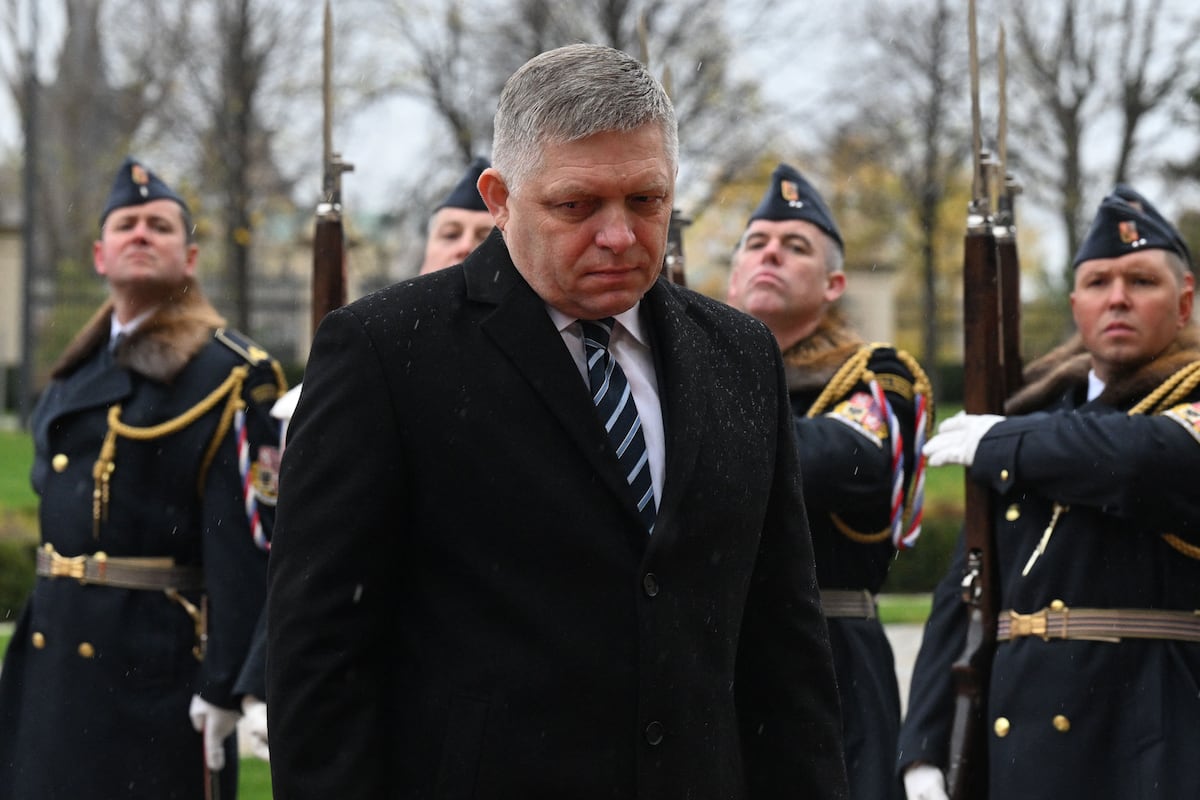
MILAN and WARSAW, Poland — Recently elected leaders in Slovakia and the Netherlands are tempering the anti-Ukraine rhetoric that elevated them to victory during their campaigns, as the stakes of antagonizing their Western allies by halting military support to Kyiv are too high, experts say.
Following the September victory of the Russia-friendly party of Slovakia’s new Prime Minister, Robert Fico, concerns emerged regarding the fate of Bratislava’s supply of military aid to Ukraine.
The Slovak authorities have donated, among other things, MiG-29 fighters, mine clearance systems, air-to-air missiles, ammunition and self-propelled artillery to their invaded neighbor.
Shortly after it was sworn in, Fico’s new Cabinet rejected the outgoing government’s latest draft of military supplies to Ukraine, which planned to send rockets and further ammunition to the embattled country.
Regardless of the politician’s tough pre-election narrative of “not a single round” for Ukraine, his flagship electoral slogan, Bratislava has yet to halt its defense cooperation with Kyiv.
During a NATO meeting held last week , Ukraine’s Minister of Foreign Affairs Dmytro Kuleba thanked his Slovak counterpart Juraj Blańr for his government’s continued involvement in helping Ukraine repel Russian forces.
“I am grateful to my Slovak counterpart for confirming that defense industry cooperation among our companies will continue, and that the repair hub in Slovakia [to service Ukrainian weapons] will also maintain operations,” Kuleba said, as quoted in a statement released by his ministry.
Blanár made similar remarks, noting that the Slovak government “will continue to support Ukraine,” and is “looking for ways to continue training Ukrainian soldiers.”
Local media have also reported that Ukraine has also shown an interest in acquiring more Slovak-made Zuzana 2 self-propelled howitzers manufactured by Konstruka Defense, of which Slovakia has already delivered eight.
Experts explain that these developments suggest that the Fico government will likely strive to balance the pro-Moscow sympathies of his voters against the broader expectations of Slovakia’s allies.
“For Fico to satisfy some of his domestic promises, it is in his interest to shift more towards the mainstream privately and elevate his values as a reliable player in Brussels with other leaders so he can cash in later more pressing priorities,” Roger Hilton, defense fellow at the Bratislava-based think tank GLOBSEC said. “These may include unlocking EU funds or getting a greater say in other policy areas like migration.”
Moreover, the seemingly contradictory rhetoric, compared to that of the election campaign, should be taken with the caveat that Slovakia doesn’t possess many of the weapons Ukraine wants, Hilton added.
“Making this shift in private is even easier for the government on the NATO level, when you consider that Slovakia has very little transformation stock left to provide Ukraine. … Fico can walk back his campaign talk without fear of having to give up anything in public,” Hilton said.
Meanwhile, in Amsterdam, the far-right Party for Freedom (PVV) of Geert Wilders won the largest number of seats in the country’s parliament last month, sparking similar fears as Fico’s victory of a potential abrupt end to Ukraine aid.
Since the election, Wilders, whose past praise of Vladimir Putin has earned him a reputation of a Kremlin-friendly populist, has launched talks with other parties to form a coalition cabinet.
The politician has said he is willing to compromise and tone down some of his more extreme policies as to gain greater support from other parties, according to a report from the Financial Times.
Forming a new government promises to be lengthy as well as complex process, and ultimately may result in Wilders not becoming prime minister, as the ruling party has declined to form a coalition with the PVV under his leadership.
“Should Wilders become part of any new cabinet, it could impact assistance to Ukraine. The PVV is against the sending of F-16s for example, arguing that doing so detracts from the defense of the Netherlands,” Davis Ellison, strategic analyst at the Hague Centre for Strategic Studies said. “There are quite possibly some very real implications coming from this election.”
Other experts are more confident about the future of Dutch military assistance to Kyiv, as they argue a majority of parties are in favor of its continuity.
“The only two political forces, including the PVV, which intend to halt the delivery of weapons and ammunition to Kyiv represent 40 out of the 150 seats in the lower chamber, [as such] it’s unlikely that other parties will accept the PVV’s intent to stop these,” Dick Zandee, head of the security and defense program at the Dutch think tank Clingendael Institute said.
Elisabeth Gosselin-Malo was a Europe correspondent for Defense News. She covers a wide range of topics related to military procurement and international security, and specializes in reporting on the aviation sector. She is based in Milan, Italy.
Jaroslaw Adamowski is the Poland correspondent for Defense News.
米兰和波兰华沙——专家表示,斯洛伐克和荷兰最近当选的领导人正在缓和竞选期间助其赢得胜利的反乌克兰言论,因为停止对基辅的军事支持会激怒他们的西方盟友,而这样做的代价太高。
继斯洛伐克新任总理罗伯特·菲佐所在的亲俄政党在9月取得胜利后,人们开始担忧布拉迪斯拉发向乌克兰提供的军事援助的命运。
斯洛伐克当局向其被入侵的邻国捐赠了包括米格-29战斗机、扫雷系统、空空导弹、弹药和自行火炮在内的物资。
菲佐的新内阁宣誓就职后不久,便否决了即将卸任的政府最新提出的对乌克兰提供军事物资的草案,该草案计划向这个饱受战火蹂躏的国家运送火箭弹和更多弹药。
尽管这位政治家在选举前大肆宣扬“一轮战争都不能打”,这是他最重要的竞选口号,但布拉迪斯拉发至今仍未停止与基辅的防务合作。
在上周举行的北约会议上,乌克兰外交部长德米特罗·库列巴感谢斯洛伐克外长尤拉伊·布拉尼尔,感谢斯洛伐克政府继续帮助乌克兰击退俄罗斯军队。
库列巴在其部门发布的一份声明中表示:“我感谢斯洛伐克同行确认我们两家公司之间的国防工业合作将继续,并且斯洛伐克的维修中心(为乌克兰武器提供维修服务)也将继续运营。”
布拉纳尔也发表了类似的言论,指出斯洛伐克政府“将继续支持乌克兰”,并且“正在寻找继续训练乌克兰士兵的方法”。
当地媒体还报道称,乌克兰也对购买更多斯洛伐克制造的由 Konstruka Defense 生产的 Zuzana 2 型自行榴弹炮表现出了兴趣,斯洛伐克已经交付了 8 门该型火炮。
专家解释说,这些事态发展表明,菲佐政府可能会努力平衡其选民亲莫斯科的倾向与斯洛伐克盟友的更广泛期望。
“菲佐要想兑现他在国内的一些承诺,就必须更加积极地融入主流社会,并在布鲁塞尔与其他领导人建立起可靠的合作关系,从而为日后更紧迫的优先事项争取利益,”位于布拉迪斯拉发的智库GLOBSEC的国防研究员罗杰·希尔顿表示。“这些优先事项可能包括获得欧盟资金,或在移民等其他政策领域获得更大的发言权。”
此外,希尔顿补充说,与竞选活动相比,这种看似矛盾的言论应该考虑到斯洛伐克并没有乌克兰想要的很多武器。
希尔顿表示:“考虑到斯洛伐克几乎没有多少转型资源可以提供给乌克兰,对北约成员国政府而言,私下进行这种转变就更加容易了……菲佐可以收回他竞选时的言论,而不用担心在公开场合做出任何让步。”
与此同时,在阿姆斯特丹,吉尔特·维尔德斯领导的极右翼自由党(PVV)上个月赢得了该国议会中最多的席位,引发了与菲佐获胜时类似的担忧,即乌克兰援助可能会突然终止。
自选举以来,维尔德斯曾因过去对弗拉基米尔·普京的赞扬而获得了亲克里姆林宫的民粹主义者的名声,他已与其他政党展开谈判,以组建联合内阁。
据《金融时报》报道,这位政治家表示,他愿意做出妥协,缓和一些较为极端的政策,以赢得其他政党的更多支持。
组建新政府注定是一个漫长而复杂的过程,最终可能导致维尔德斯无法成为总理,因为执政党拒绝与他领导的自由党组成联合政府。
“如果维尔德斯进入新内阁,可能会影响对乌克兰的援助。例如,自由党反对向乌克兰派遣F-16战斗机,认为这样做会削弱荷兰的国防,”海牙战略研究中心战略分析师戴维斯·埃里森表示。“这次选举很可能会产生一些非常实际的影响。”
其他专家对荷兰未来继续向基辅提供军事援助更有信心,因为他们认为大多数方面都赞成继续提供援助。
荷兰智库克林根达尔研究所安全与国防项目负责人迪克·赞迪表示:“包括自由党在内的仅有的两股打算停止向基辅运送武器弹药的政治力量,在下议院150个席位中占据了40席,因此,其他政党不太可能接受自由党停止运送武器弹药的意图。”
伊丽莎白·戈斯林-马洛曾任《防务新闻》欧洲通讯员。她的报道涵盖军事采购和国际安全等广泛领域,尤其擅长航空领域的报道。她常驻意大利米兰。
Jaroslaw Adamowski 是《防务新闻》驻波兰记者。