Ukraine’s long shadow: Four factors shaping European defense in 2024乌克兰的阴影挥之不去:影响2024年欧洲防务的四个因素
There is a sense of urgency in the face of Russia’s assault on Ukraine and the fallout for the continent.
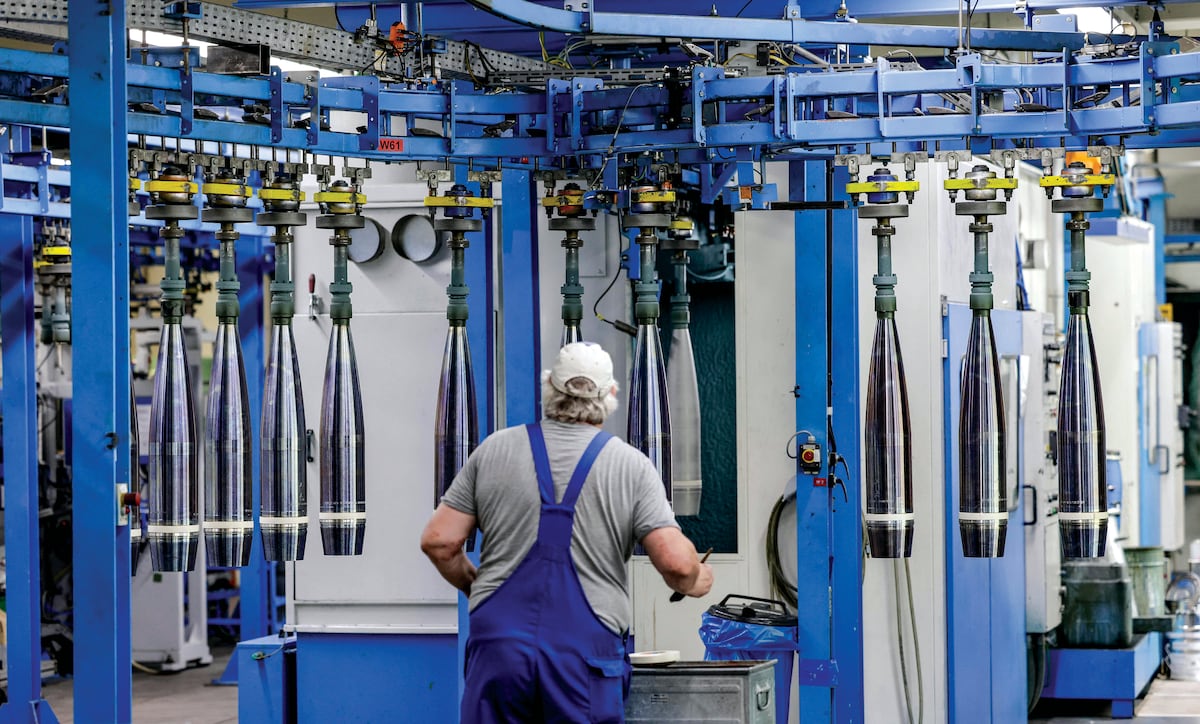
PARIS, ROME and COLOGNE, Germany — War is officially on Germany’s agenda. The prevention of it, that is, and the country’s defense during one, if it ever came to be.
But in a nation haunted by the militaristic ghosts of its past, the recent demand by Defence Minister Boris Pistorius that Germans should ready themselves for the possibility of actual war still came as a shock.
Semantically, the adjective “kriegstüchtig,” first floated by the minister in an October interview with German TV station ZDF, lives somewhere between becoming “war-capable” and “war-proficient,” nuances guaranteed to make Germans uncomfortable. Formally, it is now part of the ministry’s nomenclature that makes up the latest written guidance for the future of Germany’s armed forces.
Critics quickly seized on the term, construing it as warmongering or lamenting the lack of a more pronounced defensive focus. But what has become clear is that the fighting in Ukraine and the Gaza Strip, combined with an upcoming U.S. presidential election, could define Europe’s trajectory no matter the semantic bickering about what is, or isn’t, war.
Defense News asked European analysts about what the year 2024 will hold for the continent. Pervasive in the interviews was a sense of urgency in the face of Russia’s assault on Ukraine and the fallout for the continent. Russia’s delayed but now-massive buildup of its arms industry has experts worried President Vladimir Putin’s war machine will be trigger-happy toward its neighbors long after the fighting there stops.
“Today we are in a situation where we need to make real decisions, not discuss the need for making decisions,” Hanno Pevkur, Estonia’s defense minister, told his colleagues at a November meeting in Brussels.
While the European Union has long had a defense agenda, it has struggled to meet a key prerequisite: a sense of unity among its members on questions of war and peace, held together by a shared threat perception.
Mechanisms like the European Defence Fund or Permanent Structured Cooperation security initiative aim to grease the wheels of defense cooperation between member countries, hoping years spent on cooperative development projects spur a sense of shared ownership.
Mechanisms like the European Defence Fund aim to grease the wheels of defense cooperation between member countries. (Jacques Demarthon/AFP via Getty Images)
But overall, the idea that there is a unified military mindset in the EU is “highly questionable,” with many countries considering European defense first and foremost a matter for NATO and therefore the United States, said Yannick Quéau, the director of the Brussels-based think tank GRIP.
In that sense, pressing a defense-minded spirit onto an organization molded for maximizing peacetime potential may ultimately be a bridge too far, other analysts said.
“The heterogeneity will only increase,” said Christian Mölling, deputy director of the Berlin-based German Council on Foreign Relations’ Research Institute. He pointed to a future round of EU expansion, including applicant Ukraine, that would further stretch common defense objectives.
The bloc’s genes are that of an institutional administrator — effective at regulating markets or resolving health and energy crises, but not at organizing a common defense, according to Mölling. “We may have to say goodbye to the idea of the EU as an actor in defense.”
Lucio Caracciolo, the editor of Italian geopolitics publication Limes, argued there’s no point holding out for Europe to emerge as a united player on the world stage.
“It’s impossible — Europe is not a geopolitical player; there are too many different interests at play,” he said. “While the Baltics, Scandinavia and Poland are hostile to Russia, Germany will want to rebuild the Nord Stream 2 pipeline to Russia the moment there is a cease-fire” in Ukraine, he added.
Explosions damaged the gas pipeline linking Russia and Germany in September 2022.
France and Germany will have to show significant progress in 2024 with their marquee defense projects to uphold the promise that close European allies can translate their goodwill into weapons — although it would take almost two decades, analysts said.
On the table are a sixth-generation suite of air weaponry called the Future Combat Air System , or FCAS, and a new tank called the Main Ground Combat System . Both have shaky histories because leaders in Berlin and Paris saw their political ambitions of next-gen weaponry, made in Europe by two lead nations, held up by industrial infighting .
A mock-up of a new-generation fighter for the Future Combat Air System program was on display during the 2023 Paris Air Show. (Julien de Rosa/AFP via Getty Images)
“It would be good if we can end this back-and-forth lobbying about whether or not we’re going ahead with the project,” said Quéau, referring to periodic news stories about one or the other partner considering to call it quits. “There has to be a more clearly stated political commitment at [a] very high level.”
But without such a decision in 2024, “we’ll fall further behind,” he added.
The Franco-Germany tandem has failed to light any sparks, and Russia’s war in Ukraine, paradoxically, has sucked a lot of oxygen out of efforts to advance defense cooperation.
“The Franco-German [cooperation] has been stalled for some years now,” said Hélène Masson, a senior research fellow at the Paris-based Foundation for Strategic Research. “At the same time, the war in Ukraine has led to more bilateral and multilateral cooperation between countries sharing security challenges and supporting Ukraine,” with Poland “particularly active” in building a web of defense and armaments partners.
In addition, EU members seeking closer ties with European defense heavyweight Britain, which is no longer in the union, and with the United States already are used to constructing a patchwork of bilateral and multilateral initiatives outside bloc channels.
“The draw of Atlanticism is prevalent,” Masson said. “This environment makes the Franco-German [partnership] increasingly difficult to sustain.”
“The two countries are partners, sure, but they’re also competitors in numerous areas, which makes the situation more complex,” she added. “Each is seeking to consolidate their position through cooperation: France in the fighter aircraft segment, Germany in the field of land armaments.”
After leaning on the U.S. for security guarantees for decades, Europe may find fewer friends in Washington if former President Donald Trump is reelected next year and implements his brand of isolationism.
Though the election isn’t until Nov. 5, 2024, and Trump has ample legal trouble that could create an uphill battle in the presidential race, polls show him as the presumptive Republican nominee to go against incumbent President Joe Biden.
Given Trump’s disdain for NATO, and Europe in particular, a Trump victory could upend the continent’s security calculus. He famously threatened at the alliance’s 2018 summit in Brussels to withdraw from NATO over laggard European defense spending and has since made plans to follow through if given the chance, Rolling Stone reported in October .
Then-U.S. President Donald Trump, center, stands during a NATO summit on Dec. 4, 2019, in Watford, England. (Steve Parsons/Getty Images)
Meanwhile, U.S. lawmakers floated legislation over the summer that would make it harder for a president to pull the country out of the alliance, requiring a two-thirds majority in the Senate. The measure is now part of conference negotiations between both chambers of Congress.
Notably, in 2018, experts pointed out American withdrawal mechanics may not matter: If adversaries have reason to believe a U.S. commander-in-chief would wobble on NATO’s mutual-assistance pledge, their appetite for military adventurism would increase exponentially.
Indeed, some in Europe say Trump’s return to office could be the one thing capable of catalyzing Europe’s defense ambitions.
Yohann Michel, a research analyst in Berlin with the International Institute for Strategic Studies think tank, said big-ticket defense projects could see a boost.
“The French-German FCAS fighter program and the European main battle tank program were both spurred by Trump’s first term, and could consolidate and strengthen if he returns,” he said. “Trump would make the EU face up to hard choices, but the question is: Will it have the means to make those choices if we still don’t have enough ammunition to supply Ukraine or ourselves ?”
Gaspard Schnitzler, a senior research fellow at the Paris-based French Institute for International and Strategic Affairs, agreed.
“From a cynical point of view,” a Trump reelection would be a good thing for European defense, with countries no longer able to count on U.S. aid therefore forced to strengthen EU defense, he said.
Dick Zandee, a defense analyst at the Clingendael Institute, based in The Hague, said there wouldn’t be much of a silver lining.
“I’m not sure that even if the pressure is that high, we’ll be able to solve our problems. And there is a guy watching in Moscow, and he will make use of every situation to test us,” he said, referring to Russian President Putin.
Orchestrating a ramp-up in ammunition production — for both Ukraine and EU members — may be the bloc’s best hope in finding its defense groove over time, analysts said.
Though the production rate for materiel like 155mm artillery shells and mortar rounds is lagging, companies plan to expand their output as well as build or restart production plants. The process is expected to take years, but at least the to-do list is clearly defined, according to experts.
“Ammunition is really a key constraint for a lot of European militaries,” said Ed Arnold, a research fellow for European security at the Royal United Services Institute in London. “We just don’t have enough ammunition. So forget about the end use of what mission this might be on, and what we want to do with it. It’s got to exist on the shelves first. That is quite expensive initially, to reopen production lines.”
Ukrainian troops fire a D-30 howitzer toward Russian forces in Bakhmut on April 19, 2023. (Tom Mutch/Staff)
“But there’s no real alternative,” he added.
Estimates in Europe vary on the number of years it would take Russia to reconstitute its forces after the war in Ukraine ends . While Estonian intelligence estimates four years, Arnold expects it to be at least a decade.
“So the Europeans have a bit of time, but considering how long all of these things take, it’s actually not a lot,” he said.
An estimate by the German Council on Foreign Relations pegs the time horizon as somewhere between six and 10 years.
According to Mölling, one of the think tank’s analysts, European governments should prioritize production of tried-and-true equipment at the expense of some development-heavy programs. Mass stockpiling, he said, is the new yardstick for deterrence.
But bottlenecks remain. For example, the entire industry faces a shortage of raw materials and components, with Europe’s aeronautics sector having to replace Russia as the supplier of 40% of its titanium, according to French analyst Schnitzler.
An EU strategy for the defense industry, initially scheduled for November, was pushed to the first quarter 2024, “but delayed for a good reason,” Schnitzler said. The European Commission will use the time for consultation with member states, industry and think tanks to reach a consensus proposal, he explained.
Amid the strategic urgency, the process is still rife with political drama. “The commission is walking on eggshells because some member states consider that it exceeds its powers,” Schnitzler said.
Rudy Ruitenberg is a Europe correspondent for Defense News. He started his career at Bloomberg News and has experience reporting on technology, commodity markets and politics.
Tom Kington is the Italy correspondent for Defense News.
Sebastian Sprenger is associate editor for Europe at Defense News, reporting on the state of the defense market in the region, and on U.S.-Europe cooperation and multi-national investments in defense and global security. Previously he served as managing editor for Defense News. He is based in Cologne, Germany.
巴黎、罗马和德国科隆——战争已正式提上德国的议程。这里指的是预防战争,以及一旦战争爆发,如何保卫国家。
但在一个饱受过去军国主义幽灵困扰的国家,国防部长鲍里斯·皮斯托里乌斯最近要求德国人做好应对真正战争的准备,这仍然令人震惊。
从语义上讲,“kriegstüchtig”这个形容词最早由国防部长在10月份接受德国电视二台(ZDF)采访时提出,其含义介于“具备战争能力”和“精通战争”之间,这种细微差别势必会让德国人感到不安。从形式上讲,它现在已成为国防部术语体系的一部分,并被纳入德国武装部队未来发展的最新书面指导文件中。
批评人士迅速抓住“战争”一词大做文章,将其解读为好战言论,或哀叹缺乏更明确的防御重点。但显而易见的是,无论关于何为战争、何为非战争的语义争论如何,乌克兰和加沙地带的冲突,以及即将到来的美国总统大选,都可能决定欧洲的未来走向。
《防务新闻》采访了欧洲分析人士,询问他们对2024年欧洲大陆局势的看法。采访中普遍流露出一种紧迫感,他们担忧俄罗斯对乌克兰的侵略及其对欧洲大陆的影响。俄罗斯虽然姗姗来迟,但如今已大规模扩充军备,这令专家们担忧,即便乌克兰战事结束,普京总统的战争机器仍可能长期对邻国发动战争。
“如今,我们需要做出真正的决定,而不是讨论是否需要做出决定,”爱沙尼亚国防部长汉诺·佩夫库尔在11月于布鲁塞尔举行的一次会议上对他的同事们说。
虽然欧盟长期以来都有国防议程,但它一直难以满足一个关键的前提条件:成员国在战争与和平问题上缺乏团结一致,而这种团结是由共同的威胁认知维系的。
欧洲防务基金或永久结构性合作安全倡议等机制旨在促进成员国之间的防务合作,希望多年来在合作发展项目上投入的时间能够激发一种共同所有权意识。
欧洲防务基金等机制旨在促进成员国之间的防务合作。(图片来源:Jacques Demarthon/AFP via Getty Images)
但总体而言,欧盟内部存在统一的军事思维的想法“非常值得怀疑”,许多国家认为欧洲防务首先是北约,因此也是美国的事情,布鲁塞尔智库 GRIP 的主任 Yannick Quéau 表示。
从这个意义上讲,其他分析人士表示,将防御型精神强加给一个旨在最大限度地发挥和平时期潜力的组织,最终可能有点过头了。
“这种异质性只会加剧,”总部位于柏林的德国对外关系委员会研究所副所长克里斯蒂安·默林表示。他指出,未来欧盟可能再次扩容,包括乌克兰在内的申请国将进一步扩大欧盟的共同防御目标。
莫林认为,欧盟的基因使其更适合作为制度管理者——擅长监管市场或解决卫生和能源危机,但不擅长组织共同防御。“我们或许不得不放弃欧盟作为国防行动者的理念。”
意大利地缘政治刊物《Limes》的编辑卢西奥·卡拉乔洛认为,指望欧洲成为世界舞台上的统一力量是没有意义的。
“这不可能——欧洲并非地缘政治参与者;牵涉到的利益太多了,”他说道。“虽然波罗的海国家、斯堪的纳维亚半岛和波兰对俄罗斯抱有敌意,但一旦乌克兰停火,德国就会立即重建通往俄罗斯的北溪2号天然气管道,”他补充道。
2022年9月,连接俄罗斯和德国的天然气管道发生爆炸并遭到破坏。
分析人士表示,法国和德国必须在 2024 年就其重点国防项目取得重大进展,才能兑现欧洲亲密盟友能够将善意转化为武器的承诺——尽管这需要近二十年的时间。
摆在桌面上的是一套名为“未来作战空中系统”(FCAS)的第六代空中武器系统,以及一款名为“主战地面作战系统”(Main Ground Combat System)的新型坦克。这两项武器的研发历程都颇为坎坷,因为柏林和巴黎的领导人眼睁睁地看着他们雄心勃勃的下一代武器研发计划——由欧洲两大强国共同打造——被工业界的内斗所阻碍。
在2023年巴黎航展上,展出了一架未来作战空中系统(FCA)项目的新一代战斗机模型。(图片来源:Julien de Rosa/AFP via Getty Images)
“如果我们能结束这种关于项目是否继续推进的拉锯战,那就太好了,”奎奥说道,他指的是不时有新闻报道称,一方或双方合作伙伴考虑退出。“必须在高层做出更明确的政治承诺。”
但他补充说,如果2024年不做出这样的决定,“我们将进一步落后”。
法德联盟未能擦出任何火花,而俄罗斯在乌克兰的战争,反而使推进国防合作的努力失去了动力。
“法德合作已经停滞多年了,”总部位于巴黎的战略研究基金会高级研究员海伦·马松表示。“与此同时,乌克兰战争促使面临共同安全挑战并支持乌克兰的国家之间开展更多双边和多边合作,”其中波兰在构建国防和军备合作伙伴网络方面“尤为积极”。
此外,寻求与欧洲防务强国英国(现已脱离欧盟)和美国建立更紧密联系的欧盟成员国,已经习惯于在欧盟渠道之外构建一系列双边和多边倡议。
马松说:“大西洋主义的吸引力依然强大。在这种环境下,法德伙伴关系越来越难以维系。”
她补充说:“两国当然是合作伙伴,但在许多领域也是竞争对手,这使得情况更加复杂。双方都在寻求通过合作巩固自身地位:法国在战斗机领域,德国在陆地武器领域。”
几十年来,欧洲一直依赖美国提供安全保障。如果前总统唐纳德·特朗普明年再次当选并推行其孤立主义政策,那么欧洲在华盛顿可能会发现朋友减少。
尽管选举要到 2024 年 11 月 5 日才会举行,而且特朗普面临诸多法律问题,可能会使总统竞选之路异常艰难,但民调显示他仍是共和党推定候选人,将与现任总统乔·拜登展开角逐。
鉴于特朗普对北约,尤其是对欧洲的蔑视,他的胜选可能会颠覆欧洲大陆的安全格局。据《滚石》杂志10月份报道,他曾在2018年布鲁塞尔北约峰会上威胁要退出北约,理由是欧洲国防开支滞后。此后,他已制定计划,一旦有机会就会付诸行动。
2019年12月4日,时任美国总统唐纳德·特朗普(中)在英国沃特福德举行的北约峰会上。(图片来源:Steve Parsons/Getty Images)
与此同时,美国国会议员在夏季提出了一项法案,旨在加大总统退出美俄联盟的难度,要求参议院三分之二多数票才能通过该法案。目前,该法案已纳入国会两院的协商会议。
值得注意的是,2018 年,专家指出,美国的撤军机制可能并不重要:如果对手有理由相信美国总司令会在北约的互助承诺上动摇,那么他们对军事冒险的渴望将呈指数级增长。
事实上,欧洲一些人认为,特朗普重返总统职位可能是唯一能够激发欧洲国防雄心的事情。
柏林国际战略研究所智库的研究分析师约翰·米歇尔表示,大型国防项目可能会得到推动。
他说:“法德联合研制的未来空中作战系统(FCAS)战斗机项目和欧洲主战坦克项目都是在特朗普第一任期内推动的,如果他连任,这些项目可能会得到巩固和加强。特朗普会让欧盟面临艰难的选择,但问题是:如果我们连供应乌克兰或自身所需的弹药都不够,欧盟是否有能力做出这些选择?”
巴黎法国国际与战略事务研究所高级研究员加斯帕德·施尼茨勒对此表示赞同。
他表示,“从愤世嫉俗的角度来看”,特朗普连任对欧洲防务来说是一件好事,因为各国将无法再指望美国的援助,因此将被迫加强欧盟的防务。
位于海牙的克林根达尔研究所的国防分析师迪克·赞迪表示,不会有什么好的转机。
“我不确定即使压力如此之大,我们能否解决我们的问题。而且莫斯科有人在看着我们,他会利用一切机会来试探我们,”他指的是俄罗斯总统普京。
分析人士表示,提高乌克兰和欧盟成员国的弹药产量,可能是欧盟逐步找到国防发展方向的最佳希望。
尽管155毫米炮弹和迫击炮弹等弹药的生产速度滞后,但各公司计划扩大产量,并新建或重启生产工厂。专家表示,这一过程预计需要数年时间,但至少待办事项清单已经明确。
“弹药确实是许多欧洲军队面临的关键制约因素,”伦敦皇家联合军种研究所欧洲安全研究员埃德·阿诺德说。“我们弹药严重不足。所以,先别管它最终会用于什么任务,或者我们想用它做什么。首先,它必须有库存。而重启生产线初期成本相当高昂。”
2023年4月19日,乌克兰军队在巴赫穆特用D-30榴弹炮向俄军开火。(汤姆·穆奇/摄)
“但实际上没有其他办法,”他补充道。
欧洲各方对俄罗斯在乌克兰战争结束后重建军队所需的时间估计不一。爱沙尼亚情报部门估计需要四年,而阿诺德则认为至少需要十年。
“所以欧洲人还有一些时间,但考虑到所有这些事情需要的时间,实际上时间并不多,”他说。
德国外交关系委员会估计,这一时间跨度在六到十年之间。
据该智库分析师之一莫林称,欧洲各国政府应优先生产久经考验的成熟装备,而应减少一些研发密集型项目。他表示,大规模储备已成为衡量威慑力的新标准。
但瓶颈依然存在。例如,整个行业都面临原材料和零部件短缺的问题,据法国分析师施尼茨勒称,欧洲航空航天业不得不寻找替代俄罗斯的供应商,以填补其40%的钛供应缺口。
欧盟国防工业战略原定于11月出台,后推迟至2024年第一季度。施尼茨勒表示,推迟是有充分理由的。他解释说,欧盟委员会将利用这段时间与成员国、业界和智库进行磋商,以达成共识。
尽管形势紧迫,但这一进程仍然充满了政治纷争。“委员会如履薄冰,因为一些成员国认为它越权行事,”施尼茨勒说。
鲁迪·鲁伊滕贝格是《防务新闻》的欧洲记者。他的职业生涯始于彭博新闻社,拥有报道科技、大宗商品市场和政治方面的经验。
汤姆·金顿是《防务新闻》驻意大利记者。
塞巴斯蒂安·斯普伦格是《防务新闻》欧洲版副主编,负责报道该地区的防务市场状况,以及美欧在防务和全球安全领域的合作和多国投资。此前,他曾担任《防务新闻》执行主编。他现居德国科隆。