Improper storage damaging $1.8 billion in Army ground combat equipment不当储存导致价值18亿美元的陆军地面作战装备受损。
Pentagon investigators found that $1.8 billion of the inspected equipment was crumbling or at “increased risk” of falling apart because of poor storage
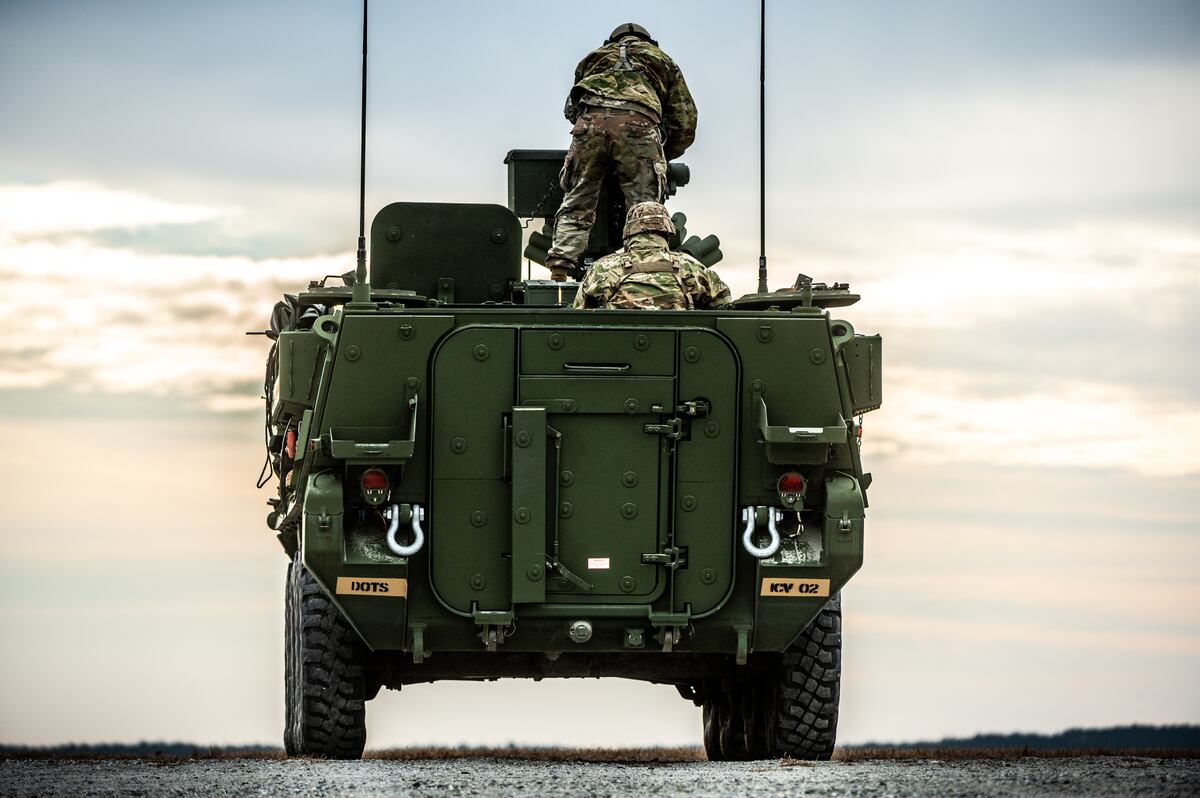
Around $1.8 billion in Army ground combat equipment is “deteriorating or at increased risk of deterioration” due to improper storage, Defense Department investigators have found.
A Department of Defense Office of Inspector General report published Monday uncovered critical deficiencies in how the Pentagon maintains and protects core components of the Army’s land capabilities. The shortfalls, the report warns, could endanger personnel, waste millions, and undermine readiness as the Army attempts to retool its logistical network for conflict across multiple theaters.
Investigators inspected $1.96 billion worth of equipment stored at two distribution centers controlled by the Defense Logistics Agency (DLA), the Defense Department bureau tasked with managing the military’s sprawling supply chains. The DLA’s distribution division, responsible for storing and disseminating materiel, handled a total $3.87 billion of Army ground combat gear as of July 2022, according to the report.
The spare parts stored at these facilities support some of the Army’s flagship land fighting technology, including the Bradley Fighting Vehicle, the Stryker Armored Combat Vehicle, and the Abrams tank, the report noted.
Two-thirds of the inspected parts — valued at $1.31 billion — exhibited “critical” deficiencies, meaning they were “deteriorating and in immediate danger of moving to a lower condition code ,” a measure of utility. In all, investigators determined that $1.8 billion (92%) of the inspected equipment was crumbling or at “increased risk” of falling apart because DLA storage facilities failed to follow Pentagon standards.
Among the spare parts in critical condition were 80 gas turbines, worth almost $90 million, stacked together on a lawn outside of a warehouse. The turbines, meant to be stored indoors, had been there since 2020, investigators learned. Investigators also found tens of millions of dollars worth of tank tracks, vehicle transmission assemblies, and diesel engines stashed away in open-air facilities without proper packaging.
Using appropriate containers and shielding gear from the elements can save millions. Investigators pointed to a case in 2021 when the Army spent $10.92 million to repair engines that had been improperly stored.
Inspectors also warned that cluttered, precarious piles of equipment risked injuring personnel working at the distribution centers.
The inspector general largely blamed the storage pitfalls on poor training and oversight.
“DLA Distribution did not provide adequate guidance to its personnel who are responsible for or support” equipment maintenance, according to the report. Investigators also found that DLA’s distribution division “did not have formalized training for the receiving, packaging, warehousing, or inspection personnel who are responsible for the storage and care of Army [ground combat systems] materiel.”
The report claims Army leaders failed to recognize the gaps in its materiel management because the branch does not “adequately oversee” how the parts of its fighting machine are cared for.
The inspector general issued eleven recommendations, including the implementation of new training regimes and regular inspections from the head of Army Tank-Automotive and Armaments Command. DLA agreed with them all.
Jaime Moore-Carrillo is an editorial fellow for Military Times and Defense News. A Boston native, Jaime graduated with degrees in international affairs, history, and Arabic from Georgetown University, where he served as a senior editor for the school's student-run paper, The Hoya.
国防部调查人员发现,由于储存不当,价值约 18 亿美元的陆军地面作战装备正在“恶化或面临更大的恶化风险”。
美国国防部监察长办公室周一发布的一份报告揭露了五角大楼在维护和保护陆军陆地作战核心组成部分方面存在严重缺陷。报告警告称,这些不足可能会危及人员安全,造成数百万美元的浪费,并削弱陆军在试图重组其后勤网络以应对多战区冲突时的战备能力。
调查人员检查了国防后勤局(DLA)下属的两个配送中心存放的价值19.6亿美元的装备。国防后勤局是国防部负责管理军队庞大供应链的机构。报告显示,截至2022年7月,国防后勤局负责物资存储和分发的配送部门经手了价值38.7亿美元的陆军地面作战装备。
报告指出,这些设施中储存的备件为陆军的一些旗舰陆地作战技术提供支持,包括布雷德利战车、斯特瑞克装甲战车和艾布拉姆斯坦克。
在接受检查的零部件中,有三分之二(价值13.1亿美元)存在“严重”缺陷,这意味着它们“正在老化,并面临立即降级的风险”,而降级是衡量其效用的指标。调查人员最终认定,由于国防后勤局(DLA)的存储设施未能遵守五角大楼的标准,导致价值18亿美元(92%)的受检设备正在老化或“极易”损坏。
在这些状况堪忧的备件中,包括80台价值近9000万美元的燃气轮机,它们被堆放在仓库外的草坪上。调查人员发现,这些原本应该存放在室内的燃气轮机自2020年以来就一直堆放在那里。调查人员还发现,价值数千万美元的坦克履带、车辆变速器总成和柴油发动机被随意地存放在露天场所,没有进行妥善包装。
使用合适的容器和防护装备可以节省数百万美元。调查人员指出,2021年曾发生过一起案例,当时陆军花费1092万美元维修因存放不当而受损的发动机。
检查人员还警告说,杂乱不堪、摇摇欲坠的设备堆放处可能会伤及配送中心的工作人员。
监察长将存储方面的缺陷主要归咎于培训和监管不力。
报告指出,“国防后勤局配送部门没有向负责或支持设备维护的人员提供足够的指导”。调查人员还发现,国防后勤局的配送部门“没有为负责陆军地面作战系统物资储存和保管的接收、包装、仓储或检验人员提供正规培训”。
报告称,陆军领导人未能认识到其物资管理方面的不足,因为该军种没有“充分监督”其作战机器部件的维护情况。
监察长提出了十一项建议,其中包括实施新的培训制度以及陆军坦克汽车和武器司令部司令定期进行检查。国防后勤局对所有建议均表示赞同。
杰米·摩尔-卡里略是《军事时报》和《防务新闻》的编辑助理。他出生于波士顿,毕业于乔治城大学,拥有国际事务、历史和阿拉伯语学位。在校期间,他曾担任学生报纸《霍亚报》的高级编辑。