Ice, fans and cooling pads: How Malaysia’s chicken farmers are beating El Niño heat冰块、风扇和降温垫:马来西亚养鸡户如何应对厄尔尼诺现象带来的高温
SHAH ALAM, Sept 18 — Inside a closed-house chicken farm in Jalan Kebun here, Mohd Muzamri Shoib instructed one of his workers to open the door.He chose the worker deliberately.As...
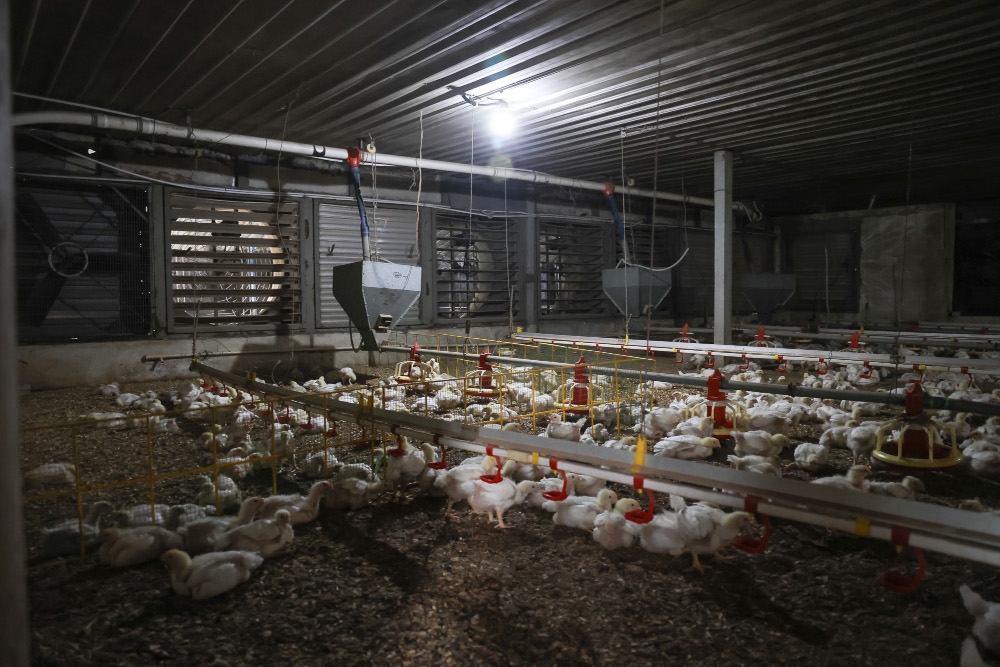
Closed-house poultry farms use cooling pads and exhaust fans to regulate temperature and reduce heat stress in chickens, which can significantly impact their growth and health.
With rising temperatures due to El Niño, farmers like Muzamri employ various cooling systems and measures including ice, water, and supplements to maintain optimal conditions for broiler chickens.
Continuous monitoring and maintenance of environmental control systems are essential for preventing heat stress and ensuring the well-being and productivity of poultry in prolonged hot weather conditions.
SHAH ALAM, Sept 18 — Inside a closed-house chicken farm in Jalan Kebun here, Mohd Muzamri Shoib instructed one of his workers to open the door.
He chose the worker deliberately.
As the door opened, Muzamri watched the flock before explaining why even a simple interruption to their routine could cause stress.
“These chickens can get stressed when someone they do not recognise opens the door,” he said.
But an unfamiliar presence is not the only source of stress for the birds.
Heat poses a far more serious challenge, and one that farmers cannot simply keep outside the door.
A prolonged spell of extreme heat could affect how quickly chickens grow, how much farmers lose and how well they perform.
Keeping the heat out
Malay Mail recently visited Muzamri’s farm, where the broiler farmer and chairman of the Selangor Poultry Farmers Association has spent 26 years raising chickens.
With a very strong El Niño expected to develop towards the end of this year, Malaysia could face extreme heat and dry weather from January to May 2027, with temperatures potentially reaching 40°C, according to MetMalaysia.
Farmers like Muzamri are therefore relying on systems that have become an increasingly important part of modern poultry farming.
His farm has two closed-house poultry buildings, one with two levels and another with a single level, both equipped with cooling pads and exhaust fans designed to keep temperatures under control.
The cooling pads line the walls of the buildings, with water pumped from large tanks and circulated through them before air is drawn through and cooled.
At the other end, large exhaust fans pull the air out while helping to remove ammonia and odours from the building.
The result is a controlled environment in which the temperature can be adjusted according to the age of the chickens.
Younger birds, for instance, require warmer conditions, with temperatures of around 37°C being more comfortable for them, similar to the warmth they would experience with a mother hen.
For older broilers, however, excessive heat becomes a growing concern.
When chickens start to overheat
Professor Datuk Zulkifli Idrus, director of the Institute of Tropical Agriculture and Food Security at Universiti Putra Malaysia, said chickens were particularly vulnerable to prolonged heat because they could not sweat like humans.
Their bodies are covered with feathers, making it harder for them to lose heat.
Instead, chickens mainly cool themselves by panting and increasing blood flow to their skin, combs and wattles.
“When temperatures remain high, they pant more, become less active, eat less and drink more,” he said.
If the heat continues, the birds can become dehydrated and their normal bodily functions can be disrupted.
Severe and prolonged heat stress can eventually result in organ failure and death, Zulkifli said.
For broiler farmers, the problem is compounded by the birds’ rapid growth.
Modern broilers become heavy quickly and generate considerable body heat, making birds approaching market weight particularly vulnerable when temperatures rise.
Muzamri said his farm’s environmental control system allows him to regulate the temperature, ventilation and feeding of the chickens.
The system is currently operated through controls at the farm, although he is looking to upgrade it so the same functions can be managed through a smartphone.
That would allow him to monitor and adjust the system even when he is away from the farm.
The controls can be used for the chicken feeders, cooling pads and fans.
And when the heat becomes particularly intense, Muzamri has another measure ready.
He buys bags of ice and puts them into a reservoir through which water passes before being pumped towards the cooling pads.
He normally orders about 30 large bags, which he said can last five to six days.
The farm has about eight water tanks, roughly the size of those commonly found in the attics of Malaysian landed homes.
Heat stress on chickens
For Muzamri, these preparations are not new.
The system has been in use for years, but the prospect of a prolonged period of extreme heat means there is little room for complacency.
“My farming activities are primarily focused on broiler chickens, but hot weather and maintaining temperatures in poultry houses are indeed very important issues for the poultry industry as a whole, particularly the broiler sector.
“When excessively hot weather occurs, chickens can experience heat stress. The effects depend on the type and age of the chickens.
“For broilers, some of the common concerns include reduced feed intake, slower growth, poorer feed conversion ratio and an increased risk of mortality if temperature and ventilation are not properly controlled,” he said.
These systems are increasingly important for modern farmers, particularly those operating closed-house farms, where exhaust fans, cooling pads, tunnel ventilation systems, temperature and humidity sensors and automatic controllers are used to manage heat.
“When temperatures rise, these systems increase ventilation and use cooling pads to help lower the temperature inside the poultry house,” Muzamri said.
“We also incur costs to purchase ice to help cool the poultry houses during the hottest part of the day, between 11am and 3pm.”
But keeping chickens cool is not simply a matter of turning on more fans.
Water is just as important.
Zulkifli said chickens drink substantially more during hot weather as they try to replace fluids lost through panting and cool their bodies.
A constant supply of clean drinking water that is not excessively warm is therefore essential, while farmers must also ensure their generators and emergency power supplies are working.
A power failure during extreme heat can be particularly dangerous in a closed-house system because the ventilation and cooling systems can stop at the moment they are most needed.
Muzamri said his preparations also extend to giving the chickens drinks containing rock sugar and other supplements intended to help them cope with the heat.
“We also provide chickens with drinks that can help cool their bodies, including rock sugar and other additional supplements, to help regulate their body temperature,” he said.
For open-house farms, where conditions inside the poultry houses are more directly affected by the weather outside, farmers must pay closer attention to ventilation, fans, shading, water supply and stocking density.
Preparing for prolonged heat
Zulkifli said the greatest risk was not necessarily a single exceptionally hot afternoon, but a prolonged spell in which high temperatures persisted day after day, particularly when nights remained warm and gave the birds little opportunity to recover.
“The problem is not just one unusually hot afternoon, but a series of hot days over a long period, especially if the night temperatures stay high and the birds have little time to recover,” he said.
The combination of temperature, humidity, ventilation and water availability determines how severe the heat stress becomes.
Adult chickens generally begin to experience heat stress when temperatures rise above about 26°C, particularly when humidity is high, he said.
The risk becomes considerably greater once temperatures reach 32°C to 35°C and above.
High humidity makes panting less effective because the birds struggle to release heat through evaporation.
For broilers, the consequences can extend beyond animal welfare and into production.
Heat-stressed birds eat less, grow more slowly and can become less efficient at converting feed into body weight.
Severe or prolonged heat stress can also increase mortality.
Laying hens face a different set of problems.
Reduced feed intake means fewer nutrients and less energy are available for egg production, while prolonged heat exposure can interfere with reproductive processes.
The result can be fewer and smaller eggs, as well as poorer eggshell quality.
For farmers, the priority is therefore to prevent heat stress before it becomes severe.
“Fans, cooling pads, water pumps, sensors, generators and water supplies need to be inspected and maintained more frequently,” Muzamri said.
At Muzamri’s farm, much of that infrastructure is already in place.
The technology may eventually move further away from the farm floor and into the farmer’s hand, with smartphone controls allowing Muzamri to monitor conditions and operate equipment remotely.
For now, however, the principle remains the same as it has throughout his 26 years in the industry: keep the birds comfortable, keep the air moving and make sure there is enough water.
With the heat expected to intensify, those preparations could become increasingly important.
AGC: Exco statement has no legal effect, move to gazette or implement proclamation on N. Sembilan Yamtuan’s removal invalid, unconstitutional
Second body recovered as search continues for missing Pulau Ketam anglers
KL to add 49ha of green spaces as city moves to protect open areas, says Hannah Yeoh
封闭式养鸡场使用冷却垫和排气扇来调节温度,减少鸡的热应激,这可以显著影响鸡的生长和健康。
由于厄尔尼诺现象导致气温升高,像穆扎姆里这样的农民采用了各种降温系统和措施,包括冰、水和补充剂,以保持肉鸡的最佳生长条件。
在长时间高温天气条件下,持续监测和维护环境控制系统对于防止热应激、确保家禽的健康和生产力至关重要。
莎阿南,9月18日讯——在莎阿南Jalan Kebun的一家封闭式养鸡场内,Mohd Muzamri Shoib指示他的一名工人打开门。
他特意选择了这名工人。
门打开后,穆扎姆里观察了羊群,然后解释说,即使是日常生活中简单的干扰也会给它们带来压力。
他说:“当陌生人开门时,这些鸡会感到紧张。”
但陌生生物的出现并不是鸟类唯一的压力来源。
高温带来了更为严峻的挑战,农民们无法简单地将其拒之门外。
持续的极端高温可能会影响鸡的生长速度、养殖户的损失以及它们的生产性能。
隔绝热量
《马来邮报》最近走访了穆扎姆里的农场,这位肉鸡养殖户兼雪兰莪家禽养殖户协会主席已经在那里养鸡26年了。
据马来西亚气象局称,由于预计今年年底将出现非常强烈的厄尔尼诺现象,马来西亚可能在 2027 年 1 月至 5 月期间面临极端高温和干旱天气,气温可能达到 40°C。
因此,像穆扎姆里这样的农民正在依赖那些已成为现代家禽养殖中越来越重要的系统的养殖系统。
他的农场有两个封闭式家禽养殖场,一个有两层,另一个有一层,两个养殖场都配备了冷却垫和排气扇,旨在控制温度。
冷却垫沿着建筑物的墙壁排列,水从大型水箱中抽出并循环流经冷却垫,然后再吸入空气进行冷却。
另一端,大型排气扇将空气排出,同时帮助去除建筑物内的氨气和异味。
这样就形成了一个可控的环境,可以根据鸡的年龄调节温度。
例如,幼鸟需要更温暖的环境,37°C 左右的温度对它们来说更舒适,类似于它们在母鸡身边感受到的温暖。
然而,对于年纪较大的肉鸡来说,过热是一个日益令人担忧的问题。
当鸡开始过热时
马来西亚博特拉大学热带农业与粮食安全研究所所长拿督祖基菲里·伊德鲁斯教授表示,鸡特别容易受到长时间高温的影响,因为它们不像人类那样会出汗。
它们的身体覆盖着羽毛,这使得它们更难散失热量。
相反,鸡主要通过喘气和增加流向皮肤、鸡冠和肉垂的血液来降温。
他说:“当气温持续偏高时,它们会喘气更厉害,活动量减少,吃得更少,喝得更多。”
如果高温持续,鸟类会脱水,正常的身体机能也会受到干扰。
祖尔基夫利表示,严重且持续的热应激最终会导致器官衰竭和死亡。
对于肉鸡养殖户来说,鸡的快速生长加剧了这个问题。
现代肉鸡生长迅速,体重增加,体温升高,因此接近上市体重的鸡在气温升高时特别容易受到伤害。
穆扎姆里说,他农场的环境控制系统使他能够调节温度、通风和鸡的喂养。
该系统目前通过农场的控制系统进行操作,但他正在考虑对其进行升级,以便可以通过智能手机管理相同的功能。
这样即使他不在农场,也能监控和调整系统。
这些控制装置可用于控制喂鸡器、冷却垫和风扇。
当天气变得格外炎热时,穆扎姆里还有另一种应对措施。
他购买袋装冰块,并将它们放入水箱中,水流经水箱后再被泵送到冷却垫。
他通常一次订购大约 30 大袋,他说这些够吃五到六天。
农场大约有八个水箱,大小与马来西亚独立式住宅阁楼里常见的水箱大致相同。
热应激对鸡的影响
对穆扎姆里来说,这些准备工作并不新鲜。
该系统已使用多年,但长期极端高温的前景意味着我们不能掉以轻心。
“我的养殖活动主要集中在肉鸡养殖上,但炎热的天气和保持鸡舍温度对于整个家禽业,特别是肉鸡养殖业来说,确实是非常重要的问题。
“当天气过热时,鸡会遭受热应激。其影响程度取决于鸡的品种和年龄。”
他说:“对于肉鸡来说,一些常见的问题包括采食量减少、生长速度减慢、饲料转化率降低,以及如果温度和通风控制不当,死亡风险增加。”
这些系统对于现代农民来说越来越重要,尤其是那些经营封闭式农场的农民,他们使用排气扇、冷却垫、隧道通风系统、温度和湿度传感器以及自动控制器来管理热量。
“当气温升高时,这些系统会增加通风量,并使用冷却垫来帮助降低家禽舍内的温度,”穆扎姆里说。
“我们还需要花费费用购买冰块,以便在一天中最热的时段(上午 11 点到下午 3 点)为家禽舍降温。”
但给鸡降温并不是简单地打开更多风扇就能解决的。
水同样重要。
祖尔基夫利表示,在炎热的天气里,鸡会喝更多的水,因为它们要补充因喘气而流失的水分,并给身体降温。
因此,持续供应不太热的清洁饮用水至关重要,同时农民还必须确保他们的发电机和应急电源能够正常工作。
在极端高温天气下,封闭式房屋系统发生停电可能会特别危险,因为通风和制冷系统可能会在最需要的时候停止工作。
穆扎姆里表示,他的准备工作还包括给鸡喂食含有冰糖和其他补充剂的饮料,以帮助它们应对高温。
“我们还为鸡提供可以帮助它们降温的饮料,包括冰糖和其他补充剂,以帮助调节它们的体温,”他说。
对于开放式农场而言,鸡舍内部的条件更容易受到外部天气的影响,因此养殖户必须更加注意通风、风扇、遮荫、供水和饲养密度。
为长时间高温做好准备
祖尔基夫利表示,最大的风险不一定是某个异常炎热的下午,而是持续高温天气,尤其是当夜晚依然温暖,让鸟类几乎没有机会恢复体力的时候。
他说:“问题不在于某个异常炎热的下午,而在于一系列长时间的高温天气,尤其是当夜间气温持续偏高,鸟类没有太多时间恢复体力时。”
温度、湿度、通风和水源供应等因素共同决定了热应激的严重程度。
他说,成年鸡通常在气温超过 26°C 左右时开始出现热应激反应,尤其是在湿度较高的情况下。
当气温达到 32°C 至 35°C 及以上时,风险会显著增加。
高湿度会降低鸟类通过喘息散热的效率,因为鸟类难以通过蒸发散失热量。
对于肉鸡而言,其后果不仅限于动物福利,还会波及生产。
受热应激的鸟类食量减少,生长速度减慢,并且饲料转化为体重的效率也会降低。
严重或持续的热应激也会增加死亡率。
产蛋母鸡面临着另一系列问题。
饲料摄入量减少意味着可用于产蛋的营养物质和能量减少,而长时间暴露在高温下会干扰繁殖过程。
结果可能是鸡蛋数量减少、个头变小,以及蛋壳质量变差。
因此,对农民来说,首要任务是在热应激变得严重之前加以预防。
穆扎姆里说:“风扇、冷却垫、水泵、传感器、发电机和供水系统需要更频繁地进行检查和维护。”
穆扎姆里的农场里,大部分基础设施已经到位。
这项技术最终可能会进一步脱离农场现场,进入农民手中,通过智能手机控制,Muzamri 可以远程监控情况和操作设备。
但就目前而言,其原则与他从事该行业 26 年来一直秉持的原则相同:保持禽类舒适,保持空气流通,并确保有足够的水。
随着气温预计将持续升高,这些准备工作可能会变得越来越重要。
总检察署:行政议会声明不具法律效力,就罢免森美兰亚姆图安一事发布公告或采取其他行动无效且违宪。
在对失踪的吉胆岛垂钓者的搜寻仍在继续之际,已找到第二具遗体。
据Hannah Yeoh报道,吉隆坡将新增49公顷绿地,以保护城市开放空间。