US Navy making Aegis updates, training changes based on Houthi attacks美国海军根据胡塞武装的袭击情况,对宙斯盾系统进行升级,并调整训练内容。
The U.S. Navy and Lockheed Martin have developed and fielded software updates for destroyers shooting down Houthi missiles and drones in the Red Sea.
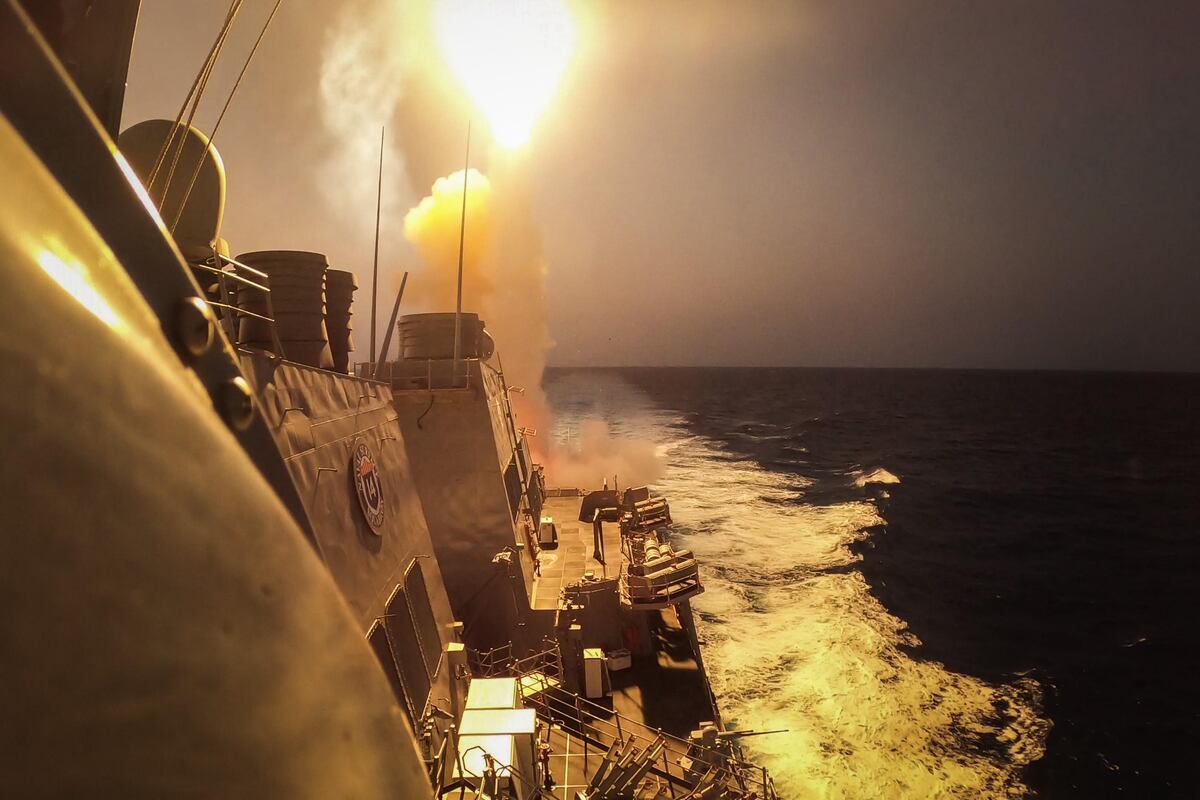
The U.S. Navy and Lockheed Martin have developed and fielded software updates for destroyers shooting down Houthi missiles and drones in the Red Sea, thanks to a team of technical experts that mined data from all the shootdown events since October.
The team studied engagements between U.S. ships and aircraft in the Middle East as well as threats posed by the Yemen-based militant group to understand how the fleet could tweak operations to better see and defeat drones and missiles. It also considered new capabilities the fleet might need for self-defense and to protect merchant ships.
The Naval Surface and Mine Warfighting Development Center has led this effort. The center’s mission is to develop surface warfare tactics, incorporate those into advanced training events and provide tactical expertise for the fleet.
The center’s commander, Rear Adm. Wilson Marks, told Defense News that after the Arleigh Burke-class destroyer Carney’s Oct. 19 shootdown of three land-attack cruise missiles launched from Yemen, “we did stand up a 24/7 watch to ensure that we could provide support to the ships and staff at a moment’s notice as they needed.”
As engagements lessened, the Navy has moved into a steady-state rhythm, with weekly meetings involving SMWDC, ships’ crew members, strike group leaders, U.S. 5th Fleet leaders and more.
The ships and aircraft provide a “storyboard” of what happened in each engagement from their perspective, Marks said, as well as data collected by the radars, sensors and combat systems.
SMWDC’s technical experts in Dahlgren, Virginia, then work with a team that includes Program Executive Office Integrated Weapons Systems, Naval Surface Warfare Center Dahlgren Division, Naval Surface Warfare Center Corona Division, Naval Information Warfighting Development Center, Johns Hopkins Applied Physics Laboratory and Lockheed Martin — and they scour the data for a range of purposes.
“The first thing is we provide immediate feedback to the ships,” highlighting any tactics changes SMWDC recommends, anything new they’re seeing in adversary behavior, new ways to configure ship systems to better see and respond to the threat, or other urgent lessons.
“Basically we’re trying to pull away the fog of war that’s going on there,” Marks said.
Sailors assigned to the U.S. Navy destroyer Carney stand watch in the ship’s combat information center during an operation to defeat a combination of Houthi missiles and drones in the Red Sea. (MC2 Aaron Lau/U.S. Navy)
In parallel, PEO Integrated Weapons Systems and Lockheed Martin are looking for “potential technical fixes” that can go into Aegis Combat System updates.
Additionally, SMWDC not only provides briefings about lessons learned to the next ships preparing to deploy, but it also rolls these updated tactics and real-world scenarios into the Surface Warfare Advanced Tactical Training events that ships conduct before their final certifications and deployments.
The Abraham Lincoln Carrier Strike Group, for example, went through a Surface Warfare Advanced Tactical Training event that was heavily influenced by the types of engagements destroyers have seen in the Red Sea over the past six months.
The strike group also tested tweaks to the Aegis Combat System software before it was pushed to ships currently operating in the Middle East, Marks said. He would not discuss the nature of the software changes, citing security reasons, but said it has shown “a significant increase in capability.”
Marks said the Navy and Lockheed Martin had developed a so-called Aegis Speed to Capability process that allows for small changes to be rapidly fielded, instead of waiting to incorporate them into the next major baseline upgrade to the combat system software.
The rear admiral said this has proved its value, as some ships deployed to the region now have software updates that help counter drones, “and we’re finding those to be very successful. And so that was an investment that was made several years ago that is really paying off now.”
Broadly, Marks said, Houthi engagements since October show the “tactics, techniques and procedures that we have in place are solid. Any changes that need to be made to those are kind of in the margins, and basically just making sure people fully understand how to utilize them.”
Though he wouldn’t provide specifics, again citing security reasons, Marks said some lessons learned have to do with the basics, including how the crews set up and operate their SPY radar.
“The Red Sea is probably one of the most difficult areas of the world when it comes to atmospherics and issues with radars. So our continued emphasis on how you set up your radar system in that type of environment has really been critical,” he said. “The second is, because of those atmospheric conditions, and also based on the adversary they’re going against, we make sure that we tailor our systems to look for the capabilities that the adversary has.”
Rather than look for a missile or drone akin to what China and Russia might fire, “you would look at the current adversary and say: ‘Hey, maybe we need to focus in a little bit more on ... certain speed characteristics or things like that that they’re seeing over in the Red Sea.’”
The U.S. Navy destroyer Gravely launches Tomahawk land-attack missiles in response to Iranian-backed Houthi behavior in the Red Sea on Jan. 12, 2024. (MC1 Jonathan Word/U.S. Navy)
He noted SMWDC made a decision within the past couple years to add training on countering unmanned systems in all domains, which has been validated by Houthis operating unmanned systems in the air, on the surface and under the water.
Overall, he said, the Surface Warfare Advanced Tactical Training events and other drills don’t require major changes or additions; rather, they may be tweaked to add a little more emphasis on certain skills and types of engagements to best prepare deploying ships for what they could encounter in the Middle East.
Though SMWDC and the rest of the technical team have generated a number of lessons and changes since October, Marks said it is important to note “our captains and crews in the Red Sea have been doing an absolutely incredible job.”
“Those sailors are executing at the top of their game — and this is during sustained combat operations at sea — and they’ve been adapting to all the adversary’s tactics like true combat veterans,” he added.
Megan Eckstein is the naval warfare reporter at Defense News. She has covered military news since 2009, with a focus on U.S. Navy and Marine Corps operations, acquisition programs and budgets. She has reported from four geographic fleets and is happiest when she’s filing stories from a ship. Megan is a University of Maryland alumna.
美国海军和洛克希德·马丁公司开发并部署了软件更新,用于驱逐舰在红海击落胡塞武装的导弹和无人机。这要归功于一个技术专家团队,他们挖掘了自 10 月以来所有击落事件的数据。
该团队研究了美国舰艇和飞机在中东的交战情况,以及也门境内武装组织构成的威胁,以了解舰队如何调整作战策略,从而更好地发现和拦截无人机和导弹。他们还考虑了舰队在自卫和保护商船方面可能需要的新能力。
海军水面与水雷作战发展中心牵头开展了这项工作。该中心的任务是制定水面作战战术,将其融入高级训练活动中,并为舰队提供战术专业知识。
该中心指挥官威尔逊·马克斯海军少将告诉《防务新闻》,在阿利·伯克级驱逐舰卡尼号于 10 月 19 日击落三枚从也门发射的陆攻巡航导弹后,“我们确实设立了 24/7 全天候值守,以确保我们能够在舰艇和人员需要时立即提供支持。”
随着交战减少,海军进入了一种稳定的节奏,每周都会举行会议,参会人员包括海上战备发展中心、舰艇船员、打击群指挥官、美国第五舰队指挥官等等。
马克思说,舰船和飞机从各自的角度提供了每次交战中发生的事情的“故事板”,以及雷达、传感器和作战系统收集的数据。
位于弗吉尼亚州达尔格伦的 SMWDC 技术专家随后与包括项目执行办公室综合武器系统、海军水面作战中心达尔格伦分部、海军水面作战中心科罗纳分部、海军信息战发展中心、约翰·霍普金斯应用物理实验室和洛克希德·马丁公司在内的团队合作,对数据进行搜寻,以用于各种目的。
“首先,我们会立即向舰艇提供反馈,”重点指出SMWDC建议的任何战术变化、他们在敌方行为中看到的任何新情况、配置舰艇系统以更好地发现和应对威胁的新方法,或其他紧急经验教训。
“我们基本上是想拨开笼罩在那里的战争迷雾,”马克思说。
在红海打击胡塞武装导弹和无人机联合攻击的行动中,美国海军驱逐舰“卡尼”号上的水兵在舰载作战信息中心值班。(二级士官亚伦·劳/美国海军)
与此同时,PEO Integrated Weapons Systems 和洛克希德·马丁公司正在寻找可以纳入宙斯盾作战系统升级的“潜在技术解决方案”。
此外,SMWDC 不仅向即将部署的下一艘舰艇提供有关经验教训的简报,而且还将这些更新的战术和真实场景融入到舰艇在最终认证和部署之前进行的“水面作战高级战术训练”活动中。
例如,亚伯拉罕·林肯号航母打击群参加了一次水面作战高级战术训练活动,该活动深受过去六个月驱逐舰在红海所经历的各种交战类型的影响。
马克思表示,打击群还在将宙斯盾作战系统软件推送至目前在中东执行任务的舰艇之前,对其进行了调整测试。他以安全为由,拒绝透露软件变更的具体内容,但表示变更后的系统“性能显著提升”。
马克思表示,海军和洛克希德·马丁公司开发了一种所谓的“宙斯盾快速能力提升”流程,该流程允许快速部署小的变更,而不是等到将其纳入作战系统软件的下一个主要基线升级中。
这位海军少将表示,这已经证明了它的价值,因为部署到该地区的一些舰艇现在已经进行了软件更新,有助于对抗无人机,“我们发现这些更新非常成功。因此,这是一项几年前进行的投资,现在真的开始获得回报了。”
马克思表示,总体而言,自10月以来与胡塞武装的接触表明,“我们现有的战术、技术和程序是稳固的。任何需要进行的调整都只是细微的,基本上只是确保人们完全理解如何运用这些战术、技术和程序。”
虽然他再次以安全原因为由拒绝提供具体细节,但马克思表示,一些吸取的教训与基本知识有关,包括机组人员如何设置和操作他们的 SPY 雷达。
“红海可能是世界上大气条件和雷达探测难度最大的地区之一。因此,我们持续关注如何在这种环境下部署雷达系统至关重要,”他说道。“其次,考虑到这些大气条件,以及我们面对的对手,我们会确保调整系统,使其能够探测到对手所拥有的能力。”
与其寻找类似于中国和俄罗斯可能发射的导弹或无人机,“不如看看当前的对手,然后说:‘嘿,也许我们需要更加关注……他们在红海看到的某些速度特征或类似的东西。’”
2024年1月12日,美国海军驱逐舰“格雷夫利”号发射战斧陆攻导弹,以回应伊朗支持的胡塞武装在红海的活动。(美国海军一级军士长乔纳森·沃德摄)
他指出,SMWDC在过去几年中决定增加针对所有领域无人系统的对抗训练,这一决定已被胡塞武装在空中、水面和水下操作无人系统所证实。
他表示,总体而言,水面作战高级战术训练活动和其他演习不需要进行重大改变或增加;相反,可以对其进行一些调整,以更加强调某些技能和类型的交战,从而更好地让部署舰艇为它们在中东可能遇到的情况做好准备。
尽管自 10 月以来,SMWDC 和其他技术团队已经总结出许多经验教训并做出了一些改变,但 Marks 表示,值得注意的是,“我们在红海的船长和船员们做得非常出色”。
“这些水兵在海上持续作战行动中都发挥出了最佳水平,他们像真正的战斗老兵一样适应了敌方的所有战术,”他补充道。
梅根·埃克斯坦是《防务新闻》的海军作战记者。自2009年以来,她一直从事军事新闻报道,主要关注美国海军和海军陆战队的行动、采购项目和预算。她曾报道过四个不同地理区域的舰队,最喜欢在舰艇上进行新闻报道。梅根毕业于马里兰大学。