Latvia To Order Anduril’s Barracuda Cruise Missile For Long-Range Strike Capability拉脱维亚将订购安杜里尔公司的梭鱼巡航导弹,以增强远程打击能力
The missile deal would drastically expand Riga’s precision-fire reach as NATO’s eastern flank races to build up its conventional long-range strike capabilities. The missile deal would drastically expand Riga’s precision-fire reach as NATO’s eastern flank races to build up its conventional long-range strike capabilities.
新闻视频
Published Sep 25, 2026 2:49 PM EDT
NATO member Latvia is moving toward acquiring Anduril Industries’ Barracuda family of long-range strike missiles, with Latvian President Edgars Rinkēvičs highlighting the effort during a visit to the U.S. defense technology company and a series of new defense-industry cooperation agreements involving Latvia. If the acquisition goes through, Latvia would be the first of the Baltic states to field a strike weapon in this category.
“It was great to visit Anduril to meet with Palmer Luckey and to witness signing of memoranda of cooperation with MOD of Latvia and Origin Robotics,” Rinkēvičs said in a post on X. “Looking forward to complete acquisition of Barracuda long-range missiles and [Latvian-U.S.] defense industry cooperation.”
It was great to visit @anduriltech to meet with @PalmerLuckey and to witness signing of memoranda of cooperation with MOD of Latvia and @OriginRobotics . Looking forward to complete acquisition of Baracuda longe range missiles and 🇱🇻 🇺🇸 defense industry cooperation pic.twitter.com/JafnNy5RAe — Edgars Rinkēvičs (@edgarsrinkevics) September 25, 2026
It was great to visit @anduriltech to meet with @PalmerLuckey and to witness signing of memoranda of cooperation with MOD of Latvia and @OriginRobotics . Looking forward to complete acquisition of Baracuda longe range missiles and 🇱🇻 🇺🇸 defense industry cooperation pic.twitter.com/JafnNy5RAe
The statement does not specify the precise Barracuda variant involved, the number of missiles Latvia intends to acquire, the expected delivery schedule, or the value of the prospective purchase. We have reached out to Anduril for more details.
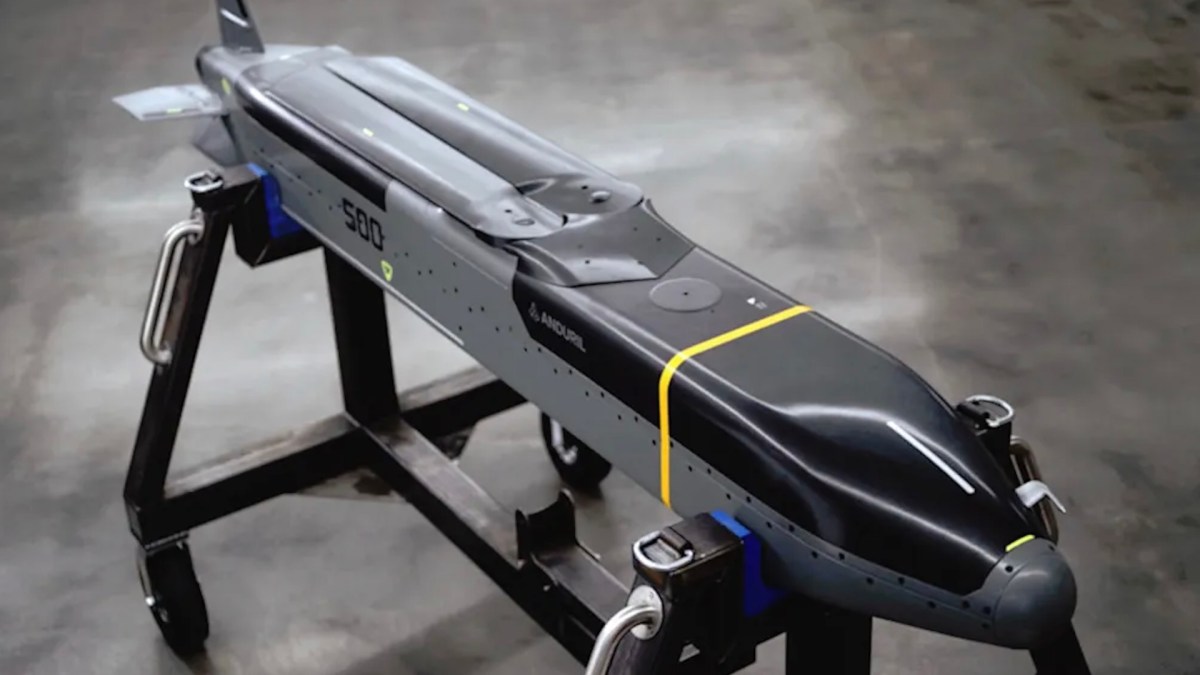
A likely candidate weapon is the Barracuda-500M, one member of Anduril’s family of autonomous, jet-powered cruise missiles, alongside the Barracuda-100M and -250M variants. Official descriptions put its range at more than 500 nautical miles, with a stated speed range of approximately 190 to 500 knots. The missile can be air-launched, for which it has received the official U.S. military designation AGM-189A . But with only a handful of utility biplanes and helicopters in its inventory, Latvia would acquire the surface-launched version, designated SLB-500M.
The announcement points to a potentially significant expansion of Latvia’s precision-strike capabilities as NATO’s eastern flank continues to build out longer-range conventional fires.
Latvia has already ordered the U.S.-made Army Tactical Missile System , or ATACMS, which will be fired M142 HIMARS launchers. The system is expected to enter Latvian service in 2027 and has a maximum range of about 186 miles.
A U.S. Army M142 HIMARS launcher involved in an exercise at at Spilve Airfield and Liepāja Airport in Latvia. Latvian Armed Forces Eriks Kukutis
Latvia’s ATACMS capability will give the country a foundation for ground-launched precision fires, but the broader European trend is toward significantly greater reach.
Ground- and sea-launched cruise and ballistic missile systems capable of hitting targets at between 1,000 and 2,000 kilometers (620 and 1,242 miles) or more are an emerging target for several European NATO members . France, Germany, Poland, Italy, Sweden and the United Kingdom are pursuing combinations of indigenous development and foreign procurement to address this requirement.
Latvia’s neighbor Poland, for example, has been building a layered long-range strike architecture combining JASSM/JASSM-ER air-launched cruise missiles with HIMARS and ATACMS. Warsaw’s ambitions as extending toward ground-launched weapons with ranges potentially reaching 3,000 kilometers (1,864 miles) and the country has previously expressed openess to hosting U.S.-owned nuclear weapons on its territory, too.
A M142 HIMARS launcher is seen during Poland’s Armed Forces Day parade in 2025. Photo by Artur Widak/NurPhoto/Getty Artur Widak
Latvian interest in Barracuda fits into the same larger transformation in European conventional strike capabilities.
For NATO’s Baltic members, the logic is particularly straightforward, with mobile, ground-launched weapons providing an additional means of striking military targets at depth without requiring control of the air over the launch area.
Dragon’s teeth obstacles are among the anti-mobility measures on Latvia’s eastern border with Russia. Latvian Armed Forces
The potential Barracuda acquisition would represent another step in a broader European shift toward deep precision strike , a term increasingly used to describe conventional weapons capable of holding targets hundreds or thousands of miles away at risk.
Deep precision strike is widely acknowledged as an increasingly important European capability gap. European NATO members have historically relied heavily on air-launched cruise missiles and other aircraft-delivered weapons, while ground-launched long-range systems have been comparatively scarce.
The deterioration of the European security environment following Russia’s full-scale invasion of Ukraine, together with the 2019 collapse of the Intermediate-Range Nuclear Forces Treaty , are important factors behind renewed European interest in long-range conventional strike.
A key driver behind Europe’s push for longer-range conventional strike is the desire to build a credible deterrent capable of holding targets deep inside Russia at risk, potentially including Moscow . Ukraine’s long-range strike campaign has demonstrated the strategic value of being able to impose costs at significant distances, while also underscoring the importance of having sufficient stocks of precision weapons. For NATO’s eastern flank, systems such as the ground-launched Barracuda could therefore provide not just another fires capability, but an additional means of imposing costs on an adversary without relying exclusively on airpower.
Importantly for Latvia, the emerging European approach is not limited to large air forces. NATO’s prospective deep-strike requirements are likely to place significant emphasis on mobile ground-launched systems because they can be dispersed and offer survivability advantages while avoiding the cost and vulnerability associated with relying exclusively on aircraft or ships as launch platforms.
An Anduril Barracuda 500, top, and a Barracuda 100, displayed during Modern Day Marine 2026 in Washington, D.C. U.S. Marine Corps photo by Cpl. Abigail Hutcheson Cpl. Abigail Hutcheson
That makes systems such as the surface-launched Barracuda particularly relevant to countries on NATO’s eastern flank.
Anduril has positioned Barracuda as part of an effort to address what it describes as a shortfall in affordable, producible long-range precision weapons . A prototype surface-launched Barracuda-500 successfully demonstrated its launcher, missile, and booster concept in testing in 2025. Anduril has emphasized that the family is intended to be more producible and affordable than many existing “exquisite” long-range weapons.
The emphasis on production capacity is notable in light of lessons emerging from the war in Ukraine, where both sides have demonstrated the importance of maintaining substantial stocks of precision weapons and relatively inexpensive one-way attack systems .
European governments are increasingly wrestling with the same issue. However, there is a fundamental tension between rapidly filling capability gaps through off-the-shelf purchases and developing indigenous European weapons that can strengthen the continent’s defense-industrial base, which is also a critical political consideration.
Latvia’s emerging relationship with Anduril appears to combine elements of both approaches, by acquiring an American-developed strike capability while simultaneously pursuing industrial cooperation with U.S. defense companies.
Ground launch of Anduril’s Barracuda-500M. Anduril
There is also a recent European precedent for combining Barracuda procurement with local industrial participation.
In July 2026, Anduril signed a strategic agreement with Polish national maintenance, repair and overhaul provider Wojskowe Zakłady Lotnicze Nr 2 (WZL-2) to establish production of the Barracuda-500M at WZL-2 facilities in Bydgoszcz, Poland. Polish state-owned defence group Polska Grupa Zbrojeniowa said Poland was the first European country to sign such an agreement with Anduril.
Bezpieczeństwo zaczyna się od silnych sojuszy. 💥🖊️ Dziś została podpisana umowa o współpracy @PGZ_pl i WZL-2 z firmą Anduril Industries, która umożliwi utworzenie w Polsce miejsc montażu i produkcji autonomicznych rakietowych pocisków manewrujących dalekiego zasięgu… pic.twitter.com/JnmM6lQZ7L — Ministerstwo Aktywów Państwowych 🇵🇱 (@MAPGOVPL) July 6, 2026
Bezpieczeństwo zaczyna się od silnych sojuszy. 💥🖊️ Dziś została podpisana umowa o współpracy @PGZ_pl i WZL-2 z firmą Anduril Industries, która umożliwi utworzenie w Polsce miejsc montażu i produkcji autonomicznych rakietowych pocisków manewrujących dalekiego zasięgu… pic.twitter.com/JnmM6lQZ7L
Polish officials have also emphasized the missile’s intended low production cost relative to higher-end U.S. cruise missiles. The planned Polish program is expected to progressively increase Polish content and eventually incorporate broader European elements, including software solutions from Anduril.
Latvia has not publicly detailed whether any Barracuda-related production, assembly, or other industrial work would be conducted in the country.
However, Latvia’s Investment and Development Agency says the country’s defense-technology delegation in the United States is seeking opportunities involving joint development, testing, manufacturing, system integration and supply chains. Origin Robotics is among the Latvian companies participating in that effort.
The broader Latvian delegation includes companies working across unmanned and counter-unmanned systems, communications, electronics, sensors, software, artificial intelligence, cybersecurity, and manufacturing.
A Latvian Army soldier shows drone video footage to U.S. Marines during a HIMARS live-fire exercise at Adazi Training Area, Latvia. U.S. Marine Corps photo by Cpl. Niles Lee Sgt. Niles Lee
Exactly how Latvia intends to employ Barracuda, how many missiles it plans to acquire, and whether any portion of the system will eventually be produced or integrated in Latvia remain unclear from the president’s announcement.
For now, the development marks another indication that long-range precision fires are moving from a capability concentrated among Europe’s largest military powers toward a broader requirement across NATO’s highly strategic eastern flank.
Contact the author: thomas@thewarzone.com
Comments couldn’t be loaded. Please refresh the page.
发布于美国东部时间2026年9月25日下午2:49
北约成员国拉脱维亚正积极推进采购安杜里尔工业公司(Anduril Industries)的“梭鱼”(Barracuda)系列远程打击导弹。拉脱维亚总统埃德加斯·林克维奇斯(Edgars Rinkēvičs)在访问这家美国国防科技公司期间重点强调了这一努力,并签署了一系列涉及拉脱维亚的国防工业合作协议。如果采购成功,拉脱维亚将成为波罗的海三国中首个装备此类打击武器的国家。
“很高兴能访问安杜里尔,与帕尔默·拉基会面,并见证与拉脱维亚国防部和Origin Robotics公司签署合作备忘录,”林克维奇斯在X论坛上发帖说。“期待完成梭鱼远程导弹的采购以及(拉脱维亚-美国)国防工业合作。”
很高兴能访问@anduriltech,与@PalmerLuckey会面,并见证与拉脱维亚国防部和@OriginRobotics签署合作备忘录。期待完成Baracuda远程导弹的采购,以及与🇱🇻🇺🇸国防工业的合作。pic.twitter.com/JafnNy5RAe — Edgars Rinkēvičs (@edgarsrinkevics) September 25, 2026
很高兴能访问@anduriltech,与@PalmerLuckey会面,并见证与拉脱维亚国防部和@OriginRobotics签署合作备忘录。期待完成Baracuda远程导弹的采购,并推进与🇱🇻🇺🇸国防工业的合作。pic.twitter.com/JafnNy5RAe
声明并未具体说明涉及的是哪种型号的梭鱼导弹、拉脱维亚计划采购的导弹数量、预计交付时间表或潜在采购金额。我们已联系安杜里尔公司以获取更多详情。
一种可能的候选武器是梭鱼-500M,它是安杜里尔公司自主喷气式巡航导弹系列的一员,该系列还包括梭鱼-100M和-250M两种型号。官方数据显示,其射程超过500海里,速度范围约为190至500节。该导弹可空射,其美国军方正式名称为AGM-189A。但由于拉脱维亚目前仅有少量通用双翼飞机和直升机,因此该国可能会采购其水面发射版本,即SLB-500M。
该声明表明,随着北约东翼继续发展远程常规火力,拉脱维亚的精确打击能力可能会得到显著提升。
拉脱维亚已订购美国制造的陆军战术导弹系统(ATACMS),该系统将由M142 HIMARS发射器发射。该系统预计将于2027年加入拉脱维亚军队服役,最大射程约为186英里。
一辆美国陆军M142“海马斯”(HIMARS)火箭炮系统参与了在拉脱维亚斯皮尔韦机场和利耶帕亚机场举行的演习。拉脱维亚武装部队 埃里克·库库蒂斯
拉脱维亚的ATACMS能力将为该国的地面发射精确火力提供基础,但更广泛的欧洲趋势是朝着更远的射程发展。
能够打击1000至2000公里(620至1242英里)或更远射程目标的陆基和海基巡航导弹和弹道导弹系统,正成为多个欧洲北约成员国的新兴目标。法国、德国、波兰、意大利、瑞典和英国正在寻求通过自主研发和外国采购相结合的方式来满足这一需求。
例如,拉脱维亚的邻国波兰一直在构建一个多层次的远程打击体系,该体系将JASSM/JASSM-ER空射巡航导弹与HIMARS和ATACMS导弹系统相结合。华沙的野心还延伸至射程可达3000公里(1864英里)的陆基武器,而且该国此前也曾表示愿意在其领土上部署美国拥有的核武器。
2025年波兰武装部队日阅兵式上,可以看到一辆M142 HIMARS火箭炮。照片由Artur Widak/NurPhoto/Getty提供。
拉脱维亚对梭鱼导弹的兴趣,与欧洲常规打击能力的更大转型相契合。
对于北约的波罗的海成员国来说,这种逻辑尤其简单明了,机动式陆基武器提供了一种额外的手段,可以在不控制发射区域上空的情况下打击纵深的军事目标。
龙牙状障碍物是拉脱维亚东部与俄罗斯接壤的边境线上的反机动措施之一。拉脱维亚武装部队
潜在的梭鱼导弹采购将代表欧洲向深度精确打击方向的又一次重大转变,这一术语越来越多地用于描述能够威胁数百或数千英里外目标的常规武器。
深度精确打击能力被广泛认为是欧洲日益凸显的能力缺口。欧洲北约成员国历来严重依赖空射巡航导弹和其他机载武器,而陆基远程打击系统则相对匮乏。
俄罗斯全面入侵乌克兰后,欧洲安全环境恶化,加上 2019 年《中导条约》的崩溃,是欧洲重新对远程常规打击产生兴趣的重要因素。
欧洲推动远程常规打击的关键驱动力在于,希望建立一种可信的威慑力量,能够对俄罗斯境内纵深目标(包括莫斯科本身)构成威胁。乌克兰的远程打击行动展现了远距离打击能力的战略价值,同时也凸显了拥有充足精确制导武器的重要性。因此,对于北约东翼而言,像陆基“梭鱼”导弹这样的系统不仅可以提供另一种火力打击能力,还能提供一种无需完全依赖空中力量就能对敌方造成损失的额外手段。
对拉脱维亚而言,至关重要的是,欧洲正在形成的战略并非仅限于庞大的空军力量。北约未来对纵深打击能力的需求很可能高度重视机动式陆基发射系统,因为这类系统可以分散部署,并具备更高的生存能力,同时避免了完全依赖飞机或舰船作为发射平台所带来的成本和脆弱性。
图中所示为在华盛顿特区举行的“现代海军陆战队2026”活动中展出的Anduril Barracuda 500(上图)和Barracuda 100。照片由美国海军陆战队下士阿比盖尔·哈奇森拍摄。
这使得像梭鱼这样的水面发射系统对于北约东翼国家来说尤为重要。
安杜里尔公司将“梭鱼”(Barracuda)导弹定位为旨在解决其所称的“价格合理、易于生产的远程精确武器”短缺问题的一部分。2025年,“梭鱼-500”原型舰载型导弹成功通过测试,验证了其发射器、导弹和助推器的设计理念。安杜里尔公司强调,该系列导弹的设计目标是比许多现有的“精密”远程武器更易于生产且价格更低廉。
鉴于乌克兰战争中双方都展现了保持大量精确武器和相对廉价的单向攻击系统的重要性,对生产能力的重视尤为值得关注。
欧洲各国政府日益面临同样的问题。然而,在通过购买现成装备快速填补能力缺口与发展能够加强欧洲大陆国防工业基础的本土欧洲武器之间,存在着根本性的矛盾,而后者也是一个至关重要的政治考量因素。
拉脱维亚与安杜里尔公司之间正在形成的关系似乎结合了两种方法的要素,一方面获得了美国开发的打击能力,另一方面又与美国国防公司开展工业合作。
安杜里尔公司“梭鱼-500M”火箭地面发射。安杜里尔公司
欧洲最近也有将 Barracuda 采购与当地工业参与相结合的先例。
2026年7月,安杜里尔公司与波兰国家维修、修理和大修供应商Wojskowe Zakłady Lotnicze Nr 2 (WZL-2)签署了一项战略协议,将在WZL-2位于波兰比得哥什的工厂内建立Barracuda-500M的生产基地。波兰国有国防集团Polska Grupa Zbrojeniowa表示,波兰是第一个与安杜里尔公司签署此类协议的欧洲国家。
Bezpieczeństwo zaczyna się od silnych sojuszy。 💥🖊️ Dziś została podpisana umowa o współpracy @PGZ_pl i WZL-2 zfirmą Anduril Industries, która umożliwi utworzenie w Polsce miejsc montażu i produkcji autonomicznych rakietowych pocisków manewrujących dalekiego zasięgu… pic.twitter.com/JnmM6lQZ7L — 部长两 Aktywów Państwowych 🇵🇱 (@MAPGOVPL) 2026 年 7 月 6 日
Bezpieczeństwo zaczyna się od silnych sojuszy。 💥🖊️ Dziś została podpisana umowa o współpracy @PGZ_pl i WZL-2 zfirmą Anduril Industries, która umożliwi utworzenie w Polsce miejsc montażu i produkcji autonomicznych rakietowych pocisków manewrujących dalekiego zasięgu… pic.twitter.com/JnmM6lQZ7L
波兰官员还强调,与美国高端巡航导弹相比,该导弹的生产成本预计会更低。波兰的这项计划预计将逐步提高波兰本土化程度,并最终纳入更广泛的欧洲元素,包括来自安杜里尔公司的软件解决方案。
拉脱维亚尚未公开详细说明是否会在该国进行任何与梭鱼(Barracuda)相关的生产、组装或其他工业工作。
然而,拉脱维亚投资发展署表示,该国驻美国的国防技术代表团正在寻求在联合研发、测试、制造、系统集成和供应链等方面的合作机会。Origin Robotics是参与这项工作的拉脱维亚公司之一。
拉脱维亚代表团成员包括从事无人和反无人系统、通信、电子、传感器、软件、人工智能、网络安全和制造等领域的公司。
在拉脱维亚阿达济训练区举行的HIMARS实弹演习中,一名拉脱维亚陆军士兵向美国海军陆战队员展示无人机拍摄的视频画面。美国海军陆战队下士尼尔斯·李/中士尼尔斯·李摄
总统的声明并未明确说明拉脱维亚打算如何使用梭鱼导弹系统,计划采购多少枚导弹,以及该系统的任何部分最终是否会在拉脱维亚生产或整合。
就目前而言,这一发展标志着远程精确火力能力正从欧洲主要军事强国集中掌握的能力,向北约高度战略性的东翼更广泛的需求转变。
联系作者:thomas@thewarzone.com
评论加载失败,请刷新页面。