“I encountered extraordinary people who showed us what human beings are capable of enduring.”“我遇到了许多非凡的人,他们向我们展示了人类能够承受的苦难。”
Barney Chua on filming Grab's emotionally-evocative documentaries
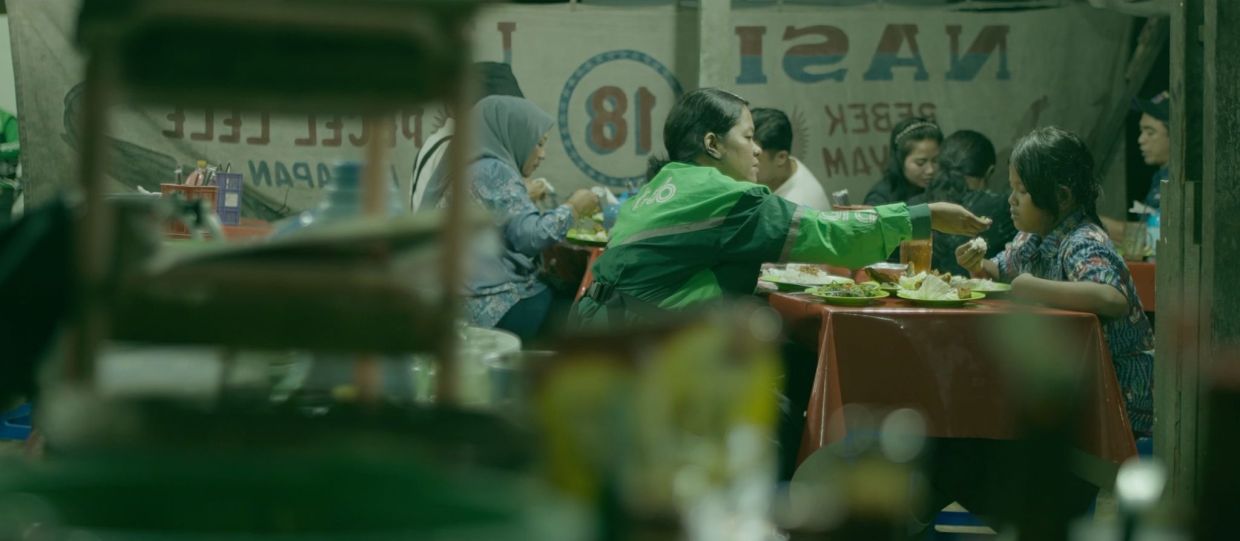
The Grab documentaries shine a light on resilience across South-East Asia.
WHEN filmmaker Barney Chua wrapped filming in Chiang Mai, he bid farewell to Aom Kwanpiromtara Suksri with a hug and a brief “take care”.
It was only after he walked away that the words began to weigh on him.
“I suddenly thought to myself – what a strange thing to say,” Chua reflects.
He was leaving Aom behind in a city where seasonal haze is a suffocating annual reality, with air quality often exceeding the World Health Organisation's safe limit.
As the co-founder of Biochar Life, Aom spends her days training smallholder farmers to adopt biochar instead of burning agricultural waste openly.
Her work however, is deeply personal. Her daughter was born with respiratory complications linked to poor air quality, making Chiang Mai’s haze impossible to separate from home life.
What struck Chua was how Aom’s activism began not with climate targets or policy, but simply, the instinct to protect her child.
“When a mother talks about her child struggling to breathe, the conversation becomes deeply human,” says Chua, the director of Grab’s new slate of documentaries.
This profound realisation set the emotional anchor for the three documentaries, which follow environmental advocates, persons with disabilities (PWDs), and single mothers across South-East Asia.
For Chua and his crew, filming was easy; earning trust of his subjects was not – and with that trust came responsibility.
“A lot of times when people talk about poverty or hardship, the storytelling immediately becomes about pity. But for us, the challenge was balancing intimacy with dignity.”
Chua believes authenticity comes from time spent with people to gain a deeper understanding of their everyday lives.
“Their routines, values, and principles tell you far more about them than dramatic moments ever could,” he confides.
That philosophy shaped the way he approached his subjects, including Sam Sothea, the general manager of Hydrologic.
The Cambodian social enterprise manufactures ceramic water filters that remove harmful bacteria from drinking water, but Chua quickly realised the story was not about filtration technology.
For Chua (middle with green bag), the ultimate purpose of the films is not advocacy through statistics, but humanisation through honest, respectful observation.
Sothea had a family member who fell ill due to water contamination, transforming what could have been a technical conversation about clean water into something deeply personal.
Rather than accepting the reality faced by many rural Cambodians, Sothea dedicated herself to expanding access to affordable water filtration, helping families avoid the same tragedy she experienced.
In Indonesia, Eko, an amputee rider who lost his right hand in an accident before learning to ride a modified motorcycle, left an impression on Chua.
The crew expected a narrative centered on trauma, but found the opposite instead.
“We kept wondering why he wasn't grieving the loss of his arm more openly. But to him, survival was more important than grief.
“He even asked us what was so special about him working hard for his family. To him, it was obvious: his family needed to live, so he needed to work,” Chua recalls.
He adds that Aom, Sothea and Eko were reminders that people rarely see themselves through the same lens as outsiders.
The same unyielding strength emerged among the single mothers he filmed.
Many had survived domestic abuse, navigated the stigma of divorce or rebuilt their lives from scratch through upskilling programmes and employment opportunities.
At the outset, Chua and his team were curious about the events that had shaped their lives.
But as filming progressed, their origin stories became secondary to their roles as breadwinners, caregivers and core pillars of their communities.
Realising their stories were not at all about hardship, Chua points out they are, at their core, about resilience, hope and perseverance.
“I was humbled by their strength and optimism. They wanted to stand on their own two feet. Even when the odds were stacked against them, many still insisted on working and supporting themselves before seeking help.
“Most of them were not fighting only for themselves anymore. They were fighting for their children,” he says.
Power of interdependence
One of Chua’s most revealing discoveries was that resilience rarely exists in isolation. True independence, he observed, begins with interdependence.
The documentaries spotlight the vital role grassroots networks play in helping individuals rebuild their lives and thrive.
Across South-East Asia, Grab collaborates with many of these organisations through its ESG initiatives, connecting communities to skills training, income opportunities and support systems that empower greater independence and long-term resilience.
Fika Chasasmeta for example, established Komunitas Ojol Tuna Rungu Indonesia (KOTRI) after witnessing how many PWDs struggled to access stable income opportunities.
She tells Chua, she created the support network for PWDs such as Eko, so they can build livelihoods with dignity and independence instead of begging or relying on family members for handouts.
Eko adapts to life after losing his right hand and continues working to support his family without self-pity.
In Malaysia, organisations like Persatuan Pemandu E-Hailing OKU Fizikal Malaysia (PPEOFM) provide a vital support network for people like Badrul – a single father with dwarfism who supports and raises his seven-year-old daughter through his work as a Grab driver-partner.
Chua found a similar spirit in Maureen Hitipeuw, who founded Single Moms Indonesia after searching for support as a single mother herself.
What began as a Facebook group has since evolved into a nationwide network of more than 1,300 women helping one another rebuild confidence, gain new skills and return to work.
“The world does not naturally bend itself around them. So independence becomes something that is designed, adapted, negotiated, and constantly worked towards through community,” Chua notes.
Single Moms Indonesia – a support group started by Maureen, helps single mothers return to work through upskilling, with Grab supporting the effort through registration assistance, free laptops and access to job opportunities.
Seeing the world differently
By the end of filming, Chua found himself returning to one common thread. “Responsibility is a very powerful driving force,” he reflects.
Whether it was a mother fighting for her children, a rider adapting to life after disability, or an advocate working to improve air quality for future generations, each was driven by a commitment to something larger than themselves.
Equally inspiring were the community leaders and NGO founders who had turned personal experiences into solutions that now support thousands of others across the region.
The experience also reinforced Chua's own responsibility as a filmmaker.
“A film cannot solve a world problem. At best, a film can shine a light on issues and help people better understand what others are going through.”
Months after filming wrapped, Chua still finds himself thinking about that farewell in Chiang Mai.
Not because of the pollution or the statistics, but because it reminded him that behind every issue is a person living through it.
“I hope audiences leave the films seeing these individuals the way we saw them: truthfully, honestly, and with dignity.”
CTA: Watch the Grab documentaries and discover the stories of resilience, community and hope unfolding across South-East Asia here .
Thank you for your report!
55 defining ESG moments in Malaysia
Don’t toss those scraps
Ateneo scientists propose generating power from Visayas tides
Grab出品的纪录片展现了东南亚各地人民的韧性。
当电影制作人 Barney Chua 在清迈结束拍摄时,他拥抱了 Aom Kwanpiromtara Suksri,并简短地说了句“保重”,向他告别。
直到他走开之后,那些话才开始让他感到沉重。
“我当时突然想到——这话说得真奇怪,”蔡女士回忆道。
他离开奥姆时,这座城市正遭受季节性雾霾的困扰,每年空气质量都令人窒息,经常超过世界卫生组织的安全限值。
作为 Biochar Life 的联合创始人,Aom 每天的工作就是培训小农户采用生物炭代替公开焚烧农业废弃物。
然而,她的作品与个人经历有着深刻的联系。她的女儿出生时患有与空气质量差相关的呼吸系统疾病,这使得清迈的雾霾与她的家庭生活密不可分。
令蔡女士印象深刻的是,Aom 的行动主义并非始于气候目标或政策,而是源于保护孩子的本能。
“当一位母亲谈论她的孩子呼吸困难时,对话就变得非常人性化了,”Grab 新纪录片系列的导演蔡说道。
这一深刻的认识为这三部纪录片奠定了情感基调,这三部纪录片分别讲述了东南亚各地环保倡导者、残疾人和单身母亲的故事。
对蔡和他的团队来说,拍摄很容易;赢得拍摄对象的信任却很难——而信任也带来了责任。
“很多时候,人们谈到贫困或苦难时,故事往往立刻变成博取同情。但对我们来说,挑战在于如何在展现亲切感的同时维护尊严。”
蔡美儿认为,真实性来自于花时间与人相处,从而更深入地了解他们的日常生活。
他坦言:“他们的日常习惯、价值观和原则,比任何戏剧性的瞬间都更能反映他们的本质。”
这种理念塑造了他对待拍摄对象的方式,包括水文公司总经理萨姆·索提亚。
这家柬埔寨社会企业生产陶瓷净水器,可以去除饮用水中的有害细菌,但蔡很快意识到,这个故事与过滤技术无关。
对于蔡(图中手提绿色袋子的人)来说,电影的最终目的不是通过统计数据进行宣传,而是通过诚实、尊重的观察来展现人性。
索提亚的一位家人因水污染而生病,这使得原本可能只是关于清洁水的技术性讨论,变成了非常私人的事情。
索提亚并没有接受柬埔寨许多农村居民面临的现实,而是致力于扩大人们获得价格合理的净水设备的机会,帮助家庭避免重蹈她所经历的悲剧。
在印度尼西亚,埃科(Eko)是一位截肢骑手,他在一次事故中失去了右手,后来学会了骑改装摩托车,他给蔡(Chua)留下了深刻的印象。
剧组原本以为故事会以创伤为中心,结果却发现情况恰恰相反。
“我们一直不明白,为什么他没有更公开地表达失去手臂的悲痛。但对他来说,生存比悲伤更重要。”
“他甚至问我们,他努力工作养家有什么特别之处。对他来说,答案显而易见:家人需要生活,所以他需要工作,”蔡回忆道。
他还补充说,Aom、Sothea 和 Eko 提醒人们,人们很少能像外人那样看待自己。
在他拍摄的单身母亲身上,也展现出了同样的坚韧不拔的精神。
许多人曾遭受家庭虐待,克服了离婚带来的耻辱,或者通过技能提升计划和就业机会从零开始重建生活。
一开始,蔡和他的团队对塑造他们人生的事件感到好奇。
但随着拍摄的进行,他们的出身故事逐渐被他们作为养家糊口者、照顾者和社区核心支柱的角色所取代。
蔡先生指出,他们的故事并非全然是关于苦难,而是关于韧性、希望和毅力。
“他们的坚强和乐观让我深受感动。他们想要自力更生。即使面临重重困难,许多人仍然坚持先工作养活自己,然后再寻求帮助。”
他说:“他们中的大多数人不再仅仅为自己而战,而是为了他们的孩子而战。”
相互依存的力量
蔡氏最具启发性的发现之一是,韧性很少孤立存在。他观察到,真正的独立始于相互依存。
这些纪录片着重展现了基层网络在帮助个人重建生活和蓬勃发展方面发挥的重要作用。
在整个东南亚地区,Grab 通过其 ESG 计划与许多此类组织合作,将社区与技能培训、收入机会和支持系统联系起来,从而增强社区的独立性和长期韧性。
例如,Fika Chasasmeta 在目睹了许多残疾人难以获得稳定的收入机会后,成立了 Komunitas Ojol Tuna Rungu Indonesia (KOTRI)。
她告诉蔡,她为像埃科这样的残疾人创建了支持网络,以便他们能够有尊严、独立地建立生计,而不是乞讨或依靠家人施舍。
失去右手后,埃科适应了新的生活,并继续工作养家糊口,没有丝毫自怜。
在马来西亚,像马来西亚残疾人乘车协会 (PPEOFM) 这样的组织为像巴德鲁这样的人提供了重要的支持网络——巴德鲁是一位患有侏儒症的单身父亲,他通过担任 Grab 司机合作伙伴来养活和抚养他七岁的女儿。
Chua 在 Maureen Hitipeuw 身上找到了类似的精神,Maureen Hitipeuw 自己也是一名单身母亲,在寻求支持后创立了“印尼单身妈妈”组织。
最初只是一个 Facebook 群组,如今已发展成为一个拥有 1300 多名女性的全国性网络,她们互相帮助重建自信、获得新技能并重返工作岗位。
“世界不会自然而然地围绕他们运转。因此,独立成为一种需要通过社群去设计、适应、协商和不断努力才能实现的东西,”蔡指出。
印尼单身妈妈互助小组由 Maureen 发起,旨在通过技能提升帮助单身母亲重返工作岗位,Grab 也通过注册协助、免费笔记本电脑和就业机会为该小组提供支持。
以不同的视角看待世界
拍摄结束后,蔡先生发现自己始终围绕着一个共同的主题。“责任是一种非常强大的驱动力,”他反思道。
无论是为孩子而战的母亲,还是适应残疾后生活的骑手,亦或是致力于改善子孙后代空气质量的倡导者,他们都怀着比自身更伟大的信念而奋斗。
同样令人鼓舞的是那些将个人经历转化为解决方案的社区领袖和非政府组织创始人,他们现在为该地区成千上万的人提供了支持。
这次经历也强化了蔡美儿作为一名电影制作人的责任感。
“电影无法解决世界性问题。充其量,电影可以揭示问题,帮助人们更好地理解他人的处境。”
拍摄结束后几个月,蔡依然会想起在清迈的那场告别。
不是因为污染或统计数据,而是因为这让他意识到,每一个问题背后都是一个正在经历这一切的人。
“我希望观众看完电影后,能像我们一样看待这些人物:真实、坦诚、有尊严。”
CTA:观看 Grab 纪录片,了解东南亚各地正在上演的关于韧性、社区和希望的故事。
感谢您的报告!
马来西亚55个具有决定性意义的ESG时刻
别把那些碎屑扔掉。
雅典耀大学科学家提议利用维萨亚斯群岛的潮汐发电