More financial help from 2027 for caregivers of those with intellectual disabilities or autism从2027年起,将为智力障碍或自闭症患者的照护者提供更多经济援助。
The eligibility criteria for schemes like the Home Caregiving Grant will be expanded. Read more at straitstimes.com.
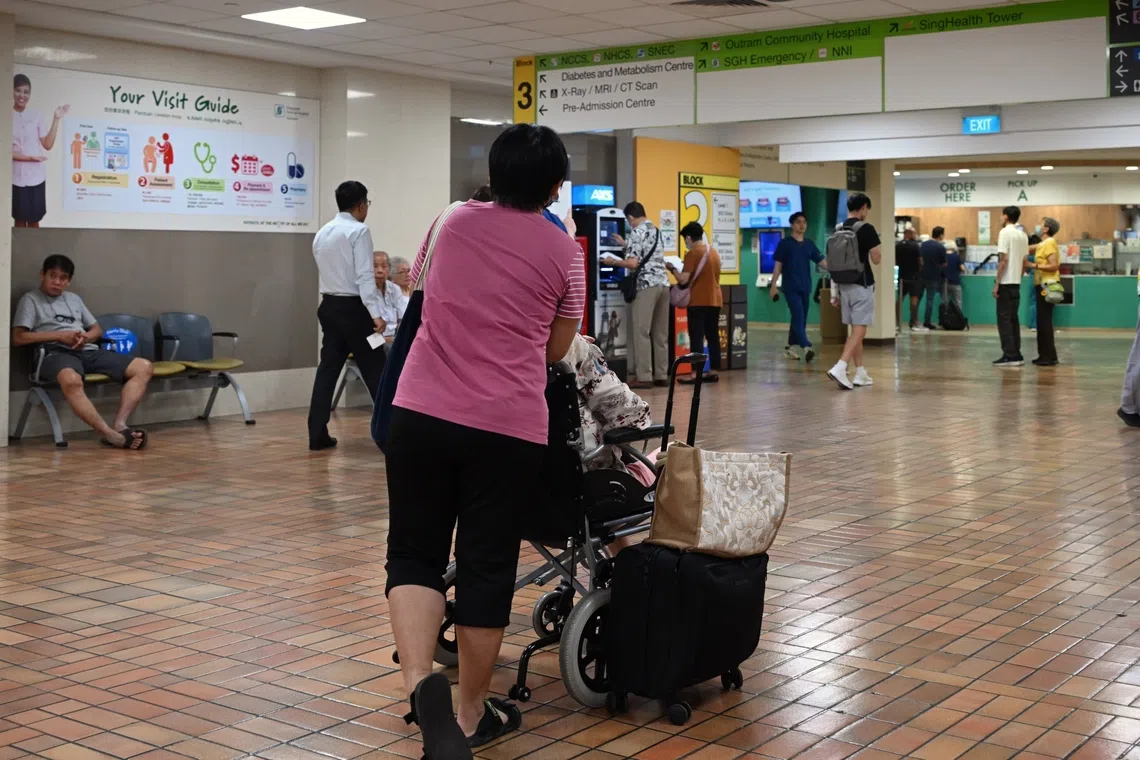
The eligibility criteria for schemes like the Home Caregiving Grant will be expanded.
ST PHOTO: KUA CHEE SIONG
Published Sep 04, 2026, 10:55 AM
Updated Sep 04, 2026, 10:55 AM
From 2027, more caregivers of people with intellectual disabilities or autism will get financial support, including expanded eligibility for the Home Caregiving Grant and lower migrant worker levies.
New Caregiver Support Touchpoints will open at community centres to help caregivers find support, while a common training framework will guide caregivers through their journey.
A new website, Carers Hub, was launched to help caregivers access services, trade caregiving items, monitor mental health, and connect with social service agencies.
SINGAPORE – Caregivers of those with intellectual disabilities or autism can expect more financial support from 2027, following the broadening of eligibility criteria for certain schemes.
The support includes a lower migrant domestic worker levy of $60, down from the usual $300, and the Home Caregiving Grant (HCG), which provides up to $600 monthly to defray caregiving costs.
Minister for Health Ong Ye Kung announced the changes at the Home Nursing Foundation’s 50th anniversary Caregiving Conference on Sept 4, alongside several other boosts to caregiver support coming in 2027.
Currently, the HCG is available only when care recipients need help with at least three activities of daily living (ADLs), such as feeding, dressing and toileting, as assessed by a professional.
However, there is a group of people with intellectual disabilities or autism with significant care needs who may not qualify for HCG, said Ong.
They may be able to perform ADLs, but still have significant care needs that are not adequately reflected in an ADL assessment. The broadened eligibility criteria would include the care needs of this group.
The change will apply to four financial support schemes: the HCG, the Migrant Domestic Worker Levy Concession for Persons with Disabilities, the Caregivers Training Grant, and the Pioneer Generation Disability Assistance Scheme.
Financial assistance and subsidies were the top service s that caregivers of persons with disabilities required but have not been able to access , according to the National Council of Social Service’s Disability and Inclusion Panel Study in 2023.
This was mainly due to complicated application processes or ineligibility for the services, according to the study.
Other initiatives announced by the Health Minister at the conference include eight new community touchpoints.
These Caregiver Support Touchpoints (CST) will be set up at five aged care service providers in Tiong Bahru-Redhill, Toa Payoh, Bedok, Bukit Panjang and Yishun, as well as three Enabling Services Hubs – community facilities offering support for people with disabilities – in Tampines, Punggol and Jurong.
Said Ong: “Whether their loved one is a senior, person with a disability, (has) dementia, (is) facing mental health challenges or a serious illness, caregivers can approach any CST and simply ask: ‘I am a caregiver. What should I do?’”
The CST staff can help identify their needs, explain available support, and connect them to services for themselves and their loved ones.
A common caregiver training framework is also in the works. It organises information on training around caregivers’ needs at each stage of their journey, so they do not need to search multiple sources to find useful training, said Ong.
The moves come as caregivers in Singapore, once overshadowed by the needs of care recipients, are increasingly seen as a group to be supported in their own right.
Ong described them as quietly toiling away in the background, playing a vital but often unnoticed role, and noted their physical and emotional burdens.
“Caregivers deserve our support, and the Government can do so in some practical ways.”
New marketplace for caregivers
A new website aimed at helping caregivers navigate information and services more easily was also launched at the conference, which was held at Gardens by the Bay’s Flower Dome.
Known as Carers Hub, it features a caregiver marketplace where users can exchange caregiving-related items, such as equipment and adaptive clothing. They may list items for sale or offer them as donations, while organisations can list their products and services.
Caregivers can also monitor their mental well-being on the website, through daily mood check-ins and self-assessment tools. They may choose to share their assessment results with a participating agency and request follow-up.
To mark the launch, the Home Nursing Foundation signed an agreement with seven partners – Caregiving Welfare Association, Lions Befrienders, Methodist Welfare Services, Montfort Care, SG Assist, TOUCH Community Services and MoneyOwl – to exchange expertise and resources.
About 500 guests gathered at the conference to discuss how Singapore can better support caregivers amid increasingly diverse and complex care needs.
Christine Tan is a correspondent at The Straits Times reporting on social affairs and issues of justice in Singapore.
Caregivers/Caregiving
居家护理补助金等计划的资格标准将扩大。
《海峡时报》摄影:郭志雄
发布于 2026 年 9 月 4 日上午 10:55
更新于2026年9月4日上午10:55
从 2027 年起,更多智力障碍或自闭症患者的照护者将获得经济支持,包括扩大居家照护补助金的适用范围和降低移工税。
新的照护者支持服务点将在社区中心开设,以帮助照护者获得支持,同时,一个通用的培训框架将指导照护者完成他们的照护之旅。
一个名为“照顾者中心”的新网站正式上线,旨在帮助照顾者获取服务、交换照顾用品、监测心理健康状况以及与社会服务机构联系。
新加坡——随着某些计划的资格标准扩大,从 2027 年起,智力障碍或自闭症人士的照顾者有望获得更多经济支持。
这项支持措施包括将外籍家庭佣工税从通常的 300 美元降低到 60 美元,以及家庭护理补助金 (HCG),该补助金每月最高可达 600 美元,用于支付护理费用。
卫生部长王乙康于9月4日在家庭护理基金会成立50周年护理大会上宣布了这些变化,同时还宣布了2027年将出台的其他几项加强护理人员支持的措施。
目前,只有当护理对象需要帮助完成至少三项日常生活活动(ADL),例如进食、穿衣和如厕时,经专业人员评估,HCG 才能提供。
Ong表示,然而,有一部分患有智力障碍或自闭症且有大量护理需求的人可能不符合HCG的资格。
他们或许能够完成日常生活活动,但仍有大量的照护需求,而这些需求无法在日常生活活动评估中得到充分体现。扩大后的资格标准将涵盖这一群体的照护需求。
这项变更将适用于四项财政援助计划:HCG、残疾人士外籍家庭佣工税优惠、护理员培训补助金和建国一代残疾人援助计划。
根据全国社会服务理事会2023年残疾与包容小组的研究,经济援助和补贴是残疾人护理人员最需要但无法获得的服务。
该研究指出,这主要是由于申请流程复杂或不符合服务资格所致。
卫生部长在会议上宣布的其他举措包括设立八个新的社区服务点。
这些照护者支持联络点 (CST) 将设立在 Tiong Bahru-Redhill、Toa Payoh、Bedok、Bukit Panjang 和 Yishun 的五家老年护理服务提供商处,以及 Tampines、Punggol 和 Jurong 的三个赋能服务中心(为残疾人士提供支持的社区设施)。
Ong说:“无论他们的亲人是老年人、残疾人、患有痴呆症、面临精神健康挑战还是身患重病,照护者都可以联系任何一位社区支持技师,简单地问:‘我是照护者,我该怎么办?’”
CST 工作人员可以帮助他们确定需求,解释可用的支持,并为他们自己和他们的亲人提供相关服务。
Ong表示,目前也在制定一个通用的照护者培训框架。该框架围绕照护者在各个阶段的需求来组织培训信息,这样他们就不需要搜索多个来源来找到有用的培训了。
新加坡的护理人员曾经因为被护理对象的需求而被忽视,如今却越来越被视为一个需要得到支持的群体,这一趋势促使政府采取了这些举措。
Ong 形容他们默默地在幕后辛勤工作,发挥着至关重要但往往不为人知的作用,并指出他们承受着身心上的负担。
“护理人员值得我们支持,政府可以通过一些切实可行的方式来做到这一点。”
面向护理人员的新市场
在滨海湾花园花穹举行的会议上,还推出了一个旨在帮助护理人员更轻松地获取信息和服务的新网站。
这个名为“照护者中心”(Carers Hub)的平台设有照护者交易区,用户可以在这里交换与照护相关的物品,例如设备和辅助服装。用户可以出售物品或捐赠物品,而机构也可以发布他们的产品和服务。
照护者还可以通过网站上的每日情绪打卡和自我评估工具来监测自己的心理健康状况。他们可以选择与合作机构分享评估结果并申请后续跟进。
为庆祝成立,居家护理基金会与七个合作伙伴——护理福利协会、狮子会友助会、卫理公会福利服务中心、蒙福护理中心、SG Assist、TOUCH 社区服务和 MoneyOwl——签署协议,交流专业知识和资源。
约 500 位嘉宾齐聚一堂,参加会议,探讨新加坡如何更好地支持护理人员应对日益多样化和复杂的护理需求。
克里斯汀·谭是《海峡时报》的记者,报道新加坡的社会事务和司法问题。
照护者/照护