Keppel planning for subsea cable to transmit solar energy from Indonesia to Jurong Island plant吉宝集团计划铺设海底电缆,将印尼的太阳能输送到裕廊岛发电厂。
The electricity will be transmitted from the Riau Islands. Read more at straitstimes.com.
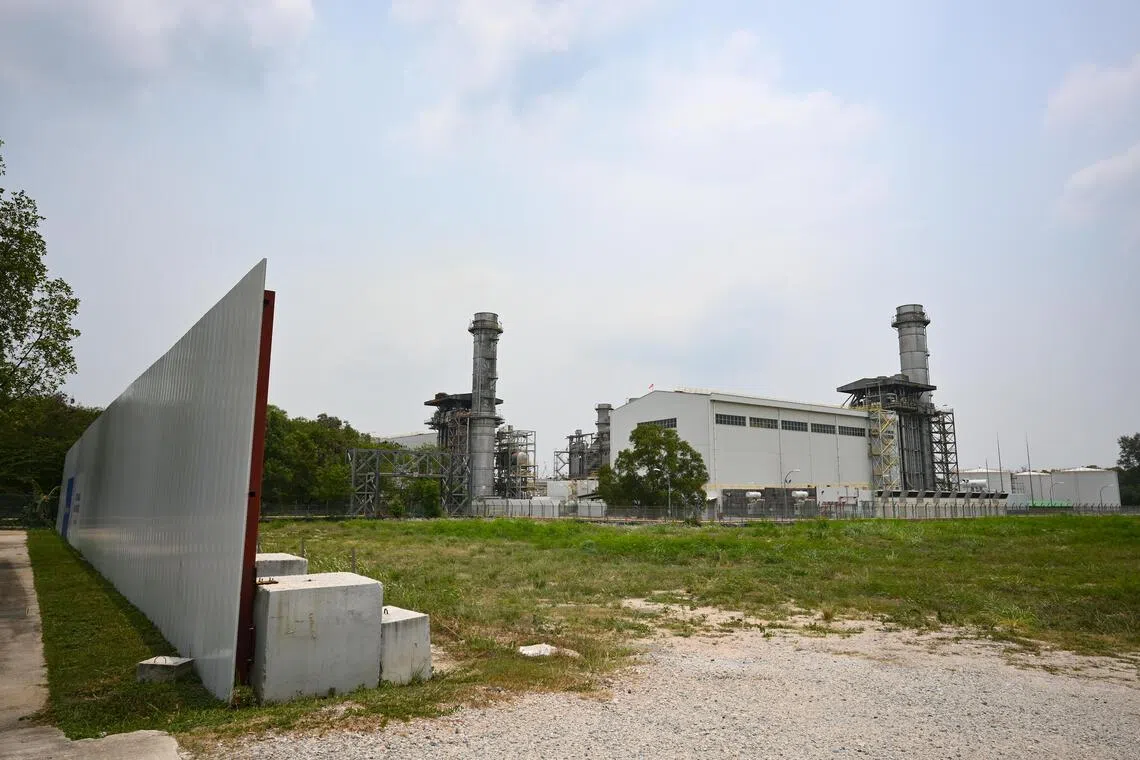
Keppel is planning for the transmission cable from the Riau Islands solar facility to land at the Keppel Merlimau Cogen power plant (above).
ST PHOTO: LIM YAOHUI
Published Sep 18, 2026, 07:30 PM
Updated Sep 18, 2026, 07:30 PM
Keppel plans a subsea cable to transmit solar energy from Indonesia’s Riau Islands to Jurong Island.
Keppel’s power plants on Jurong Island can supply up to 25% of Singapore’s power and support data centres with clean electricity.
Singapore aims to import 6 GW of low-carbon electricity by 2035 from regional projects, with 13 approvals granted to date.
SINGAPORE - A subsea cable linking Jurong Island to a solar plant in Indonesia could soon shore up Singapore’s ability to import low-carbon electricity from its neighbours, as part of plans by asset manager Keppel.
The company is planning for the transmission cable from the Riau Islands solar facility to land at the Keppel Merlimau Cogen power plant, said Keppel Infrastructure’s managing director for power and renewables, Janice Bong.
She was speaking to the media during a Sept 18 tour of the firm’s two power plants on Jurong Island.
The planned cable is subject to detailed development and regulatory approvals, noted Keppel, which had in 2024 received a conditional licence from the Energy Market Authority (EMA) to import 300 megawatts (MW) of solar power from Indonesia.
Keppel Energy was among five firms give n conditional licences to import electricity from Indonesia. Conditional licences are given to electricity import projects in an advanced developmental stage that are assessed to be technically and commercially viable.
If the deal goes through, Keppel will be able to supply electricity to the national grid from a variety of low-carbon energy sources.
Other than being a landing point for electricity imports from Indonesia, the Keppel Merlimau Cogen power plant, operational since 2007, will also be equipped to handle emerging forms of low-carbon fuel for electricity generation.
Keppel is exploring ways to tap biomethane, ammonia and hydrogen, according to Bong. Such fuels are considered more sustainable than fossil fuels as they either do not produce planet-warming carbon emissions, or have a lower carbon footprint, when burned.
The Keppel Merlimau Cogen plant now produces electricity by burning natural gas. About 95 per cent of Singapore’s electricity needs are currently met by this fuel form.
But Singapore is exploring more pathways to power the country, including through electricity imports, and tapping emerging forms of lower-carbon fuel.
Singapore is aiming to import about 6 gigawatts (GW) of low-carbon electricity by 2035 . This is anticipated to meet about one-third of the Republic’s energy needs by then.
As at August, the Republic has awarded conditional approvals to 13 projects to import clean power from Australia, Cambodia, Indonesia, Malaysia, and Vietnam .
Bong noted that upcoming data centres on Jurong Island could benefit from their proximity to Keppel Merlimau Cogen facility and the Keppel Sakra Cogen power plant, which began operations in May.
A heat recovery steam generator at the Keppel Sakra Cogen power plant. ST PHOTO: LIM YAOHUI
A heat recovery steam generator at the Keppel Sakra Cogen power plant.
Jurong Island will host Singapore’s largest low-carbon data centre park on 20ha of land, amounting to about the size of 25 football fields.
The Keppel Sakra Cogen power plant, also located on Jurong Island , will be capable of tapping low-carbon hydrogen, biomethane and ammonia.
When combined, both plants account for up to a quarter of Singapore’s total power generation capacity.
Bong said these plants can help supply data centres and tech giants that operate large-scale cloud networks, which have committed to use green energy for at least half of their power needs for new data centre capacity.
Janice Bong, Keppel Infrastructure’s managing director for power and renewables, noted that upcoming data centres on Jurong Island could benefit from their proximity to Keppel Merlimau Cogen facility and the Keppel Sakra Cogen power plant. ST PHOTO: LIM YAOHUI
Janice Bong, Keppel Infrastructure’s managing director for power and renewables, noted that upcoming data centres on Jurong Island could benefit from their proximity to Keppel Merlimau Cogen facility and the Keppel Sakra Cogen power plant.
Bong said the com pany is also exploring the potential of zero-carbon power from ammonia, as well as bioenergy and sustainable fuel opportunities in countries such as Indonesia and Malaysia.
Of the green energy pathways, biomethane ranks top in terms of commercial viability and the ease of transporting the source to Singapore, she added.
吉宝集团计划将廖内群岛太阳能发电厂的输电电缆铺设到吉宝美利茂热电联产厂(上图)。
ST 照片:林耀辉
发布于2026年9月18日晚上7:30
更新于2026年9月18日晚上7:30
吉宝集团计划铺设一条海底电缆,将印度尼西亚廖内群岛的太阳能输送到裕廊岛。
吉宝在裕廊岛的发电厂可以供应新加坡高达 25% 的电力,并为数据中心提供清洁电力。
新加坡的目标是到 2035 年从区域项目中进口 6 吉瓦的低碳电力,目前已批准 13 个项目。
新加坡——根据资产管理公司吉宝集团的计划,一条连接裕廊岛和印度尼西亚一座太阳能发电厂的海底电缆可能很快就会增强新加坡从邻国进口低碳电力的能力。
吉宝基础设施电力和可再生能源董事总经理 Janice Bong 表示,该公司计划将廖内群岛太阳能发电厂的输电电缆铺设到吉宝美利茂热电联产厂。
9月18日,她在参观公司位于裕廊岛的两座发电厂期间接受了媒体采访。
吉宝集团指出,该海底电缆计划尚需经过详细的开发和监管审批。吉宝集团于 2024 年获得了能源市场管理局 (EMA) 的有条件许可,可以从印度尼西亚进口 300 兆瓦 (MW) 的太阳能电力。
吉宝能源是获得印尼电力进口有条件许可证的五家公司之一。有条件许可证颁发给处于高级开发阶段且经评估在技术和商业上都可行的电力进口项目。
如果交易达成,吉宝集团将能够利用各种低碳能源向国家电网供电。
除了作为从印度尼西亚进口电力的登陆点外,自 2007 年投入运营以来,吉宝美利茂热电厂还将配备处理新兴的低碳燃料发电装置。
据邦格透露,吉宝集团正在探索利用生物甲烷、氨和氢气的方法。这些燃料被认为比化石燃料更具可持续性,因为它们燃烧时要么不会产生导致全球变暖的碳排放,要么碳足迹更低。
吉宝美利茂热电联产厂目前通过燃烧天然气发电。新加坡约95%的电力需求目前都由这种燃料形式满足。
但新加坡正在探索更多为国家提供能源的途径,包括进口电力和利用新兴的低碳燃料。
新加坡的目标是到2035年进口约6吉瓦(GW)的低碳电力。预计届时这将满足新加坡约三分之一的能源需求。
截至 8 月,共和国已向 13 个从澳大利亚、柬埔寨、印度尼西亚、马来西亚和越南进口清洁能源的项目授予了有条件批准。
Bong指出,裕廊岛即将建成的数据中心可以受益于其靠近吉宝美利茂热电联产设施和吉宝沙克拉热电厂(该电厂于5月开始运营)。
吉宝沙克拉热电联产厂的余热回收蒸汽发生器。(海峡时报摄影:林耀辉)
吉宝沙克拉热电厂的余热回收蒸汽发生器。
裕廊岛将建成新加坡最大的低碳数据中心园区,占地 20 公顷,相当于 25 个足球场的大小。
位于裕廊岛的吉宝沙克拉热电联产厂将能够利用低碳氢气、生物甲烷和氨气。
两座电厂加起来的发电量占新加坡总发电量的四分之一。
邦表示,这些电厂可以帮助为运营大规模云网络的数据中心和科技巨头供电,这些公司已承诺至少一半的新数据中心容量的电力需求将使用绿色能源。
吉宝基础设施电力及可再生能源董事总经理Janice Bong指出,裕廊岛即将兴建的数据中心可受益于其毗邻吉宝美利茂热电联产设施和吉宝沙克拉热电联产电厂的地理优势。(海峡时报照片:林耀辉)
吉宝基础设施电力和可再生能源董事总经理 Janice Bong 指出,裕廊岛即将建成的数据中心可以受益于其靠近吉宝美利茂热电联产设施和吉宝沙克拉热电厂。
Bong表示,该公司还在探索利用氨气生产零碳电力的潜力,以及在印度尼西亚和马来西亚等国的生物能源和可持续燃料机遇。
她补充说,在各种绿色能源途径中,生物甲烷在商业可行性和将原料运输到新加坡的便利性方面都名列前茅。