Drone sightings near bases, infrastructure unnerve German officials无人机在基地和基础设施附近出现,令德国官员感到不安。
German officials suspect Russia may be involved, though pinpointing a culprit has proven difficult.
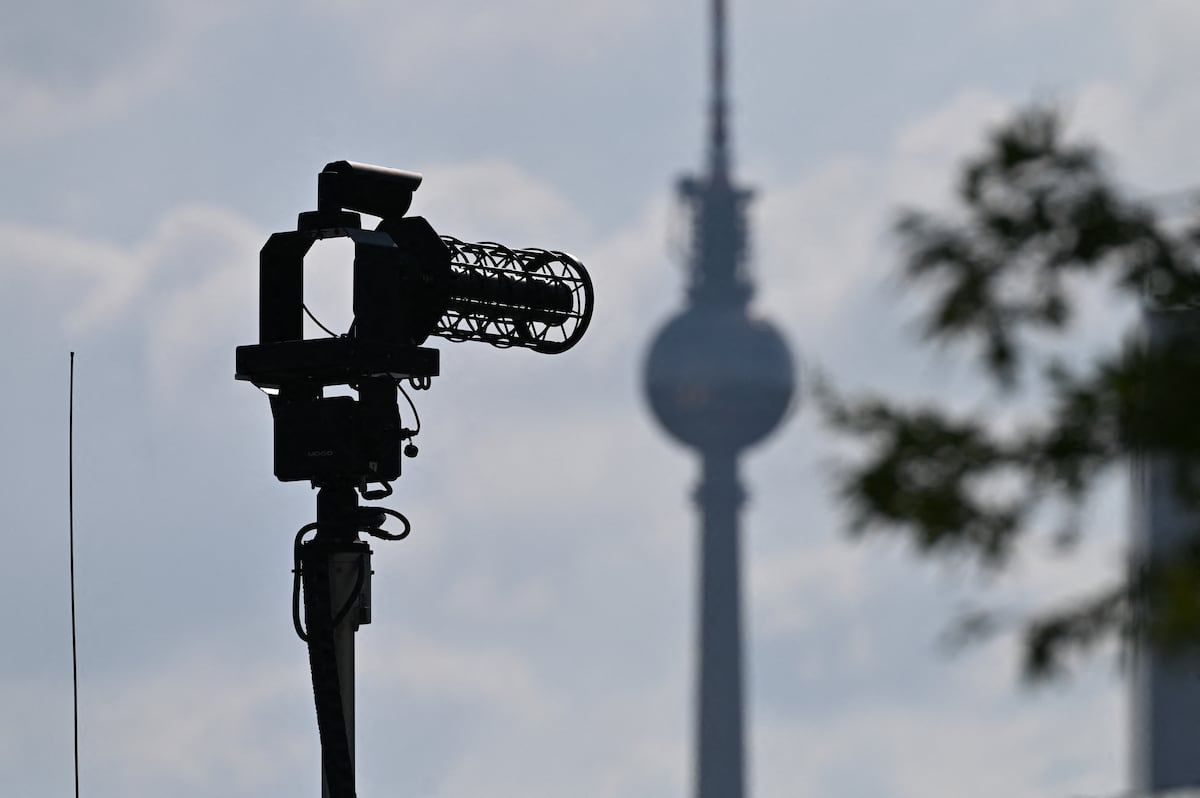
BERLIN — A series of suspicious events near military bases and critical infrastructure throughout Germany has put policymakers and military officials on edge.
This month, nocturnal drone flights were repeatedly spotted over an area packed with critical infrastructure in the country’s far north. The unmanned vehicles were seen seemingly spying on a defunct nuclear power plant, a large chemical factory and a liquefied natural gas terminal, German public broadcasters reported.
The LNG facility was hastily constructed to help wean Germany off Russian gas following Putin’s full-scale invasion of Ukraine in February 2022.
Prosecutors are keeping tight-lipped about the case, but Schleswig Holstein state police have asked the country’s military for assistance. The intruding drones escaped at speeds of up to 100 kilometers per hour, outrunning the police drones, the German newspaper Der Spiegel reported. The military has provided prosecutors with radar data and other information, a spokesman for the German Defense Ministry told German news agency DPA.
The public prosecutor’s office in Flensburg, the northern state’s capital, has launched an investigation into the case on suspicion of espionage for sabotage purposes, the French news agency AFP reported.
Last week, the NATO air base in Geilenkirchen in western Germany was temporarily put on the second-highest alert level after foreign intelligence suggested a threat may be imminent. German media reported that the danger was allegedly drone-based, though German authorities have not publicly confirmed this.
A spokesperson for the base told reporters last week that “nothing flew over the base,” calling speculations to the contrary “absurd.”
Officials at U.S. European Command, which oversees America’s force posture in Germany and elsewhere on the continent, declined to discuss specific threats. The command “routinely implements and adjusts appropriate force protection measures to ensure the security and safety of our personnel and our equipment,” a spokeswoman wrote in a statement for this article.
“As always, USEUCOM advises personnel in the European theater remain vigilant and report suspicious activity and implement prudent personal risk mitigation measures. The safety and security of our military communities is paramount.”
Unidentified drones have been reported over military training grounds, including those where Germany instructs Ukrainian soldiers. The flights and suspicious activities have been going on for well over a year, though little progress on countermeasures or investigations into their origin appears to have been made.
German intelligence agencies have, however, said that they suspect Russian involvement.
Two Germans of Russian heritage were arrested in Bavaria in April for allegedly planning to carry out sabotage attacks for Moscow in Germany. The prosecutors allege that they had already scouted out railroad tracks, military training areas and defense infrastructure for this purpose.
The Munich-based newspaper “Süddeutsche Zeitung” reported this week that in 2023 alone, more than 400 drone flights over or near restricted German military areas were reported.
The Defense Department, meanwhile, expects to get new counter-drone technology soon, with Thomas Hitschler, the agency’s parliamentary state secretary, writing to lawmakers earlier this summer that new system would be delivered to the Bundeswehr, Germany’s armed forces, by the end of the year.
He clarified that defending against drones in and above military installations is the Bundeswehr’s job, while state police officials are responsible for doing so outside of bases.
Since the Russian invasion of Ukraine, there has been a significant uptick in investment in the German military. Chancellor Olaf Scholz declared a “watershed moment” in the war, and his administration shored up defense budgets and started to address longstanding deficits in the country’s armed forces.
Concerns surrounding possible Russian acts of sabotage have spread throughout Western Europe. Earlier this year, a critical communications cable was cut in a “deliberate act,” as Norwegian authorities called it, at an air base in the Nordic country. Cables were also cut for Norway’s hydrophone system, which Oslo uses to surveil movements in the North Sea.
Other, as of yet unsolved cases of apparent sabotage, such as cases of apparent arson in countries like Poland, the U.K. and the Baltic States, suggest that a foreign actor with a gripe against the West may be stepping up its unconventional warfare activities.
The German domestic secret service has issued repeated public warnings of hybrid warfare, including recently in July: “The cases observed across Europe since 2023 and increased evidence of possible activities in Germany are currently leading to an adjusted assessment,” warned the so-called Office for the Protection of the Constitution. “There is an increased risk of sabotage activities or corresponding preparatory acts in Germany.”
The intelligence agency said in its most recent annual report that “hybrid threats such as cyberattacks and espionage, particularly by the Russian regime,” were at the center of its attention.
Noah Robertson in Washington contributed to this report.
Linus Höller is Defense News' Europe correspondent and OSINT investigator. He reports on the arms deals, sanctions, and geopolitics shaping Europe and the world. He holds master’s degrees in WMD nonproliferation, terrorism studies, and international relations, and works in four languages: English, German, Russian, and Spanish.
柏林——德国各地军事基地和关键基础设施附近发生的一系列可疑事件,令政策制定者和军方官员感到不安。
本月,德国北部一处关键基础设施密集区多次出现夜间无人机飞行。德国公共广播公司报道称,这些无人机似乎在监视一座废弃的核电站、一家大型化工厂和一个液化天然气接收站。
为了帮助德国摆脱对俄罗斯天然气的依赖,在普京于 2022 年 2 月全面入侵乌克兰之后,德国匆忙建造了液化天然气设施。
检察官对此案保持缄默,但石勒苏益格-荷尔斯泰因州警方已请求军方协助。据德国《明镜周刊》报道,入侵的无人机以高达每小时100公里的速度逃脱,甩开了警方的无人机。德国国防部发言人告诉德新社,军方已向检察官提供了雷达数据和其他信息。
据法新社报道,北部州首府弗伦斯堡的检察官办公室已对此案展开调查,怀疑其涉及以破坏为目的的间谍活动。
上周,位于德国西部盖伦基兴的北约空军基地在收到外国情报机构的威胁预警后,一度被提升至第二高的警戒级别。德国媒体报道称,威胁据称来自无人机,但德国当局尚未公开证实这一说法。
该基地的一位发言人上周告诉记者,“没有任何东西飞过基地”,称与之相反的猜测“荒谬”。
负责监督美国在德国及欧洲大陆其他地区兵力部署的美国欧洲司令部官员拒绝就具体威胁置评。该司令部一位发言人在一份声明中写道,司令部“会定期实施并调整适当的部队保护措施,以确保人员和装备的安全”。
“与以往一样,美国欧洲司令部建议欧洲战区人员保持警惕,报告可疑活动,并采取谨慎的个人风险缓解措施。我们军事人员的安全至关重要。”
据报道,不明无人机出现在包括德国训练乌克兰士兵的军事训练场在内的多个军事训练场上空。这些飞行和可疑活动已持续一年多,但似乎在采取应对措施或调查其来源方面进展甚微。
然而,德国情报机构表示,他们怀疑俄罗斯参与其中。
今年四月,两名具有俄罗斯血统的德国人在巴伐利亚州被捕,他们涉嫌策划在德国境内为莫斯科实施破坏袭击。检方称,他们此前已为此目的勘察了铁路、军事训练区和国防基础设施。
总部位于慕尼黑的《南德意志报》本周报道称,仅在 2023 年,就有 400 多起无人机在德国军事禁区上空或附近飞行的报道。
与此同时,美国国防部预计很快将获得新的反无人机技术。该机构的议会国务秘书托马斯·希奇勒今年夏天早些时候致信议员,称新系统将于年底前交付给德国联邦国防军。
他澄清说,在军事设施内和上空防御无人机是联邦国防军的职责,而州警察官员则负责在基地外进行此类防御。
自俄罗斯入侵乌克兰以来,德国军费投入显著增加。总理奥拉夫·朔尔茨宣布这是战争中的“分水岭时刻”,他的政府增加了国防预算,并开始着手解决该国武装部队长期存在的赤字问题。
针对俄罗斯可能实施破坏活动的担忧已蔓延至整个西欧。今年早些时候,挪威一处空军基地的一条关键通信电缆被切断,挪威当局称之为“蓄意行为”。此外,挪威用于监视北海动向的水听器系统的电缆也被切断。
其他一些尚未侦破的明显破坏案件,例如波兰、英国和波罗的海国家发生的明显纵火案,表明对西方怀有不满的外国势力可能正在加紧其非常规战争活动。
德国国内安全部门曾多次公开警告混合战争,包括最近一次在7月份:“自2023年以来,欧洲各地出现的案例以及越来越多的证据表明德国境内可能存在类似活动,目前正促使我们对相关形势进行调整,”所谓的宪法保卫局警告说。“德国境内发生破坏活动或相应准备行动的风险正在增加。”
该情报机构在其最新年度报告中表示,“网络攻击和间谍活动等混合威胁,特别是来自俄罗斯政权的威胁”,是其关注的重点。
华盛顿的诺亚·罗伯逊对本报道亦有贡献。
林努斯·霍勒是《防务新闻》的欧洲记者和开源情报调查员。他报道影响欧洲乃至全球的军火交易、制裁和地缘政治。他拥有大规模杀伤性武器不扩散、恐怖主义研究和国际关系三个硕士学位,并精通英语、德语、俄语和西班牙语四种语言。