‘Range of options’ ready for South China Sea aggression: US admiral美国海军上将:已准备好应对南海侵略的“一系列选项”
Washington and Beijing have been on a collision course over China’s increasingly assertive actions to defend its territorial claims in the South China Sea.
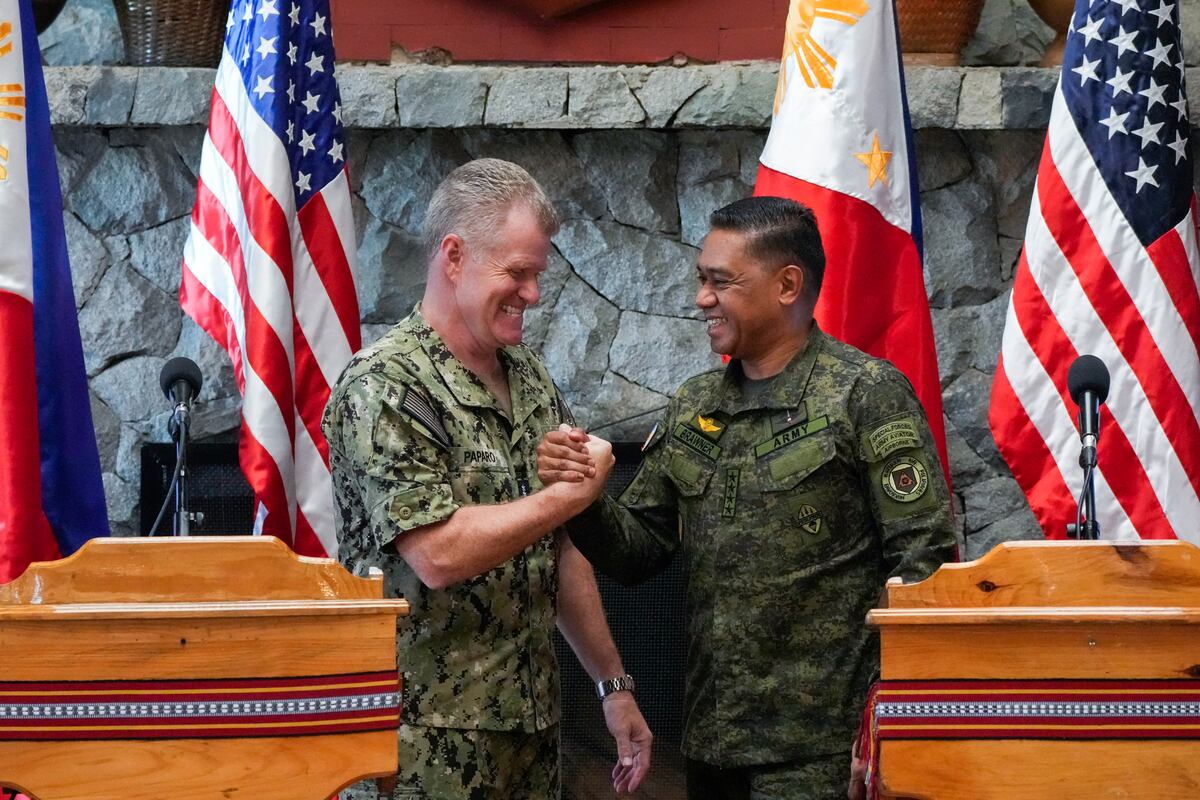
American forces are ready with a “range of options” to deal with increasing acts of aggression in the disputed South China Sea if ordered to carry them out jointly and after consultations with treaty ally the Philippines, a U.S. admiral said.
U.S. Indo-Pacific Command chief Adm. Samuel Paparo, who heads the biggest number of combat forces outside the U.S. mainland, refused to provide details of the contingency options.
Paparo's comments came when asked at a news conference what the longtime treaty allies could do to deal with China’s so-called gray-zone tactics in the disputed waters.
The “gray-zone tactics” refer to types of assault, like water cannon fire and the blocking and ramming of rival ships in the disputed waters, that are under the threshold of an actual armed attack and wouldn’t allow the Philippines to invoke its 1951 Mutual Defense Treaty with the U.S. The treaty obligates either country to help the other in case of an armed external attack.
“We certainly have prepared a range of options and USINDOPACOM stands ready, if so called, after consultations in accordance with the treaty to execute those shoulder to shoulder with our ally,” Paparo said.
Detailing those U.S. military options would allow “the potential adversary” to “build a countermeasure to those,” he said.
Paparo held a joint news conference with Armed Forces of the Philippines chief Gen. Romero Brawner Jr., after both led an annual meeting in the northern Philippine mountain city of Baguio to discuss security challenges and military plans. They include the Balikatan — Tagalog for “shoulder to shoulder” — the treaty allies’ largest combat exercises, which in April involved more than 16,000 American and Philippine forces and were partly staged in the South China Sea.
In response to a question, Paparo repeated the U.S. military is open, after treaty consultations with the Philippines, to escorting Philippine ships in the South China Sea amid a spike in hostilities between Beijing and Manila in the disputed waters. Such a prospect would risk putting U.S. Navy ships in direct collisions with those of China.
Washington and Beijing have been on a collision course over China’s increasingly assertive actions to defend its territorial claims in the South China Sea, and Beijing’s stated goal of annexing Taiwan, by force if necessary.
Brawner said the Philippines could still fend for itself in the disputed waters, where hostilities with the Chinese coast guard, navy and suspected militia ships have alarmingly spiked since last year.
“If we exhaust all the options and nothing works, then that’s the time we can ask for help,” Brawner told reporters.
When Philippine forces in the disputed waters “are at the verge of dying,” because food supplies were being blocked by Chinese forces, “then that’s the time that we are going to seek the help of the United States,” Brawner said, but added that “we still have a lot of options.”
During combat exercises by U.S. and Philippine forces in April, the U.S. military transported a midrange missile system to the northern Philippines, angering China , which warned that the missile system can trigger a regional arms race and endanger regional stability. Beijing demanded the U.S. missile system, which can threaten mainland China, be pulled out of the Philippines.
Paparo and Brawner refused to say on Thursday if and when the missile system would be flown out of the Philippines. Brawner thanked the U.S. military for transporting the high-tech weaponry to the country, saying Philippine forces were being exposed to advance defense equipment that the Philippine military plan to acquire in the future.
"Just like what we did with the Stingers and with the Javelins, we start training already even if we don’t have them yet in our inventory,” Brawner said.
China has angered the Philippines by repeatedly harassing its navy and coast guard ships with powerful water cannons, a military-grade laser, blocking movements and other dangerous maneuvers in the high seas near two disputed South China Sea shoals. They have led to minor collisions that have injured several Philippine navy personnel and damaged supply boats.
China has accused the Philippines of setting off the hostilities in the disputed waters by encroaching in what it says are its offshore territories, demarcated by 10 dashes on a map. It says the Chinese coast guard and navy have been forced to take action to expel Philippine coast guard and other vessels from those areas.
The Philippines has repeatedly cited a 2016 international arbitration ruling based on the U.N. Convention of the Law of the Sea that invalidated China’s claim over virtually the entire South China Sea on historical grounds.
Aaron Favila contributed to this report.
一位美国海军上将表示,如果接到命令,美军将与条约盟友菲律宾进行磋商后,共同采取应对南海争议地区日益增长的侵略行为的“一系列方案”。
美国印太司令部司令塞缪尔·帕帕罗海军上将指挥着美国本土以外数量最多的作战部队,但他拒绝透露应急方案的细节。
帕帕罗是在新闻发布会上被问及长期条约盟友可以采取什么措施来应对中国在争议水域所谓的“灰色地带”策略时发表上述评论的。
“灰色地带战术”指的是在争议水域使用水炮射击、阻挡和撞击敌对船只等攻击手段,这些手段尚未达到实际武装攻击的程度,因此菲律宾无法援引其与美国于 1951 年签订的共同防御条约。该条约规定,任何一方都有义务在遭受外部武装攻击时帮助另一方。
帕帕罗说:“我们当然已经准备了一系列方案,如果需要,美国印太司令部将在根据条约进行磋商后与我们的盟友并肩执行这些方案。”
他表示,详细说明美国的这些军事选项会让“潜在的对手”有机会“制定应对措施”。
帕帕罗与菲律宾武装部队总司令罗梅罗·布劳纳将军共同举行了新闻发布会。此前,两人在菲律宾北部山城碧瑶主持召开了年度会议,讨论安全挑战和军事计划。这些计划包括“肩并肩”(Balikatan,塔加洛语意为“肩并肩”),这是美菲两国规模最大的联合军事演习。今年4月,超过16000名美菲士兵参加了此次演习,部分演习在南海进行。
帕帕罗在回答提问时重申,在与菲律宾进行条约磋商后,美国军方愿意在南海为菲律宾舰船提供护航,以应对北京和马尼拉在争议水域日益加剧的敌对行动。但此举可能会使美国海军舰船与中国舰船发生直接碰撞。
华盛顿和北京在中国日益强硬地捍卫其在南海的领土主张以及北京公开宣称必要时以武力吞并台湾的目标上,一直处于冲突之中。
布劳纳表示,菲律宾仍然可以在争议水域自卫,自去年以来,与中国海警、海军和疑似民兵船只的敌对行动急剧增加。
“如果我们用尽所有办法都行不通,那么那时我们才能寻求帮助,”布劳纳告诉记者。
布劳纳说,当菲律宾军队在争议水域“濒临死亡”,因为粮食供应被中国军队封锁时,“那时我们才会寻求美国的帮助”,但他补充说,“我们仍然有很多选择”。
今年4月,美菲两国军队举行联合军事演习期间,美军向菲律宾北部运送了一套中程导弹系统,此举激怒了中国。中国警告称,该导弹系统可能引发地区军备竞赛,危及地区稳定。北京要求美国将这套可能威胁中国大陆的导弹系统撤出菲律宾。
帕帕罗和布劳纳周四拒绝透露导弹系统何时以及是否将从菲律宾撤出。布劳纳感谢美军向菲律宾运送这些高科技武器,并表示菲律宾军队正在接触到菲律宾军方计划未来采购的先进防御装备。
布劳纳说:“就像我们对待毒刺队和标枪队那样,即使我们还没有这些队员,我们也已经开始训练了。”
中国多次在南海两处争议岛礁附近公海域,使用强力水炮、军用激光等武器骚扰菲律宾海军和海警舰艇,并进行阻拦、拦截等危险操作,激怒了菲律宾。这些行为导致多起轻微碰撞,造成菲律宾海军人员受伤,补给船受损。
中国指责菲律宾侵犯其在争议水域的领海(地图上以十条短横线标示),从而引发了冲突。中国称,中国海警和海军被迫采取行动,将菲律宾海警船和其他船只驱逐出这些区域。
菲律宾多次援引 2016 年一项基于《联合国海洋法公约》的国际仲裁裁决,该裁决以历史为由驳回了中国对几乎整个南海的主权声索。
Aaron Favila对本报道亦有贡献。