Marine Colonel Who Led Mideast Combat Deployment Wants His Own Drone Boats曾率领海军陆战队上校指挥中东作战部署的部队,希望拥有自己的无人艇。
"If the first thing you're putting through the breach isn't a robot, something's wrong."
Published Sep 18, 2026 2:01 PM EDT
The officer who led the 31st Marine Expeditionary Unit (MEU) on its recent combat deployment to the Middle East told us he needs his own uncrewed surface vessels (USVs) on future deployments. Operationalizing USVs is an area where the Marines are lagging behind. In particular, he wants the ability to send USVs forward to reconnoiter potential highly-contested beach landing areas, a mission largely assumed by the Navy.
As we have frequently reported , the military use of USVs is now proliferating around the globe at an increasing rate. Ukraine has employed sea drones to devastating effect against Russia’s Black Sea Fleet vessels and facilities , forcing the general evacuation of Russian naval assets from occupied Crimea to bases in Russia proper. During Operation Epic Fury, the U.S. used them for the first time in combat , as one-way attack weapons against Iranian targets, to hunt for mins, and for a search and rescue operation to locate the crew of an AH-64 Apache helicopter downed by Iran, as well as general broad-area surveillance and awareness. China is investing heavily in the space, as well, along with many other navies around the globe, both friend and foe.
The following video shows the first U.S. use of a USV as a kamikaze weapon.
Yesterday, using multiple one-way attack surface drones, CENTCOM forces successfully struck a submarine and ship maintenance facility in Iran. Three Corsair unmanned surface vessels hit the port at Bandar Abbas Naval Base, marking the first time American forces have employed sea… pic.twitter.com/bOM2kmgRxz — U.S. Central Command (@CENTCOM) July 13, 2026
Yesterday, using multiple one-way attack surface drones, CENTCOM forces successfully struck a submarine and ship maintenance facility in Iran. Three Corsair unmanned surface vessels hit the port at Bandar Abbas Naval Base, marking the first time American forces have employed sea… pic.twitter.com/bOM2kmgRxz
“There was a lot in theater that were being used, but it wasn’t something that we went out with,” Col. Chris P. Niedziocha told us when we asked if the 31st MEU deployed with USVs. He answered in the affirmative when we asked him if MEUs need sea drones on future deployments. He said it is part of the “explosion in robotics and autonomy” being used in combat.
“These systems are incredibly useful and capable,” explained Niedziocha, now director of the USMC Expeditionary Warfare School. “And you say, ‘Hey, you know, [in] the next war, if the first thing you’re putting through the breach isn’t a robot, something’s wrong. You say never send a Marine someplace you haven’t sent a bullet. I think the new way is [you] never want to send a Marine someplace you haven’t already sent a robot. So yeah, we’re embracing [the technology] and we’re not leaders. We’re fast followers in that regime.”
Asked for specific use cases he sees for USVs, the colonel talked about using them before putting Marines ashore.
“I can tell you if you’re doing an amphibious operation, you want to understand what’s waiting beneath the surface in the water column,” Niedziocha noted. “So something can go either with a side-looking sonar array or even forward-looking to demonstrate that there’s nothing there, and the hydrography and bathymetry is what you… need for the operation to be successful.”
Hydrography measures “the shape and features of the shoreline; the characteristics of tides, currents, and waves; and the physical and chemical properties of the water itself,” according to NOAA . Bathymetry, which is part of that, focuses on mapping the depths and shapes of underwater terrain.
These functions are critical for mine detection and determining whether there are man-made or natural obstacles that would impede landing operations. While these missions are largely being performed by the Navy, including with USVs , the Marines are moving toward making that an organic capability. Recently, the Marines announced they were testing a counter-mine USV system. The evaluation was conducted late last month at Camp Pendleton by the Program Manager Combat Support Systems (PM CSS) Explosive Hazard Defeat Team.
The test of the USV was “in response to a littoral capability gap,” according to the media release . “The solution: seek a commercial USV solution that is equipped with integrated autonomous driving and payloads that consist of Sonar, Forward-Looking Infrared (FLIR) cameras, Line of Sight (LOS) Communications and Acoustic Communications (AComms).”
This was part of the overall effort to develop “solutions that enable increased standoff for Marines to detect, investigate and neutralize threats,” the release added. “The innovation of Explosive Ordnance Disposal (EOD) and Littoral Explosive Ordnance Neutralization (LEON) systems will provide Marine EOD Technicians with the confidence to operate in contested environments while preserving combat power, increasing operational reach, and minimizing exposure to explosive threats.”
LEON is a so-called system of systems, using a remotely operated vehicle, diver equipment, an unmanned underwater vehicle (UUV), a USV, and an Amphibious Unmanned Ground Vehicle to enable “EOD to confirm and mark hazards and obstacles from very shallow water to the beach zone,” the media release added.
While unmanned systems have long been part of EOD operations, “we’re expanding that into maritime systems that allow more endurance and less risk for operators,” said Chief Warrant Officer 2 Alfredo Andrade, officer in charge, Explosive Ordnance Disposal Company, 7th Engineer Support Battalion (ESB). “Some of the conflicts that we are engaged in take a toll on the force, and surging in new forces is costly. It turns into a logistical problem. To preserve the safety and the health of the forces… the USV and the [LEON] program exist to ensure that we have readily available combat power.”
In late August at Camp Pendleton, the PM CSS Explosive Hazard Defeat Team tested an unmanned surface vessel in response to a littoral capability gap. (PAE Marine Corps photo by Kristiana Gehly) Kristiana Gehly
While Niedziocha didn’t address USVs for offensive combat roles, the Marines have evaluated them for that use as well as for logistics, among other functions.
Our Autonomous Low-Profile Vessel (ALPV) solicitation is now accepting submissions. The @DeptofWar and the @USMC need to resupply units spread over wide distances in contested littoral environments. Increased all-domain threats targeting logistics capabilities, locations, and… pic.twitter.com/Af8v0DTRHS — Department of War Innovation Unit (@DIU_x) March 3, 2026
Our Autonomous Low-Profile Vessel (ALPV) solicitation is now accepting submissions. The @DeptofWar and the @USMC need to resupply units spread over wide distances in contested littoral environments. Increased all-domain threats targeting logistics capabilities, locations, and… pic.twitter.com/Af8v0DTRHS
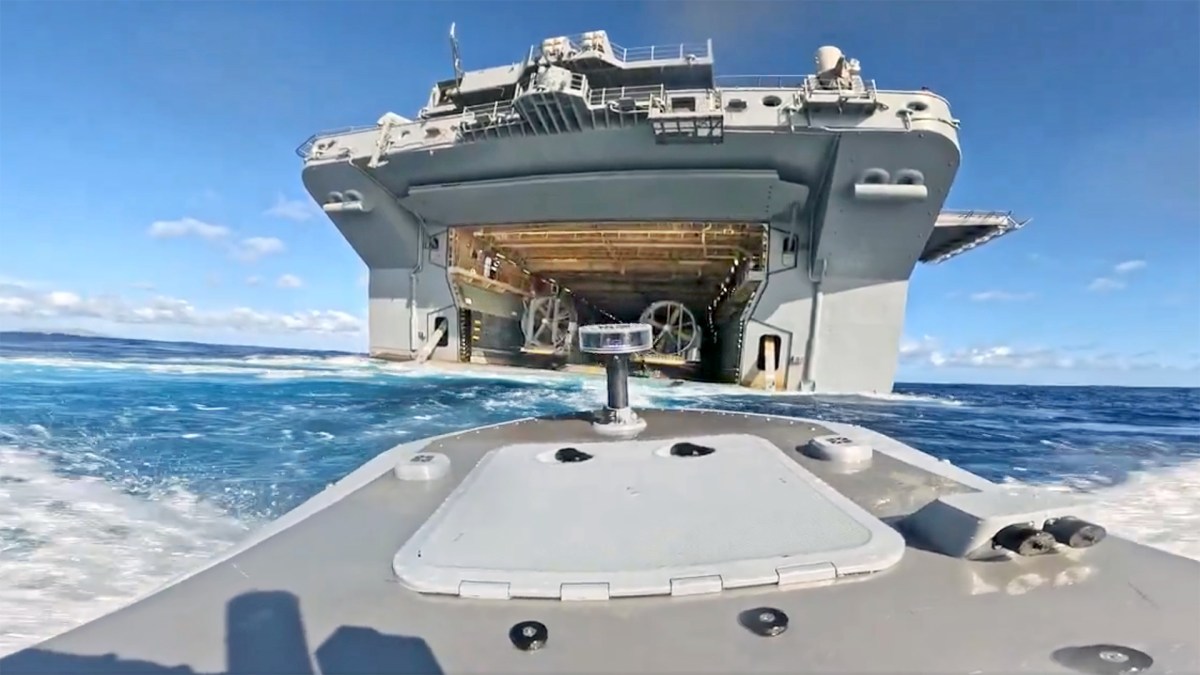
There have been many other tests, as well. Including one just this summer at RIMPAC. These trials saw the launch and recovery of one of Splash Industries’ Typhoon USVs aboard the USS Essex . The ‘Gator Navy’ of amphibious assault vessels that haul Marines and their kit around the oceans is uniquely suited to act as USV motherships. Their well decks allow for easy deployment and recovery of USVs of many sizes and capabilities near seamlessly. So it won’t be surprising is these vessels and the Marines aboard them quickly become staples in the Pentagon’s USV playbook.
Watch us land one of our drone-boats inside a moving US Navy warship during RIMPAC. This world-first resupply mission was performed completely autonomously using a Splash Industries Typhoon USV. pic.twitter.com/AEzNzZjsL1 — Ivan Avanesov (@i_vanesov) July 14, 2026
Watch us land one of our drone-boats inside a moving US Navy warship during RIMPAC. This world-first resupply mission was performed completely autonomously using a Splash Industries Typhoon USV. pic.twitter.com/AEzNzZjsL1
Still, the Marines have a long way to go to catch up to how these systems are already being used.
The Houthi rebels of Yemen actually pioneered the operational use of kamikaze USVs years ago and Ukraine has led the way in advancements of these systems. They first employing them as kamikaze weapons, but then added machine guns and rockets and later missiles, which were used to shoot down Russian helicopters and jets . Ukraine has also used them to launch first-person view (FPV) and bomber drone attacks as well as deliver uncrewed ground vehicles (UGVs) into enemy territory. Last week, Ukraine claimed to have attacked a Russian USV with a USV , marking another first.
You can see that engagement in the following video.
Ukraine's Navy says a Sargan unmanned surface vessel destroyed a Russian unmanned boat with machine-gun fire in the Black Sea, the first-ever battle between unmanned surface vessels. Ukrainian Navy personnel operated in coordination with HUR. #Ukraine pic.twitter.com/Avg4ecz8m6 — NOELREPORTS 🇪🇺 🇺🇦 (@NOELreports) September 12, 2026
Ukraine's Navy says a Sargan unmanned surface vessel destroyed a Russian unmanned boat with machine-gun fire in the Black Sea, the first-ever battle between unmanned surface vessels. Ukrainian Navy personnel operated in coordination with HUR. #Ukraine pic.twitter.com/Avg4ecz8m6
Having recently returned from a six-month deployment that saw the Marine Corps’ first use of its Expeditionary Advanced Base Operations (EABO) concept in a combat setting during the fight against Iran, Niedziocha has a good sense of the realities of modern warfare. His Marines operated forward arming and refueling points (FARPs) for various aircraft in combat for the first time and set up remote sensing locations.
That a commander like him who sees value in USVs is a good sign for progress in the development of these systems.
Contact the author: howard@twz.com
Comments couldn’t be loaded. Please refresh the page.
发布于美国东部时间2026年9月18日下午2:01
最近率领第31海军陆战队远征部队(MEU)赴中东执行作战部署的军官告诉我们,他希望在未来的部署中拥有自己的无人水面艇(USV)。海军陆战队在无人水面艇的作战运用方面进展缓慢。他尤其希望能够派遣无人水面艇前往潜在的高风险海滩登陆区域进行侦察,而这项任务目前主要由海军承担。
正如我们多次报道的那样,无人水面艇(USV)的军事用途正以惊人的速度在全球范围内扩散。乌克兰曾利用无人水面艇对俄罗斯黑海舰队的舰艇和设施造成毁灭性打击,迫使俄罗斯海军从被占领的克里米亚撤离至俄罗斯本土基地。在“史诗狂怒行动”中,美国首次将无人水面艇投入实战,用作对伊朗目标的单向攻击武器,用于搜寻敌方目标,以及搜救被伊朗击落的AH-64“阿帕奇”武装直升机的机组人员,此外还用于大范围的监视和态势感知。中国以及全球许多其他国家的海军,包括盟友和敌对国家,都在大力投资这一领域。
以下视频展示了美国首次使用无人水面艇作为神风特攻队武器的场景。
昨天,美国中央司令部部队使用多架单向攻击水面无人机成功袭击了伊朗的一处潜艇和舰艇维修设施。三架“海盗”无人水面舰艇袭击了阿巴斯港海军基地,这是美军首次使用海上攻击…… pic.twitter.com/bOM2kmgRxz — 美国中央司令部 (@CENTCOM) 2026年7月13日
昨天,美国中央司令部部队使用多架单向攻击水面无人机成功袭击了伊朗的一处潜艇和舰艇维修设施。三架“海盗”无人水面舰艇袭击了阿巴斯港海军基地的港口,这是美军首次使用海上攻击…… pic.twitter.com/bOM2kmgRxz
“战区里有很多这种装备,但我们并没有随部队出动,”克里斯·P·尼齐奥查上校在被问及第31海军陆战队远征部队是否部署了无人水面艇时这样回答。当我们问他海军陆战队远征部队未来部署是否需要海上无人机时,他给出了肯定的回答。他表示,这是“机器人和自主技术在作战中爆炸式增长”的一部分。
“这些系统非常实用且功能强大,”现任美国海军陆战队远征作战学校校长尼齐奥查解释道,“你会说,‘嘿,你知道,在下一场战争中,如果你第一个冲锋陷阵的不是机器人,那就说明有问题。’你会说,永远不要把海军陆战队员派到你没用子弹射过的地方。我认为新的理念是,永远不要把海军陆战队员派到你没用机器人射过的地方。所以,是的,我们正在拥抱这项技术,但我们不是领导者。在这个体系中,我们是快速追随者。”
当被问及他认为无人水面艇的具体用途时,这位上校谈到了在海军陆战队登陆前使用它们的情况。
“我可以告诉你,如果你要执行两栖作战任务,你需要了解水面下水体中的情况,”尼齐奥查指出。“所以,可以使用侧视声呐阵列,甚至前视声呐来确认水面下没有目标,而水文和水深测量数据正是你……确保作战成功所必需的。”
根据美国国家海洋和大气管理局(NOAA)的定义,水文测量学测量“海岸线的形状和特征;潮汐、水流和波浪的特征;以及水体本身的物理和化学性质”。水深测量学是水文测量学的一部分,其重点是绘制水下地形的深度和形状。
这些功能对于水雷探测和判断是否存在会阻碍登陆行动的人为或自然障碍至关重要。虽然这些任务目前主要由海军执行,包括使用无人水面艇(USV),但海军陆战队正努力将其发展成为自身固有的能力。近日,海军陆战队宣布正在测试一套反水雷无人水面艇系统。该评估于上月底在彭德尔顿营地由作战支援系统项目经理(PM CSS)爆炸物危害排除小组进行。
根据新闻稿,此次无人水面艇(USV)测试是“为了弥补近岸作战能力的不足”。“解决方案是:寻找一种商用无人水面艇解决方案,该方案需配备集成式自主驾驶系统和有效载荷,有效载荷包括声呐、前视红外(FLIR)摄像机、视距(LOS)通信和声学通信(AComms)系统。”
新闻稿补充道,这是为“开发能够增强海军陆战队员远距离探测、调查和消除威胁的解决方案”而开展的整体工作的一部分。“爆炸物处理(EOD)和近岸爆炸物中和(LEON)系统的创新将使海军陆战队爆炸物处理技术人员更有信心在对抗环境中作战,同时保持战斗力,扩大作战范围,并最大限度地减少暴露于爆炸物威胁的风险。”
LEON 是一个所谓的系统之系统,它利用遥控潜水器、潜水员设备、无人水下航行器 (UUV)、无人水面航行器 (USV) 和两栖无人地面车辆,使“爆炸物处理小组能够确认和标记从极浅水域到海滩区域的危险和障碍物”,新闻稿补充道。
无人系统虽然早已是爆炸物处理行动的一部分,但“我们正在将其扩展到海上系统,以增强作战能力并降低操作人员的风险,”第7工程支援营(ESB)爆炸物处理连负责人、二级准尉阿尔弗雷多·安德拉德说道。“我们参与的一些冲突会给部队造成巨大损耗,而增派新兵成本高昂,会演变成后勤难题。为了保障部队的安全和健康……无人水面艇(USV)和[LEON]项目的存在,正是为了确保我们拥有随时可用的作战力量。”
8月下旬,在彭德尔顿营地,海军陆战队后勤保障司令部爆炸物危害防范小组测试了一艘无人水面舰艇,以应对近岸作战能力的不足。(海军陆战队照片,摄影:克里斯蒂安娜·盖利)克里斯蒂安娜·盖利
虽然尼齐奥查没有谈到无人水面艇在进攻作战中的作用,但海军陆战队已经评估了它们在进攻作战以及后勤等方面的用途。
我们的自主低矮舰艇(ALPV)招标现已开始接受投标。美国陆军部和海军陆战队需要为分散在竞争激烈的近岸环境中的部队提供补给。针对后勤能力、地点等的全域威胁日益增加…… pic.twitter.com/Af8v0DTRHS — 美国陆军部创新部门 (@DIU_x) 2026年3月3日
我们的自主低矮舰艇(ALPV)招标现已开始接受投标。美国陆军部和海军陆战队需要为分散在竞争激烈的近岸环境中的部队提供补给。针对后勤能力、地点等的全方位威胁日益增加…… pic.twitter.com/Af8v0DTRHS
此外,还有许多其他测试,包括今年夏天在环太平洋军演期间进行的一次。在这些试验中,Splash Industries公司的“台风”无人水面艇在“埃塞克斯”号两栖攻击舰上进行了投放和回收。“鳄鱼海军”的两栖攻击舰负责在海洋上运送海军陆战队员及其装备,它们非常适合作为无人水面艇的母舰。它们的坞舱可以近乎无缝地部署和回收各种尺寸和性能的无人水面艇。因此,这些舰艇及其搭载的海军陆战队员很快成为五角大楼无人水面艇作战计划中的主力,也就不足为奇了。
观看我们在环太平洋军演期间,如何将我们的无人艇降落在一艘行驶中的美国海军军舰上。这项全球首创的补给任务完全由Splash Industries公司的“台风”无人水面艇自主完成。pic.twitter.com/AEzNzZjsL1 — Ivan Avanesov (@i_vanesov) July 14, 2026
观看我们在环太平洋军演期间,如何将我们的无人艇降落在一艘行驶中的美国海军军舰上。这项全球首创的补给任务完全由Splash Industries公司的“台风”无人水面艇自主完成。pic.twitter.com/AEzNzZjsL1
不过,海军陆战队要赶上这些系统的使用方式,还有很长的路要走。
也门胡塞武装多年前就率先将神风特攻无人水面艇(USV)投入实战,而乌克兰则在这些系统的改进方面处于领先地位。乌克兰最初将其用作神风特攻武器,后来又为其加装了机枪、火箭弹,以及后来的导弹,并用这些导弹击落了俄罗斯的直升机和喷气式飞机。乌克兰还利用这些无人水面艇发动第一人称视角(FPV)无人机和轰炸机无人机攻击,以及向敌方领土投放无人地面车辆(UGV)。上周,乌克兰声称使用一架无人水面艇攻击了一架俄罗斯无人水面艇,这又是一项史无前例的壮举。
您可以在以下视频中看到这种互动。
乌克兰海军称,一艘“萨尔甘”级无人水面舰艇在黑海用机枪击沉了一艘俄罗斯无人艇,这是历史上首次无人水面舰艇之间的战斗。乌克兰海军人员与乌克兰海军协同作战。#乌克兰 pic.twitter.com/Avg4ecz8m6 — NOELREPORTS 🇪🇺 🇺🇦 (@NOELreports) September 12, 2026
乌克兰海军称,一艘“萨尔甘”级无人水面舰艇在黑海用机枪击沉了一艘俄罗斯无人艇,这是历史上首次无人水面舰艇之间的战斗。乌克兰海军人员与乌克兰海军协同作战。#乌克兰 pic.twitter.com/Avg4ecz8m6
尼兹奥查最近刚结束为期六个月的部署,期间海军陆战队在对抗伊朗的战斗中首次在实战中使用了远征前进基地作战(EABO)概念,因此他对现代战争的现实有着深刻的理解。他的海军陆战队员首次在战斗中操作前沿武器补给和加油点(FARP),为各种飞机提供火力支援,并建立了遥感监测站。
像他这样的指挥官能够看到无人水面艇的价值,这对于这些系统的发展来说是一个好兆头。
联系作者:howard@twz.com
评论加载失败,请刷新页面。