What “begging” for $2 taught me about surviving on Singapore’s streets在新加坡街头乞讨2美元教会了我什么?
Participating in a poverty simulation exercise gave me fresh perspective on breaking the cycle of poverty. Read more at straitstimes.com.
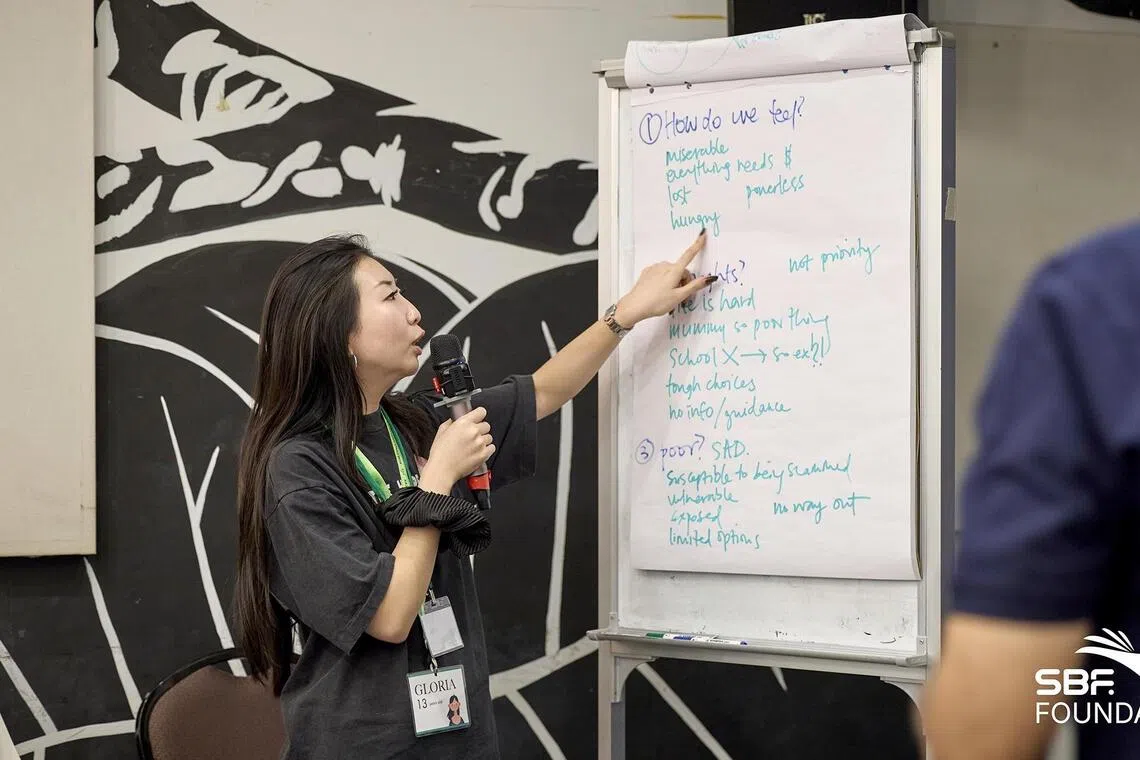
Participating in a poverty simulation exercise gave me fresh perspective on breaking the cycle of poverty.
Participants sharing what they learnt or felt after the poverty simulation session.
PHOTO: SINGAPORE BUSINESS FEDERATION FOUNDATION
Published Sep 19, 2026, 07:00 AM
Updated Sep 19, 2026, 07:00 AM
For the first time in my life, I realised I’m not above begging.
And I actually begged for money – or rather for what passes as money.
In August, I participated in a poverty simulation session, where I took on the persona of an 80-year-old widow named “Doreen”. Doreen’s life had unravelled after a renovation contractor ran off with all her money and left her one-room flat uninhabitable.
Her only child lived overseas and was uncontactable, and Doreen ended up sleeping outside her flat.
Organised by the Singapore Business Federation Foundation (SBF Foundation) , New Hope Community Services and the Singapore Association of Mental Health, the session, called “In Their Shoes”, compressed four days of simulation into about two hours in real time.
As Doreen, I was given $15 in make-believe cash, a few tokens that stood in for ez-link cards, a torchlight, a pair of glasses and a sleeping bag, which were supposed to last for the next four days.
Participants in the exercise took on various personas, which were loosely based on the real lives of people experiencing homelessness who were helped by New Hope Community Services, a social service agency that runs shelters and other services for this group.
Volunteers played the roles of staff at a family service centre (FSC), homeless shelter, supermarket, pawnshop, workplaces and even the Immigration and Checkpoints Authority (ICA).
On day one of the simulation, I naively thought all I needed to do was to go to the homeless shelter and my problems would be solved. I was so wrong.
I needed a referral from the FSC to secure a place at the shelter.
And I needed to produce my identity card to verify my identity before the FSC would take on my case. It was only then that I realised Doreen’s IC had been stolen while she was sleeping on the streets. Replacing my stolen IC would cost $20, but all I had was $15. At this point, I was told I could find a daily-rated job, pawn my valuables (of which I had none) or pick cardboard to sell.
I instinctively chose the first option. I mean, how hard could it be to get a gig job?
Then I realised I was role-playing an 80-year-old unskilled worker without an IC, without food and shelter, without kith and kin. Thinking back, just the thought of how alone and vulnerable Doreen was sends chills down my spine.
The only job available to Doreen was manual labour – rolling a bolt down a long metal rod for $2 per completed unit.
After a full day of this tedious task, I’d earned only $4, leaving me $1 short of the $20 I needed to replace my stolen IC. That was the moment I started begging.
In the grip of desperation, I pleaded with the man next to me in my most piteous whimper: “Have pity on me, this old aunty. I have not eaten for two days.”
The man, another participant in the simulation, gave me $2. He was flush with cash, having earned at least $10 from the same job. Perhaps he gave because he was embarrassed by my constant pleading? Maybe I begged because I felt I wouldn’t be judged or humiliated by a fellow participant?
Would I beg in real life? I hope I will never ever have to find out.
In my feverish drive to cobble together $20, I went hungry – and disobeyed the simulation’s rule that we had to buy food every day.
When there are no real hunger pangs to contend with, spending even one precious dollar on food seems like a waste of money.
But in real life, those living from hand to mouth have to make hard choices. Paying one bill, meeting one need, means giving up something else.
And having savings is a luxury they can only dream of.
With the $2 that I begged for, I finally had enough money to make a replacement IC and get a referral to the homeless shelter.
But that was not the end of the story.
The mental cost of scarcity
During the role-play, the fear and desperation of not having a place to sleep at night and food to fill my stomach warped my thinking.
I couldn’t think straight, weigh my options properly or plan ahead.
I was just so fixated on finding $20 for the new IC.
This is what behavioural economists call the bandwidth tax: the severe toll chronic poverty and scarcity takes on a person’s mental capacity.
Scarcity forces the mind to focus on immediate crises, leaving the person with limited mental capacity for rational decision-making, learning or long-term planning.
What looks like poor decision-making among the poor may not be a lack of reasoning capacity, irresponsibility or laziness. When survival consumes every ounce of energy, there is just no mental bandwidth to really plan or think things through.
This can be a vicious cycle, with repeated bad decisions entrenching people further in poverty.
Lilian Ong, New Hope’s senior director of services and transformation, noted that real-life rough sleepers deal with protracted sleep deprivation and constant hyper-vigilance over their safety and belongings. Not to mention all the problems that led them to sleeping on the streets in the first place.
“Being in a constant crisis state, they are unable to think clearly. It’s a fight or flight mode, so they can think only of immediate needs like food and shelter,” she said.
“Or, when they think of a job, they think of daily-rated jobs where they can get their pay each day, instead of thinking of career pathways or progression.”
Restoring their sense of agency
Stepping into Doreen’s shoes changed how I saw social support for the down and out.
Ensuring there are policies and programmes to help them is important, but what is equally critical is that these people can navigate and access these schemes easily.
If we want social interventions to work, they have to be designed with the lived realities of those with very limited bandwidths in mind.
On their own, with their myriad of problems and limited mental bandwidth, these people would probably be lost at sea.
Such interventions should also involve more accompaniment by professionals and volunteers to support them through real challenges and even perceived barriers, such as thinking it is futile to ask for help.
Already, this is happening among some quarters.
There has been a “deep shift” in how the Ministry of Social and Family Development (MSF) delivers social services, said Minister-in-charge of Social Services Integration Desmond Lee in 2022.
The focus has shifted to meeting the needs of low-income families in a proactive and coordinated manner across different Government and community agencies and putting these families at the centre, instead of organising social services around agencies or programmes, Lee said.
The ComLink+ scheme, which provides financial and other incentives to low-income families with children if they take steps to better their lives, is an example of this shift.
For example, family coaches motivate and support ComLink+ families to work towards their goals, like finding a stable job, while helping them navigate the network of resources. Volunteers also befriend these families to offer support in different ways.
New Hope’s Ong said that the poverty simulation exaggerated the administrative barriers those experiencing homelessness face in real life. In reality, there is more support to help them navigate the system.
For example, those who are found to be in dire financial need will often get help from social service offices to replace their stolen IC, she said.
The PEERS (Partners Engaging And Empowering Rough Sleepers) Network – which brings together government agencies, social service groups and community partners to help the unhoused – has also coordinated efforts to make access to the shelters and aid much easier.
For example, when groups such as the Homeless Hearts of Singapore and the Catholic Welfare Services go on their night walks to reach out to rough sleepers, New Hope staff are on standby to admit those seeking shelter.
The move gives rough sleepers immediate access to the shelter even before the paperwork is finalised, Ong added.
New Hope also has job coaches to help their charges prepare for employment in big and small ways. This includes helping them find jobs, assisting them with their resumes, getting them the necessary attire for work and checking in regularly with them after they start work.
The social service agency is also hoping to train more volunteers to befriend rough sleepers and support them in different ways.
Promoting inclusive hiring
Beyond the Government and social service agencies, businesses can also step up to drive social change.
For example, the SBF Foundation organises In Their Shoes to help business leaders better understand the realities and barriers vulnerable groups face to promote inclusive hiring.
Besides the poverty simulation workshop, In Their Shoes also involved a visit to a homeless shelter and a vocational training centre for people with mental health conditions.
As SBF Foundation chief executive Yap Su-Yin said of inclusive hiring: “It does not mean lowering hiring standards or hiring someone simply because they come from a vulnerable group.
“Rather, it is about making sure that a person’s circumstances do not become an automatic reason for excluding them.”
The two-hour simulation gave me an insight into the indignities of poverty, but I know I can go back to my middle-class comforts after the session is over. Yet, as Doreen, I realised that true assistance also goes beyond receiving food, shelter or financial aid. At the heart of it, effective social support is about restoring a besieged person’s sense of agency and dignity.
By guiding vulnerable individuals through the support system and empowering them to rebuild their lives, we are building a humanity where no one should feel they have to beg for their basic human worth.
Theresa Tan is the senior social affairs correspondent at The Straits Times. She covers issues that affect families, youth and vulnerable groups.
参与贫困模拟演练让我对打破贫困循环有了新的认识。
参与者分享他们在贫困模拟体验后所学到或感受到的东西。
图片:新加坡商业联合会基金会
发布于 2026 年 9 月 19 日上午 7:00
更新于2026年9月19日上午7:00
我生平第一次意识到,我并非不配乞讨。
我竟然乞讨钱财——或者更确切地说,是乞讨那些勉强能称之为钱的东西。
八月份,我参加了一次贫困模拟体验活动,扮演了一位名叫“多琳”的80岁寡妇。多琳的生活因为一位装修承包商卷走了她所有的钱,并把她那间一居室的公寓变成了无法居住的住所而彻底崩溃。
她的独生子住在海外,无法联系,多琳最终只能睡在公寓外面。
本次活动由新加坡商业联合会基金会(SBF基金会)、新希望社区服务中心和新加坡心理健康协会联合举办,名为“设身处地”,将四天的模拟体验压缩到大约两个小时的实时时间内。
我扮演多琳,得到了 15 美元的假现金、一些可以代替易通卡的代币、一个手电筒、一副眼镜和一个睡袋,这些东西应该够我用四天。
参与练习的人员扮演了各种角色,这些角色大致取材于新希望社区服务中心帮助过的无家可归者的真实生活。新希望社区服务中心是一家社会服务机构,为该群体运营庇护所和其他服务。
志愿者们扮演了家庭服务中心 (FSC)、无家可归者收容所、超市、当铺、工作场所甚至移民与关卡局 (ICA) 的工作人员的角色。
模拟的第一天,我天真地以为只要去流浪者收容所,我的问题就能解决。我大错特错了。
我需要FSC的推荐信才能在收容所获得一个位置。
在联邦服务委员会受理我的案件之前,我需要出示身份证以核实身份。直到那时我才意识到,多琳的身份证在她露宿街头时被偷了。补办身份证需要20美元,但我只有15美元。这时,有人告诉我,我可以找一份按日计酬的工作,典当我的贵重物品(但我什么都没有),或者去捡纸板卖。
我本能地选择了第一个选项。我的意思是,找份零工能有多难?
后来我才意识到,我扮演的是一位80岁高龄、没有身份证、没有食物和住所、没有亲人的无业游民。回想起来,仅仅是想到多琳当时的孤独和脆弱,就让我不寒而栗。
多琳唯一能找到的工作是体力劳动——将螺栓沿着长金属杆滚下来,每完成一个单位可获得 2 美元。
辛苦干了一整天这件枯燥乏味的事,我只挣了4美元,离补办被偷的身份证所需的20美元还差1美元。就在那时,我开始乞讨。
绝望之下,我用最凄惨的呜咽声哀求身边的男人:“可怜可怜我这个老姑妈吧。我已经两天没吃饭了。”
那个男人,也是模拟实验的参与者,给了我2美元。他手头很宽裕,从同一份工作中至少赚了10美元。也许他给钱是因为我不断乞求让他感到尴尬?也许我乞求是因为我觉得不会被其他参与者评判或羞辱?
现实生活中我会去乞求吗?我希望永远不必面对这种情况。
为了拼命攒下 20 美元,我挨了饿——并且违反了模拟游戏中必须每天购买食物的规则。
如果没有真正的饥饿感,哪怕花一美元买食物都像是浪费钱。
但在现实生活中,那些勉强糊口的人不得不做出艰难的选择。支付一笔账单,满足一项需求,就意味着放弃其他一些东西。
拥有存款对他们来说是遥不可及的奢侈。
用我乞讨来的 2 美元,我终于有足够的钱去办理一张新的身份证,并获得去流浪者收容所的转介。
但这并非故事的结局。
稀缺带来的心理代价
在角色扮演过程中,没有地方睡觉、没有食物填饱肚子的恐惧和绝望扭曲了我的思维。
我无法冷静思考,无法正确权衡各种选择,也无法提前计划。
我当时一心只想筹到20美元买新的集成电路。
这就是行为经济学家所说的“带宽税”:长期贫困和匮乏对人的心智能力造成的严重损害。
匮乏迫使人们的注意力集中在眼前的危机上,导致人们的理性决策、学习或长期规划的心理能力有限。
穷人看似糟糕的决策,可能并非源于缺乏推理能力、不负责任或懒惰。当生存耗尽了所有精力时,人们根本没有余力进行真正的计划或深思熟虑。
这可能是一个恶性循环,一再做出错误决定会使人们更加深陷贫困。
新希望机构服务与转型高级总监莉莲·翁指出,现实生活中的露宿者长期睡眠不足,并且时刻高度警惕自身安全和财物安全。更不用说导致他们流落街头的种种根源问题了。
“由于长期处于危机状态,他们无法清晰思考。他们处于战斗或逃跑的应激状态,所以只能想到食物和住所等眼前的需求,”她说。
“或者,当他们想到工作时,他们想到的是按日计酬的工作,可以每天拿到工资,而不是想到职业发展道路或晋升机会。”
恢复他们的自主感
设身处地地体验多琳的经历改变了我对社会对弱势群体的支持的看法。
确保有政策和计划来帮助他们固然重要,但同样重要的是,这些人能够轻松地了解和使用这些计划。
如果我们希望社会干预措施奏效,就必须在设计时考虑到那些资源非常有限的人的现实生活。
如果靠他们自己,再加上他们自身诸多问题和有限的精力,这些人很可能会在海上迷失方向。
此类干预措施还应包括更多专业人员和志愿者的陪伴,以帮助他们应对实际挑战,甚至是感知到的障碍,例如认为寻求帮助是徒劳的。
这种情况已经在某些领域出现了。
社会及家庭发展部(MSF)负责社会服务整合的部长李智陞在2022年表示,该部提供社会服务的方式发生了“深刻转变”。
李说,重点已经转移到以积极主动、协调一致的方式,跨政府和社区机构满足低收入家庭的需求,并将这些家庭置于中心,而不是围绕机构或项目组织社会服务。
ComLink+ 计划为低收入有子女的家庭提供经济和其他方面的奖励,以鼓励他们采取措施改善生活,这就是这种转变的一个例子。
例如,家庭辅导员会激励和支持ComLink+项目的家庭努力实现他们的目标,例如找到一份稳定的工作,同时帮助他们了解并利用各种资源。志愿者也会与这些家庭建立友谊,并以各种方式提供支持。
新希望组织的翁先生表示,贫困模拟夸大了无家可归者在现实生活中面临的行政障碍。实际上,他们能获得更多支持来帮助他们应对各种系统问题。
她表示,例如,那些被发现经济困难的人通常会从社会服务机构获得帮助,以补办被盗的身份证。
PEERS(合作伙伴参与和赋能露宿者)网络——该网络汇集了政府机构、社会服务团体和社区合作伙伴,旨在帮助无家可归者——也协调各方努力,使人们更容易获得庇护所和援助。
例如,当新加坡无家可归者之心和天主教福利服务等团体进行夜间巡视,接触露宿街头的人时,新希望的工作人员随时待命,接收那些寻求庇护的人。
Ong补充说,此举可以让露宿街头的人即使在手续最终办妥之前也能立即入住庇护所。
新希望中心还配备了就业辅导员,从各个方面帮助受助者做好就业准备。这包括帮助他们寻找工作、协助他们撰写简历、提供必要的工作服装,并在他们开始工作后定期回访。
该社会服务机构还希望培训更多志愿者,与露宿街头的人交朋友,并以各种方式为他们提供支持。
促进包容性招聘
除了政府和社会服务机构之外,企业也可以积极推动社会变革。
例如,SBF 基金会组织了“设身处地”活动,帮助企业领导者更好地了解弱势群体面临的现实和障碍,从而促进包容性招聘。
除了贫困模拟工作坊之外,“感同身受”项目还包括参观无家可归者收容所和精神健康障碍人士职业培训中心。
正如新加坡佛教基金会首席执行官叶素茵在谈到包容性招聘时所说:“这并不意味着降低招聘标准,或者仅仅因为某人来自弱势群体就雇用他们。
“更确切地说,是要确保一个人的境况不会成为自动将其排除在外的理由。”
这两个小时的模拟体验让我深刻体会到贫困的种种屈辱,但我知道体验结束后我可以回到舒适的中产阶级生活。然而,作为多琳,我意识到真正的帮助远不止于提供食物、住所或经济援助。有效的社会支持的核心在于帮助身处困境的人们重拾自主感和尊严。
通过引导弱势群体融入支持系统,并赋予他们重建生活的能力,我们正在构建一个没有人需要乞求基本人性价值的人类社会。
特蕾莎·谭是《海峡时报》的资深社会事务记者。她主要报道影响家庭、青年和弱势群体的问题。