Man sues HSBC Life over wrong 2002 ‘involuntary resignation’ record, but loses defamation claim男子起诉汇丰人寿,指控其2002年“非自愿离职”记录错误,但诽谤诉讼败诉。
Man loses defamation claim against HSBC Life over inaccurate 2002 employment record despite court ruling the report was negligent and defamatory. Read more at straitstimes.com.
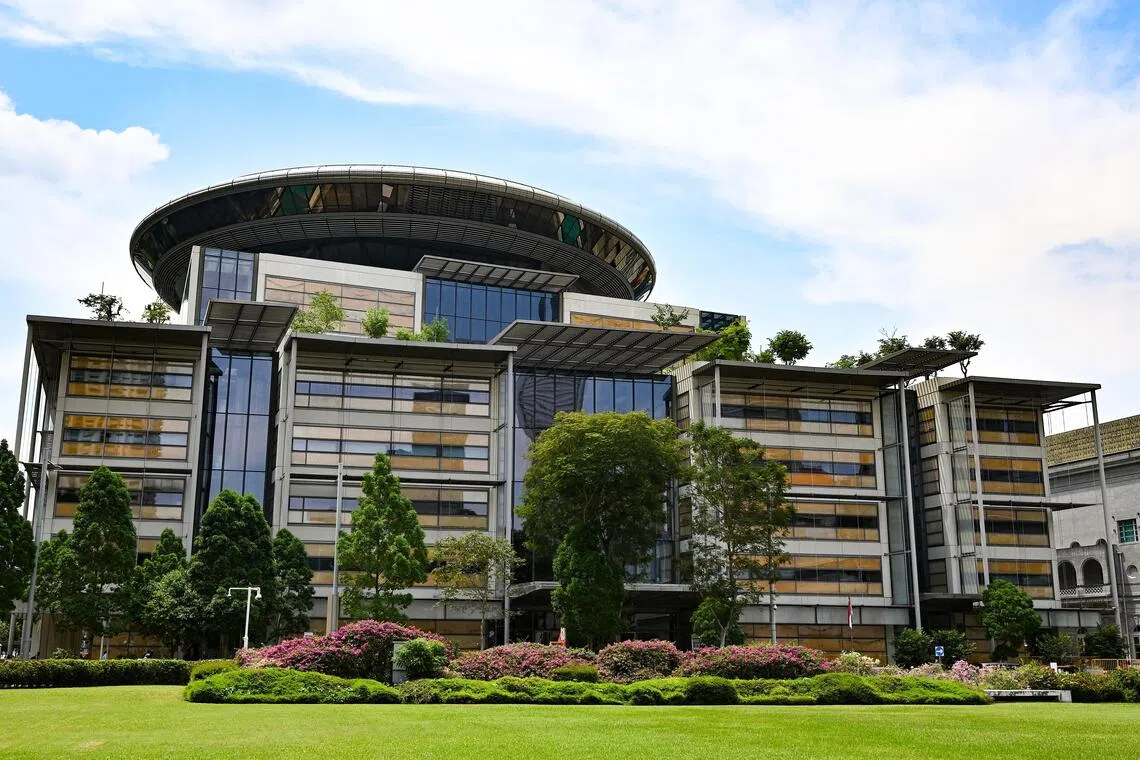
Chua Kim Chuan lost the case because the High Court found he had not proved the inaccurate reference cost him the Prudential job opportunity.
Published Sep 18, 2026, 11:15 PM
Updated Sep 19, 2026, 12:09 AM
SINGAPORE – A 2002 resignation came back to haunt a man more than two decades later when a background check for a prospective job wrongly described his departure from his former employer as an “involuntary resignation”.
The man, Chua Kim Chuan, sued his former employer AXA Insurance – now HSBC Life – claiming the inaccurate reference cost him his new job at Prudential. He argued that an inaccurate employment report that HSBC Life gave to Prudential was defamatory.
The High Court on Sept 18 found HSBC Life had been negligent, and a statement that he had “failed to complete fit and proper exercise” was defamatory in the context in which it was made.
But Chua still lost the case because the court found he had not proved the inaccurate reference cost him the Prudential job opportunity.
High Court Justice Kwek Mean Luck said in a written judgment that the evidence showed that Prudential wanted Chua to join full-time and leave his job at Marina Bay Sands (MBS), but Chua did not want to do so.
Chua had worked for AXA from 2000 to 2002 as an insurance agent and financial services manager. He resigned in September 2002.
After AXA, he worked at Phillip Securities from 2002 to 2008. He joined MBS in 2010.
In 2023, more than 20 years after he left AXA, Chua was looking to return to the financial advisory industry and was interviewed by Prudential.
As part of Prudential’s background checks, screening company Sterling RISQ obtained an employment verification report from HSBC Life, which had taken over AXA.
The report, which was based on AXA’s electronic records, stated that Chua’s reason for leaving AXA was an “involuntary resignation”. It also stated that he had “failed to complete fit and proper exercise”.
Both statements were wrong.
Chua had voluntarily resigned. HSBC Life later found that the statement about the “fit and proper exercise” was also inaccurate. What Chua had not completed was an annual declaration.
After Chua’s lawyers wrote to HSBC Life in May 2023, the insurer checked AXA’s physical records and found the inaccuracies.
HSBC Life then wrote to Prudential in July 2023 to clarify that the two entries were incorrect and apologised to Chua.
Kwek said HSBC Life had breached its duty of care to Chua by providing the employment report with errors that communicated a negative impression of Chua.
The justice said “involuntary resignation” had a negative connotation because it suggested conduct that led AXA to ask Chua to resign.
Kwek noted that the errors would suggest that Chua had been asked to resign.
“This is defamatory, as it would lower him in the eyes of prospective employers in the financial advisory and insurance industry,” he said.
But Chua did not win his defamation claim.
Employment references are protected by the legal concept of qualified privilege, meaning a reference provider can be protected from a defamation claim unless the claimant can show that the protection should not apply, such as by proving malice.
Chua alleged that HSBC Life had acted maliciously because of personal animosity and had been reckless about whether the information was true.
The judge rejected this.
The HSBC Life employee who prepared the reference had relied on AXA’s electronic records and had no reason to harm Chua.
When the errors were discovered, HSBC Life apologised and corrected them.
Chua’s negligence claim therefore turned on a different question: whether the inaccurate reference had caused him to lose the Prudential opportunity.
This was where his claim failed.
Chua had been working at MBS since February 2010 as a dealer inspector and he wanted to keep that job while joining Prudential on a part-time basis.
After his interview with Prudential, he was told that he would have to leave MBS and join Prudential full-time.
The exchange that followed on WhatsApp became an important part of the evidence.
Prudential representative Ong Kai Xin told Chua: “You need to quit then have the MAP”, referring to Prudential’s Management Associate Programme.
Chua replied that he had “insisted and maintained from the start” that he intended to join the insurer part-time.
He explained to Ong on WhatsApp why he did not want to give up his MBS job.
“I already said I need my secured income from MBS because among other things, I have a wife who will outlived (sic) me,” he wrote.
He added: “I can’t be certain whether I’ll be able to perform as a high flier as I was b4.”
He then made the distinction that became significant in the case: “Reference check is one issue. Leaving MBS completely is another totally different issue.”
Chua later testified that he had been prepared to leave MBS for Prudential.
He explained that he had obtained permission from MBS to work as a financial representative of Prudential because he wanted to keep the option open to work part-time, but had not committed to a decision.
But Kwek found that this was an “afterthought” because it was not stated in Chua’s affidavit and contradicted his WhatsApp messages.
Prudential said in court that its main concern was Chua’s concurrent employment at MBS.
Its representative said Chua’s job application had not been rejected outright, but that the insurer could not proceed with his onboarding while he continued working at MBS. The application eventually lapsed after Chua did not follow up.
The judge said that while there was evidence that Prudential was looking into the reference provided by HSBC Life, there was no evidence that Prudential had declined to offer Chua a job because of the two errors in HSBC Life’s report.
“What is clear on the evidence is that Prudential required Chua to leave MBS before it could accept him and that Chua was not prepared to do so,” he said.
The case also involved Chua’s claims that inaccurate references had been given to other prospective employers between 2009 and 2023. But the court found that he could not establish when some of the alleged references had been provided.
His claims were dismissed and HSBC Life was awarded costs.
HSBC Life has since changed its procedures. The insurer told the court that it now limits employment references to the previous 10 years and checks both electronic and physical records.
Toh Yong Chuan is The Straits Times’ assistant business editor, covering manpower, political and policy issues, and law. He is an advocate and solicitor of the Supreme Court.
蔡金泉败诉,因为高等法院认为他未能证明不准确的推荐信导致他失去了保诚公司的工作机会。
发布于 2026 年 9 月 18 日晚上 11:15
更新于2026年9月19日凌晨12:09
新加坡——2002 年的一次辞职,在二十多年后给一名男子带来了麻烦。当时,一份潜在工作的背景调查错误地将他从前雇主那里离职描述为“非自愿辞职”。
该男子蔡金泉(Chua Kim Chuan)起诉其前雇主安盛保险(现为汇丰人寿),声称其不实推荐信导致他失去了在保诚集团的新工作。他认为汇丰人寿向保诚集团提供的不实雇佣报告构成诽谤。
高等法院于 9 月 18 日裁定,汇丰人寿存在疏忽,并且关于他“未能完成适当锻炼”的声明在其语境中构成诽谤。
但蔡先生最终还是败诉了,因为法院认为他未能证明这份不准确的推荐信让他失去了保诚公司的工作机会。
高等法院法官郭敏乐在书面判决中表示,证据表明保诚希望蔡先生全职加入公司并辞去他在滨海湾金沙(MBS)的工作,但蔡先生不愿意这样做。
蔡先生于2000年至2002年间在安盛保险公司担任保险代理人和金融服务经理,并于2002年9月辞职。
在离开安盛之后,他于 2002 年至 2008 年在辉立证券工作。他于 2010 年加入 MBS。
2023 年,在离开 AXA 20 多年后,蔡先生希望重返金融咨询行业,并接受了保诚的面试。
作为保诚集团背景调查的一部分,筛选公司 Sterling RISQ 从收购了安盛集团的汇丰人寿获得了就业核实报告。
该报告基于安盛的电子记录,指出蔡先生离开安盛的原因是“非自愿辞职”。报告还指出,他“未能完成适任性考核”。
两种说法都是错误的。
蔡先生是自愿辞职的。汇丰人寿后来发现,关于“适格性审查”的说法也不准确。蔡先生未完成的是年度申报。
2023 年 5 月,蔡先生的律师致函汇丰人寿后,该保险公司检查了安盛的纸质记录,发现了不准确之处。
汇丰人寿随后于 2023 年 7 月致函保诚,澄清这两项记录有误,并向蔡先生道歉。
郭先生表示,汇丰人寿违反了其对蔡先生的注意义务,向其提供的雇佣报告存在错误,给蔡先生留下了负面印象。
法官表示,“非自愿辞职”一词带有负面含义,因为它暗示了导致安盛要求蔡先生辞职的行为。
郭指出,这些错误表明蔡某已被要求辞职。
他说:“这是诽谤,因为这会降低他在金融咨询和保险行业潜在雇主眼中的形象。”
但蔡先生的诽谤诉讼最终败诉。
就业推荐信受有限特权的法律概念保护,这意味着推荐人可以免受诽谤索赔,除非索赔人能够证明这种保护不应适用,例如通过证明恶意。
蔡先生声称汇丰人寿因个人恩怨而恶意行事,并且罔顾信息的真实性。
法官驳回了这一请求。
汇丰人寿的这名员工在准备推荐信时,依据的是安盛的电子记录,并没有理由伤害蔡先生。
发现错误后,汇丰人寿道歉并予以纠正。
因此,蔡先生的过失索赔取决于另一个问题:不准确的参考是否导致他失去了保诚的机会。
他的主张在这里站不住脚。
蔡先生自 2010 年 2 月起一直在 MBS 担任经销商检查员,他希望在兼职加入保诚的同时,也能继续从事这份工作。
在与保诚公司面试后,他被告知他必须离开滨海湾金沙,全职加入保诚公司。
随后在 WhatsApp 上的交流成为重要的证据部分。
保诚代表王凯欣告诉蔡:“你需要辞职,然后参加MAP计划”,指的是保诚的管理助理计划。
蔡先生回应说,他“从一开始就坚持”打算以兼职身份加入这家保险公司。
他通过 WhatsApp 向 Ong 解释了他为什么不想放弃在 MBS 的工作。
“我已经说过,我需要从MBS获得稳定的收入,因为除其他原因外,我还有妻子,她会比我活得更久,”他写道。
他补充道:“我无法确定我是否还能像以前那样发挥出色。”
然后,他做出了对本案至关重要的区分:“背景调查是一回事,彻底离开MBS则是完全不同的另一回事。”
蔡后来作证说,他原本准备离开滨海湾金沙集团加入保诚集团。
他解释说,他已获得 MBS 的许可,可以担任保诚的财务代表,因为他想保留兼职工作的选项,但尚未做出最终决定。
但郭发现这是“事后添加的”,因为蔡的宣誓书中没有提到这一点,而且与他的 WhatsApp 消息相矛盾。
保诚在法庭上表示,其主要担忧是蔡先生同时在滨海湾金沙银行任职。
其代表表示,蔡先生的求职申请并未被直接拒绝,但由于他仍在滨海湾金沙银行工作,保险公司无法继续办理他的入职手续。由于蔡先生没有后续跟进,该申请最终失效。
法官表示,虽然有证据表明保诚正在调查汇丰人寿提供的推荐信,但没有证据表明保诚因为汇丰人寿报告中的两处错误而拒绝向蔡提供工作机会。
他说:“证据清楚地表明,保诚要求蔡先生离开滨海湾金沙银行才能接受他,而蔡先生并不愿意这样做。”
该案还涉及蔡某声称在 2009 年至 2023 年间,他曾向其他潜在雇主提供不准确的推荐信。但法院认定他无法确定某些所谓的推荐信是在何时提供的。
他的诉讼请求被驳回,汇丰人寿获得了诉讼费用。
汇丰人寿此后更改了相关流程。该公司向法庭表示,现在只查阅过去10年的工作经历作为参考,并同时核查电子和纸质记录。
杜永泉是《海峡时报》的助理商业编辑,负责报道人力资源、政治政策和法律方面的新闻。他同时也是最高法院的律师。