The US usually sells weapons to Taiwan – with drones, expect the reverse美国通常会向台湾出售武器——但对于无人机,情况可能会相反。
Taiwan's biggest appeal is the lack of China in the manufacturing supply chain, one analyst said.
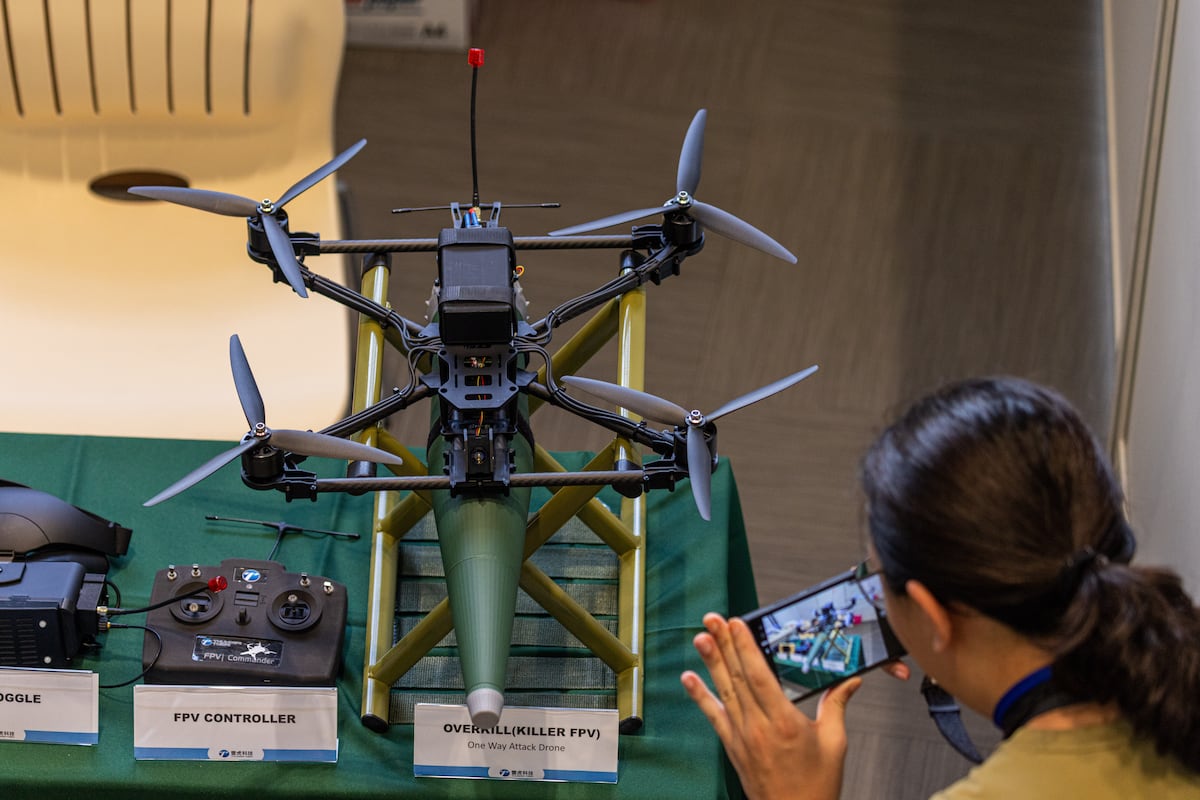
NEW TAIPEI CITY, Taiwan — The United States has been selling advanced weapons to Taiwan for years, with large American contractors churning out more of the higher-end equipment than the island could ever produce alone for its defense against its military rival China.
Now Taiwan, an all-purpose manufacturing hub since the 1980s with an emphasis on high-tech hardware, is positioning to sell homegrown drones to the U.S. military so it can avoid the dominant Chinese supply chain, analysts and recent transactions indicate.
“Foreign governments value Taiwanese drones mainly because of Taiwan’s strong information and communication technologies foundation and its role as a trusted supply chain partner,” said Lee Yi-ching, an analyst with the Market Intelligence & Consulting Institute in Taipei.
“From a supply-chain perspective, Western countries have increasingly prioritized reducing their reliance on Chinese drones and Chinese-made components,” Lee said. “Amid concerns over information security, wartime supply chain resilience and national security, the trustworthiness of component sources has become an important factor for Western governments when evaluating drone suppliers.”
China-headquartered DJI makes at least 70% of the world’s commercial and civilian-use drones, including for American consumers.
On June 4, the de-facto U.S. embassy in Taiwan said the Virginia-based Association for Uncrewed Vehicle Systems International and the Industrial Technology Research Institute in Taiwan were working together on drone technology.
A day earlier, domestic media had reported that Taiwan’s Metal Industries Research & Development Center signed a memorandum to team up with American defense technology company Anduril.
“We recognize that Taiwan’s strengths in advanced manufacturing, electronics, and agile production make it a natural and indispensable partner,” the de-facto embassy’s director, Raymond Greene, said in a June 4 statement.
And last year, Taiwanese manufacturer Thunder Tiger’s Overkill-brand kamikaze drone set a precedent for Asia by meeting the Pentagon’s certification requirements.
The Taiwanese drone industry was worth NT$12.9 billion (US$410 million) last year after growing 2.5 times over 2024, and drone exports racked up NT$2.95 billion, the island’s premier, Cho Jung-tai, said in a statement on April 30. Taiwan has worked on drones of some type since the 1990s.
In the first quarter this year, the United States was the No. 3 importer, with shipments worth $2.58 million, after Poland and the Czech Republic.
Taiwan aims to make NT$40 billion worth of drones by 2030, Cho added, noting that the island has a “complete supply chain.”
The U.S. military is paying special attention to drones in light of their use in the Russia-Ukraine war, analysts said, and U.S. legislators proposed in 2025 expanding domestic drone production to 1 million units per year.
But that ambition would “take some time for the U.S. industry to expand that scale, particularly as they don’t have a strong commercial UAV industry already in place,” said Jeremiah Gertler, senior advisor with the U.S.-based aerospace consulting firm AeroDynamic Advisory.
“It would not be surprising in that case for the U.S. to ask allies to provide production capacity and or finished products to act as a bridge while the U.S. got its production in place,” Gertler said.
Taiwan could offer the United States an “at-scale” solution for situations where swarms of UAVs are needed for air and sea combat and China will watch how well they perform, predicted Doug Barry, an international trade consultant and adjunct professor at George Washington University.
Taiwanese manufacturers can make drones in small or large batches, a possible advantage over other suppliers, said Sean Su, an independent tech analyst in Taiwan.
But its “biggest appeal” is the lack of China in the supply chain, he said. U.S. officials fret over data security, possible espionage and supply chain risks posed by any military gear sourced from China.
“Drones in general are very low cost, so it doesn’t matter if China is much cheaper,” Su said. Taiwan’s drones “are in a range that is already dozens of times cheaper than many other platforms with arguably even more capability,” he added.
台湾新台北市——多年来,美国一直在向台湾出售先进武器,美国大型承包商生产的高端装备数量远远超过台湾自身能够生产的,用于防御其军事对手中国。
分析人士和最近的交易表明,自 20 世纪 80 年代以来,台湾一直是全能制造中心,尤其注重高科技硬件。如今,台湾正准备向美国军方出售国产无人机,以避开中国占主导地位的供应链。
“外国政府重视台湾无人机,主要是因为台湾拥有强大的信息通信技术基础,并且是值得信赖的供应链合作伙伴,”台北市场情报咨询研究所分析师李宜晴表示。
李表示:“从供应链的角度来看,西方国家越来越重视减少对中国无人机和中国制造零部件的依赖。在信息安全、战时供应链韧性和国家安全等问题上,零部件来源的可靠性已成为西方政府评估无人机供应商的重要因素。”
总部位于中国的 DJI 生产了全球至少 70% 的商用和民用无人机,其中包括面向美国消费者的无人机。
6月4日,美国驻台湾的实际大使馆表示,总部位于弗吉尼亚州的国际无人驾驶飞行器系统协会和台湾工业技术研究院正在合作研发无人机技术。
前一天,国内媒体报道称,台湾金属工业研究发展中心与美国国防科技公司安都瑞尔签署了一份合作备忘录。
“我们认识到,台湾在先进制造业、电子产品和敏捷生产方面的优势使其成为一个天然且不可或缺的合作伙伴,”事实上的大使馆主任雷蒙德·格林在6月4日的一份声明中表示。
去年,台湾制造商雷虎公司的“超杀”品牌自杀式无人机满足了五角大楼的认证要求,为亚洲树立了先例。
台湾行政院长曹荣台4月30日发表声明称,台湾无人机产业去年产值达129亿新台币(约合4.1亿美元),预计到2024年将增长2.5倍,其中无人机出口额达29.5亿新台币。台湾自上世纪90年代起就开始研发各种类型的无人机。
今年第一季度,美国是第三大进口国,进口额达 258 万美元,仅次于波兰和捷克共和国。
Cho补充说,台湾的目标是到2030年生产价值400亿新台币的无人机,并指出台湾拥有“完整的供应链”。
分析人士称,鉴于无人机在俄乌战争中的应用,美国军方正特别关注无人机,美国立法者提议在 2025 年将国内无人机产量扩大到每年 100 万架。
但美国航空航天咨询公司 AeroDynamic Advisory 的高级顾问 Jeremiah Gertler 表示,要实现这一目标,“美国工业需要一些时间才能扩大规模,尤其是在他们还没有强大的商用无人机产业的情况下”。
“在这种情况下,美国要求盟友提供生产能力或成品作为过渡,以便美国自身能够建立生产能力,这并不令人意外,”格特勒说。
国际贸易顾问、乔治·华盛顿大学兼职教授道格·巴里预测,台湾可以为美国提供一种“大规模”的解决方案,以应对需要大量无人机进行空战和海战的情况,而中国将密切关注它们的表现。
台湾独立科技分析师苏世恩表示,台湾制造商可以小批量或大批量生产无人机,这可能比其他供应商更具优势。
但他表示,其“最大的吸引力”在于供应链中没有中国环节。美国官员担忧任何从中国采购的军事装备都可能带来数据安全、间谍活动和供应链风险。
苏先生表示:“无人机的成本总体来说非常低,所以即使中国的价格低很多也无关紧要。”他还补充道,台湾的无人机“价格已经比许多其他平台便宜几十倍,而且性能可能更强”。