European-Ukrainian cooperation sparks next-gen combat robot欧洲与乌克兰的合作催生了下一代战斗机器人
The variant was developed in partnership with the Ukrainian company Frontline, the Ukrainian military and frontline-experienced testers.
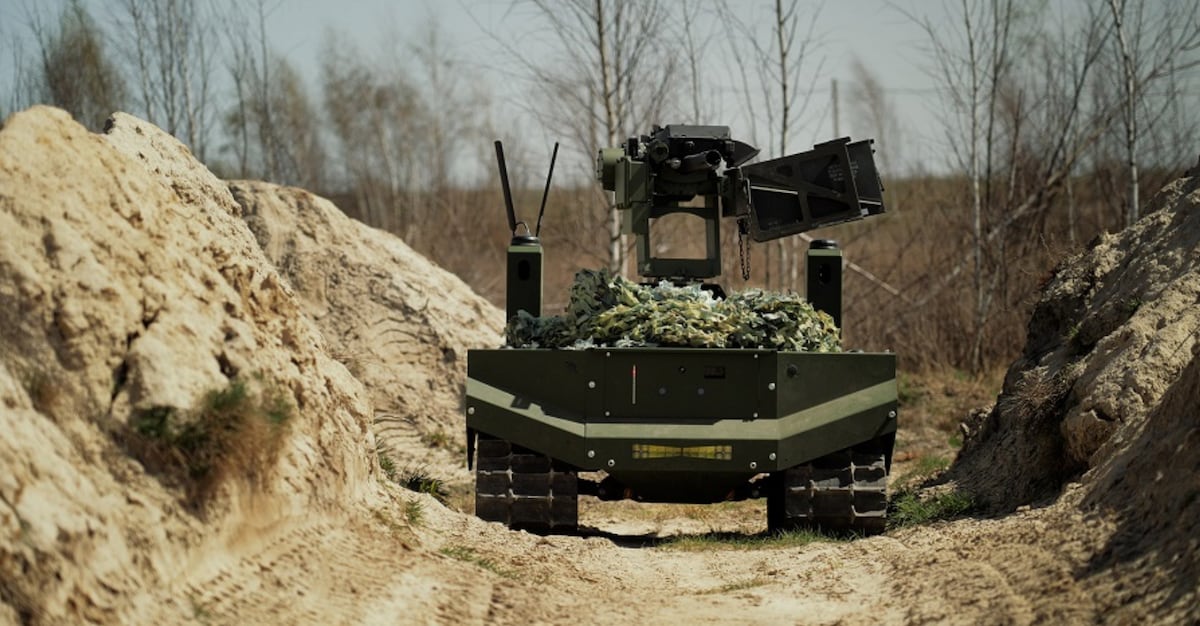
LONDON — European defense company ARX Robotics has introduced its new combat robot, designed in cooperation with the Ukrainian Armed Forces and based on their specific recommendations to solve key operational challenges in battle.
The Germany-based company launched its latest unmanned ground vehicle, the Combat Gereon, during the DSEI trade show here last week.
The system, which combines the existing Gereon RCS platform with AI-enabled autonomous functions , was displayed here armed with the LOKI remote weapon station from Slovenian company Valhalla Turrets.
The variant was developed in partnership with the Ukrainian company Frontline, the Ukrainian military and frontline-experienced testers, ARX Robotics chief executive officer Marc Wietfeld told Defense News.
The company boss detailed three key suggestionsprovided by the Ukrainian forces relating to the system’s dimensions and operationsto make it more adaptable to real combat conditions.
“Some [examples] included reducing the UGV’s size and weight to allow easy integration into front-line logistics; simplifying controls so that operators with minimal training can use it effectively under combat stress; and increasing modularity to enable quick field repair and adaptation to changing mission needs,” Wietfeld said.
The use of combat robots across the battlefield in Ukraine has proliferated, with machines taking over tasks previously assigned to soldiers.
The dynamic has translated into an increase in companies engagedin the development of UGVs, which now stands at over 100, per the Ukrainian Ministry of Digital Transformation website.
Earlier this year, the European Defense Agency’s innovation hub launched an initiative to test aerial drones and UGVs to assess their fit in resupply and logistics missions.
While several European manufacturers already produce war robots, Wietfield said the main drawbacks of many of these platforms revolve around their size, cost and complexity.
“The main weaknesses of many European combat UGVs are their large form factor and heavy weight, which prevent integration into front-line logistics – they are [also] often complex, expensive, and based on sensitive technology not designed for sustained battlefield use,” he said.
He added that several of them require up to three operators, which can be an inefficient use of personnel, as many countries already face manpower shortages.
Elisabeth Gosselin-Malo was a Europe correspondent for Defense News. She covers a wide range of topics related to military procurement and international security, and specializes in reporting on the aviation sector. She is based in Milan, Italy.
伦敦——欧洲国防公司 ARX Robotics 推出了其新型作战机器人,该机器人是与乌克兰武装部队合作设计,并根据乌克兰武装部队的具体建议,旨在解决战斗中的关键作战挑战。
这家总部位于德国的公司上周在DSEI防务展上推出了其最新的无人地面车辆“战斗吉伦”。
该系统结合了现有的Gereon RCS平台和人工智能赋能的自主功能,此次展出的装备包括斯洛文尼亚Valhalla Turrets公司生产的LOKI遥控武器站。
ARX Robotics 首席执行官 Marc Wietfeld 告诉《防务新闻》,该型号机器人是与乌克兰公司 Frontline、乌克兰军方和一线经验丰富的测试人员合作开发的。
该公司负责人详细介绍了乌克兰军队提出的三项关键建议,这些建议与该系统的尺寸和操作有关,旨在使其更适应真实的作战条件。
维特菲尔德说:“一些例子包括缩小无人地面车辆的尺寸和重量,以便轻松融入前线后勤;简化控制,以便训练最少的操作人员也能在战斗压力下有效使用它;以及提高模块化程度,以便快速进行现场维修并适应不断变化的任务需求。”
在乌克兰战场上,战斗机器人的使用日益普及,机器接管了以前由士兵执行的任务。
根据乌克兰数字化转型部的网站显示,这种动态已经转化为从事无人地面车辆(UGV)开发的公司的增加,目前已超过 100 家。
今年早些时候,欧洲防务局创新中心启动了一项计划,测试空中无人机和无人地面车辆,以评估它们在补给和后勤任务中的适用性。
维特菲尔德表示,虽然一些欧洲制造商已经生产战争机器人,但这些平台的主要缺点在于其体积、成本和复杂性。
他说:“许多欧洲作战无人地面车辆的主要缺点是体积庞大、重量沉重,这阻碍了它们融入前线后勤保障体系——它们通常也很复杂、昂贵,并且基于敏感技术,并非为持续的战场使用而设计。”
他还补充说,其中一些设备需要多达三名操作员,这可能是对人员的低效利用,因为许多国家已经面临人力短缺的问题。
伊丽莎白·戈斯林-马洛曾任《防务新闻》欧洲通讯员。她的报道涵盖军事采购和国际安全等广泛领域,尤其擅长航空领域的报道。她常驻意大利米兰。