US Marine Corps plans to use 3D scanners to detect cracked body armor美国海军陆战队计划使用3D扫描仪检测防弹衣的裂纹。
The U.S. Marine Corps is looking to acquire high-resolution 3D scanners to detect cracked body armor.
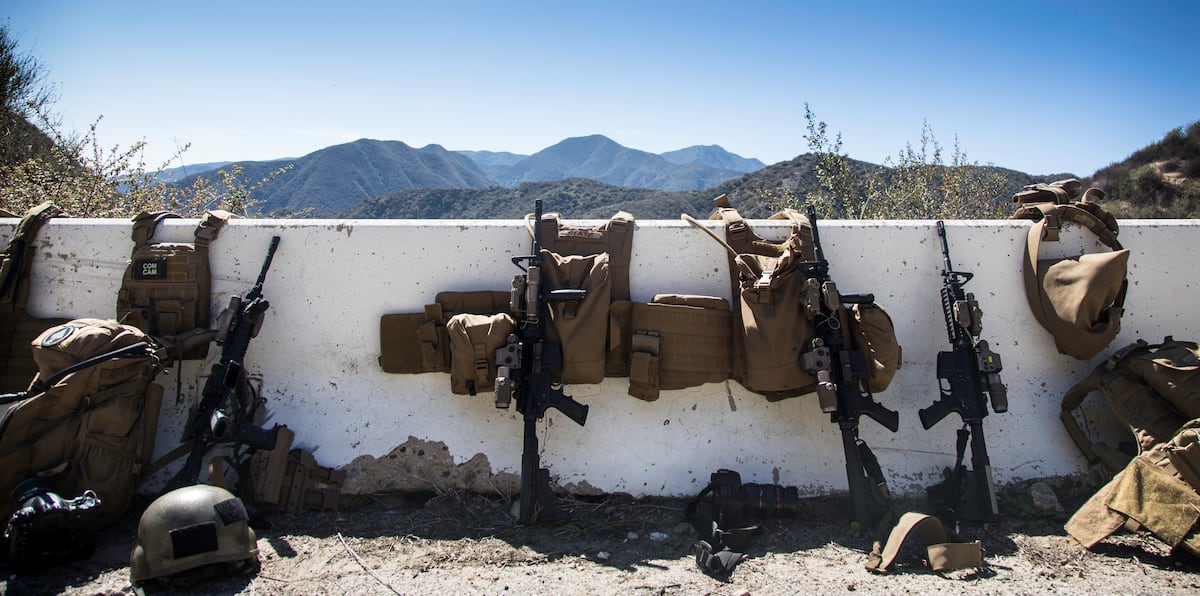
The U.S. Marine Corps is looking to acquire high-resolution 3D scanners to detect cracked body armor.
The goal is to develop sensors that can “scan individual hard armor plates for cracks and delaminations,” according to a Marine Corps Request For Information , which is due Oct. 2. More specifically, the devices will inspect Enhanced Small Arms Protective Inserts and United States Marine Corps Lightweight Plates.
The Enhanced Armor Inspection System will use computed tomography , or CT, scanners. CT scanning, commonly used for tasks such as medical imaging and airport bomb detection, creates 3D images that are more detailed than traditional 2D X-ray images.
The Marine Corps intends to set up 10 CT scanners for body armor inspection. This includes six devices in the continental United States, two in Japan and one each in Hawaii and Guam.
The Marine Corps currently uses two techniques to spot defects in body armor, as explained in a 2023 Small Business Innovation Research solicitation that sought new methods of examining cracked ceramic plates and delaminated polyethylene layers. Cracked ceramics are detected by X-rays and deformed polyethylene by tapping the armor and determining whether the sound is like a chime (good) or a thud (bad).
The SBIR did point to CT scanning as an alternative, but noted that “this method is extremely expensive and requires highly trained personnel.”
The new RFI seeks an automated commercial system. It should include an “automated material custom conveyance & sorting system, imaging system, and data processing/handling that is fully equipped with customized Automated Defect Recognition (ADR) software to meet the USMC’s requirements.”
Contractors should specify how many plates per minute their systems can examine. They are also asked to describe how well the scanners can handle “materials with varying densities or compositions, such as the blend of boron carbide and silicon carbide, or the presence of metal crack arrestors.”
In 2011, a Department of Defense Inspector General audit found that the U.S. Army had purchased 5.1 million ballistic inserts that might have been defective. Army tests sometimes failed to use the correct-sized armor plates, the proper velocity for bullets fired at the plates or assess the effects of weathering and altitude.
The Army replied that there was “no case in which the military’s body armor has failed to do its job in protecting troops in Iraq and Afghanistan.”
There have also been claims of defective military body armor in Britain and Taiwan , as well as for U.S. police departments .
Michael Peck is a correspondent for Defense News and a columnist for the Center for European Policy Analysis. He holds an M.A. in political science from Rutgers University. Find him at theuncommondefense.com. His email is mikedefense1@gmail.com.
美国海军陆战队正寻求采购高分辨率 3D 扫描仪,用于检测防弹衣上的裂纹。
根据美国海军陆战队一份将于 10 月 2 日截止的信息征询书,目标是开发能够“扫描单个硬质装甲板,检测裂纹和分层”的传感器。更具体地说,这些设备将检查增强型小型武器防护插板和美国海军陆战队轻型装甲板。
增强型装甲检测系统将采用计算机断层扫描(CT)扫描仪。CT扫描常用于医学成像和机场炸弹探测等任务,它生成的3D图像比传统的2D X射线图像更详细。
美国海军陆战队计划安装10台CT扫描仪用于防弹衣检查。其中6台位于美国本土,2台位于日本,夏威夷和关岛各1台。
目前,美国海军陆战队采用两种技术来检测防弹衣的缺陷。这在2023年小型企业创新研究(SBIR)招标书中有所阐述,该招标书旨在寻找检测陶瓷板裂纹和聚乙烯层分层的新方法。陶瓷板裂纹通过X射线检测,而聚乙烯层变形则通过敲击防弹衣来判断声音是清脆(良好)还是沉闷(不良)。
SBIR 确实指出 CT 扫描是一种替代方案,但同时指出“这种方法非常昂贵,而且需要训练有素的人员”。
新的信息征询书(RFI)寻求的是一种自动化商业系统。该系统应包括“自动化物料定制输送和分拣系统、成像系统以及数据处理/处理系统,并配备定制的自动缺陷识别(ADR)软件,以满足美国海军陆战队的要求。”
承包商应明确说明其系统每分钟可检测多少块板材。他们还需说明扫描仪处理“密度或成分各异的材料,例如碳化硼和碳化硅的混合物,或含有金属裂纹阻隔器的材料”的能力如何。
2011年,美国国防部监察长的一项审计发现,美国陆军采购的510万个防弹插板可能存在缺陷。陆军的测试有时未能使用尺寸合适的装甲板,未能采用合适的子弹速度,也未能评估风化和海拔高度的影响。
陆军方面回应称,“没有任何案例表明军用防弹衣在保护伊拉克和阿富汗的部队方面未能发挥作用。”
英国、台湾以及美国警察部门也曾出现过军用防弹衣存在缺陷的指控。
迈克尔·佩克是《防务新闻》的通讯员,也是欧洲政策分析中心的专栏作家。他拥有罗格斯大学政治学硕士学位。您可以在theuncommondefense.com找到他。他的邮箱是mikedefense1@gmail.com。