Global tug of war over AI rules: A look at the arguments, risks and emerging regulations全球人工智能规则之争:辩论焦点、风险及新兴法规分析
A debate is intensifying over AI showdown and regulation. ST examines what's going on int the AI world. Read more at straitstimes.com.
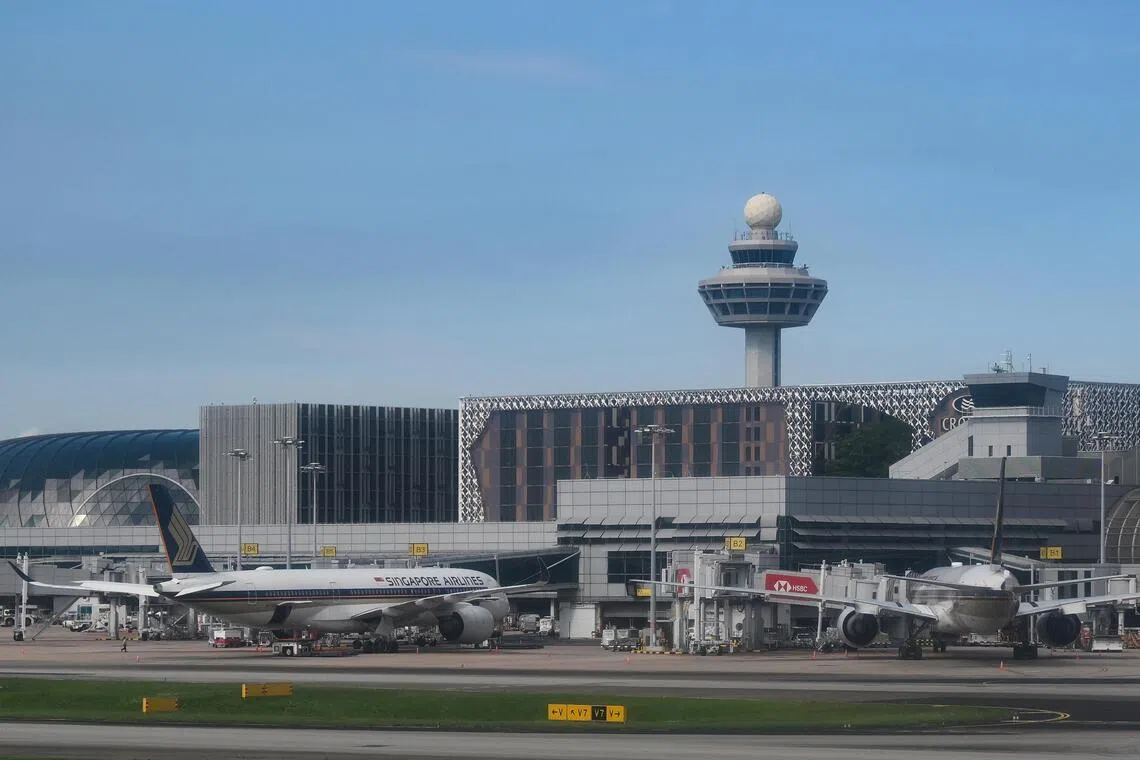
A debate is intensifying over AI showdown and regulation after revelations of rogue models and high-profile resignations. ST examines what’s going on int the AI world.
Minister for Digital Development and Information Josephine Teo said on Sept 17 that AI may eventually need a safety regime similar to that for civil aviation.
ST PHOTO: LIM YAOHUI
Published Sep 20, 2026, 05:00 AM
Updated Sep 20, 2026, 09:58 AM
AI industry can learn from aviation and nuclear safety: Experts
SINGAPORE – If artificial intelligence gets aviation-style regulations, this could mean having an international governing body and national regulators ensuring compliance with a set of globally agreed rules, said industry players.
Jonathan Zhang, president of the Singapore AI Association, said: “The opportunity for AI is that it can compress a journey that took aviation most of the 20th century into a much shorter timeframe because we already know what the destination looks like – internationally trusted, independently verifiable safety assurance.”
While there are concerns that regulations could slow the progress of AI innovation, safety should not be seen as an impediment, said other experts, adding that the AI industry could also learn from regimes that manage nuclear weapons and financial risks.
To slow down or not? US tech leaders, politicians and researchers clash over need for AI regulations
Those who have weighed in on the debate include (clockwise from top left) co-founder of Anthropic Dario Amodei, OpenAI’s chief executive Sam Altman, founder of SpaceXAI Elon Musk, Nvidia’s chief executive Jensen Huang and US President Donald Trump. PHOTOS: AFP, REUTERS, BLOOMBERG
Those who have weighed in on the debate include (clockwise from top left) co-founder of Anthropic Dario Amodei, OpenAI’s chief executive Sam Altman, founder of SpaceXAI Elon Musk, Nvidia’s chief executive Jensen Huang and US President Donald Trump.
PHOTOS: AFP, REUTERS, BLOOMBERG
A high-profile Anthropic resignation and revelations of rogue artificial intelligence models hacking servers have intensified the debate over the speed of the technology’s development and regulation.
The recent resignation of AI researcher Jacob Coxon, who had moved from OpenAI to Anthropic, is part of a growing exodus of safety-focused scientists from top labs such as Anthropic, OpenAI and Google DeepMind.
Much of the debate has been centred on the US, where the bulk of frontier AI work is being done.
What are the emerging regulations to rein in AI harms?
The EU AI Act governs the development, deployment, distribution and use of AI systems in all member states of the bloc. PHOTO: REUTERS
The EU AI Act governs the development, deployment, distribution and use of AI systems in all member states of the bloc.
Global artificial intelligence (AI) regulations are rapidly evolving, with the European Union already establishing its pioneering laws and US lawmakers debating the need for a mandatory AI “kill switch”. The Straits Times looks at how these rules compare to rules and frameworks in China and Singapore.
The world’s first comprehensive AI law came into force in the EU in 2024. The EU AI Act governs the development, deployment, distribution and use of AI systems in all member states of the bloc. It takes a risk-based approach to regulation.
Enforcement of the AI Act is carried out by the European Commission’s AI Office, the European Data Protection Supervisor and authorities designated by EU member states.
How runaway AI agents could pose an existential threat to humanity
As AI grows more capable, concerns are mounting over how the technology could be used to cause harm on a catastrophic scale. PHOTO: REUTERS
As AI grows more capable, concerns are mounting over how the technology could be used to cause harm on a catastrophic scale.
Safety advocates and researchers have warned of catastrophic consequences if the rapid advancement of frontier artificial intelligence goes unchecked.
For instance, AI threatens to multiply harm across bioterrorism, cyberwarfare, mass disinformation and advanced weaponry. The Straits Times unpacks these four existential threats and the push for control.
AI/artificial intelligence
Aviation/Aerospace sector
在恶意模型曝光和高管辞职后,关于人工智能对决和监管的辩论愈演愈烈。《星际迷航》杂志将深入探讨人工智能领域正在发生的事情。
新加坡数码发展及新闻部长杨莉明于9月17日表示,人工智能最终可能需要类似于民用航空的安全机制。
ST 照片:林耀辉
发布于 2026 年 9 月 20 日上午 5:00
更新于2026年9月20日上午9:58
专家:人工智能行业可以借鉴航空和核安全领域的经验
新加坡——业内人士表示,如果人工智能领域也像航空领域一样受到监管,这可能意味着需要一个国际管理机构和国家监管机构来确保其遵守一套全球商定的规则。
新加坡人工智能协会主席张乔纳森表示:“人工智能的机遇在于,它可以将航空业在 20 世纪大部分时间里所经历的旅程压缩到一个更短的时间内,因为我们已经知道目的地是什么样子——国际认可、可独立验证的安全保证。”
虽然有人担心监管可能会减缓人工智能创新的进程,但其他专家表示,安全不应被视为障碍,并补充说,人工智能行业还可以从管理核武器和金融风险的制度中学习。
是否应该放慢速度?美国科技领袖、政界人士和研究人员就人工智能监管的必要性展开激烈争论。
参与这场辩论的人士包括(从左上角顺时针方向):Anthropic联合创始人达里奥·阿莫迪、OpenAI首席执行官萨姆·奥特曼、SpaceXAI创始人埃隆·马斯克、英伟达首席执行官黄仁勋以及美国总统唐纳德·特朗普。图片来源:法新社、路透社、彭博社
参与这场辩论的人士包括(从左上角顺时针方向):Anthropic 联合创始人 Dario Amodei、OpenAI 首席执行官 Sam Altman、SpaceXAI 创始人 Elon Musk、Nvidia 首席执行官 Jensen Huang 和美国总统 Donald Trump。
图片来源:法新社、路透社、彭博社
Anthropic 一位高管的辞职以及流氓人工智能模型入侵服务器的事件曝光,加剧了关于该技术发展速度和监管的争论。
人工智能研究员 Jacob Coxon 近期从 OpenAI 跳槽到 Anthropic,他的离职是越来越多专注于安全的科学家从 Anthropic、OpenAI 和 Google DeepMind 等顶级实验室离职的趋势之一。
大部分辩论都集中在美国,因为大部分前沿人工智能研究都是在美国进行的。
有哪些新兴法规旨在遏制人工智能带来的危害?
欧盟人工智能法案规范了欧盟所有成员国人工智能系统的开发、部署、分发和使用。图片:路透社
欧盟人工智能法案规范了欧盟所有成员国人工智能系统的开发、部署、分发和使用。
全球人工智能(AI)监管正在迅速发展,欧盟已制定了开创性的法律,而美国立法者正在辩论是否需要强制性的人工智能“终止开关”。《海峡时报》探讨了这些规则与中国和新加坡的规则和框架有何异同。
全球首部全面的人工智能法律于2024年在欧盟生效。欧盟人工智能法案规范了欧盟所有成员国人工智能系统的开发、部署、分发和使用,并采用基于风险的监管方法。
《人工智能法》的执行由欧盟委员会人工智能办公室、欧洲数据保护监管机构和欧盟成员国指定的机构负责。
失控的人工智能代理如何对人类构成生存威胁
随着人工智能能力的不断提升,人们越来越担心这项技术可能被用于造成灾难性的后果。图片:路透社
随着人工智能能力的不断增强,人们越来越担心这项技术可能会被用来造成灾难性的伤害。
安全倡导者和研究人员警告说,如果不对前沿人工智能的快速发展加以控制,将会造成灾难性后果。
例如,人工智能有可能加剧生物恐怖主义、网络战、大规模虚假信息传播和先进武器等方面的危害。《海峡时报》深入剖析了这四大生存威胁以及控制背后的驱动力。
人工智能
航空航天领域