Thaksin era minister reflects on Thailand’s 2006 coup d’état. Calls for a democracy dedicated to people他信时代的一位部长回顾了泰国2006年的政变,并呼吁建立一个真正以人民为中心的民主制度。
Twenty years after tanks toppled Thaksin, Phumtham warns Thailand still bears the scars. Two coups, dissolved parties, fallen prime ministers and rewritten charters later, over… Read More ›
新闻视频
September 20, 2026 at 11:56 am
in Economy , Living , Media , Politics , Thailand
Twenty years after tanks rolled into Bangkok and toppled Thaksin Shinawatra’s government, an ousted minister has issued a stark anniversary warning. Former Deputy Prime Minister Phumtham Wechayachai says Thailand lost time, trust and opportunities after the September 19, 2006 coup. Another coup, rewritten constitutions, dissolved parties, removed prime ministers and deadly street clashes followed. Yet Phumtham also rejects unchecked elected power, insisting governments must face scrutiny and removal under established rules. Now, more than 30 million Thais have backed another constitutional drafting process. Two decades after the military abolished the 1997 “People’s Constitution”, Thailand is again rewriting its political rules.
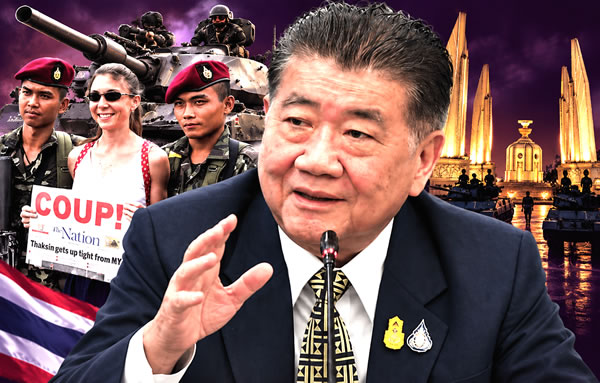
Former Deputy Prime Minister Phumtham Wechayachai marks 20 years since the 2006 coup, warning Thailand lost time and trust as voters back a new constitution. ( Source: Khaosod )
Former Deputy Prime Minister Phumtham Wechayachai marked Thailand’s 2006 military coup anniversary on Saturday with a warning about its consequences. Twenty years later, he said political conflict, constitutional change and lost opportunities continued to shape the country.
Mr Phumtham spoke from direct experience of the September 19, 2006 seizure of power. He was Deputy Minister of Transport when the military removed Prime Minister Thaksin Shinawatra. Mr Thaksin was attending the United Nations General Assembly in New York. Back in Bangkok, tanks appeared as military commanders took control.
Notably, Mr Phumtham’s ministerial career ended immediately. He later became one of 111 Thai Rak Thai executives banned from politics for five years. The party itself was dissolved in May 2007. Yet its political movement survived and returned to government after the next election.
Phumtham recalls 2006 coup and warns Thailand against using extra-constitutional power to end crises
On Saturday, Mr Phumtham returned to those events in a lengthy Facebook statement. It was entitled “20 years since September 19th, the coup against an elected government.” He said Thailand must learn from the episode and remember its consequences.
“Twenty years after September 19, 2006, a crucial question remains for the Thai people to remember,” Mr Phumtham said. “I was a minister in the government that was overthrown. On that day, Thailand went through conflict, lost opportunities, and repercussions that have lasted for two decades.”
At the centre of his statement was the use of extra-constitutional power. Mr Phumtham said its use against democratic mechanisms required renewed scrutiny by Thai society. In particular, he questioned whether military intervention could resolve political disputes rather than merely change governments.
“The most important lesson I learned from that day’s events is that the use of extra-constitutional power to undermine the mechanisms and continuity of democracy must be seriously questioned and scrutinised by Thai society once again,” Mr Phumtham stated.
His argument then turned to Thailand’s experience since the coup. A military takeover could change a government overnight, he said. However, it could also create larger problems and cost the country opportunities.
“Over the past twenty years, we have seen… many changes in government, constitutional amendments, and changes to the rules,” he said. “But the problems and conflicts have not disappeared.”
Phumtham backs checks on elected governments but says accountability must be democratic
Instead, Mr Phumtham said Thailand had lost time, continuity, trust and opportunities for its people. “This is a lesson I believe Thailand should not have to face again,” he added.
Crucially, Mr Phumtham did not argue that an electoral victory gave governments unrestricted political power. He specifically rejected the proposition that a parliamentary majority could exercise absolute authority.
Democracy must also recognise minority rights, he said. Equally, governments must operate under checks and balances which command public confidence. Governments making mistakes must face scrutiny, while corrupt politicians must face prosecution.
Separately, failed governments must be replaceable. Political parties breaking promises must also face accountability. Mr Phumtham insisted these processes should operate under democratic laws and established political rules.
In his account, democracy could never guarantee a government acceptable to everyone. Rather, political institutions must provide mechanisms for investigating wrongdoing and replacing governments. Voters must also retain the power to determine their political future.
“If the people make the wrong choice, they must have the right to choose again,” Mr Phumtham said. “If the government makes a mistake, it must be scrutinised and held accountable.”
Thaksin’s landslide mandate and rural support built unprecedented power before opposition intensified
Consequently, he argued that correcting political mistakes should not create even larger problems. His intervention also returned attention to the extraordinary political crisis which engulfed Thailand during 2006.
The military intervention did not emerge from a political vacuum. Mr Thaksin had entered the crisis after an overwhelming electoral victory only one year earlier. Thai Rak Thai dominated the February 2005 general election, winning 377 of the House’s 500 seats.
As a result, Mr Thaksin became the first elected Thai prime minister to complete a full four-year term. He then returned to office with an overwhelming parliamentary majority. Thai Rak Thai had become the country’s dominant electoral organisation.
Its strength rested heavily across northern and northeastern Thailand. Furthermore, millions of lower-income and rural voters formed an important part of its coalition. Universal healthcare and village funds were among the government’s signature programmes.
By then, Thai Rak Thai had established an electoral operation without precedent in contemporary Thai politics. Mr Thaksin had also become the country’s dominant political figure. At the same time, his concentration of political power generated fierce opposition.
Shin Corporation sale, tax controversy and Bangkok protests deepen the political crisis around Thaksin
Critics accused his government of conflicts of interest, cronyism and interference with independent institutions. They also accused it of applying pressure against critical media. In addition, opponents complained that too much political power had become concentrated around Mr Thaksin.
His human rights record faced separate criticism. Specifically, his government’s 2003 campaign against illegal drugs was associated with more than 2,000 deaths. Political opposition then intensified sharply during late 2005 and early 2006.
Against that backdrop came a business deal which transformed the confrontation. In January 2006, the Shinawatra family sold its controlling Shin Corporation interest to Singapore’s Temasek. The transaction was worth approximately $1.9 billion.
Significantly, the family incurred no capital gains tax on the share transaction. The deal immediately generated political controversy. Critics attacked its tax treatment and the transfer of a major telecommunications group to a foreign state-owned investor.
In response, opposition to Mr Thaksin accelerated. The transaction became a powerful rallying point for his opponents. Large demonstrations followed in Bangkok, led principally by the People’s Alliance for Democracy.
Boycotted election is annulled before tanks enter Bangkok and military commanders remove Thaksin
Under mounting pressure, Mr Thaksin dissolved parliament in February 2006. He then called a snap general election for April 2. The Democrat Party and other opposition parties boycotted the contest.
Thai Rak Thai subsequently dominated the election and received approximately 16.4 million votes. Nevertheless, the boycott produced severe problems in constituencies where government candidates lacked significant opposition. The political deadlock therefore intensified.
On May 8, the Constitutional Court annulled the election. Another general election was eventually scheduled for October 15. Before voters could return to the polls, however, the military intervened.
On September 19, Mr Thaksin was thousands of kilometres away in New York. He had travelled there for the United Nations General Assembly. Meanwhile, tanks and troops appeared at strategic locations across Bangkok.
Army commander General Sonthi Boonyaratglin and other senior officers seized power. The military imposed martial law and removed Mr Thaksin’s government. More significantly, the coup leaders abolished the 1997 Constitution.
Coup ends parliament and 1997 charter as military leaders cite division, corruption and political deadlock
Parliament and the Senate were abolished. Political parties faced restrictions on their normal operations. Public gatherings were also restricted, while troops were deployed at media organisations. Broadcasting controls followed.
For their part, the coup leaders offered several reasons for intervening. They cited national division and corruption. They also accused the government of interfering with independent institutions.
Moreover, military leaders argued that existing political mechanisms had failed to resolve the crisis. Mr Thaksin’s opponents had already accused his government of weakening constitutional checks. His supporters, however, argued that the coup destroyed the constitutional system itself.
Beyond Mr Thaksin’s removal, the coup terminated a major constitutional experiment. Thailand’s 1997 charter was widely called the “People’s Constitution”. It had emerged from earlier instability and demands for political reform.
Importantly, the charter sought to create stronger elected governments alongside powerful independent institutions. Thailand had previously endured unstable coalitions and frequent changes of prime minister. Accordingly, the new system encouraged stronger parties and more durable governments.
People’s Constitution strengthened elected governments before military intervention ended its framework
It succeeded on both counts. Mr Thaksin used the framework more effectively than any previous Thai politician. Thai Rak Thai became an extraordinarily powerful national organisation and secured a commanding parliamentary majority.
Conversely, critics argued that this strength weakened institutions intended to scrutinise elected power. The military responded by abolishing the constitutional framework altogether. September 19 therefore changed far more than the identity of Thailand’s prime minister.
Afterwards, retired General Surayud Chulanont became prime minister under post-coup arrangements. A new constitutional drafting process also began. The resulting 2007 Constitution went before voters the following August.
About 57% of participating voters approved the charter. Thailand then returned to a general election in December 2007. The result demonstrated the continuing electoral strength of the movement removed one year earlier.
By then, Thai Rak Thai no longer existed. The party had been dissolved in May 2007. Its 111 banned executives included Mr Phumtham.
Despite that, the political movement associated with Mr Thaksin survived. The People Power Party became its principal successor. In December 2007, it won the largest number of parliamentary seats.
Thaksin movement survives party dissolution and returns through People Power Party after the 2006 coup
Samak Sundaravej subsequently became prime minister. Thus, the coup had removed Mr Thaksin without eliminating the electoral coalition behind him. That reality dominated the next phase of Thai politics.
Within months, upheaval returned. The Constitutional Court removed Mr Samak from office in September 2008. Somchai Wongsawat succeeded him as prime minister.
His tenure was equally short. In December 2008, the Constitutional Court dissolved the People Power Party. Mr Somchai consequently lost office.
Thereafter, Democrat Party leader Abhisit Vejjajiva became prime minister. Street politics continued, however, as the Red Shirt movement mobilised against his government. Large demonstrations followed.
Eventually, confrontation in Bangkok during 2010 turned deadly. The crisis became another major episode in the struggle which followed September 2006. Thailand then returned to national elections in July 2011.
Once again, a party associated with Mr Thaksin won decisively. Pheu Thai captured 265 of the House’s 500 seats. Yingluck Shinawatra subsequently became Thailand’s first female prime minister.
Courts remove two prime ministers before Pheu Thai wins 2011 election and Yingluck Shinawatra takes office
Two years later, another political crisis developed. Large anti-government demonstrations again filled Bangkok during late 2013. The confrontation continued into the following year.
In May 2014, the Constitutional Court removed Ms Yingluck from office. Nine days later, the military intervened again. Army commander General Prayut Chan-o-cha seized power on May 22.
Consequently, Thailand had experienced two successful military coups within eight years. Both removed governments originating from the same broad electoral political movement. The second takeover then produced another extended period of military rule.
As part of that process, Thailand acquired another constitutional framework. The present 2017 Constitution emerged following the 2014 coup. Yet the country’s political landscape was already changing again.
At the 2019 general election, Future Forward emerged as a significant new political force. It attracted substantial support, particularly among younger voters. Its programme also moved beyond the older political confrontation surrounding Mr Thaksin.
Yingluck’s removal precedes 2014 coup before Future Forward emerged as a new political force in Thailand
The Constitutional Court dissolved Future Forward in February 2020. Even so, much of its political support subsequently transferred to Move Forward. That party then produced another major electoral shift in May 2023.
Move Forward won 151 House seats, more than any other party. Party leader Pita Limjaroenrat nevertheless failed to secure sufficient parliamentary support to become prime minister. Pheu Thai subsequently assembled a coalition government.
Another change followed in August 2024. The Constitutional Court dissolved Move Forward. Its political movement subsequently continued through the People’s Party.
By 2026, therefore, Thailand’s political landscape differed markedly from September 2006. The conflict was no longer centred exclusively on Mr Thaksin and his network. Constitutional disputes and party dissolutions nevertheless continued throughout the period.
On another front, Mr Phumtham used Saturday’s statement to revive another theme associated with the Thai Rak Thai era. He called it “a democracy that feeds the people”.
For Mr Phumtham, political institutions also had to produce tangible results in everyday life. “Democracy must answer fundamental questions: Do people have enough income to live on? Do farmers have a future?”
“Do ordinary people have access to healthcare? Do our children have education, jobs, and hope?”
Links democracy to living standards, healthcare, farmers’ futures, education, employment and hope
Mr Phumtham said stable democracy required several elements operating together. These included voters’ voices and checks on political power. Additionally, government itself had to function effectively.
“This is what I’ve always called ‘a democracy that feeds the people,’” Mr Phumtham stated. “Democracy must include the voice of the people, checks and balances on the exercise of power, a functioning government, and rules that ensure no one is above the rules.”
His wider argument about lost economic opportunities has also been examined through economic research. There is evidence that the 2006 political crisis damaged confidence and some investment decisions.
For example, the World Bank examined economic uncertainty surrounding the crisis. About one-fifth of surveyed businesses reported adverse effects on investment decisions.
The effects were particularly evident among larger, exporting and foreign-owned companies. The World Bank also reported weak domestic demand during 2006. Political and policy uncertainty affected private consumption and investment.
Later research, however, did not establish the coup as the cause of Thailand’s longer-term economic performance. A 2023 econometric study specifically examined the effects of the September 2006 intervention.
Economic research finds short-term disruption after 2006 but no established long-term damage
It found no statistically significant effect across several major indicators. Those included real gross domestic product, growth, investment, inflation, exports, imports and unemployment.
The study did identify temporary effects on consumption. It also found increased military expenditure. Accordingly, Mr Phumtham’s broader lost-opportunity claim remains his assessment rather than an established economic calculation.
Two decades later, the anniversary arrives as Thailand again faces fundamental constitutional change. Voters went to the polls on February 8, 2026, for another referendum.
This time, they were asked whether Thailand should begin drafting a new constitution. The result was overwhelming.
More than 30.5 million votes supported beginning the process. By comparison, only 874,994 votes opposed it. About 2.89 million ballots were invalid.
The referendum again placed Thailand’s constitutional system at the centre of national politics. Since absolute monarchy ended in 1932, Thailand has had 20 constitutions. The country has also experienced 13 successful military coups.
New charter referendum wins 30 million votes as Thailand again confronts constitutional change in 2026
In parallel, legislation this year addresses political cases spanning much of the same turbulent period. Thailand’s new political amnesty law took effect in August.
It covers specified political offences committed between January 1, 2005 and July 15, 2025. Its timeframe therefore stretches from before the 2006 crisis through two decades of political confrontation.
Parliamentary estimates indicate that about 6,000 people could benefit. Serious offences and corruption cases are excluded. Section 112 offences are also outside the legislation.
Elsewhere, Saturday’s anniversary prompted interventions from other political figures. Former Pheu Thai politician Korkaew Pikulthong published his own assessment of the past two decades.
A House military affairs committee event also marked the anniversary at the Bangkok Art and Culture Centre. Progressive Movement chairman Thanathorn Juangroongruangkit addressed the gathering.
Mr Thanathorn discussed military power and Thailand’s political economy. He also argued for reforms concerning military resources and institutions.
Taken together, the anniversary discussion stretched beyond Mr Thaksin’s removal. It covered military intervention, constitutions, elections, courts, political parties and independent institutions.
Political amnesty covers two decades of turmoil as other figures join debate on the 2006 coup anniversary
Mr Phumtham, however, said he did not want September 19 reduced to another exercise in assigning blame. Instead, he focused on mechanisms for handling political disputes and government failure.
Thailand should have a system allowing governments to face scrutiny without overthrowing the political order, he said. Conflict should also remain possible without abandoning established rules.
Likewise, governments should be replaceable without resorting to extra-constitutional power. Ultimately, Mr Phumtham returned to voters and their ability to remove governments through elections.
“If the people make the wrong choice, they must have the right to choose again,” he said. “If the government makes a mistake, it must be scrutinised and held accountable. Correcting mistakes should not be done by creating bigger mistakes.”
He then distilled his anniversary message into a direct warning drawn from September 2006.
“Do not solve problems and conflicts by destroying the rules that should be used to resolve those problems and conflicts.”
Phumtham says governments must face scrutiny and removal through rules rather than military intervention
Finally, Mr Phumtham acknowledged that elections inevitably produce governments opposed by substantial sections of the population.
“Democracy may not always give us the government we like, but it must provide rules that allow for the change of government without destroying the country.”
Twenty years earlier, Thailand’s elected government had disappeared overnight. Tanks entered Bangkok while its prime minister was in New York.
The 1997 Constitution was abolished. Parliament and the Senate disappeared with it. Political activity and public gatherings were restricted.
Yet the political movement behind the ousted government returned through elections little more than a year later. Political confrontation subsequently continued through parliament, courts and the streets.
Another military coup followed in 2014. Another constitution followed in 2017. Several major political parties were subsequently dissolved.
Now Thailand has again started the process towards another constitutional settlement. More than 30 million voters backed drafting a new charter in February.
Twenty years after September 19, that process coincides directly with Mr Phumtham’s anniversary intervention. “Because a country can change its power overnight, but restoring opportunities and trust may take a lifetime,” Mr Phumtham said.
Thammasat University legal scholar and 1992 protest leader warns another coup cannot be ruled out
Government in peril over the coming weeks with Constitutional Court petition over Senate collusion conspiracy
Justice Minister suspended from roles linked to the expanding Senate criminal investigation by the DSI
Shocking and real evidence of a massive Senate election collusion campaign. 1,200 people being probed by DSI
Senator calls on members to suspend duties. Fears tainted decisions. 146 Senators to be summoned later
Political crisis brewing. ‘Blue’ line senators called upon the acknowledge collusion charges in Bangkok
Controversy over special police investigators as the Senate Election case threatens explosive findings
Case against two Ministers accepted by Constitutional Court over Senate probe. Could see them removed
Senate allegations growing in strength as powerful investigation gets underway. 7,000 people tracked
Justice Minister confident there is a sound basis for the criminal probe into last year’s Senate election
DSI panel to decide on a criminal probe into the 2024 Senate election which could spark political crisis
Joseph Anthony is an expat from Ireland who has lived in Thailand for the last decade. He has worked extensively in the media including editorial positions in Ireland and Thailand. He is focused on economic and business stories in Thailand as well as the expat lifestyle.
All posts by Joseph O' Connor
From stalls to smartphones, Thai Revenue pulls in a growing cohort of online traders in new economy September 15, 2026 Thailand’s taxman chases the smartphone economy as
Tighter ‘bottleneck’ regime on money transfers in force across financial system per central bank orders September 15, 2026 Bank of Thailand Governor Vitai Ratanakorn orders
PM Anutin accompanies King and Queen on a historic visit to Vietnam for three days hours before verdict September 14, 2026 King and Queen begin historic Hanoi State Visit as
Election Commission creates more questions than answers as it refers 77 people to the Supreme Court September 14, 2026 Senate scandal heads for court as EC targets 77
Gauntlet thrown down to the Election Commission before it votes on explosive Senate collusion scandal cases September 14, 2026 Monday’s Senate showdown could open a new political
Police raids on nightlife venues in Bangkok’s Wang Thonglang area as clandestine foreign control grows September 14, 2026 Bangkok police swoop on 17 venues in Wang
TH AI plan runs into problems and bottlenecks. New AIS deal offering cheap 29 baht per month internet September 13, 2026 Thailand’s flagship ฿1.6 billion AI scheme hits
Prime Minister scrambles to get data centre sector back on track after energy and regulatory hiatus September 13, 2026 Thailand’s data centre boom hits a regulatory wall
Mystery Chinese man used lost phone to lure Thai woman into trap at his condo and sexually attack her September 12, 2026 Pattaya woman Beam Mukassara claims a Chinese man
Former Ayutthaya abbot and his mistress sent to jail as court denies them bail as police probe finances September 12, 2026 Sex, cash and gold engulf a royal Ayutthaya temple as
Rising concerns in tourist hotspots about unruly tourists from Middle Eastern countries refusing to pay September 12, 2026 Foreign tourist mocks a Phuket motorcycle rider and
American wanted for sex offences against female minors arrested at Chiang Mai Buddhist retreat September 11, 2026 Thai police infiltrate a Chiang Mai meditation retreat
PM Anutin’s mission to Oslo to represent Thailand at the funeral of King Harald V amid budget scrutiny by the opposition September 11, 2026 Royal mission puts Anutin among monarchs and world
Bank of Thailand warns economic potential is falling with a severe crisis in the small business sector September 11, 2026 Thailand faces a widening economic split as exports
Masked man stages armed robbery in Pathum Thani netting 1.5 million baht before torching getaway car September 10, 2026 Gunman seals six people inside a Talat Thai bank,
Police officer bursts into tears as he surrenders to police led by son a day after murdering his wife September 10, 2026 Kindergarten killing ends in a dramatic dawn surrender
Court denies mercy to savage killer who bludgeoned a hotel worker to death in a drug crazed robbery in Hua Hin September 9, 2026 Death for Hua Hin hotel killer Rattikorn “Sam”
Partnership between Nestlé and the billionaire Mahagitsiri family descends into all out legal warfare September 15, 2026
Four bodies removed Tuesday from a Jewish cemetery in Chachoengsao in new crackdown on illegal burials September 15, 2026
Election Commission exposed based on Monday’s sweeping decisions and judgments warns opposition September 15, 2026
Chinese man arrested after he fled to Thailand in 1991. Firm’s capital raised weeks before his shock downfall September 14, 2026
Thailand’s K-shaped economy sees a large number of people cut back on food and meals to make ends meet September 14, 2026
Opinion poll shows public concern about Israeli misbehaviour in Thailand amid a febrile political mood September 14, 2026
Ex Pheu Thai minister warns Commission members that soon they could be judged as crunch vote looms September 13, 2026
Sex and financial scandal at famous monastery rocks Thailand. Abbot and girlfriend amassed huge wealth September 13, 2026
Thailand hailed as a haven for retirees and digital nomads but officials breed doubt and uncertainty September 12, 2026
Commerce Minister Suphajee responds to Sondhi Limthongkul’s attack on new liberal investment rules September 12, 2026
Pressure movement against Israel in Thailand gains momentum as it combines with street protests September 12, 2026
Bank bandit arrested at a Bangkok resort. 54 year old Saifa Kasemut has a history of armed robbery crime September 12, 2026
Former Prime Minister and Democrat Party leader cites a lack of public trust in the Election Commission September 11, 2026
Foreign nominee companies down by 81.77% as government seizes or freezes assets of over 20 billion September 11, 2026
Ayutthaya abbot disrobes as top temple official is arrested by police who worked undercover for months September 10, 2026
Veteran protest leader and media boss Sondhi begins his street protest campaign at Israel’s Embassy September 10, 2026
Substantial US Thai trade deal ready to be finalised by a call between Anutin and Trump says Minister September 10, 2026
Pattaya police officer clinically executed his wife at a kindergarten and was later surrounded at home September 9, 2026
Thailand gets ready to enter the age of nuclear power with plans for two small modular reactors by 2037 September 9, 2026
Petrol and diesel rise as inflation for August comes in at 2.53%. However confidence is also seen rising September 9, 2026
Nationwide probe targeting over 36K foreigner linked firms with land and a further 7k which own condos September 8, 2026
Sex network boss arrested in shock police home raid on Sunday after probe exposed child porn racket September 8, 2026
© 2026 Thai Examiner. All rights reserved.
2026年9月20日上午11:56
经济、生活、媒体、政治、泰国
在坦克开进曼谷推翻他信·西那瓦政府二十年后,一位被罢黜的部长发出了一份措辞严厉的周年纪念警告。前副总理蓬塔姆·威猜猜表示,2006年9月19日政变后,泰国失去了时间、信任和机遇。随后发生了另一次政变,宪法被修改,政党被解散,总理被罢免,以及致命的街头冲突。然而,蓬塔姆也反对不受制约的民选权力,他坚持认为政府必须接受审查,并根据既定规则被罢免。如今,超过3000万泰国人支持再次进行宪法起草。在军方废除1997年“人民宪法”二十年后,泰国再次开始重写其政治规则。
泰国前副总理普塔姆·威猜猜在2006年政变20周年之际警告说,随着选民支持新宪法,泰国已经失去了时间和信任。(来源:考索德报)
泰国前副总理普塔姆·威猜猜周六纪念2006年军事政变周年,并就政变的后果发出警告。他表示,20年后,政治冲突、宪法变革和错失的机遇仍在影响着这个国家。
普姆塔姆先生以亲身经历者的身份讲述了2006年9月19日的政变。当时他是交通部副部长,军方推翻了总理他信·西那瓦。他信当时正在纽约出席联合国大会。在曼谷,随着军方指挥官控制局势,坦克出现在街头。
值得注意的是,普姆塔姆先生的部长生涯就此结束。他后来成为111名被禁止参与政治五年的泰爱泰党高管之一。该党本身于2007年5月解散。然而,其政治运动得以延续,并在随后的选举中重返执政。
普姆塔姆回顾了2006年的政变,并警告泰国不要动用宪法之外的权力来结束危机。
周六,普姆塔姆先生在脸书上发表了一篇长文,再次提及了当年的事件。文章标题为“9·19事件20周年:推翻民选政府的政变”。他表示,泰国必须从这一事件中吸取教训,并牢记其后果。
“2006年9月19日事件发生20年后,泰国人民仍需铭记一个至关重要的问题,”普姆塔姆先生说。“我曾是那届被推翻政府的部长。在那一天,泰国经历了冲突、错失良机,以及持续了二十年的深远影响。”
他的声明核心在于宪法之外的权力运用。普姆塔姆先生表示,这种权力被用来对抗民主机制,泰国社会需要重新审视这一问题。他尤其质疑,军事干预能否解决政治争端,而不仅仅是更迭政府。
“我从那天的事件中学到的最重要的教训是,利用宪法之外的权力来破坏民主机制和延续性的行为,必须再次受到泰国社会的严肃质疑和审查,”普姆塔姆先生表示。
随后,他以泰国政变后的经验为例展开论述。他指出,军事政变可以在一夜之间改变政府,但也可能造成更大的问题,并使国家错失发展机遇。
他说:“过去二十年来,我们见证了政府的多次更迭、宪法的多次修正以及规则的多次变更。但问题和冲突并未消失。”
普姆塔姆支持对民选政府进行监督,但他表示问责制必须是民主的。
普姆塔姆先生表示,泰国因此失去了时间、延续性、信任以及人民的发展机遇。“我认为泰国不应该再次经历这样的教训,”他补充道。
至关重要的是,普姆塔姆先生并没有主张选举胜利赋予政府不受限制的政治权力。他明确否定了议会多数派可以行使绝对权力的观点。
他还表示,民主也必须承认少数群体的权利。同样,政府必须在制衡机制下运作,才能赢得公众的信任。犯错的政府必须接受审查,腐败的政客必须受到起诉。
此外,失败的政府必须可以被替换。违背承诺的政党也必须承担责任。普姆塔姆先生坚持认为,这些程序必须在民主法律和既定的政治规则下进行。
在他看来,民主永远无法保证建立一个所有人都能接受的政府。相反,政治制度必须提供调查不当行为和更换政府的机制。选民也必须保留决定自身政治命运的权力。
“如果人民做出了错误的选择,他们必须有权重新选择,”普姆塔姆先生说。“如果政府犯了错误,就必须接受审查并追究其责任。”
他信凭借压倒性优势和农村地区的支持,在反对势力加强之前,积累了前所未有的权力。
因此,他认为纠正政治错误不应造成更大的问题。他的发言也使人们重新关注2006年席卷泰国的那场非同寻常的政治危机。
军事干预并非凭空而来。他信先生在一年前刚刚以压倒性优势赢得选举,便介入了这场危机。泰爱泰党在2005年2月的大选中占据绝对优势,赢得了国会500个席位中的377个。
因此,他信先生成为泰国历史上首位完成四年完整任期的民选总理。随后,他以压倒性的议会多数席位再次当选。泰爱泰党也成为泰国最具影响力的选举组织。
其力量主要集中在泰国北部和东北部。此外,数百万低收入和农村选民也是其执政联盟的重要组成部分。全民医疗保健和乡村发展基金是该政府的标志性项目。
到那时,泰爱泰党已经建立起一套在泰国当代政治史上前所未有的选举运作体系。他信先生也已成为泰国最具影响力的政治人物。与此同时,他对政治权力的集中也引发了强烈的反对。
Shin集团出售、税务争议和曼谷抗议活动加剧了他信的政治危机。
批评人士指责他的政府存在利益冲突、裙带关系和干预独立机构的问题。他们还指责政府对批评性媒体施压。此外,反对派抱怨说,过多的政治权力集中在他信先生手中。
他的人权记录也受到了其他方面的批评。具体而言,他领导的政府在2003年发起的禁毒运动导致2000多人死亡。此后,在2005年末和2006年初,政治反对声浪急剧上升。
在此背景下,一笔商业交易改变了双方的对抗格局。2006年1月,西那瓦家族将其控股的信集团股份出售给了新加坡淡马锡控股。这笔交易价值约19亿美元。
值得注意的是,该家族在此次股权交易中无需缴纳任何资本利得税。这笔交易立即引发了政治争议。批评人士抨击其税务处理方式以及将一家大型电信集团转让给外国国有投资者的做法。
作为回应,反对他信的呼声日益高涨。这笔交易成为反对者强有力的集结号。随后,曼谷爆发了大规模示威游行,主要由人民民主联盟领导。
在坦克进入曼谷、军方指挥官撤换他信之前,抵制选举的结果被宣布无效。
在越来越大的压力下,他信先生于2006年2月解散了国会。随后,他宣布于4月2日举行大选。民主党和其他反对党抵制了此次选举。
泰爱泰党随后在选举中占据主导地位,获得约1640万张选票。然而,抵制选举在政府候选人缺乏有力对手的选区造成了严重问题,政治僵局因此加剧。
5月8日,宪法法院宣布选举无效。另一次大选最终定于10月15日举行。然而,在选民能够再次前往投票站之前,军方进行了干预。
9月19日,他信先生远在数千公里之外的纽约。他此行是为了出席联合国大会。与此同时,坦克和军队出现在曼谷各战略要地。
陆军司令颂提·汶亚拉格林将军和其他高级军官发动政变夺取政权。军方实施戒严,并罢免了塔信政府。更重要的是,政变领导人废除了1997年宪法。
政变导致议会解散,1997年宪章被废除,军方领导人称政变原因是内部分裂、腐败和政治僵局。
议会和参议院被废除。各政党的正常活动受到限制。公共集会也受到限制,军队被部署到媒体机构。随后,广播受到管制。
政变领导人则给出了干预政变的几个理由。他们列举了国家分裂和腐败问题,并指责政府干涉独立机构。
此外,军方领导人认为,现有的政治机制未能解决危机。他信的反对者此前已指责其政府削弱了宪法制衡。然而,他的支持者则认为,政变摧毁了宪政体制本身。
除了他信先生被罢黜之外,政变也终结了一项重要的宪政实验。泰国1997年的宪章被广泛称为“人民宪法”。它是在早期的动荡局势和政治改革呼声中诞生的。
重要的是,该宪章旨在建立更强大的民选政府,同时兼顾强大的独立机构。泰国此前一直饱受不稳定的联合政府和频繁更换总理之苦。因此,新体制鼓励建立更强大的政党和更稳定的政府。
《人民宪法》在军事干预终结其框架之前,加强了民选政府的权力。
两方面都取得了成功。他信先生比以往任何一位泰国政治家都更有效地运用了这一框架。泰爱泰党发展成为一个极其强大的全国性组织,并在议会中获得了绝对多数席位。
相反,批评人士认为,这种力量削弱了旨在监督民选权力的机构。军方的回应是彻底废除了宪法框架。因此,9月19日改变的远不止泰国总理的身份。
随后,退役将军素拉育·朱拉暖根据政变后的安排出任总理。新的宪法起草工作也随之启动。最终形成的2007年宪法于次年8月提交选民投票表决。
约57%的投票者赞成该宪章。泰国随后于2007年12月恢复大选。选举结果表明,一年前被推翻的运动仍然拥有强大的选举力量。
那时,泰爱泰党已不复存在。该党于2007年5月解散,其111名被禁的高级成员中包括普姆塔姆先生。
尽管如此,与他信先生相关的政治运动依然存在。人民力量党成为其主要继承者。2007年12月,该党赢得了最多的议会席位。
他信运动在政党解散后幸存下来,并在2006年政变后通过人民力量党卷土重来。
随后,萨玛·顺达拉维出任总理。因此,政变虽然罢免了他信,但并未瓦解他背后的选举联盟。这一事实主导了泰国政治的下一阶段。
几个月后,动荡再次爆发。2008年9月,宪法法院罢免了萨马先生的职务。颂猜·翁沙瓦接任总理一职。
他的任期同样短暂。2008年12月,宪法法院解散了人民力量党。颂猜先生因此失去了职务。
此后,民主党领袖阿披实·维乍集瓦出任总理。然而,街头政治斗争仍在继续,红衫军运动动员起来反对他的政府,随后爆发了大规模示威游行。
最终,2010年曼谷的冲突演变为致命事件。这场危机成为自2006年9月以来泰国动荡局势中的又一重大事件。泰国随后于2011年7月再次举行全国大选。
与他信先生有关联的政党再次取得压倒性胜利。为泰党在国会500个席位中赢得265席。英拉·西那瓦随后成为泰国首位女总理。
在为泰党赢得2011年大选、英拉·西那瓦就任总理之前,法院罢免了两任总理。
两年后,另一场政治危机爆发。2013年末,曼谷再次爆发大规模反政府示威游行。冲突一直持续到第二年。
2014年5月,宪法法院罢免了英拉女士的职务。九天后,军方再次介入。5月22日,陆军总司令巴育·占奥差将军夺取政权。
因此,泰国在八年内经历了两次成功的军事政变。这两届政府都源于同一场广泛的选举政治运动。第二次政变后,泰国又陷入了一段较长的军人统治时期。
作为这一进程的一部分,泰国获得了另一套宪政框架。现行的2017年宪法是在2014年政变后制定的。然而,该国的政治格局已开始再次发生变化。
在2019年大选中,未来前进党崛起成为一支重要的政治新力量。它获得了大量支持,尤其是在年轻选民中。其纲领也超越了围绕他信先生的旧有政治对抗。
英拉下台之前,泰国发生了2014年政变,之后未来前进党崛起成为泰国新的政治力量。
宪法法院于2020年2月解散了未来前进党。即便如此,该党的大部分政治支持随后转移到了前进党。该党随后在2023年5月的选举中再次引发了重大的选举格局变化。
前进党赢得了151个众议院席位,比其他任何政党都多。然而,该党领袖皮塔·林加伦拉特未能获得足够的议会支持,出任总理。随后,为泰党组建了联合政府。
2024年8月,又发生了另一次变化。宪法法院解散了“前进党”。此后,该党的政治运动通过人民党继续进行。
因此,到2026年,泰国的政治格局与2006年9月相比已截然不同。冲突不再仅仅围绕他信及其关系网展开。然而,宪法争议和政党解散事件在此期间仍然持续发生。
另一方面,普姆塔姆先生利用周六的声明重提了与泰爱泰时代相关的另一个主题。他称之为“惠及人民的民主”。
在普姆塔姆先生看来,政治机构也必须在日常生活中产生切实可见的成果。“民主必须回答一些根本性问题:人们是否有足够的收入维持生计?农民是否有未来?”
“普通民众能否获得医疗保健?我们的孩子能否接受教育、拥有工作和希望?”
将民主与生活水平、医疗保健、农民的未来、教育、就业和希望联系起来
普姆塔姆先生表示,稳定的民主制度需要多个要素协同运作,包括选民的发言权和对政治权力的制衡,此外,政府本身也必须高效运作。
“这正是我一直以来所说的‘惠及人民的民主’,”普姆塔姆先生说道。“民主必须包含人民的声音、对权力行使的制衡、一个运转良好的政府,以及确保任何人都不凌驾于规则之上的规则。”
他关于经济机会损失的更广泛论点也得到了经济研究的检验。有证据表明,2006年的政治危机损害了人们的信心,并影响了一些投资决策。
例如,世界银行对危机带来的经济不确定性进行了调查。约五分之一的受访企业表示,危机对其投资决策产生了不利影响。
这些影响在规模较大的出口型企业和外资企业中尤为明显。世界银行的报告也显示,2006年国内需求疲软。政治和政策的不确定性影响了私人消费和投资。
然而,后来的研究并未证实政变是泰国长期经济表现不佳的原因。2023年的一项计量经济学研究专门考察了2006年9月干预行动的影响。
经济研究发现,2006年后出现了短期波动,但尚未发现长期损害。
研究发现,在几个主要指标上,包括实际国内生产总值、经济增长、投资、通货膨胀、出口、进口和失业率,均未出现具有统计学意义的显著影响。
该研究确实发现了消费的暂时性影响,也发现军费开支有所增加。因此,普姆塔姆先生关于机会成本大幅下降的说法,仍然只是他的个人评估,而非既定的经济计算。
二十年后,值此周年纪念之际,泰国再次面临根本性的宪法变革。选民于2026年2月8日前往投票站,就另一次全民公投进行投票。
这一次,他们被问及泰国是否应该开始起草新宪法。结果压倒性地支持这一观点。
超过3050万张选票支持启动该程序。相比之下,只有874994张选票反对。约有289万张选票无效。
此次公投再次将泰国的宪政体制置于国家政治的核心位置。自1932年结束君主专制以来,泰国已颁布过20部宪法,并经历了13次成功的军事政变。
新宪章公投获得3000万张选票,泰国再次面临2026年宪法改革。
与此同时,今年出台的立法也涉及了大部分发生在同一动荡时期的政治案件。泰国新的政治特赦法已于8月生效。
它涵盖了 2005 年 1 月 1 日至 2025 年 7 月 15 日期间发生的特定政治犯罪。因此,其时间范围从 2006 年危机之前一直延续到长达二十年的政治对抗时期。
议会估计,约有6000人可能受益。严重犯罪和腐败案件不包括在内。第112条规定的犯罪行为也不在立法范围之内。
此外,周六的周年纪念日也引发了其他政治人物的关注。前为泰党政治家科卡·皮库尔通发表了他对过去二十年局势的评估。
众议院军事事务委员会也在曼谷艺术文化中心举办活动,纪念这一周年。进步运动主席塔纳通·宗龙伦吉在活动中发表了讲话。
塔纳通先生探讨了军事力量和泰国的政治经济。他还主张对军事资源和机构进行改革。
总的来说,周年纪念讨论的内容远不止于他信下台一事,还涵盖了军事干预、宪法、选举、法院、政党和独立机构等诸多方面。
政治特赦涵盖了长达二十年的动荡时期,其他人物也加入到关于2006年政变周年纪念日的讨论中。
然而,普姆塔姆先生表示,他不希望9月19日沦为又一次互相指责的场合。相反,他更关注处理政治纠纷和政府失职的机制。
他表示,泰国应该建立一套机制,使政府能够在不颠覆政治秩序的前提下接受监督。冲突也应该在不放弃既定规则的前提下继续存在。
同样,政府也应该可以更迭,而无需诉诸宪法之外的权力。最终,普姆塔姆先生还是回归到选民及其通过选举罢免政府的能力。
他说:“如果人民做出了错误的选择,他们必须有权重新选择。如果政府犯了错误,就必须接受审查并承担责任。纠正错误不应该以制造更大的错误为代价。”
然后,他将周年纪念致辞提炼成一条直接的警告,这条警告源自 2006 年 9 月。
“不要通过破坏解决问题和冲突的规则来解决问题和冲突。”
普姆塔姆表示,政府必须通过规则接受审查和罢免,而不是诉诸军事干预。
最后,普姆塔姆先生承认,选举不可避免地会产生遭到相当一部分民众反对的政府。
“民主制度或许不能总是给我们带来我们想要的政府,但它必须提供规则,允许政府更迭而不至于摧毁国家。”
二十年前,泰国民选政府一夜之间消失。当时,泰国总理正在纽约,坦克却开进了曼谷。
1997年宪法被废除,议会和参议院也随之消失。政治活动和公共集会受到限制。
然而,被推翻政府背后的政治运动仅仅一年多后就通过选举卷土重来。随后,政治对抗在议会、法院和街头持续不断。
2014年又发生了一次军事政变。2017年又颁布了一部新宪法。随后,几个主要政党被解散。
如今,泰国再次启动了制定新宪法的进程。今年2月,超过3000万选民投票支持起草新宪章。
9·19事件二十周年之际,这一进程恰好与普姆塔姆先生的周年纪念发言不谋而合。“因为一个国家可以在一夜之间改变其政权,但重建机遇和信任却可能需要一生的时间,”普姆塔姆先生说道。
泰国国立法政大学法学学者、1992年抗议活动领导人警告称,不能排除再次发生政变的可能性。
未来几周,由于参议院串谋阴谋案已提交宪法法院请愿书,政府岌岌可危。
司法部长因涉嫌参与特别调查局 (DSI) 扩大的参议院刑事调查而被停职。
令人震惊的真实证据表明,参议院选举存在大规模串谋活动。1200人正在接受DSI的调查。
参议员呼吁议员暂停职务,担忧决策受到干扰。稍后将传唤146名参议员。
政治危机酝酿之中。“蓝线”参议员呼吁承认曼谷的勾结指控。
参议院选举案疑似出现爆炸性调查结果,引发关于特别警察调查员的争议
宪法法院受理了针对两名部长的案件,该案源于参议院的调查。他们可能因此被免职。
随着强有力的调查展开,参议院的指控愈发有力。已有7000人关注。
司法部长确信,对去年参议院选举展开刑事调查有充分的理由。
特别调查局小组将决定是否对2024年参议院选举展开刑事调查,这可能引发政治危机。
约瑟夫·安东尼是一位来自爱尔兰的侨民,过去十年一直居住在泰国。他曾在爱尔兰和泰国的媒体行业担任过编辑职务,拥有丰富的媒体从业经验。他主要关注泰国的经济和商业新闻,以及侨民的生活方式。
约瑟夫·奥康纳的所有帖子
从摊位到智能手机,泰国税务部门正积极监管新兴经济中的新一代在线交易者(2026年9月15日) 泰国税务部门正追寻智能手机经济的足迹
根据泰国央行2026年9月15日发布的命令,金融系统将实施更严格的资金转移“瓶颈”机制。泰国央行行长维泰·拉达那空下令
阿努廷总理陪同国王和王后对越南进行为期三天的历史性访问,就在2026年9月14日判决公布前几个小时。国王和王后开始了对河内的历史性国事访问。
选举委员会将77人移交最高法院,引发更多疑问而非解答(2026年9月14日) 参议院丑闻将诉诸法庭,选举委员会将目标对准77人
在选举委员会就爆炸性的参议院勾结丑闻案进行投票之前,各方已向其发出挑战。2026年9月14日星期一,参议院的摊牌可能会开启新的政治局面。
2026年9月14日,曼谷警方突击搜查旺通朗区夜生活场所,外国势力暗中控制该地区的现象日益严重。警方突击搜查了旺通朗区的17家场所。
泰国人工智能计划遭遇困境和瓶颈。新的AIS协议提供每月29泰铢的低价互联网服务,预计于2026年9月13日生效。泰国耗资16亿泰铢的旗舰人工智能计划遭遇挫折。
泰国总理紧急采取措施,力图在能源和监管停滞后重振数据中心行业(2026年9月13日) 泰国数据中心热潮遭遇监管壁垒
2026年9月12日,芭堤雅女子Beam Mukassara称,一名神秘中国男子利用丢失的手机将一名泰国女子诱骗至其公寓并对其进行性侵。
前阿瑜陀耶寺住持及其情妇因涉嫌财务纠纷被法院拒绝保释并送入监狱(2026年9月12日) 性、现金和黄金充斥着阿瑜陀耶皇家寺庙
旅游热点地区日益关注来自中东国家的游客拒付车费等不文明行为。2026年9月12日,一名外国游客在普吉岛嘲笑一名摩托车骑手。
2026年9月11日,一名因性侵未成年女性而被通缉的美国男子在清迈佛教静修中心被捕。泰国警方渗透了清迈的一处冥想静修中心。
2026年9月11日,在反对党对预算进行审查之际,阿努廷总理将代表泰国前往奥斯陆参加哈拉尔五世国王的葬礼。此次皇家访问使阿努廷与君主和世界各国领导人齐聚一堂。
泰国央行警告称,小企业部门面临严重危机,经济潜力正在下降(2026年9月11日) 随着出口下滑,泰国面临日益扩大的经济分化
2026年9月10日,一名蒙面男子在巴吞他尼实施武装抢劫,劫走150万泰铢后焚毁了逃跑车辆。同日,一名持枪男子将六人困在一家泰泰银行内。
2026年9月10日,一名警官在儿子带领下向警方投降,他痛哭流涕,此前一天他刚刚杀害了自己的妻子。幼儿园枪击案以黎明时分的戏剧性投降告终。
2026年9月9日,华欣一名酒店凶手拉提科恩·“萨姆”·阿特金斯被判死刑,此前他因吸毒后神志不清而抢劫并残忍地将一名酒店员工殴打致死。
雀巢与亿万富翁马哈吉西里家族的合作关系于2026年9月15日演变为全面法律战。
2026年9月15日,在打击非法埋葬的新一轮行动中,四具遗体于周二从北柳府一处犹太人墓地被移走。
反对派警告:根据周一的一系列决定和判决,选举委员会的真面目暴露无遗 2026年9月15日
一名中国男子于1991年逃往泰国后被捕。该公司在他于2026年9月14日突然倒闭前几周筹集了资金。
泰国经济呈K型波动,许多人为了维持生计不得不减少食物和餐饮开支。(2026年9月14日)
民意调查显示,在当前紧张的政治氛围下,公众对以色列在泰国的不当行为感到担忧 2026年9月14日
前为泰党部长警告欧盟委员会成员,关键投票即将到来,他们可能很快就会受到评判(2026年9月13日)
泰国著名寺院爆出性丑闻和财务丑闻。住持及其女友聚敛巨额财富。2026年9月13日
泰国被誉为退休人士和数字游民的天堂,但官方却散布疑虑和不确定性 2026年9月12日
商务部长苏帕吉回应桑迪·林通库对新自由投资规则的抨击 2026年9月12日
泰国针对以色列的施压运动与街头抗议活动相结合,势头强劲 2026年9月12日
一名银行劫匪在曼谷一家度假村被捕。54岁的赛法·卡塞穆特曾有持械抢劫前科。2026年9月12日
前总理兼民主党领袖指出公众对选举委员会缺乏信任 2026年9月11日
2026年9月11日,由于政府查封或冻结超过200亿美元的资产,外国代理公司数量下降了81.77%。
阿瑜陀耶寺住持脱去僧袍,此前警方秘密潜伏数月后逮捕了寺庙高级官员 2026年9月10日
资深抗议领袖兼媒体大佬桑迪于2026年9月10日在以色列大使馆前发起街头抗议活动。
泰国部长阿努廷表示,美泰实质性贸易协议有望在阿努廷与特朗普通话后最终敲定(2026年9月10日)
2026年9月9日,芭堤雅一名警察在幼儿园内残忍地枪杀了妻子,随后在家中被警方包围。
泰国准备进入核电时代,计划在2037年前建成两座小型模块化反应堆(2026年9月9日)
受8月份通胀率2.53%的影响,汽油和柴油价格上涨。然而,市场信心预计在2026年9月9日也会上升。
全国范围内的调查目标是超过3.6万家与外国人有关联的土地公司和另外7000家拥有公寓的公司 2026年9月8日
2026年9月8日,一名性交易网络头目因涉嫌儿童色情犯罪活动于周日被警方突袭逮捕。
© 2026 Thai Examiner。版权所有。