A single resignation by Loke suffices: Malaysia does not need a constitutional confrontation — Phar Kim Beng陆兆福的辞职就足够了:马来西亚不需要宪政对抗——法金明
SEPTEMBER 20 — The decision of DAP secretary-general Anthony Loke to offer his resignation as Transport Minister should be understood for what it is: a serious political...
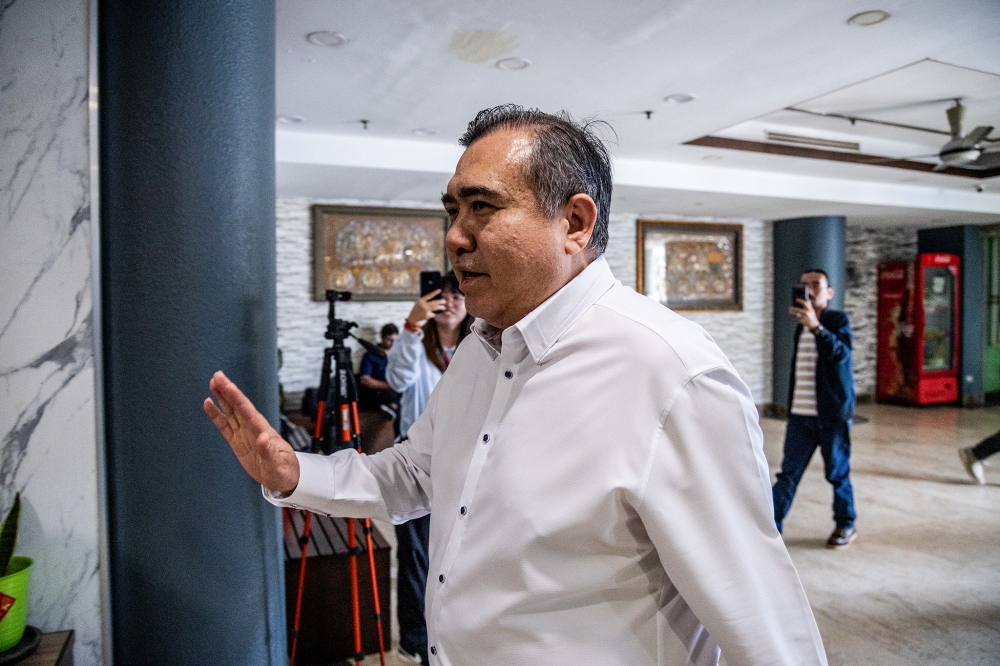
Anthony Loke's offer to resign as Malaysia's Transport Minister serves as a strategic political gesture in response to the conditional pardon granted to former Prime Minister Najib Razak.
This single resignation reflects the Democratic Action Party's (DAP) stance on corruption without inciting political instability or confrontations with the constitutional monarchy.
The decision underscores the importance of constitutional restraint and the distinct roles within Malaysia's parliamentary system, emphasizing the value of measured political responses over mass resignations.
Loke's approach allows for a balance of expressing dissent while maintaining government stability.
SEPTEMBER 20 — The decision of DAP secretary-general Anthony Loke to offer his resignation as Transport Minister should be understood for what it is: a serious political signal.
However, one deliberately calibrated not to become a constitutional confrontation.
This distinction matters.
Following the conditional pardon granted to former prime minister Najib Razak – allowing him to serve the remainder of his SRC International sentence under house arrest until August 23, 2028 – DAP faced an obvious dilemma.
It had to demonstrate that its long-standing position on corruption had not disappeared merely because it was now part of the Federal Government.
Yet it also had to recognise that Malaysia remains a constitutional monarchy operating through institutions, conventions and carefully delineated powers.
The pardon was granted through the constitutional pardons process chaired by the Yang di-Pertuan Agong.
Loke’s response therefore carries considerable significance.
It was measured and principled.
As the Secretary General of DAP, Loke has offered to relinquish his Cabinet position while the other DAP ministers and deputy ministers remain in government.
Loke said explicitly that this was intended to register the party’s position without producing political instability.
DAP also reiterated that it respects the Yang di-Pertuan Agong’s constitutional authority over pardons.
A mass resignation would convey something fundamentally different.
If every DAP minister and deputy minister were to leave simultaneously, especially if such action threatened the survival of the government, the political meaning could easily move beyond disagreement with the treatment of Najib.
It could be perceived as a direct and frontal political challenge arising from the exercise of the monarchy’s constitutional prerogative.
This would be unwise.
Malaysia’s constitutional system was never designed to resolve every disagreement through institutional escalation.
Its genius, when functioning properly, lies precisely in the opposite direction: checks and balances, parliamentary accountability, Cabinet responsibility, judicial independence and constitutional restraint.
These are mechanisms for containing disagreement, not multiplying it.
Malaysia also inherited important conventions from the Westminster and Whitehall traditions of government.
Ministers can disagree.
Ministers can resign.
Parliament can scrutinise.
Political parties can protest.
Courts can adjudicate matters properly before them.
But the responsible government also depends upon restraint.
Not every disagreement requires the maximum constitutional weapon available.
Indeed, parliamentary decorum becomes particularly important at moments such as this.
Parliament is not merely a numerical battlefield where one coalition attempts to bring another down whenever an objection arises.
It is an institution whose durability depends upon members understanding the distinction between opposition, dissent and systemic confrontation.
Loke’s resignation occupies precisely that middle ground.
One resignation says: we disagree profoundly.
A mass Cabinet walkout could be interpreted as saying: the political arrangement itself can no longer continue because of this constitutional decision.
Those are very different messages.
DAP therefore does not need multiple ministers resigning together.
As and when appropriate, Nga Kok Ming can be the second Minister to resign in due course at some point in future.
Nga once affirmed that if Najib is released, although to be fair, Nga did not anticipate the concept of conditional house arrest, he would resign.
Thus if Najib is released, Nga has to resign too.
As it is, due to the need not to trigger any extreme political turbulence, Pakatan Harapan does not need an avalanche of ministerial resignations merely to demonstrate moral seriousness.
Tantrums are imbecilic in statecraft.
They don’t and must not be allowed to co-exist.
Malaysia is a trading nation and a hub of Asean that others would like to look up too.
Therefore, other office bearers in DAP can retain the option to resign as and when Najib is pardoned time and again in other corruption trials.
That option itself constitutes political leverage guided by maturity.
To be sure, Loke said other DAP leaders had been prepared to relinquish their positions.
But the party’s Central Executive Body, composed of 30 members, decided they should remain to protect political stability.
This is not necessarily a weakness.
It is constitutional proportionality.
Malaysia has already experienced extraordinary political instability since the 2020 Sheraton Move.
Governments changed.
Parliamentary majorities shifted.
Political alignments were repeatedly reconstructed.
The key lesson from 2020 should not be that every controversy must produce another political earthquake.
The opposite lesson is more useful.
A mature parliamentary democracy should possess gradations of response.
A minister can protest.
A party can issue a dissenting position.
Parliamentarians can demand explanations.
Civil society can criticise.
The media can investigate.
Lawyers can debate constitutional implications.
And voters ultimately retain their judgment at the ballot box.
These constitute the ordinary checks and balances of parliamentary government.
They are deliberately less spectacular than a political counter-offensive.
That does not make them less important.
There is another reason why restraint matters.
Najib’s legal position has not simply vanished.
The conditional pardon concerns the remaining sentence arising from the SRC International conviction.
Separately, Najib was convicted in December 2025 in another 1MDB-related case and sentenced to 15 years’ imprisonment; he is appealing that conviction.
In other words, Najib could be convicted yet again on his ongoing 1MDB trial.
There has been no total and absolute miscarriage of justice or due process writ large.
Malaysia therefore should not confuse clemency with the disappearance of the judicial process.
The judiciary has its role.
The monarchy has its constitutional role too.
Parliament has its parameters to continue to convene accordingly.
The Cabinet has its collective responsibilities as well.
Political parties have every right to express disagreement within this elaborate but judicious architecture.
The danger begins when these separate roles are compressed into one enormous political confrontation.
This is why Loke’s single resignation can suffice.
It registers DAP’s discomfort without requiring DAP to abandon the government.
It demonstrates political accountability without automatically destabilising Parliament.
Most importantly, it allows disagreement to exist without turning disagreement into an institutional collision involving the Cabinet, Parliament and the constitutional monarchy.
There is wisdom in knowing when enough is enough.
Besides, the Westminster and Whitehall traditions that influenced Malaysia’s parliamentary institutions were built not merely upon written rules but upon conventions of restraint.
Constitutional government survives because political actors possess powers they sometimes deliberately choose not to exercise to their fullest extent.
Malaysia needs more of this instinct, not less.
Prime Minister Anwar Ibrahim shall consider, ideally, approve the resignation with utmost care, invariably, speed.
* Phar Kim Beng is professor of Asean Studies, and director at the Institute of International and Asean Studies, International Islamic University Malaysia.
** This is the personal opinion of the writer or publication and does not necessarily represent the views of Malay Mail.
The scent of opportunity: Unlocking the hidden value of agarwood — Nor Azila Mohd Noor
Pet parents and the new culture of consumption — Nurul Fardini Zakaria
Dementia: Knowing earlier makes a difference — Ong Yi Song
Hotspots, peat fires and palm oil: Why tracing Malaysia’s haze is so complicated
Anwar: Najib has right to seek pardon, but wider impact must be considered
Anwar to meet Loke before deciding on resignation, says no letter submitted yet
马来西亚交通部长陆兆福提出辞职,这是对前总理纳吉布·拉扎克获得有条件赦免的回应,是一种战略性的政治姿态。
这一人的辞职体现了民主行动党(DAP)在反腐败问题上的立场,既没有引发政治动荡,也没有与君主立宪制发生冲突。
该决定凸显了宪法约束的重要性以及马来西亚议会制度中不同角色的重要性,强调了审慎的政治回应比大规模辞职更有价值。
洛克的做法既能表达异议,又能维持政府稳定,从而实现了两者之间的平衡。
9月20日——民主行动党秘书长陆兆福决定辞去交通部长一职,这应该被理解为一个严肃的政治信号。
然而,其中一方刻意避免演变成宪法层面的对抗。
这种区别很重要。
在对前总理纳吉布·拉扎克给予有条件赦免后——允许他居家监禁至 2028 年 8 月 23 日,以服完 SRC 国际公司剩余的刑期——民主行动党面临着一个显而易见的困境。
它必须证明,它长期以来在反腐败问题上的立场并没有因为现在是联邦政府的一部分而改变。
然而,它也必须认识到,马来西亚仍然是一个君主立宪制国家,通过各种制度、惯例和精心划分的权力进行运作。
此次赦免是通过国家元首主持的宪法赦免程序获得的。
因此,洛克的回应具有相当重要的意义。
它经过深思熟虑,并且有原则。
作为民主行动党秘书长,陆兆福已提出放弃内阁职位,而其他民主行动党部长和副部长则继续留在政府中。
陆兆福明确表示,此举旨在表明该党的立场,同时避免造成政治动荡。
行动党还重申,尊重国家元首在赦免方面的宪法权力。
集体辞职则传达出截然不同的信息。
如果民主行动党所有部长和副部长同时离职,尤其是如果这种行动威胁到政府的生存,那么其政治意义很容易超出对纳吉待遇的不满。
这可以被视为君主行使宪法特权所带来的直接而正面的政治挑战。
这样做不明智。
马来西亚的宪政体制从来就不是设计用来通过制度升级来解决所有分歧的。
它的精髓,在正常运作的情况下,恰恰在于相反的方向:权力制衡、议会问责制、内阁责任制、司法独立和宪法约束。
这些机制旨在遏制分歧,而不是加剧分歧。
马来西亚也继承了威斯敏斯特和白厅政府传统中的重要惯例。
部长们之间可以有分歧。
部长可以辞职。
议会可以进行审查。
政党可以进行抗议。
法院可以对他们面前的案件进行妥善裁决。
但负责任的政府也依赖于克制。
并非所有分歧都需要动用宪法赋予的最大权力。
的确,在这样的时刻,议会礼仪显得尤为重要。
议会不仅仅是人数上的战场,任何一个联盟都不能在出现反对意见时试图扳倒另一个联盟。
这是一个其持久性取决于成员理解反对、异议和系统性对抗之间区别的机构。
洛克的辞职恰好处于这种中间立场。
其中一份辞职信写道:我们意见严重分歧。
内阁集体退场可以被解读为:由于这项宪法决定,现有的政治安排无法继续下去。
这是截然不同的信息。
因此,民主行动党并不需要多位部长同时辞职。
未来某个时候,若情况允许,倪可敏可能会成为第二位辞职的部长。
恩加曾表示,如果纳吉布获释(尽管公平地说,恩加并没有预料到有条件软禁的概念),他将辞职。
因此,如果纳吉布获释,恩加也必须辞职。
事实上,由于无需引发任何极端的政治动荡,希望联盟并不需要大量部长辞职来仅仅为了表明其道德严肃性。
在治国理政中,发脾气是愚蠢的。
它们不能也绝不能共存。
马来西亚是一个贸易大国,也是东盟的中心,其他国家都希望向它学习。
因此,当纳吉布在其他贪污审判中一次又一次获得赦免时,民主行动党的其他官员可以选择辞职。
这一选择本身就是一种成熟指导下的政治筹码。
陆兆福表示,其他民主行动党领导人也已准备好放弃他们的职位。
但由 30 名成员组成的党中央执行机构决定,为了维护政治稳定,他们应该留任。
这未必是弱点。
这是宪法规定的比例原则。
自 2020 年喜来登事件以来,马来西亚已经经历了非同寻常的政治动荡。
政府更迭了。
议会多数派发生了变化。
政治格局被反复重组。
2020年给我们最重要的教训不应该是,每一次争议都必然会引发另一场政治地震。
相反的教训更有用。
成熟的议会民主制应该具备不同程度的回应机制。
部长可以提出抗议。
政党可以发表反对意见。
议员可以要求解释。
公民社会可以进行批评。
媒体可以进行调查。
律师可以就宪法影响展开辩论。
最终,选民会在投票箱前做出自己的判断。
这些构成了议会制衡的常规机制。
它们刻意避免像政治反击那样引人注目。
但这并不意味着它们就不重要。
克制之所以重要,还有另一个原因。
纳吉布的法律地位并没有就此消失。
有条件赦免涉及因 SRC International 案而产生的剩余刑期。
此外,纳吉布于 2025 年 12 月在另一起与 1MDB 有关的案件中被判有罪,并被判处 15 年监禁;他正在对该判决提出上诉。
换句话说,纳吉布可能在正在进行的 1MDB 案审判中再次被判有罪。
不存在任何彻底的司法不公或程序上的重大缺陷。
因此,马来西亚不应将赦免与司法程序的消失混为一谈。
司法部门发挥着自身的作用。
君主制也具有其宪法意义。
议会按照既定程序继续召开会议。
内阁也负有集体责任。
在这个精心设计但又合乎情理的框架内,各政党完全有权表达不同意见。
当这些各自独立的角色被压缩成一场巨大的政治对抗时,危险就开始了。
这就是为什么洛克的一次辞职就足够了。
它表达了民主行动党的不满,但并不要求民主行动党放弃执政。
它既体现了政治问责制,又不会自动破坏议会的稳定。
最重要的是,它允许分歧存在,而不会将分歧演变成涉及内阁、议会和君主立宪制的制度性冲突。
懂得适可而止是一种智慧。
此外,影响马来西亚议会制度的威斯敏斯特和白厅传统,不仅建立在成文规则之上,而且建立在克制的惯例之上。
宪政政府之所以能够存续,是因为政治行为者拥有权力,但他们有时会故意选择不充分行使这些权力。
马来西亚需要更多这种本能,而不是更少。
总理安瓦尔·易卜拉欣应慎重考虑,并尽可能迅速地批准辞呈。
* Phar Kim Beng 是马来西亚国际伊斯兰大学东盟研究教授兼国际与东盟研究所所长。
**本文仅代表作者或刊物个人观点,并不一定代表《马来邮报》的立场。
机遇的芬芳:揭开沉香的隐藏价值——诺尔·阿兹拉·莫哈末·诺尔
宠物主人与新的消费文化——努鲁尔·法尔迪尼·扎卡利亚
痴呆症:及早发现至关重要——翁怡松
热点地区、泥炭火灾和棕榈油:为什么追踪马来西亚的雾霾如此复杂
安华:纳吉布有权寻求赦免,但必须考虑更广泛的影响。
安华表示,他将在决定是否辞职前与陆兆福会面,目前尚未提交辞职信。