Solar investments saved Singapore $123.8m in higher fossil fuel import costs: Report报告显示,新加坡投资太阳能节省了1.238亿美元化石燃料进口成本:新加坡投资太阳能已节省了1.238亿美元。
Solar investments helped Singapore save S$123.8 million in fossil fuel import costs amid 2026 energy price spikes caused by the Strait of Hormuz crisis. Read more at straitstimes.com.
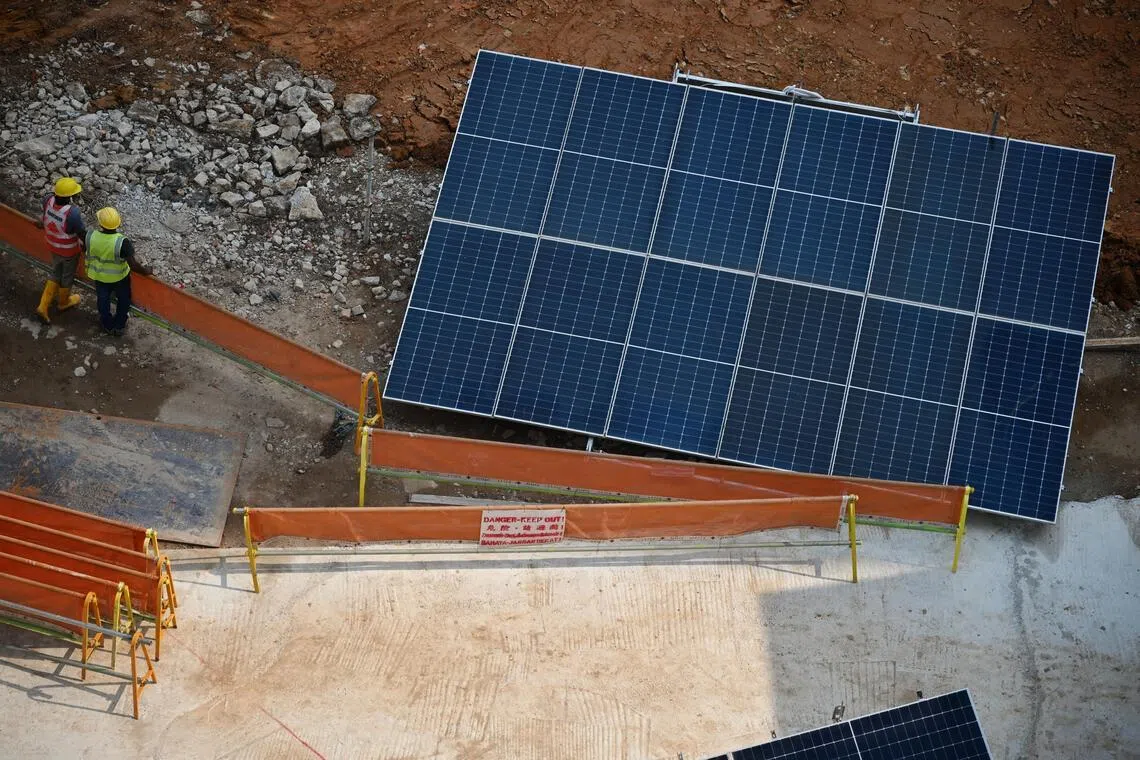
Nearly all the savings came from avoided gas imports, according to the Centre for Research on Energy and Clean Air report.
ST PHOTO: KUA CHEE SIONG
Published Sep 21, 2026, 05:00 AM
Updated Sep 21, 2026, 05:00 AM
Investments in solar energy saved Singapore an estimated US$97 million (S$123.8 million) in power-related fossil fuel imports over five months earlier in 2026, after energy prices spiked due to the crisis in the Strait of Hormuz, according to a report by the Finland-based Centre for Research on Energy and Clean Air.
Despite the savings, the report by the independent research organisation found that Singapore’s reliance on imported fossil fuels still caused it to incur a US$8.1 billion in additional gross fossil fuel costs in the six months following the outbreak of the US-Iran war.
Analysts recommend expanding solar, battery storage, and regional energy grids to reduce fossil fuel dependence and improve energy security amid volatile global prices.
SINGAPORE – Investments in solar energy saved Singapore an estimated US$97 million (S$ 123.8 million) in power-related fossil fuel imports over five months earlier in 2026, after energy prices spiked because of the crisis in the Strait of Hormuz, a recent report has found.
Nearly all the savings came from avoided gas imports, according to the Finland-based Centre for Research on Energy and Clean Air (CREA) report published in late August.
Of this, about US$40 million were savings from avoiding the additional premium imposed by the Hormuz crisis for natural gas, said a CREA analyst.
CREA’s Europe-Russia policy and energy analysis team lead Isaac Levi told The Straits Times in an e-mail interview: “(The savings) demonstrate the benefits of Singapore’s solar expansion programme.”
These figures were modelled wholesale-price estimates , he said.
Despite the savings, the report by the independent research organisation found that Singapore’s reliance on imported fossil fuels still caused it to incur US$8.1 billion in additional gross fossil fuel costs in the six months following the outbreak of the US-Iran war.
This placed Singapore 13th among 171 territories for extra fossil fuel import costs during the period, said Levi, with China, India and the US bearing the heaviest financial burdens.
The report, co-authored by CREA’s Luke Wickenden and Lauri Myllyvirta, had wanted to examine the financial fallout for fossil fuel importers.
They drew on a range of data sources, such as analytics platform Kpler’s tracking data of global commodity shipments at ports, and monthly non-fossil fuel power generation data from non-profit energy think-tank Ember.
Economic benefits from renewables
Singapore imports fossil fuels for power generation, and for its industrial sector.
Levi said t he savings came from Singapore’s reduced need to import fossil fuels for power generation due to the country’s solar drive since 2020.
More than 95 per cent of the country’s power is generated from imported natural gas, prices of which spiked owing to the US-Iran war.
Strikes during the conflict hampered shipments through the Strait of Hormuz, a critical maritime chokepoint that once carried about 20 per cent of the world’s oil and liquefied natural gas (LNG).
According to the report, during the US-Iran conflict’s first six months, Asian LNG prices averaged 75 per cent above what pre-war futures markets had expected to pay then. European LNG prices were 60 per cent higher for the same period.
Singapore has been ramping up efforts to tap solar energy, the most viable form of renewable energy.
In February, the Republic raised its solar deployment target from 2 gigawatt-peak (GWp) to 3 GWp by 2030, after achieving its initial goal in 2025 through the roll-out of solar panels on rooftops, reservoirs and other surfaces.
Still, Levi noted that solar still makes up a relatively small share of Singapore’s power mix. S ola r energy currently contributes only about 2 per cent of the country’s electricity needs.
Even if the Republic achieves its current target to generate 3 GWp of energy via solar, the amount will comprise only about 4 per cent of the country’s total electricity demand by 2030.
Levi said Singapore could reduce its exposure to volatile global fuel prices through further investments in non-fossil fuel-based sources.
These include rooftop and floating solar, offshore wind where feasible, battery storage, energy efficiency and renewable electricity imports supported by stronger regional grid connections.
“Regional power trading could give Singapore access to lower-cost renewable electricity from neighbouring countries when global LNG prices spike,” Levi said. “This would diversify its energy supply, reduce reliance on gas-fired power, and help shield consumers and businesses from sudden increases in international fuel prices.”
The report found that South-east Asia as a region bore a heavy financial toll from the crisis, incurring US$13.9 billion in net costs, based on additional import costs and export earnings. This ranked the region fourth among 11 regions in terms of total net costs incurred.
Said Levi: “South-east Asia has spent six months paying for a war it had no part in starting. Asian LNG prices ran 75 per cent above what markets expected before the strikes, the sharpest regional gap we measured .
“Regional cooperation on storage and grids helps at the margins, but the only real hedge against a shock like this is importing less fossil fuel in the first place.”
EMA looking into geothermal energy
Asked for its response to the CREA report, an Energy Market Authority (EMA) spokeswoman said South-east Asia can reduce exposure to the volatility of global oil and gas prices by tapping and developing its abundant renewable energy resources, including hydropower, solar and wind.
“Under the ASEAN Power Grid vision, regional interconnections help catalyse such projects to develop ASEAN’s renewable energy resources by connecting them to demand centres and improving their bankability,” she said.
She noted that the ongoing Middle East conflict has translated to higher local electricity prices, as Singapore’s natural gas prices are largely tied to oil prices under commercial contracts.
The regulated electricity tariff is determined quarterly based on natural gas prices in the first 2½ months of the preceding quarter.
EMA said it is also looking to develop other ways to strengthen Singapore’s energy security and cut the carbon footprint of its power sector. “This includes looking into geothermal energy, advanced nuclear energy technologies, as well as hydrogen and ammonia,” the spokeswoman added.
Singapore as a refining and transhipment hub
Singapore also imports fossil fuels for its industrial sector.
Its status as a refining and transhipment hub became an economic buffer for the country, Levi said, allowing the island-state to record a net gain of about US$500 million in the six months following the Strait of Hormuz disruption.
He added: “Singapore is a refining and transhipment hub, not simply an importer.”
He said that the country paid roughly US$3.5 billion more for the crude oil and LNG it brought in for its own account, and US$4.6 billion more for the diesel, petrol and jet fuel it imports as feedstock or for blending.
“But it also re-exports a large share and refines crude into products exporting diesel and petrol , and those outbound cargoes get revalued at the same crisis-inflated benchmark prices when they leave the country,” he added.
Diesel and petrol exports alone earned it about US$7.7 billion more than they would have at pre-war prices, according to the report’s data. This was enough to offset the inflated cost of imports and tip the Republic into a small net gain.
This made Singapore the 26th-largest net gainer among 32 territories worldwide, trailing the largest gainers, which were major oil producers US, Russia, Saudi Arabia and the United Arab Emirates.
Levi noted that Singapore’s massive bunkering throughput (fuel pumped directly into ships and aircraft) was not priced into their model as an export, which suggests that there could be even higher volumes of resold fuel unaccounted for.
Ang Qing is a journalist covering local and international breaking news at The Straits Times, with a focus on the environment, crime, technology and social issues.
根据能源与清洁空气研究中心的报告,几乎所有的节省都来自避免天然气进口。
《海峡时报》摄影:郭志雄
发布于 2026 年 9 月 21 日上午 5:00
更新于2026年9月21日凌晨5:00
根据芬兰能源与清洁空气研究中心的一份报告,由于霍尔木兹海峡危机导致能源价格飙升,新加坡在2026年提前五个月投资太阳能,节省了约9700万美元(1.238亿新元)的电力相关化石燃料进口费用。
尽管节省了开支,但独立研究机构的报告发现,新加坡对进口化石燃料的依赖仍然导致其在美伊战争爆发后的六个月内额外产生了 81 亿美元的化石燃料总成本。
分析人士建议扩大太阳能、电池储能和区域电网的建设,以减少对化石燃料的依赖,并在全球价格波动的情况下提高能源安全。
新加坡——最近的一份报告显示,由于霍尔木兹海峡危机导致能源价格飙升,新加坡在2026年提前五个月投资太阳能,节省了约9700万美元(1.238亿新元)的电力相关化石燃料进口费用。
根据总部位于芬兰的能源与清洁空气研究中心 (CREA) 于 8 月下旬发布的报告,几乎所有的节省都来自避免天然气进口。
据CREA的一位分析师称,其中约有4000万美元是由于避免了霍尔木兹危机对天然气征收的额外溢价而节省下来的。
CREA 欧洲-俄罗斯政策和能源分析团队负责人 Isaac Levi 在接受《海峡时报》电子邮件采访时表示:“(节省的费用)证明了新加坡太阳能扩张计划的好处。”
他说,这些数字是根据批发价格模型估算得出的。
尽管节省了开支,但独立研究机构的报告发现,新加坡对进口化石燃料的依赖仍然导致其在美伊战争爆发后的六个月内额外产生了 81 亿美元的化石燃料总成本。
Levi表示,在此期间,新加坡在171个地区中化石燃料进口额外成本排名第13位,而中国、印度和美国承担的财政负担最重。
这份由CREA的卢克·威肯登和劳里·米利维尔塔共同撰写的报告,旨在调查化石燃料进口商的财务损失。
他们利用了一系列数据来源,例如分析平台 Kpler 提供的全球港口商品运输跟踪数据,以及非营利能源智库 Ember 提供的每月非化石燃料发电数据。
可再生能源带来的经济效益
新加坡进口化石燃料用于发电和工业生产。
Levi表示,新加坡自2020年以来大力发展太阳能,减少了对化石燃料进口的需求,从而节省了开支。
该国超过 95% 的电力来自进口天然气,而由于美伊战争,天然气价格飙升。
冲突期间的袭击阻碍了通过霍尔木兹海峡的运输,霍尔木兹海峡是一个重要的海上咽喉要道,曾经运输着世界上约 20% 的石油和液化天然气 (LNG)。
报告显示,在美伊冲突爆发后的前六个月,亚洲液化天然气价格平均比战前期货市场预期价格高出75%。同期,欧洲液化天然气价格也高出60%。
新加坡一直在加大力度开发利用太阳能,太阳能是最可行的可再生能源形式。
今年 2 月,该国将太阳能部署目标从 2 吉瓦峰值 (GWp) 提高到 2030 年的 3 吉瓦峰值 (GWp)。此前,该国已于 2025 年通过在屋顶、水库和其他表面上推广太阳能电池板实现了最初的目标。
不过,利维指出,太阳能在新加坡的能源结构中占比仍然相对较小。目前,太阳能仅占该国电力需求的约2%。
即使共和国实现了目前通过太阳能发电 3 GWp 的目标,到 2030 年,这一数字也仅占该国总电力需求的 4% 左右。
Levi表示,新加坡可以通过进一步投资非化石燃料来源来降低其受全球燃料价格波动的影响。
这些措施包括屋顶和漂浮式太阳能、在可行的情况下发展海上风能、电池储能、提高能源效率以及通过加强区域电网连接来支持可再生电力进口。
“当全球液化天然气价格飙升时,区域电力交易可以让新加坡从邻国获得成本更低的再生能源电力,”利维说。“这将使其能源供应多元化,减少对天然气发电的依赖,并有助于保护消费者和企业免受国际燃料价格突然上涨的影响。”
报告指出,东南亚地区受此次危机冲击巨大,净损失高达139亿美元,其中包括额外的进口成本和出口收入。在11个地区中,东南亚地区的净损失总额排名第四。
列维说:“东南亚花了六个月时间为一场它并未参与挑起的战争付出代价。亚洲液化天然气价格比罢工前市场预期高出75%,这是我们测量到的区域差距最大的一次。”
“在储能和电网方面开展区域合作能起到一定的作用,但应对此类冲击的唯一真正保障是从一开始就减少化石燃料的进口。”
EMA正在研究地热能
针对CREA的报告,能源市场管理局(EMA)发言人表示,东南亚可以通过开发和利用其丰富的可再生能源资源(包括水力发电、太阳能和风能),来降低全球油气价格波动带来的风险。
她表示:“根据东盟电网愿景,区域互联有助于促进此类项目的发展,通过将它们与需求中心连接起来,提高其融资可行性,从而开发东盟的可再生能源资源。”
她指出,持续不断的中东冲突导致当地电价上涨,因为根据商业合同,新加坡的天然气价格很大程度上与石油价格挂钩。
受监管的电力价格按季度确定,依据是上一季度前两个半月的天然气价格。
EMA表示,他们也在寻求其他途径来加强新加坡的能源安全,并减少电力行业的碳排放。“这包括研究地热能、先进的核能技术,以及氢能和氨能,”发言人补充道。
新加坡作为炼油和转运中心
新加坡也进口化石燃料用于其工业部门。
Levi表示,该岛国作为炼油和转运中心的地位成为该国的经济缓冲,使得这个岛国在霍尔木兹海峡中断后的六个月内净增约5亿美元。
他补充道:“新加坡是一个炼油和转运中心,而不仅仅是一个进口国。”
他表示,该国为自用进口的原油和液化天然气多支付了约 35 亿美元,为作为原料或用于混合的进口柴油、汽油和航空燃料多支付了约 46 亿美元。
“但它也转口大量原油,并将原油提炼成柴油和汽油等产品出口,而这些出口货物在离开该国时,又会按照危机期间被抬高的基准价格重新估值,”他补充道。
报告数据显示,仅柴油和汽油出口一项就为该国带来了约77亿美元的收入,比战前价格高出不少。这足以抵消进口成本上涨的影响,使该国最终实现小幅净收益。
这使得新加坡成为全球 32 个地区中净增幅度排名第 26 的地区,落后于净增幅度最大的地区,即主要石油生产国美国、俄罗斯、沙特阿拉伯和阿拉伯联合酋长国。
Levi 指出,新加坡庞大的船舶和飞机燃料加注量(直接向船舶和飞机泵入燃料)并未作为出口计入其模型中,这表明可能还有更高数量的转售燃料未被计入。
Ang Qing是《海峡时报》的一名记者,负责报道本地和国际突发新闻,重点关注环境、犯罪、科技和社会问题。