An OV-10 Bronco Pilot’s Adventure Teaching Thai Flyers Forward Air Control一名OV-10“野马”飞行员的冒险经历:教授泰国飞行员前向空中管制
A mission to train Thai aircrew gave one U.S. Air Force OV-10 pilot unique insight into a shadowy local counter-narcotics mission.
新闻视频
By Thomas Newdick , ‘Danno’
Updated Oct 28, 2021 6:07 PM EDT
The twin-turboprop, twin-boom OV-10 Bronco is one of those rare aircraft that seems to never cease being of interest . Not only does nothing much else look quite like it, but this counterinsurgency specialist has enjoyed a truly unusual career trajectory, which has taken it from the jungles of Vietnam, via Operation Desert Storm, to hunting ISIS insurgents in Iraq. In the meantime, it’s also seen combat in some lesser-known conflicts, from confronting guerrillas in the Philippines to taking part in a coup d’état in Venezuela . Today, its unique flying qualities and capabilities mean it’s in demand for training Joint Terminal Air Controllers (JTACs), more widely known as Forward Air Controllers.
But what was it actually like to fly the Bronco as a frontline combat aircraft during its tenure with the U.S. Air Force? Unlike its more glamorous fast-jet brethren, the OV-10’s Air Force career is little known and rarely publicized. One man who can help set that record straight is ‘Danno,’ who spent his last two Air Force assignments strapped in the cockpit of the Bronco.
Over to you, ‘Danno’…
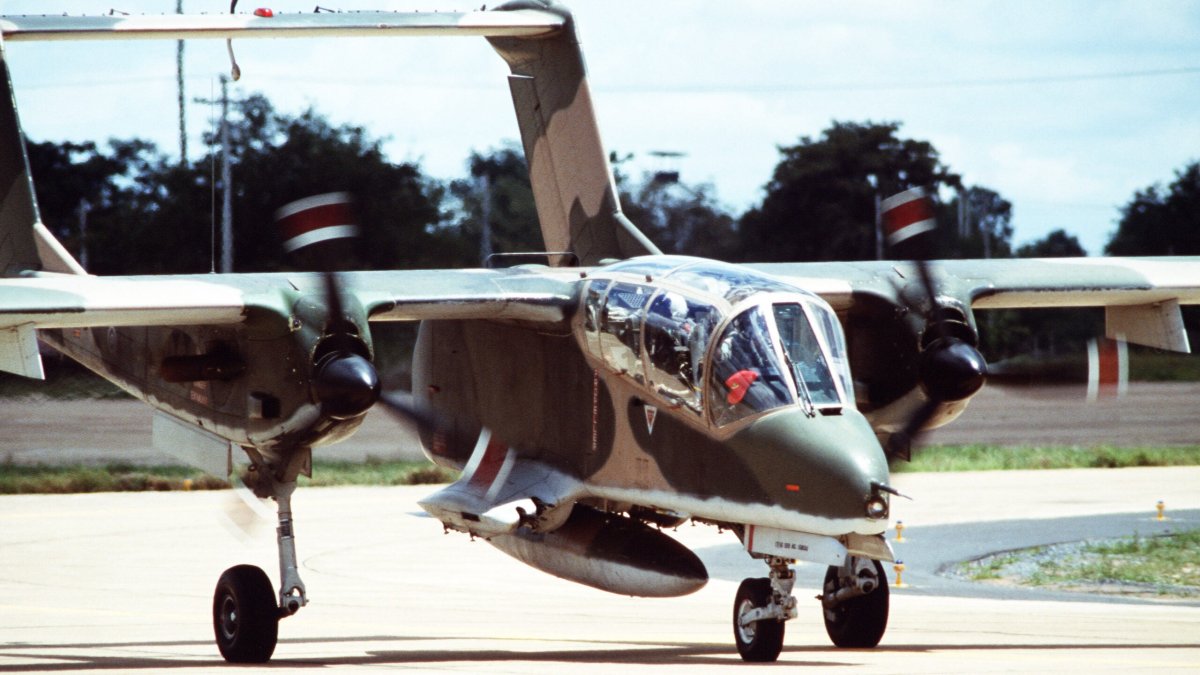
A Royal Thai Air Force OV-10C Bronco during Exercise Cobra Gold in 1987., U.S. DoD
The War Zone’s Tyler Rogoway asked me a couple of years ago when he noticed I had some military flying experience if I might have some stories to contribute. I more or less blew him off, as I value privacy and don’t normally toot my own horn. But I’m getting old now, and my kinfolk don’t give a crap about what I did, so I’ve changed my mind, and thought I’d share a couple of stories that might be of interest to the readers here since they are about a favorite topic: war machines.
I ultimately accumulated 810 hours in the OV-10 during my two tours at the 27th Tactical Air Support Squadron (TASS) at George Air Force Base, California, and the 19th TASS at Osan in South Korea . That total includes about 50 hours in the Thai OV-10C model (the U.S. Air Force model was the OV-10A).
My whole time flying OV-10s (and my earlier F-4 Phantom II assignments) was peacetime simulated combat. I had previous-enlisted time prior to 1971 (not in Vietnam) and that counted towards my 20-years of active duty. I got my wings in 1974 and retired in December 1989, and there were no major wars in that period. President Ronald Reagan managed to get us into a few small conflicts (Beirut, Grenada, and Panama) but I didn’t participate. My stories are not about war. There are several good Vietnam-era books that tell stories of brave Forward Air Controllers in OV-10s (as well as O-1 and O-2 aircraft) during that war. In the meantime, I’ll just temporarily call this forum the ‘Cold War Zone.’
Having said that, I did shoot a lot of 2.75-inch marking rockets (usually with a white phosphorus warhead, dubbed ‘Willy Pete’) and dropped a lot of 25-pound practice bombs (BDU-33s; they had a small smoke charge) from the Bronco. We used the small practice bombs to mark targets on ranges when the Air Force said we were getting short on Willy Pete. The only time I fired the M60 machine guns was when I flew the Thai C-models. They had left the guns in the aircraft, while the USAF had taken them out.
The twin M60 machine guns in one of the sponsons of a Thai OV-10C., RoyKabanlit/Wikimedia Commons
This is a short story about a Military Training Team (MTT) I led in Thailand to instruct a few Royal Thai Air Force (RTAF) OV-10C squadron pilots in the art of Forward Air Control. This took place in February and March 1987.
In 1986, I checked out in OV-10s after several years as an F-4G (Advanced Wild Weasel) pilot. The Bronco wasn’t my first choice in a change of weapons systems, but, you know, the needs of the Air Force came first, and I became mildly excited about flying it during peacetime. It would definitely be a change of pace, because flying Weasel tactics during the early 1980s was mainly done at 500 feet (or lower) and the speed of heat. Seeing what was on the ground in the Phantom at those speeds was blurry — unless you were pointing at the ground and a target. Identifying details on the ground was something I thought would be fun.
The OV-10A squadron (27th TASS) to which I was assigned needed experienced fighter pilots (at least that is what the assignment people said). This was a large Bronco squadron with over 40 airframes and a shitload of pilots. The Air Force had recently deactivated two OV-10 squadrons at Sembach in West Germany, and they were all brought to George AFB. Over half the pilots were what we called ‘FAFACs’ (First Assignment Forward Air Controllers). They were pilots out of UPT (Undergraduate Pilot Training), and the Bronco is what they were awarded, with the likely follow-on assignment in a fighter.
Most of these guys were first lieutenants and wet behind the ears.
A U.S. Air Force OV-10A from the 27th TASS at George AFB in January 1987., Rob Schleiffert/Wikimedia Commons
FAFACs were flying the Bronco more or less to keep their flying skills up to speed and learn the tactical environment. Their primary job was acting as Battalion Air Liaison Officers (ALOs) with the U.S. Army. At least twice a year, they would go on temporary duty (TDY) to their assigned unit with the Army on exercises and camp out in tents and drive around in Humvees or armored personnel carriers, and coordinate air support for the battalions. If war broke out, that was their job, while us more experienced and higher-ranking officers would be tasked to fly the OV-10s as FACs. I never had to eat MREs as I (deservedly) fell into the latter category.
Another 27th TASS OV-10A over California. , VIA AUTHOR
After about eight months of being a flight commander, I was made chief of STANEVAL (standardization and evaluation) and was in charge of four or five other evaluators. We gave all the check rides to the squadron pilots.
A month into this job, the squadron commander (an O-6) called me in and asked if I wanted to head an MTT for about a month in Thailand. The RTAF had two squadrons of OV-10Cs and had requested some FAC training, as they were a little unsure about how it worked. They were primarily using their Broncos for counterinsurgency and were worried about FAC tasking in a Cobra Gold exercise that included U.S. fighters. I didn’t hesitate in volunteering as I had been to Thailand several times during my stint flying F-4s at Clark Air Base, Philippines, and I loved the place, especially the food and, uh, other things.
The team was three pilots, one other guy from my squadron and one pilot (who would meet us in Bangkok) from the OV-10 squadron at Wheeler Air Force Base in Hawaii. We learned the Thai squadron we would be working with was based in Chiang Mai. To those who are familiar with the country, you know that is a ‘sweet’ northern city with much cooler temperatures with great sightseeing and plenty of after-hours activities.
The three MTT instructors with ‘Kag,’ the Thai squadron secretary. She wanted to get in every photo we took. In the background is an RTAF OV-10C. I am on the far right., VIA AUTHOR
Before leaving, my squadron mate and I prepared a training syllabus that included classroom lectures and flying training missions. We were told by the gurus at TAC HQ at Langley Air Force Base, Virginia, that there weren’t going to be any live weapon deliveries (marking rockets) because range space/time was limited there. All flying training was going to be what we called ‘dry CAS’ [close air support].
We packed up our harnesses, G-suits, helmets, clipboards, etc., and headed to Thailand from California. We had a free day in Bangkok, so I reacquainted myself with Patpong and Soi Cowboy (Google it).
A Thai OV-10C on the flight line during the joint Thai/U.S. Exercise Thalay Thai in 1989., NATIONAL ARCHIVES
I’ll not bore you with the details of our reception and classroom instruction except to say it went very well. It was obvious to us they had picked their best English speakers among the five or six pilots to be trained. Even then, Thai English can be a little hard to understand if you’re not used to it, so it was a minor problem.
We finally started flying with them, as instructors in the back seat. Basic FAC tactics include what is called a nine-line brief to the fighters you are working with. On a couple of training sorties, we actually had RTAF F-5Es fly up from Korat to do the dry CAS. On the other flights, the squadron’s other OV-10s simulated the fighters. We soon figured out that we had to simplify the nine-line brief.
We decided to use low-threat tactics, talk the fighters to the target area, put them in a wheel above us, then give them items four to eight. Since it was all dry, our most-used simulated targets were a village or town Buddhist temple. These buildings stood out with gold or orange roofs and were easy to talk the fighter pilot’s eyes onto as the target.
I tried to use bridges and river banks several times and that was hit or miss with the simulated fighter guys who couldn’t get their eyes on the target. Maybe it was a language problem but our inability to mark the targets with a Willy Pete added to the difficulties. I later asked the U.S. Assistant Air Attaché at the embassy in Bangkok if we should have been dry dive-bombing temples and he didn’t think it was a good idea. But he was a former C-141 pilot. What the hell did he know?
The Thai pilots couldn’t care less.
A typical Buddhist temple, as found in towns and villages across Thailand. We used them as simulated targets since it was easy to talk the Thai fighter pilot’s eyes onto them., VIA AUTHOR
The Thai OV-10C was almost identical to the OV-10A we flew back at home, with minor cockpit differences. The main one, I remember, is they didn’t have a fire-suppression agent for the engines in case of an engine fire. Performance between the two models was identical; that is, very good performance with two engines running but lousy performance if you lost one. Fortunately, that never occurred during our TDY. As previously mentioned, the Thais also left the four M60 machine guns in the sponsons while the USAF had them all removed.
The training was progressing as expected when one morning, about two weeks into the MTT, the Thai squadron commander informed us that a car was waiting to take us to the U.S. Consulate in Chiang Mai. We didn’t even know a U.S. Consulate existed there. We arrived and were ushered into an office where a balding gray-haired guy in a white shirt, with glasses, was standing beneath a rotating ceiling fan. He introduced himself at the U.S. Consulate General. Standing to his side was some Caucasian dude in an Aloha shirt with sunglasses on, although it wasn’t particularly bright in the room. I immediately thought of a 1960s movie scene out of The Ugly American .
The Consulate General introduced the shades guy as Agent “John Smith” from the U.S. Drug Enforcement Agency (DEA). We were offered water and invited to sit down. They then began their briefing.
Some background info might help: In 1986, Reagan had declared war on drugs, and the primary focus was on the Colombian cartels. But the Golden Triangle area just north of Chiang Mai still produced the hard drugs from poppies that we know as opium and heroin. The Thai government was getting enormous pressure from the United States to do something about the drug traffic from that area.
The DEA guy told us Chiang Mai was the home of a couple of drug lords who were involved in most of the heroin traffic from the Golden Triangle. He said that, because we three were the only U.S. military guys in the whole damn city working with the RTAF, we had to leave town for a few days because our lives could be at risk. That got our attention, and I asked why. He reluctantly told us the Thai OV-10 squadron, which was our host, was going to conduct a drug interdiction mission that might involve casualties. Depending on how the mission was executed, the drug lords residing in Chiang Mai may think that our presence at the squadron would indicate our involvement somehow, even though we were strictly doing CAS training.
A rare seven-ship of Thai OV-10Cs (including the photo ship). This formation was likely set up for photo op., VIA AUTHOR
After hearing that, we readily accepted the offer of flying (commercially) back to Bangkok for a few days. “Where are the flight tickets, and what five-star hotel did you book us in?” was an immediate question. Naturally, we wished for more detail on the operation, but at this point, we knew the Thai pilots quite well, and we were sure they would spill the beans regarding the mission.
Prior to catching a flight that night, we went back to the squadron, and the Thai operations officer told us the training had been suspended for four days because they were involved in a mission. We knew, of course, it wasn’t a FAC/CAS mission, so I asked one of the more friendly pilots what was going on. He didn’t hesitate to lay it out for me. They were arming four OV-10s to carry two Mk 82 dumb bombs each. Those are 500-pound high-explosive and make quite a boom. On the Bronco, they were attached to a single rack which was bolted to each sponson. The centerline tank remained on the aircraft in this configuration.
I asked ‘Pui’ (that was the pilot’s nickname) what they were bombing, and he said a heroin processing plant. I asked him where and, to my surprise, he pointed on a wall map to a site about 10 kilometers inside Burma (now also known as Myanmar). I thought it was good we were getting the hell out of Dodge, since they were going to be bombing a foreign country which may trigger something more serious. (Burma at that time had little or no air defense capability, but still …).
So off we went to Bangkok, and I re-reacquainted myself and the team with Patpong and Soi Cowboy for the next three days. We did a couple of touristy things but spent a lot of time in ex-pat watering holes in that city.
After a few days, we got a call from the Embassy and ticket pickup instructions to fly back to Chiang Mai and resume training. The timeline had been interrupted by four days of no training, so we had to adlib our training syllabus, but I think they learned the basics of what an airborne FAC is supposed to do. I asked ‘Pui’ how the mission into Burma went, and all he gave me was a thumbs up. None of us could get any further information from any of the pilots, so I suspect they were being told to keep their traps shut. In retrospect, I’m not sure their mission went well at all, and it could have just been action to appease the U.S. pressure. For all I know, the Mk 82s may have just made a few divots in the jungle to the north. It’s possible they didn’t even cross the border. So the results of that operation remain a mystery.
‘Pui’ poses in front of one of the OV-10Cs., VIA AUTHOR
After another week or so of training, we said goodbye to the Thai Bronco pilots and returned to our base in California, flying peacetime CAS with an occasional deviation for an actual search and rescue (like looking for Dean Martin’s son) or other search missions.
The Thais threw us a going-away party on St. Patrick’s Day. Some personnel from the Joint U.S. Military Assistance Group at the U.S. Embassy flew up to join in., VIA AUTHOR
Six or seven months passed, and I missed the more exciting (IMHO) flying in Asia, so I volunteered for a remote tour flying OV-10s at Osan Air Base. I was surprised when the assignment shoe clerks asked if I could be ready to go in a month. Hell yes!
Security policemen race from a Cadillac Gage Commando armored personnel carrier to defend an OV-10 during an operational readiness inspection at Osan Air Base in the early 1980s., U.S. DoD
As an aside, together with a first lieutenant at the Osan squadron, I flew the final Pacific Air Forces OV-10 sortie when we ferried it down to a small airfield in South Korea where it was wrapped up and put on a barge in August or September 1989. It was one of those that was given to the Philippines for their air force.
I enjoyed my Bronco flying in Korea, which was much closer to the action than the high desert of California. I was again appointed the chief of STANEVAL and, in early 1989, I got called to the group commander’s office. He asked me if I wanted to go back to Thailand. He further stated that I was a ‘by-name request’ to go back and give the same squadron more FAC training. Not only was I flattered, but I jumped on the opportunity. Kimchi and Bulgogi were good, but I yearned for some Tom Yum Gai and Pad Thai again. And I was to be solo on this MTT — just me and the Thais.
Three OV-10As from the 27th TASS at George AFB during a deployment to Palmerola Air Base in Honduras in 1987. I had already transferred to Korea by this point so wasn’t part of this TDY., VIA AUTHOR
And that MTT was an entirely different story. I returned to Chiang Mai in February 1989 to the same RTAF OV-10 squadron and actually got some front-seat time. The new squadron commander was a young lieutenant colonel who was married to the king’s number-three daughter. She was a genuine princess, and he was called the Royal Consort.
The previous squadron commander (during my 1987 MTT) had gotten shot down in a Bronco when Thailand and Laos had a short-lived border dispute in late 1987. In fact, he had been captured after bailing out over the disputed area in Laos and was only released when a ceasefire was agreed upon and prisoners were exchanged. I didn’t see him during my ’89 MTT.
The three American instructors with the commander of 411 Squadron, RTAF, and the operations officer. The squadron commander is in the blue uniform He was later shot down in a Bronco during a border dispute with Laos., VIA AUTHOR
So that just about wraps up my story about the OV-10, although there were a few interesting things that happened on that MTT, as well. To conclude, it’s worth pointing out that I was single this whole time, with no kids that I knew of. So, I was very flexible in my personal logistics.
As for Thailand’s Bronco fleet, the last of these aircraft were finally withdrawn from service in 2004, after more than three decades of service. Eight of the former RTAF aircraft were provided to the Philippines, which today is the sole military operator of the type, whose aircraft continue the Bronco’s long tradition of counterinsurgency warfare in the Asia Pacific region.
Contact the author: Thomas@thedrive.com
Comments couldn’t be loaded. Please refresh the page.
作者:托马斯·纽迪克,《丹诺》
更新于美国东部时间2021年10月28日下午6:07
双涡轮螺旋桨、双尾撑的OV-10“野马”是一款罕见的飞机,似乎永远都吸引着人们的目光。它不仅外形独特,而且这款反叛乱专家的服役经历也非同寻常:从越南丛林,到“沙漠风暴”行动,再到伊拉克打击ISIS武装分子,它都留下了足迹。与此同时,它也参与了一些鲜为人知的冲突,例如在菲律宾与游击队作战,以及在委内瑞拉参与政变。如今,凭借其独特的飞行性能和能力,它成为联合终端空中管制员(JTAC,更广为人知的名称是前线空中管制员)训练的热门选择。
但驾驶OV-10“野马”作为一线作战飞机服役于美国空军期间,究竟是怎样的体验呢?与那些更引人注目的喷气式战斗机兄弟不同,OV-10的空军生涯鲜为人知,也很少被公开报道。丹诺或许能帮助我们还原这段历史,因为他在空军的最后两个服役阶段都驾驶过OV-10“野马”。
接下来就交给你了,“丹诺”……
1987年“金色眼镜蛇”联合军演期间,一架泰国皇家空军OV-10C“野马”攻击机。(美国国防部)
几年前,《战区》的泰勒·罗戈威注意到我有一些军用飞行经验,就问我是否愿意分享一些故事。我当时没怎么理会他,因为我重视隐私,也不喜欢自吹自擂。但现在我年纪大了,亲戚们也对我的过去漠不关心,所以我改变了主意,想和大家分享几个故事,或许这里的读者会感兴趣,因为它们都与我最喜欢的话题——战争机器——有关。
我在加利福尼亚州乔治空军基地的第27战术空中支援中队(TASS)和韩国乌山的第19战术空中支援中队(TASS)的两次服役期间,总共驾驶OV-10飞机累计飞行了810小时。其中约50小时是在泰国OV-10C型飞机上飞行的(美国空军的型号是OV-10A)。
我驾驶OV-10(以及之前驾驶F-4“鬼怪II”战斗机)的全部时间都用于和平时期的模拟战斗。我在1971年之前有过服役经历(不在越南),这计入了我20年的现役时间。我于1974年获得飞行员资格,并于1989年12月退役,那段时间没有发生过任何重大战争。罗纳德·里根总统设法让我们卷入了一些小规模冲突(贝鲁特、格林纳达和巴拿马),但我没有参与。我的故事与战争无关。有很多优秀的越战时期书籍讲述了勇敢的前线空中管制员驾驶OV-10(以及O-1和O-2飞机)在战争期间的故事。在此期间,我暂且把这个论坛称为“冷战区”。
话虽如此,我的确发射过很多2.75英寸的标记火箭(通常装有白磷弹头,绰号“威利·皮特”),也用“野马”飞机投掷过很多25磅的练习炸弹(BDU-33型,带有少量烟雾弹)。空军说“威利·皮特”快用完了,我们就用这些小型练习炸弹在靶场上标记目标。我唯一一次使用M60机枪,是在驾驶泰国C型飞机的时候。他们把机枪留在了飞机上,而美国空军则把它们拆掉了。
泰国OV-10C攻击机侧炮座上的两挺M60机枪。(图片来源:RoyKabanlit/Wikimedia Commons)
这是一个关于我带领一支军事训练小组(MTT)在泰国训练几名泰国皇家空军(RTAF)OV-10C中队飞行员,教授前线空中管制技巧的短篇故事。这件事发生在1987年2月和3月。
1986年,我结束了几年F-4G(先进野鼬鼠)飞行员的生涯,转而驾驶OV-10。虽然更换武器系统时,OV-10并非我的首选,但你也知道,空军的需求永远是第一位的,而且我也对在和平时期驾驶OV-10感到有些兴奋。这绝对会是一次节奏上的巨大转变,因为在20世纪80年代初期,驾驶“野鼬鼠”战斗机执行战术时,飞行高度主要在500英尺(甚至更低),速度极快。在那种速度下,驾驶“鬼怪”战斗机很难看清地面上的情况——除非你瞄准地面和目标。我觉得辨认地面细节会很有趣。
我被分配到的OV-10A中队(第27战术空中支援中队)需要经验丰富的战斗机飞行员(至少分配人员是这么说的)。这是一个规模庞大的“野马”中队,拥有超过40架飞机和一大批飞行员。空军最近在西德森巴赫解散了两个OV-10中队,并将所有OV-10都调到了乔治空军基地。超过一半的飞行员是我们所说的“第一任务前线空中管制员”(FAFAC)。他们都是本科飞行员训练(UPT)的毕业生,被分配到“野马”中队,之后很可能会被分配到战斗机部队。
这些人大多是少尉,经验尚浅。
1987年1月,一架隶属于美国空军第27战术空中支援中队的OV-10A攻击机,摄于乔治空军基地。(图片来源:Rob Schleiffert/Wikimedia Commons)
前线空中管制员(FAFAC)驾驶“野马”飞机主要是为了保持飞行技能并熟悉战术环境。他们的主要职责是担任美国陆军营级空中联络官(ALO)。他们每年至少两次会临时调派(TDY)到所属的陆军部队参加演习,住在帐篷里,乘坐悍马或装甲运兵车四处巡逻,协调各营的空中支援。如果战争爆发,这就是他们的职责,而我们这些经验更丰富、军衔更高的军官则会被指派驾驶OV-10飞机担任前线空中管制员。我从来不用吃单兵口粮(MRE),因为我(理所当然地)属于后者。
另一架塔斯社OV-10A侦察机飞越加利福尼亚州,这是该机拍摄到的第27张。(图片来自作者)
在担任飞行指挥官大约八个月后,我被任命为STANEVAL(标准化和评估)主管,负责管理四五名评估员。我们负责对中队飞行员进行所有飞行考核。
入职一个月后,中队长(一位上校)把我叫过去,问我是否愿意带领一个多任务训练小组(MTT)去泰国待一个月左右。泰国皇家空军有两个OV-10C中队,他们请求进行一些前线空中管制(FAC)训练,因为他们对FAC的运作方式不太熟悉。他们主要用OV-10C执行反叛乱任务,并且担心在有美军战斗机参与的“金色眼镜蛇”联合军演中,FAC任务的执行会遇到困难。我毫不犹豫地自告奋勇,因为我在菲律宾克拉克空军基地驾驶F-4战斗机期间曾多次去过泰国,我很喜欢那里,尤其是那里的美食,嗯,还有其他一些方面。
团队由三名飞行员组成,其中一人来自我的中队,另一人来自夏威夷惠勒空军基地的OV-10中队(他会在曼谷与我们汇合)。我们了解到,我们将要合作的泰国中队驻扎在清迈。熟悉泰国的人都知道,清迈是一座“迷人”的北部城市,气候凉爽宜人,拥有众多景点和丰富的夜生活。
三位MTT教官和泰国空军中队秘书“卡格”在一起。她想出现在我们拍的每一张照片里。背景里是一架泰国皇家空军的OV-10C。我在最右边。(图片来自作者)
出发前,我和我的战友制定了一份训练计划,其中包括课堂讲授和飞行训练任务。弗吉尼亚州兰利空军基地战术空军司令部的专家告诉我们,由于靶场空间和时间有限,不会进行任何实弹投放(标记火箭)。所有飞行训练都将是我们所说的“模拟近距离空中支援”。
我们收拾好安全带、抗荷服、头盔、写字板等等,从加利福尼亚出发前往泰国。我们在曼谷有一天自由活动时间,所以我重温了帕蓬和牛仔街(可以谷歌一下)。
1989年泰美联合军演“泰泰”期间,一架泰国OV-10C攻击机停在跑道上。(图片来自美国国家档案馆)
我就不赘述接待和课堂培训的细节了,总之一切都很顺利。很明显,他们从五六名受训飞行员中挑选了英语最好的几位。即便如此,如果你不习惯泰式英语,还是会觉得有点难懂,所以这只是个小问题。
我们终于开始和他们一起飞行了,作为教官坐在后座。基本的前线空中管制战术包括向合作的战斗机飞行员进行所谓的“九行简报”。在几次训练飞行中,我们甚至安排了泰国皇家空军的F-5E战斗机从呵叻飞来模拟近距离空中支援。在其他飞行中,中队的其他OV-10飞机则扮演战斗机的角色。我们很快意识到,必须简化这九行简报。
我们决定采用低威胁战术,引导战斗机飞行员飞到目标区域,让他们在我们上方的轮盘上集合,然后给他们分配第四到第八项任务。由于场地干燥,我们最常用的模拟目标是村庄或城镇的佛教寺庙。这些建筑的金色或橙色屋顶非常醒目,很容易吸引战斗机飞行员的注意力,让他们将其作为目标。
我尝试了好几次利用桥梁和河岸进行轰炸,但效果时好时坏,模拟战斗机飞行员总是无法瞄准目标。也许是语言障碍,但我们无法用瞄准器标记目标也加剧了难度。后来我问美国驻曼谷大使馆的空军助理武官,我们是否应该对寺庙进行空降俯冲轰炸,他认为这不是个好主意。但他以前是C-141飞行员,他懂什么呢?
泰国飞行员对此毫不在意。
这是泰国城镇乡村常见的典型佛教寺庙。我们用它们作为模拟目标,因为很容易吸引泰国战斗机飞行员的注意力。(作者注)
泰国的OV-10C和我们回国时驾驶的OV-10A几乎完全相同,只有座舱略有不同。我记得最主要的一点是,他们的OV-10C没有配备发动机灭火剂,以防发动机起火。两款机型的性能完全一样:双发运转时性能极佳,但一旦失去一台发动机,性能就会大幅下降。幸运的是,在我们执行短期任务期间,这种情况从未发生过。正如之前提到的,泰国方面保留了机身侧翼上的四挺M60机枪,而美国空军则全部拆除了。
训练进展一切如常。大约两周后的一个早晨,泰国中队指挥官通知我们,有一辆车在清迈等候,准备接我们去美国领事馆。我们之前甚至不知道那里有美国领事馆。我们到达后被领进一间办公室,里面站着一个秃顶、头发花白、戴着眼镜的男人,穿着白衬衫,站在一个旋转的吊扇下。他自我介绍说是美国总领事馆的。他旁边站着一个穿着夏威夷衬衫、戴着墨镜的白人男子,尽管房间里光线并不明亮。我立刻想起了六十年代电影《丑陋的美国人》中的一个场景。
总领事馆工作人员介绍说,戴墨镜的那位男士是美国缉毒局(DEA)的特工“约翰·史密斯”。他们给我们倒了水,并请我们坐下。之后,他们开始进行情况介绍。
一些背景信息或许有所帮助:1986年,里根总统宣布向毒品宣战,主要目标是哥伦比亚贩毒集团。但清迈以北的金三角地区仍然出产我们熟知的鸦片和海洛因等硬性毒品。美国向泰国政府施加了巨大压力,要求其采取措施打击该地区的毒品走私。
缉毒局的人告诉我们,清迈是几个毒枭的老巢,他们控制着金三角的大部分海洛因贩运。他说,因为我们三个是整个城市里唯一和泰国皇家空军合作的美军人员,所以我们必须离开几天,以免生命受到威胁。这引起了我们的注意,我问他为什么。他很不情愿地告诉我们,接待我们的泰国OV-10中队即将执行一次缉毒任务,可能会造成人员伤亡。根据任务执行情况,住在清迈的毒枭可能会认为我们出现在中队里就意味着我们参与了他们的活动,尽管我们只是在进行近距离空中支援训练。
罕见的七架泰国OV-10C战斗机编队(包括拍照机)。这很可能是为了拍照而设置的。(图片来自作者)
听到这话,我们欣然接受了(乘坐商业航班)返回曼谷待几天的提议。“机票在哪儿?你们给我们订的是哪家五星级酒店?”我们立刻问道。当然,我们很想知道行动的更多细节,但那时我们已经和泰国飞行员很熟了,相信他们会把任务的内幕都告诉我们。
当晚登机前,我们回到中队,泰国作战军官告诉我们,由于他们正在执行一项任务,训练暂停了四天。我们当然知道这不是前线空中管制/近距离空中支援任务,所以我问了一位比较友好的飞行员到底发生了什么事。他毫不犹豫地向我解释了情况。他们正在为四架OV-10轰炸机装弹,每架飞机携带两枚Mk 82型非制导炸弹。这种炸弹重达500磅,爆炸威力巨大。在OV-10上,炸弹被挂载在一个挂架上,挂架用螺栓固定在每个侧翼上。在这种配置下,飞机的中央油箱仍然保留在机身上。
我问“普伊”(那是飞行员的绰号)他们要轰炸什么,他说是一个海洛因加工厂。我又问他具体位置,令我惊讶的是,他指着墙上的地图,指向缅甸(现在也叫缅甸联邦)境内大约10公里处的一个地点。我想我们赶紧离开真是太好了,因为他们要轰炸的是一个外国,这可能会引发更严重的后果。(当时的缅甸几乎没有防空能力,但即便如此……)
于是我们去了曼谷,接下来的三天里,我和团队再次回到了帕蓬和牛仔街。我们做了一些游客常做的事,但大部分时间都泡在了这座城市里外国人常去的酒吧里。
几天后,我们接到大使馆的电话,通知我们取回机票飞回清迈继续训练。由于四天没有训练,训练计划被打乱,我们不得不临时调整训练内容,但我认为他们已经掌握了空中前线空中管制员的基本职责。我问“普伊”缅甸之行的进展如何,他只是竖起了大拇指。我们谁也没能从任何飞行员那里得到更多信息,所以我怀疑他们被告知要保持沉默。现在回想起来,我不确定他们的任务是否成功,这很可能只是为了平息美国的压力而采取的行动。就我所知,那些Mk 82飞机可能只是在北部丛林里留下了一些痕迹。他们甚至有可能根本没有越过边境。所以,那次行动的结果至今仍是个谜。
“Pui”在其中一架OV-10C战斗机前摆姿势拍照。(图片来自作者)
经过大约一周的训练后,我们向泰国野马飞行员告别,返回了我们在加利福尼亚的基地,执行和平时期的近距离空中支援任务,偶尔也会偏离航线执行真正的搜救任务(例如寻找迪恩·马丁的儿子)或其他搜救任务。
圣帕特里克节那天,泰国人给我们举办了欢送会。美国大使馆美军联合援助小组的一些人员也飞来参加了。(作者供稿)
六七个月过去了,我怀念在亚洲更刺激的飞行经历(恕我直言),于是我自愿申请去乌山空军基地驾驶OV-10飞机。令我惊讶的是,人事部门的办事员问我一个月内能不能做好准备。当然可以!
20世纪80年代初,在乌山空军基地的一次作战准备检查中,几名安保警察从一辆凯迪拉克·盖奇突击队装甲运兵车中迅速赶往一架OV-10攻击机进行保护。(美国国防部)
顺便提一下,1989 年 8 月或 9 月,我和乌山空军基地的一名中尉一起驾驶太平洋空军的 OV-10 执行了最后一次飞行任务,我们把它运送到韩国的一个小型机场,在那里它被包裹起来,装上驳船。它是赠予菲律宾空军的飞机之一。
我在韩国驾驶Bronco飞机飞行非常愉快,那里比加州的高原沙漠更接近战区。我再次被任命为STANEVAL(陆军航空兵支援司令部)主任,1989年初,我被叫到大队指挥官办公室。他问我是否愿意重返泰国。他还说,这是“点名”让我回去给同一个中队提供更多前线空中管制员(FAC)训练。我不仅感到受宠若惊,而且欣然接受了这个机会。泡菜和烤肉固然美味,但我还是渴望再次品尝冬阴功鸡汤和泰式炒河粉。而且这次多任务训练(MTT)我将独自执行——只有我和泰国人。
1987年,驻扎在乔治空军基地的第27战术空中支援中队的3架OV-10A攻击机部署到洪都拉斯帕尔梅罗拉空军基地。当时我已经调往韩国,所以没有参与这次临时任务。(图片来自作者)
而那次多任务训练营的经历则完全不同。1989年2月,我回到清迈,加入了同一个皇家泰国空军OV-10中队,并且真的获得了一些前座飞行时间。新任中队长是一位年轻的中校,他娶了国王的三女儿。她是一位名副其实的公主,而他则被称为王夫。
前任中队长(在我1987年参加多任务训练期间)在1987年底泰国和老挝发生短暂边界冲突时,驾驶一架Bronco飞机被击落。事实上,他在老挝争议地区跳伞后被俘,直到双方达成停火协议并交换战俘后才获释。我在1989年参加多任务训练期间没有见到他。
三名美国教官与泰国皇家空军第411中队指挥官和作战官合影。中队指挥官身穿蓝色制服。他后来在与老挝的边境冲突中驾驶一辆福特野马车被击落。(图片来自作者)
关于OV-10的故事就差不多讲完了,虽然在那次多用途训练任务中也发生了一些有趣的事情。最后值得一提的是,我当时一直单身,也没有孩子。所以,我的个人安排非常灵活。
至于泰国的“野马”战斗机机队,在服役三十余年后,最后一架飞机于2004年退役。其中八架原泰国皇家空军的飞机移交给了菲律宾,菲律宾如今是该机型的唯一军方用户,其飞机延续了“野马”战斗机在亚太地区反叛乱作战中的悠久传统。
联系作者:Thomas@thedrive.com
评论加载失败,请刷新页面。