Vietnam is taking Thailand’s quality tourist in huge numbers while Bangkok flails about with crackdowns越南正大量吸引泰国的优质游客,而曼谷却在严厉打击旅游方面举步维艰。
Vietnam’s tourism boom is closing the gap on Thailand as low prices, easier visas and soaring Western arrivals drive growth. Thailand faces falling visitor numbers,… Read More ›
新闻视频
September 21, 2026 at 1:21 pm
in Economy , Living , Media , Politics , Thailand
Vietnam is mounting its biggest challenge yet to Thailand’s tourism crown as a once-massive 22-million visitor gap collapses. Vietnam is surging beyond pre-Covid records while Thailand remains millions below its 2019 peak. Crucially, Vietnam is beating Thailand on the value that once powered its tourism machine: price. It is also easing visas, expanding airports and attracting soaring Western arrivals. Thailand, meanwhile, is tightening immigration, ramping up security and struggling to recover its huge Chinese market. Almost 30,000 foreigners were refused entry during this year’s first five months. Through August, Vietnam’s arrivals surged 14.4% while Thailand’s fell 3.08%. The year-to-date gap had narrowed to roughly five million. A once-distant threat is now a serious regional contest.
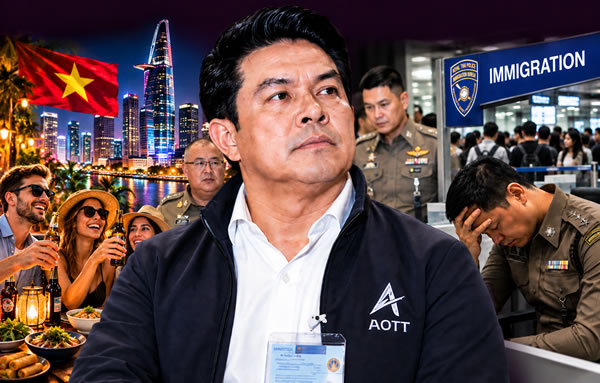
Tourism Minister Surasak Phancharoenworakul faces a stark test as Vietnam surges ahead on price and visitors. Thailand tightens entry and security while its tourism lead shrinks. ( Source: Thai Government )
Vietnam is rapidly closing a tourism gap with Thailand that once appeared almost unbridgeable. At the centre of the shift is price. Before Covid, Thailand towered over Vietnam in international tourism. In 2019, Thailand attracted 39.8 million international visitors. Vietnam received approximately 18 million. As a result, Thailand entered the pandemic with a lead approaching 22 million tourists.
Six years later, that advantage had almost halved. Thailand received 32.97 million foreign visitors during 2025. Vietnam attracted almost 21.2 million. More significantly, the two countries continued moving in opposite directions during 2026. Thailand received 20.94 million visitors during the first eight months. That represented a 3.08% decline. Vietnam received 15.9 million during the same period, up 14.4%.
By August, Thailand’s year-to-date lead had consequently fallen to approximately five million visitors. Vietnam overtaking Thailand no longer looks as remote as before Covid.
Vietnam’s post-Covid surge leaves Thailand far behind its 2019 peak as tourism revenues also weaken
Vietnam has already passed its pre-pandemic tourism record. By contrast, Thailand remains far below its 2019 peak. Crucially, Vietnam continues expanding while Thailand’s recovery has stalled.
The divergence is striking because Covid devastated both tourism industries. Vietnam received only 3.8 million international visitors in 2020. Afterwards, strict border restrictions reduced foreign tourism to a fraction of previous levels. Thailand suffered a similar collapse. Yet Vietnam’s reopening produced an increasingly powerful recovery.
Foreign arrivals reached 12.6 million in 2023. They climbed to 17.6 million during 2024. That brought Vietnam within 2.4% of its previous record. Then came the breakthrough. International arrivals jumped 20.4% to almost 21.2 million during 2025. Thus, Vietnam finished the year 17.8% above its 2019 international visitor total.
Thailand initially staged a strong recovery as well. International arrivals reached 28.15 million in 2023. They increased to 35.55 million during 2024. In 2025, however, that momentum stopped. Foreign arrivals dropped 7.23% to 32.97 million. Thailand therefore finished last year approximately 6.8 million visitors below its 2019 record.
Tourism receipts also weakened. Foreign visitors generated approximately ฿1.54 trillion during 2025. That represented a 4.71% decline from the previous year. Overall tourism revenue, including domestic travel, reached approximately ฿2.70 trillion. That was down 1.26%. Across the border, Vietnam recorded its strongest tourism year. Tourism revenue exceeded one quadrillion dong for the first time.
Vietnam targets 25 million visitors as lower travel costs challenge Thailand’s traditional advantage
Vietnam has now targeted 25 million international arrivals during 2026. Notably, the latest figures show its expansion continuing. Vietnam received almost two million international visitors during August alone. That was 18.4% higher than August 2025. August also falls within Vietnam’s lower international tourism season.
Vietnam’s National Statistics Office identifies several reasons for the growth. These include easier visa policies, stronger promotion and an expanding range of tourism products. Most importantly, the agency also identifies competitive travel costs. That goes directly to one of Thailand’s greatest traditional strengths.
For decades, Thailand built its enormous tourism industry partly around exceptional value for money. Visitors found good hotels, restaurants, beaches and nightlife at prices substantially below Western destinations. Thailand remains comparatively inexpensive against many developed tourism markets. Yet that comparison matters less in today’s regional contest.
Travellers considering Southeast Asia can compare Bangkok directly with Saigon. Similarly, they can compare Phuket with Phu Quoc. They can also compare Thai resorts with Da Nang and Vietnam’s expanding coastal destinations. Increasingly, Vietnam competes at a lower price. Moreover, that difference extends far beyond the hotel bill.
Thai tourism leaders warn Vietnam’s lower costs are gaining ground as its hotel capacity expands
Thailand’s tourism industry has itself acknowledged the problem. Association of Thai Travel Agents Secretary-General Adit Chairattananont has identified Vietnam as an increasingly serious competitor. He has pointed to comparable natural attractions available at lower costs. Separately, he has warned about Thailand’s high living costs. He has also highlighted the baht’s impact on tourism competitiveness.
Accommodation represents only one part of a visitor’s spending. Tourists also pay for meals, drinks, taxis, entertainment, excursions, shopping and domestic transport. Over two weeks, relatively small daily differences accumulate quickly. For families, those differences multiply across several travellers. For retirees and long-stay visitors, they accumulate across months.
The same calculation matters to digital nomads. Their spending extends across accommodation, food, transport, communications, banking and immigration costs. Accordingly, Vietnam’s lower daily costs provide a significant competitive advantage. Thailand must increasingly defend a market segment it once dominated almost automatically.
In parallel, Vietnam’s accommodation capacity has expanded rapidly. The country now has approximately 780,000 rooms across around 38,000 registered accommodation establishments. Thailand has an estimated 704,000 rooms. Vietnam therefore already possesses substantial capacity for further international growth.
Vietnam expands airports and visa access while Thailand tightens scrutiny of repeat foreign visitors
Transport infrastructure is expanding alongside the hotel sector. Saigon, officially Ho Chi Minh City, has opened Terminal 3 at Tan Son Nhat International Airport. The terminal can handle 20 million passengers annually. On another front, the much larger Long Thanh International Airport is being developed outside Saigon. Phu Quoc is also expanding airport facilities as international demand increases.
The investment matters because airport capacity can restrict tourism growth. Vietnam is building infrastructure for substantially larger passenger numbers. At the same time, hotel investment continues across its principal destinations. Da Nang, Nha Trang, Hanoi, Saigon and Phu Quoc now compete aggressively for international leisure traffic.
Vietnam has also reduced barriers to entry. Visa exemptions were extended for several important European and Asian markets during 2025. Eligible visitors can remain for up to 45 days without obtaining visas. As part of this, Vietnam has expanded access to its electronic visa system. Easier entry now accompanies lower costs and growing capacity.
Thailand has recently moved in another direction. Under Prime Minister Anutin Charnvirakul’s government, immigration officers have increased scrutiny of foreigners repeatedly entering as tourists. Immigration reported 29,993 foreigners refused entry between January and May under its “No Entry” measures. That represents a significant number within only five months.
Thailand cuts visa-free stays as tougher immigration rules raise concerns among long-stay foreigners
The total did not consist solely of suspected visa runners. Other grounds included inadequate funds, unclear travel arrangements and suspected illegal employment. Even so, unusually frequent entries and exits can attract additional immigration scrutiny. Repeat visitors can therefore face greater examination than during Thailand’s initial post-Covid reopening.
Thailand has also ended the 60-day visa exemption introduced during the tourism recovery. From September 15, the replacement scheme generally permits eligible tourists to remain for 30 days. The government has cited security, tourism and economic considerations. In addition, it has identified misuse of visa privileges as a concern.
The policy shift is significant. After Covid, Thailand made entry easier as it fought to rebuild foreign tourism. Now, immigration controls are tightening while overall international arrivals are falling. Vietnam, in contrast, is easing access while its foreign arrivals climb.
Tourism and Sports Minister Surasak Phancharoenworakul therefore faces a market transformed since 2019. Thailand wants higher-spending visitors while targeting foreigners who misuse tourist entry. At the same time, tougher enforcement has generated discussion among long-stay foreigners and digital nomads.
Digital nomad Adam Jones leaves Thailand after highlighting visa, banking and rising cost concerns
Thailand became one of Asia’s best-known centres for remote workers after Covid. Many spend months in the kingdom while travelling periodically elsewhere in Southeast Asia. Others rotate between Thailand, Vietnam, Indonesia, Malaysia and the Philippines. For these travellers, immigration flexibility can influence where they spend longer periods.
Australian content creator Adam Jones provides one prominent example of changing sentiment. Jones, known online as Keis One, has approximately 117,000 followers. He has spent years documenting expatriate life in Thailand. In September, however, he published a broadcast entitled “The Digital Nomad Dream is Finished in Thailand.”
Jones announced that he was leaving the kingdom. He cited visa changes and difficulties surrounding banking among factors behind his decision. His departure does not establish a broader statistical trend. Nonetheless, his comments illustrate concerns voiced publicly by some long-stay foreigners.
Jones also recently visited Saigon. On returning, he contrasted costs there with those encountered in Bangkok. Jones expressed surprise at the difference. He argued that prices charged to foreigners in parts of Thailand had become excessive. Those observations are his rather than official price measurements.
Thailand puts tourist security centre stage as police operations and immigration enforcement intensify
Still, his comments mirror the competitiveness problem already identified by Thai tourism executives. For digital nomads, the calculation extends beyond hotel prices. Accommodation, food, transport, banking, visas and regional mobility all affect convenience and cost. Vietnam is increasingly competing for precisely this mobile population.
Thailand does offer another route. The five-year Destination Thailand Visa was introduced partly for remote workers and digital nomads. Yet many remote workers move regularly between several Southeast Asian countries. They may not want one country to become their permanent regional base. For them, easy entry remains part of a destination’s value.
On another front, security has moved closer to the centre of Thailand’s international tourism message. Mr Surasak is increasingly seen alongside police while highlighting measures designed to strengthen tourist safety. In August, for example, he personally inspected Tourist Police operations and new security equipment.
These included surveillance technology, mobile drone command facilities and dedicated Tourist Police deployments. Officially, the government presents such measures as evidence that foreign visitors are being protected. Tourist safety has consequently become a highly visible element of tourism promotion.
At street level, another side of the security drive is equally visible. Police operations targeting nightlife areas have become prominent in Bangkok, Pattaya and Phuket. Immigration enforcement has intensified alongside them. Almost 30,000 foreigners were refused entry during the first five months.
Thailand’s changing tourism image meets a surge in European visitors choosing fast-growing Vietnam
The imagery surrounding Thailand’s tourism industry has therefore changed. For decades, Thailand marketed beaches, nightlife, hospitality, food and a famously relaxed atmosphere. That combination helped attract tens of millions of foreign visitors. Now, international coverage also carries police operations, raids, immigration checks and security deployments.
This change comes against Thailand’s modern history of military interventions and political instability. Those events received extensive international coverage. Today’s security-heavy imagery therefore does not appear in an historical vacuum. For its part, the government presents increased policing as a means of strengthening visitor confidence.
The tourism market has become more competitive at the same time. Destinations compete through convenience, atmosphere, price, connectivity and perceived safety. Repeat visitors can also switch countries easily when costs or entry conditions change. That mobility makes regional competition increasingly unforgiving.
Against this backdrop, Vietnam is recording exceptional growth from Western long-haul markets. European arrivals reached approximately 2.68 million during the first eight months of 2026. That represented an extraordinary increase of 53.4%. The scale of that rise is particularly important for Thailand.
Vietnam’s Western visitor boom contrasts with Thailand’s continuing struggle to recover Chinese tourists
Visitors from the Americas increased 20.7% to approximately 887,000. Elsewhere, Oceania produced almost 489,000 visitors, an increase of 23.3%. Vietnam’s growth is therefore no longer primarily an Asian tourism story. Europeans, Americans, Australians and New Zealanders are increasingly contributing to the boom.
Thailand’s Western markets have not disappeared. Russia and several European countries remain particularly important. Their overall performance, however, has been substantially weaker than Vietnam’s Western growth. Vietnam is consequently making rapid gains among travellers traditionally important to Thailand.
Thailand has also become increasingly dependent on major Asian source markets to support overall numbers. Malaysia and India are particularly important. China remains critical despite failing to recover anywhere close to its pre-Covid level. That missing Chinese business remains one of Thailand’s largest tourism problems.
Approximately 11 million Chinese tourists visited Thailand during 2019. They accounted for more than one quarter of all international arrivals. In 2025, however, Thailand received only approximately 4.47 million Chinese visitors. That represented a 33.55% fall from 2024. Malaysia consequently replaced China as Thailand’s largest source market.
The Chinese decline has left an enormous hole in Thailand’s tourism recovery. The difference from 2019 exceeds six million visitors. Recovering even part of that market could substantially improve Thailand’s headline figures. So far, the old Chinese volumes have not returned.
Vietnam gains Asian and Western visitors together as Thailand relies more heavily on Malaysia and India
Vietnam has moved in the opposite direction. China supplied approximately 5.3 million visitors to Vietnam during 2025. South Korea provided another 4.3 million. China consequently became Vietnam’s largest international tourism market.
That expansion has continued this year. China supplied approximately 3.54 million arrivals during the first eight months of 2026. South Korea contributed another 2.76 million. Combined, those countries accounted for almost 40% of Vietnam’s international visitors.
Yet that huge Asian business has not prevented Vietnam from expanding rapidly in Western markets. Instead, the country is growing on both fronts. It attracts millions of Chinese and South Korean visitors while Western arrivals surge simultaneously.
That changes the competitive picture considerably. Vietnam is no longer merely a cheaper destination benefiting from booming regional travel. Increasingly, it competes directly for Western visitors, central to Thailand’s tourism industry for decades.
The composition of growth is also important. Vietnam is adding visitors from Europe, the Americas, Oceania, China and South Korea. Thailand is still trying to recover millions of Chinese arrivals lost since 2019. In response, Malaysia and India have become increasingly important to maintaining Thai visitor numbers.
Thai hotels face weaker rates, more rooms and softer bookings despite the country’s established strengths
Pressure is also visible inside Thailand’s hotel sector. Bangkok hotel occupancy reached 76.2% during the first half of 2026. Yet average daily room rates fell 2.1% to ฿4,013. Revenue per available room slipped 0.6%.
Furthermore, another 17,000 rooms are expected to enter Bangkok’s hotel market during the next two years. Additional supply is therefore approaching while foreign arrival growth remains weak. Hotels face greater competition for business in an already pressured market.
Industry expectations have weakened as well. A Thai Hotels Association and Bank of Thailand survey was released in September. It found 52% of respondents expected fewer than 32 million foreign arrivals this year. That would put 2026 below last year’s 32.97 million.
Forward bookings also provided another warning. Fourth-quarter reservations were below their equivalent levels last year. This matters because Thailand traditionally relies heavily on the final months. European winter travellers provide important business during the high season.
Thailand nevertheless retains enormous tourism assets. Bangkok, Phuket, Pattaya, Chiang Mai and Koh Samui enjoy global recognition. The country also has extensive airline connections and decades of international hospitality experience. Medical tourism and long-stay travel remain important markets.
Vietnam turns Thailand’s old value formula against it as the tourism gap narrows sharply after Covid
Those strengths, however, do not remove the pressure created by regional price competition. Value for money was central to Thailand’s extraordinary tourism success. Vietnam is now competing on much of the same territory.
It offers major cities, beaches, islands, food, nightlife and rapidly expanding accommodation. In parallel, its aviation infrastructure is being enlarged to handle more passengers. Its visa regime has become easier for important international markets. Crucially, many everyday costs remain lower.
The post-Covid numbers show how dramatically the balance has changed. In 2019, Thailand attracted approximately 21.8 million more international visitors than Vietnam. By 2025, that gap had fallen below 12 million. After eight months of 2026, the year-to-date difference stood at approximately five million.
The scale of the shift is impossible to miss. Thailand remains the larger international tourism market by annual visitor numbers. Vietnam, though, is expanding rapidly while Thailand has moved backwards.
Price does not determine every holiday decision. Flights, attractions, visas, security, convenience and service also influence travellers. Notably, Vietnam’s own statistics identify competitive travel costs as a factor behind its growth. Thai tourism executives are simultaneously warning about Thailand’s weakening price competitiveness.
Vietnam expands access and capacity as Thailand tightens controls and struggles to regain lost visitors
Policy differences are becoming sharper as well. Vietnam is easing entry, expanding airports and adding tourism capacity. Thailand is tightening immigration controls while placing greater emphasis on security and enforcement. Meanwhile, Vietnam is gaining rapidly across Asian and Western markets.
Thailand still has the larger established tourism machine. It is, however, fighting to restore growth while recovering millions of Chinese visitors lost since 2019. Vietnam faces no comparable post-Covid deficit. It has already exceeded its previous international arrival record.
Vietnam entered Covid with approximately 18 million international visitors. It emerged above 21 million and continues recording double-digit growth. Thailand entered the pandemic with almost 40 million. It recovered to 35.55 million during 2024 before falling below 33 million.
During 2026, the divergence continued. Thailand’s arrivals fell during the first eight months. Vietnam’s rose by double digits over the same period. As a consequence, the gap between the two major tourism markets narrowed further.
Vietnam’s expansion will bring greater pressure on airports, roads, hotels and tourism centres. Thailand’s visitor numbers could also recover if major source markets strengthen. Separately, currency movements can alter the price equation quickly. Yet none of those possibilities changes what has already happened.
Vietnam’s rapid growth brings it closer to Thailand as lower prices strengthen its tourism challenge
The distance separating the two tourism industries has contracted dramatically. Seven years ago, Vietnam overtaking Thailand would have appeared a distant prospect. Today, the visitor numbers make that prospect considerably less remote.
Thailand remains ahead in total international arrivals. Vietnam, however, is gaining tourists while Thailand is losing them. Vietnam is also attracting rapidly increasing numbers of Europeans, Americans and Australians. At the same time, millions of Chinese and South Korean visitors continue arriving.
Its airports are expanding. Its hotel capacity has grown. Its visa regime has become easier. Above all, its prices remain highly competitive.
Thailand, by comparison, is fighting to restore growth in a transformed regional tourism market. Its immigration regime has become more restrictive. Security and law enforcement are also increasingly visible elements of its tourism presentation. Meanwhile, its crucial Chinese market remains far below 2019 levels.
The transformation since Covid is stark. Thailand entered the crisis with nearly 22 million more international visitors than Vietnam. By August 2026, its year-to-date lead stood at only about five million.
Vietnam has taken one of the strongest elements of Thailand’s old tourism formula and turned it into a competitive weapon. It combines beaches, cities, food and nightlife with easier access and expanding capacity.
Most importantly, it competes aggressively on the factor that helped make Thailand a tourism giant.
Thailand’s once mighty tourism industry is failing but now faces further damage from overvalued baht
Economists baffled by extraordinary and damaging rise of the baht in 2025 hitting tourism and exports
Top Thai banker launches blistering attack on present state of the economy calling for more inclusion
Top economist warns of a stronger baht as the US economy weakens. Tourism and exports face a severe hit
Rate cut anticipated as outgoing Bank of Thailand governor attends last Monetary Policy Committee
Finance Ministry & central bank move to boost credit by shifting non-performing debt into asset firms
Business leaders and bankers urge the government to push through the US Thai tariff deal at all costs
Game changer US Thai trade deal approved at special cabinet meeting as 19% tariff rate warmly welcomed
Win for Thailand. 19% U.S. tariff deal just announced. Rate lower and more competitive than predicted
Last minute tweaks in Bangkok as deal is finalised with U.S. However, Thailand may not match Vietnam
Finance Minister explains the Kingdom’s latest offer to US officials as Thailand pursues competitive tariff deal
Hardboiled US negotiators exposing Thailand’s policy double talk. A trade deal inferior to Vietnam is likely
Trump tariff crisis has exposed the colonisation of the Thai economy by Chinese zero-dollar factories
Joseph Anthony is an expat from Ireland who has lived in Thailand for the last decade. He has worked extensively in the media including editorial positions in Ireland and Thailand. He is focused on economic and business stories in Thailand as well as the expat lifestyle.
All posts by Joseph O' Connor
Probe into 11,000 firms linked to foreigners holding 85 billion baht in property to be complete by Sept 30th September 16, 2026 Thailand races to resolve 11,000 company probes by
US man arrested in Phuket based a warrant issued in Texas over 4 years ago for a strangulation offence September 16, 2026 American fugitive Brad is arrested outside his Phuket
United Nations process begins with hearing in Singapore. Thai Foreign Minister took a bold, hard line September 15, 2026 Thailand and Cambodia face off in Singapore over
From stalls to smartphones, Thai Revenue pulls in a growing cohort of online traders in new economy September 15, 2026 Thailand’s taxman chases the smartphone economy as
Tighter ‘bottleneck’ regime on money transfers in force across financial system per central bank orders September 15, 2026 Bank of Thailand Governor Vitai Ratanakorn orders
PM Anutin accompanies King and Queen on a historic visit to Vietnam for three days hours before verdict September 14, 2026 King and Queen begin historic Hanoi State Visit as
Election Commission creates more questions than answers as it refers 77 people to the Supreme Court September 14, 2026 Senate scandal heads for court as EC targets 77
Gauntlet thrown down to the Election Commission before it votes on explosive Senate collusion scandal cases September 14, 2026 Monday’s Senate showdown could open a new political
Police raids on nightlife venues in Bangkok’s Wang Thonglang area as clandestine foreign control grows September 14, 2026 Bangkok police swoop on 17 venues in Wang
TH AI plan runs into problems and bottlenecks. New AIS deal offering cheap 29 baht per month internet September 13, 2026 Thailand’s flagship ฿1.6 billion AI scheme hits
Prime Minister scrambles to get data centre sector back on track after energy and regulatory hiatus September 13, 2026 Thailand’s data centre boom hits a regulatory wall
Mystery Chinese man used lost phone to lure Thai woman into trap at his condo and sexually attack her September 12, 2026 Pattaya woman Beam Mukassara claims a Chinese man
Former Ayutthaya abbot and his mistress sent to jail as court denies them bail as police probe finances September 12, 2026 Sex, cash and gold engulf a royal Ayutthaya temple as
Rising concerns in tourist hotspots about unruly tourists from Middle Eastern countries refusing to pay September 12, 2026 Foreign tourist mocks a Phuket motorcycle rider and
American wanted for sex offences against female minors arrested at Chiang Mai Buddhist retreat September 11, 2026 Thai police infiltrate a Chiang Mai meditation retreat
PM Anutin’s mission to Oslo to represent Thailand at the funeral of King Harald V amid budget scrutiny by the opposition September 11, 2026 Royal mission puts Anutin among monarchs and world
Bank of Thailand warns economic potential is falling with a severe crisis in the small business sector September 11, 2026 Thailand faces a widening economic split as exports
Thaksin seeks injunctive relief from Revenue efforts to collect 17 billion tax judgment in August 2025 September 16, 2026
British man attacked and slashed by drunk motorbike duo on Tuesday as they tried to steal his smartphone September 16, 2026
Election Commission member derails PM Anutin Charnvirakul’s efforts to put senate scandal in the past September 16, 2026
Partnership between Nestlé and the billionaire Mahagitsiri family descends into all out legal warfare September 15, 2026
Four bodies removed Tuesday from a Jewish cemetery in Chachoengsao in new crackdown on illegal burials September 15, 2026
Election Commission exposed based on Monday’s sweeping decisions and judgments warns opposition September 15, 2026
Chinese man arrested after he fled to Thailand in 1991. Firm’s capital raised weeks before his shock downfall September 14, 2026
Thailand’s K-shaped economy sees a large number of people cut back on food and meals to make ends meet September 14, 2026
Opinion poll shows public concern about Israeli misbehaviour in Thailand amid a febrile political mood September 14, 2026
Ex Pheu Thai minister warns Commission members that soon they could be judged as crunch vote looms September 13, 2026
Sex and financial scandal at famous monastery rocks Thailand. Abbot and girlfriend amassed huge wealth September 13, 2026
Thailand hailed as a haven for retirees and digital nomads but officials breed doubt and uncertainty September 12, 2026
Commerce Minister Suphajee responds to Sondhi Limthongkul’s attack on new liberal investment rules September 12, 2026
Pressure movement against Israel in Thailand gains momentum as it combines with street protests September 12, 2026
Bank bandit arrested at a Bangkok resort. 54 year old Saifa Kasemut has a history of armed robbery crime September 12, 2026
Former Prime Minister and Democrat Party leader cites a lack of public trust in the Election Commission September 11, 2026
Foreign nominee companies down by 81.77% as government seizes or freezes assets of over 20 billion September 11, 2026
Ayutthaya abbot disrobes as top temple official is arrested by police who worked undercover for months September 10, 2026
Veteran protest leader and media boss Sondhi begins his street protest campaign at Israel’s Embassy September 10, 2026
Substantial US Thai trade deal ready to be finalised by a call between Anutin and Trump says Minister September 10, 2026
Pattaya police officer clinically executed his wife at a kindergarten and was later surrounded at home September 9, 2026
Thailand gets ready to enter the age of nuclear power with plans for two small modular reactors by 2037 September 9, 2026
© 2026 Thai Examiner. All rights reserved.
2026年9月21日下午1点21分
经济、生活、媒体、政治、泰国
随着曾经高达2200万的游客差距迅速缩小,越南正对泰国旅游业霸主地位发起迄今为止最大的挑战。越南的游客数量已超过新冠疫情前的记录,而泰国的游客数量仍比2019年的峰值低数百万。至关重要的是,越南在曾经支撑其旅游业发展的关键因素——价格——上击败了泰国。越南还在放宽签证要求、扩建机场,并吸引大量西方游客。与此同时,泰国则在收紧入境政策、加强安保,并努力恢复其庞大的中国市场。今年前五个月,近3万名外国人被拒绝入境。截至8月份,越南的游客数量激增14.4%,而泰国则下降了3.08%。今年迄今为止的差距已缩小至约500万。曾经遥远的威胁如今已演变为一场严峻的区域竞争。
随着越南在价格和游客数量上迅速超越泰国,泰国旅游部长素拉萨·潘查伦沃拉库尔面临严峻考验。与此同时,泰国在旅游业领先优势缩小的同时,也收紧了入境和安保措施。(来源:泰国政府)
越南正迅速缩小与泰国之间一度看似无法逾越的旅游差距。这一转变的核心在于价格。在新冠疫情爆发前,泰国在国际旅游业方面远超越南。2019年,泰国吸引了3980万国际游客,而越南仅接待了约1800万。因此,在疫情爆发前,泰国的游客数量领先越南近2200万。
六年之后,这一优势几乎减半。2025年,泰国接待了3297万外国游客,而越南仅吸引了近2120万。更重要的是,两国在2026年继续朝着相反的方向发展。前八个月,泰国接待了2094万游客,同比下降3.08%;而同期越南接待了1590万游客,同比增长14.4%。
到8月份,泰国今年迄今为止的游客数量领先优势已相应缩小至约500万。越南超越泰国的可能性不再像新冠疫情前那样渺茫了。
越南疫情后的复苏势头强劲,令泰国旅游业远逊于2019年的峰值水平,同时旅游收入也出现下滑。
越南的旅游业已经超过了疫情前的历史最高水平。相比之下,泰国的旅游业仍远低于2019年的峰值。至关重要的是,越南的旅游业仍在持续增长,而泰国的复苏却停滞不前。
这种差异令人瞩目,因为新冠疫情对两国旅游业都造成了毁灭性打击。2020年,越南仅接待了380万国际游客。此后,严格的边境限制措施使外国游客数量锐减至疫情前水平的一小部分。泰国也经历了类似的崩溃。然而,越南的重新开放带来了强劲的复苏。
2023年,越南外国游客到访量达到1260万人次。2024年,这一数字攀升至1760万人次,距离此前的最高纪录仅差2.4%。随后,越南迎来了突破性进展。2025年,国际游客到访量猛增20.4%,达到近2120万人次。因此,越南2025年的国际游客总数比2019年增长了17.8%。
泰国旅游业最初也呈现强劲复苏势头。2023年国际游客到访量达到2815万人次,2024年增至3555万人次。然而,2025年这一增长势头戛然而止。外国游客到访量下降7.23%,至3297万人次。因此,泰国去年的游客到访量比2019年的历史最高纪录少了约680万人次。
旅游收入也有所下降。2025年,外国游客旅游收入约为1.54万亿泰铢,较上年下降4.71%。包括国内旅游在内的整体旅游收入约为2.70万亿泰铢,下降1.26%。而在邻国越南,旅游业则迎来了史上最强劲的一年,旅游收入首次突破1000万亿越南盾。
越南的目标是吸引2500万游客,因为较低的旅游成本正在挑战泰国的传统优势。
越南目前的目标是到2026年吸引2500万国际游客。值得注意的是,最新数据显示,这一增长势头仍在持续。仅8月份,越南就接待了近200万国际游客,比2025年8月增长了18.4%。8月正值越南国际旅游淡季。
越南国家统计局指出,旅游业增长的原因有很多,包括签证政策放宽、宣传力度加大以及旅游产品种类日益丰富。更重要的是,该机构还指出,泰国的旅游成本极具竞争力,而这正是泰国旅游业的传统优势之一。
几十年来,泰国凭借其极高的性价比,打造了庞大的旅游业。游客可以以远低于西方旅游目的地的价格,享受到优质的酒店、餐厅、海滩和夜生活。与许多发达旅游市场相比,泰国的旅游成本仍然相对较低。然而,在当今的区域竞争中,这种比较的意义已大不如前。
考虑前往东南亚的旅行者可以直接比较曼谷和西贡。同样,他们也可以比较普吉岛和富国岛。他们还可以比较泰国度假村与岘港以及越南蓬勃发展的沿海旅游目的地。越南的竞争力日益增强,价格也更低。此外,这种价格优势远不止体现在酒店费用上。
泰国旅游业领袖警告称,随着越南酒店容量的扩大,其较低的成本优势正在逐渐显现。
泰国旅游业自身也承认了这个问题。泰国旅行社协会秘书长阿迪特·柴拉塔纳农指出,越南正日益成为泰国旅游业的强劲竞争对手。他强调,越南拥有类似的自然景观,但价格更低。此外,他还警告说,泰国的生活成本很高。他还强调了泰铢汇率对旅游业竞争力的影响。
住宿只是游客消费的一部分。游客还要支付餐饮、饮料、出租车、娱乐、短途旅行、购物和境内交通等费用。两周下来,每天看似不多的开销也会迅速累积。对于家庭游客来说,这些差额会因多人出行而倍增。对于退休人士和长期游客来说,这些差额则会持续数月之久。
对数字游民而言,同样的考量也至关重要。他们的支出涵盖住宿、餐饮、交通、通讯、银行服务和移民费用等各个方面。因此,越南较低的日常成本为其提供了显著的竞争优势。泰国必须不断捍卫其曾经几乎自动占据主导地位的市场领域。
与此同时,越南的住宿能力也迅速增长。目前,越南在约3.8万家注册住宿机构中拥有约78万间客房。相比之下,泰国估计拥有70.4万间客房。因此,越南已具备进一步拓展国际市场的巨大潜力。
越南扩大机场规模并放宽签证限制,而泰国则加强对外国回头客的审查。
随着酒店业的发展,交通基础设施也在不断扩建。西贡(正式名称为胡志明市)已启用新山一国际机场3号航站楼,该航站楼年旅客吞吐量可达2000万人次。与此同时,规模更大的隆城国际机场正在西贡郊外建设中。随着国际需求的增长,富国岛也在扩建机场设施。
这项投资至关重要,因为机场容量会限制旅游业的发展。越南正在建设基础设施,以应对大幅增长的客流量。与此同时,越南主要旅游目的地的酒店投资也在持续进行。岘港、芽庄、河内、胡志明市和富国岛如今正激烈争夺国际休闲旅游客源。
越南也降低了入境门槛。2025年期间,越南对多个重要的欧洲和亚洲市场延长了免签政策。符合条件的游客无需签证即可停留最多45天。作为该政策的一部分,越南扩大了电子签证系统的使用范围。如今,入境更加便捷的同时,成本也更低,入境容量也在不断提升。
泰国近期采取了不同的政策。在阿努廷·查恩维拉库尔总理的领导下,移民官员加强了对多次以游客身份入境的外国人的审查。移民局报告称,今年1月至5月期间,共有29993名外国人因“禁止入境”措施而被拒绝入境。短短五个月内,这一数字就相当可观。
泰国缩短免签停留期限,更严格的移民规定引发长期居留外国人的担忧
被查获的人员并非全部是涉嫌非法签证逃犯。其他原因包括资金不足、行程安排不明以及涉嫌非法就业。即便如此,频繁出入境仍可能招致额外的移民审查。因此,与泰国疫情后初期重新开放期间相比,多次入境的游客可能会面临更严格的审查。
泰国已取消旅游业复苏期间推出的60天免签政策。自9月15日起,新的免签政策通常允许符合条件的游客停留30天。政府表示,此举是出于安全、旅游和经济方面的考虑。此外,政府还指出,滥用签证特权也是一个令人担忧的问题。
政策转变意义重大。新冠疫情后,泰国为重振外国旅游业而放宽了入境限制。如今,在国际入境人数整体下降的情况下,泰国却收紧了入境管制。相比之下,越南在放宽入境限制的同时,外国入境人数却在攀升。
因此,旅游与体育部长素拉萨·潘查伦沃拉库尔面临着自2019年以来市场格局的转变。泰国希望吸引消费能力更强的游客,同时打击滥用入境政策的外国人。与此同时,更严格的执法措施也引发了长期居留的外国人和数字游民的讨论。
数字游民亚当·琼斯在强调签证、银行服务和不断上涨的生活成本问题后离开泰国。
新冠疫情后,泰国成为亚洲最知名的远程办公中心之一。许多人会在泰国居住数月,同时定期前往东南亚其他地区。也有人会在泰国、越南、印尼、马来西亚和菲律宾之间轮流居住。对于这些旅行者来说,入境政策的灵活性会影响他们选择在何处长期停留。
澳大利亚内容创作者亚当·琼斯(Adam Jones)就是一个典型的例子,说明了这种情绪的转变。琼斯网名Keis One,拥有约11.7万粉丝。多年来,他一直记录着在泰国的外籍人士生活。然而,今年9月,他发布了一期题为“数字游民的梦想在泰国破灭了”的节目。
琼斯宣布他将离开沙特阿拉伯王国。他表示,签证政策的变化以及银行业务方面的困难是导致他做出这一决定的原因之一。他的离开并不能代表一种普遍的统计趋势。然而,他的言论反映了一些长期居住在沙特阿拉伯的外国人公开表达的担忧。
琼斯最近也去了西贡。回来后,他将那里的物价与曼谷的物价进行了对比。琼斯对两者之间的差异感到惊讶。他认为,泰国部分地区向外国人收取的物价过高。这些观察结果是他个人的,而非官方数据。
泰国将游客安全置于首要位置,警方行动和移民执法力度加大。
不过,他的评论也反映了泰国旅游业高管们早已指出的竞争问题。对于数字游民来说,考虑的因素远不止酒店价格。住宿、餐饮、交通、银行服务、签证以及区域流动性都会影响便利性和成本。越南正日益成为泰国争夺这部分流动人口的热门目的地。
泰国确实提供了另一条途径。五年期的泰国目的地签证推出之初,部分原因就是为了方便远程工作者和数字游民。然而,许多远程工作者经常往返于多个东南亚国家之间。他们可能并不希望将某个国家作为其永久的区域基地。对他们而言,便捷的入境仍然是目的地价值的一部分。
另一方面,安全问题在泰国国际旅游宣传中的重要性日益凸显。苏拉萨克先生越来越多地与警方一同露面,强调旨在加强游客安全的各项措施。例如,今年8月,他亲自视察了旅游警察的运作情况和新添置的安保设备。
这些措施包括监控技术、移动无人机指挥设施和专门的旅游警察部署。政府官方将这些措施作为保护外国游客安全的证据。因此,游客安全已成为旅游推广中一个备受瞩目的要素。
在街头层面,安保行动的另一面同样显而易见。针对夜生活区域的警务行动在曼谷、芭堤雅和普吉岛等地尤为突出。与此同时,移民执法力度也随之加强。在最初的五个月里,近3万名外国人被拒绝入境。
泰国旅游形象的转变,与选择快速发展的越南的欧洲游客激增趋势相吻合。
因此,泰国旅游业的形象发生了变化。几十年来,泰国一直以海滩、夜生活、热情好客、美食和悠闲自在的氛围为卖点。这些因素共同吸引了数千万外国游客。如今,国际媒体的报道中也出现了警方的行动、突击检查、入境检查和安保部署等内容。
这一变化与泰国近代史上军事干预和政治动荡的历史背景相悖。这些事件曾引起国际社会的广泛关注。因此,如今泰国加强安保的景象并非凭空而来。而泰国政府则将加强警力部署视为增强游客信心的手段。
与此同时,旅游市场竞争也日趋激烈。旅游目的地在便利性、氛围、价格、交通连接和安全感等方面展开竞争。此外,当费用或入境条件发生变化时,回头客也很容易转换目的地。这种流动性使得区域竞争愈发残酷。
在此背景下,越南来自西方长途市场的客流量呈现显著增长。2026年前八个月,欧洲游客到访越南的人数约为268万人次,增幅高达53.4%。这一增长规模对泰国而言尤为重要。
越南西方游客数量的激增与泰国持续努力恢复中国游客数量形成鲜明对比。
来自美洲的游客数量增长了20.7%,达到约88.7万人次。此外,大洋洲游客数量接近48.9万人次,增长了23.3%。因此,越南旅游业的增长不再仅仅依赖于亚洲游客。欧洲、美国、澳大利亚和新西兰的游客也日益成为推动越南旅游业繁荣的重要力量。
泰国的西方市场并未消失。俄罗斯和一些欧洲国家仍然非常重要。然而,它们的整体表现远逊于越南在西方市场的增长。因此,越南正在迅速赢得那些传统上对泰国至关重要的游客群体。
泰国越来越依赖亚洲主要客源市场来支撑整体旅游业增长。马来西亚和印度尤为重要。尽管中国市场尚未恢复到疫情前的水平,但仍然至关重要。中国游客的流失仍然是泰国旅游业面临的最大难题之一。
2019年,约有1100万中国游客到访泰国,占国际游客总数的四分之一以上。然而,预计到2025年,泰国仅接待约447万中国游客,较2024年下降33.55%。马来西亚因此取代中国,成为泰国最大的客源市场。
中国游客数量的下滑给泰国旅游业的复苏造成了巨大缺口。与2019年相比,游客数量减少了超过600万人次。即使恢复部分中国游客,也能显著改善泰国的整体旅游业数据。但迄今为止,中国游客数量仍未恢复到之前的水平。
越南吸引了来自亚洲和西方的游客,而泰国则更加依赖马来西亚和印度的游客。
越南的情况则恰恰相反。2025年,中国向越南输送了约530万游客,韩国则输送了430万游客。因此,中国成为越南最大的国际旅游客源市场。
这一增长势头在今年仍在持续。2026年前八个月,中国游客约354万人次到访越南,韩国游客约276万人次。这两个国家合计占越南国际游客总数的近40%。
然而,庞大的亚洲市场并未阻碍越南在西方市场的快速扩张。相反,越南在亚洲和西方市场都实现了增长。它吸引了数百万中国和韩国游客,与此同时,西方游客数量也大幅增长。
这极大地改变了竞争格局。越南不再仅仅是受益于区域旅游业蓬勃发展的廉价旅游目的地。它越来越多地直接与泰国争夺西方游客,而西方游客几十年来一直是泰国旅游业的核心。
增长的构成也至关重要。越南的游客来源地正在增加,包括欧洲、美洲、大洋洲、中国和韩国。泰国仍在努力弥补自2019年以来流失的数百万中国游客。因此,马来西亚和印度对于维持泰国游客数量的重要性日益凸显。
尽管泰国拥有诸多优势,但泰国酒店仍面临价格走低、客房数量增加和预订量疲软的困境。
泰国酒店业也面临压力。2026年上半年,曼谷酒店入住率达到76.2%。然而,平均每日房价却下降了2.1%,至4013泰铢。每间可供出租客房的收入也下滑了0.6%。
此外,预计未来两年曼谷酒店市场还将新增17,000间客房。因此,在外国游客数量增长依然疲软的情况下,酒店供应量却在不断增加。酒店在原本就竞争激烈的市场中面临着更大的压力。
行业预期也已减弱。泰国酒店协会和泰国银行9月份发布的一项调查显示,52%的买家预计今年外国游客到访量将低于3200万人次。这意味着2026年的外国游客到访量将低于去年的3297万人次。
预订情况也发出了另一个警示信号。第四季度的预订量低于去年同期水平。这一点至关重要,因为泰国历来非常依赖旅游旺季的最后几个月。欧洲冬季游客在旺季期间贡献了重要的客流量。
尽管如此,泰国仍然拥有巨大的旅游资源。曼谷、普吉岛、芭堤雅、清迈和苏梅岛享誉全球。泰国还拥有广泛的航空网络和数十年的国际酒店服务经验。医疗旅游和长期旅游仍然是重要的市场。
新冠疫情后,随着旅游差距急剧缩小,越南开始反制泰国以往的价值主张。
然而,这些优势并不能消除区域价格竞争带来的压力。物超所值是泰国旅游业取得巨大成功的关键。如今,越南在许多方面也面临着同样的竞争。
它拥有主要城市、海滩、岛屿、美食、夜生活以及快速发展的住宿设施。与此同时,其航空基础设施也在扩建,以接待更多旅客。其签证政策也已简化,方便重要的国际市场。至关重要的是,许多日常开支仍然较低。
新冠疫情后的数据表明,两国游客数量比越南发生了巨大变化。2019年,泰国吸引的国际游客比越南多约2180万人次。到2025年,这一差距已缩小至1200万人次以下。2026年上半年,两国游客数量的差距约为500万人次。
这种转变的规模显而易见。按年游客数量计算,泰国仍然是最大的国际旅游市场。然而,越南正在快速扩张,而泰国却出现了倒退。
价格并非决定所有度假选择的唯一因素。航班、景点、签证、安全、便利性和服务也都会影响旅行者。值得注意的是,越南自身的统计数据显示,具有竞争力的旅游成本是其旅游业增长的因素之一。与此同时,泰国旅游业高管则警告称,泰国的价格竞争力正在减弱。
越南扩大了入境通道和接待能力,而泰国则收紧了管控措施,并努力挽回流失的游客。
政策差异也日益显著。越南正在放宽入境限制,扩建机场,增加旅游接待能力。泰国则在收紧移民管制,同时更加重视安全和执法。与此同时,越南正在迅速占领亚洲和西方市场。
泰国仍然拥有规模更大、更成熟的旅游体系。然而,它正努力恢复增长,同时还要弥补自2019年以来流失的数百万中国游客。越南则没有面临类似的疫情后游客流失问题。其国际游客入境人数已经超过了此前的最高纪录。
越南在新冠疫情爆发前约有1800万国际游客。疫情结束后,这一数字超过2100万,并持续保持两位数增长。泰国在疫情爆发前拥有近4000万国际游客。疫情期间,泰国的国际游客数量在2024年恢复至3555万,之后回落至3300万以下。
2026年,这种分化仍在继续。泰国游客到访量在前八个月出现下降,而越南游客到访量同期则实现了两位数增长。因此,两大旅游市场之间的差距进一步缩小。
越南的扩张将给机场、公路、酒店和旅游中心带来更大的压力。如果主要客源市场走强,泰国的游客数量也可能回升。此外,汇率波动会迅速改变价格格局。然而,所有这些可能性都无法改变已经发生的事情。
越南的快速增长使其与泰国的差距缩小,而较低的价格也加剧了越南旅游业面临的挑战。
两国旅游业之间的差距已大幅缩小。七年前,越南超越泰国似乎还遥不可及。而如今,游客数量的增长使得这一前景变得不再遥远。
泰国在国际游客总数方面仍然领先。然而,越南的游客数量正在增长,而泰国的游客数量却在下降。越南也正迅速吸引着越来越多的欧洲、美国和澳大利亚游客。与此同时,数百万中国和韩国游客也持续涌入越南。
其机场正在扩建,酒店容量不断增长,签证手续也更加便捷。最重要的是,其物价依然极具竞争力。
相比之下,泰国正努力在经历了转型后的区域旅游市场中恢复增长。其移民政策日趋严格,安全和执法也日益成为其旅游宣传中不可忽视的因素。与此同时,其至关重要的中国市场仍远低于2019年的水平。
新冠疫情以来,泰国的国际游客数量发生了翻天覆地的变化。疫情爆发前,泰国的国际游客数量比越南多出近2200万人次。而到2026年8月,泰国的年度累计游客数量仅比越南多出约500万人次。
越南借鉴了泰国传统旅游模式中最强大的要素之一,并将其转化为竞争优势。它将海滩、城市、美食和夜生活完美融合,同时交通更加便利,接待能力也在不断提升。
最重要的是,它在帮助泰国成为旅游大国的因素上展开了激烈的竞争。
泰国曾经强大的旅游业正在衰落,如今又面临泰铢高估带来的进一步打击。
经济学家对泰铢在2025年出现异常且破坏性的上涨感到困惑,认为这将重创旅游业和出口。
泰国顶级银行家猛烈抨击当前经济状况,呼吁加强包容性经济。
顶级经济学家警告称,随着美国经济疲软,泰铢可能走强。旅游业和出口将面临严重冲击。
泰国央行即将卸任的行长出席最后一次货币政策委员会会议,市场预期将下调利率。
财政部和央行采取措施,通过将不良债务转移到资产公司来提振信贷。
商界领袖和银行家敦促政府不惜一切代价推进美泰关税协议。
具有里程碑意义的美泰贸易协议在内阁特别会议上获得批准,19%的关税税率受到热烈欢迎。
对泰国有利。美国刚刚宣布了一项19%的关税协议。税率比预期更低,更具竞争力。
在与美国最终敲定协议之际,曼谷方面进行了最后的调整。然而,泰国可能无法与越南匹敌。
泰国财政部长向美国官员解释了泰国最新提出的关税协议,泰国正寻求达成一项具有竞争力的关税协议。
美国强硬谈判代表揭露了泰国政策上的两面派伎俩。与越南的贸易协议很可能不如泰国。
特朗普关税危机暴露了中国零美元工厂对泰国经济的殖民统治。
约瑟夫·安东尼是一位来自爱尔兰的侨民,过去十年一直居住在泰国。他曾在爱尔兰和泰国的媒体行业担任过编辑职务,拥有丰富的媒体从业经验。他主要关注泰国的经济和商业新闻,以及侨民的生活方式。
约瑟夫·奥康纳的所有帖子
对与持有850亿泰铢房产的外国人有关的11000家公司的调查将于9月30日前完成 2026年9月16日 泰国正加紧解决这11000家公司的调查
2026年9月16日,一名美国男子在普吉岛被捕,逮捕令是四年前德克萨斯州签发的,罪名是勒颈。这名美国逃犯名叫布拉德,在普吉岛郊外被捕。
联合国程序在新加坡启动听证会。泰国外交部长于2026年9月15日采取强硬立场,泰国和柬埔寨在新加坡就此问题展开对峙。
从摊位到智能手机,泰国税务部门正积极监管新兴经济中的新一代在线交易者(2026年9月15日) 泰国税务部门正追寻智能手机经济的足迹
根据泰国央行2026年9月15日发布的命令,金融系统将实施更严格的资金转移“瓶颈”机制。泰国央行行长维泰·拉达那空下令
阿努廷总理陪同国王和王后对越南进行为期三天的历史性访问,就在2026年9月14日判决公布前几个小时。国王和王后开始了对河内的历史性国事访问。
选举委员会将77人移交最高法院,引发更多疑问而非解答(2026年9月14日) 参议院丑闻将诉诸法庭,选举委员会将目标对准77人
在选举委员会就爆炸性的参议院勾结丑闻案进行投票之前,各方已向其发出挑战。2026年9月14日星期一,参议院的摊牌可能会开启新的政治局面。
2026年9月14日,曼谷警方突击搜查旺通朗区夜生活场所,外国势力暗中控制该地区的现象日益严重。警方突击搜查了旺通朗区的17家场所。
泰国人工智能计划遭遇困境和瓶颈。新的AIS协议提供每月29泰铢的低价互联网服务,预计于2026年9月13日生效。泰国耗资16亿泰铢的旗舰人工智能计划遭遇挫折。
泰国总理紧急采取措施,力图在能源和监管停滞后重振数据中心行业(2026年9月13日) 泰国数据中心热潮遭遇监管壁垒
2026年9月12日,芭堤雅女子Beam Mukassara称,一名神秘中国男子利用丢失的手机将一名泰国女子诱骗至其公寓并对其进行性侵。
前阿瑜陀耶寺住持及其情妇因涉嫌财务纠纷被法院拒绝保释并送入监狱(2026年9月12日) 性、现金和黄金充斥着阿瑜陀耶皇家寺庙
旅游热点地区日益关注来自中东国家的游客拒付车费等不文明行为。2026年9月12日,一名外国游客在普吉岛嘲笑一名摩托车骑手。
2026年9月11日,一名因性侵未成年女性而被通缉的美国男子在清迈佛教静修中心被捕。泰国警方渗透了清迈的一处冥想静修中心。
2026年9月11日,在反对党对预算进行审查之际,阿努廷总理将代表泰国前往奥斯陆参加哈拉尔五世国王的葬礼。此次皇家访问使阿努廷与君主和世界各国领导人齐聚一堂。
泰国央行警告称,小企业部门面临严重危机,经济潜力正在下降(2026年9月11日) 随着出口下滑,泰国面临日益扩大的经济分化
他信寻求法院颁布禁令,阻止税务部门在2025年8月追缴170亿比索的税款判决。2026年9月16日
2026年9月16日,一名英国男子周二遭两名醉酒摩托车手袭击并被割伤,当时两人试图抢走他的智能手机。
选举委员会成员阻挠总理阿努廷·查恩维拉库尔平息参议院丑闻的努力 2026年9月16日
雀巢与亿万富翁马哈吉西里家族的合作关系于2026年9月15日演变为全面法律战。
2026年9月15日,在打击非法埋葬的新一轮行动中,四具遗体于周二从北柳府一处犹太人墓地被移走。
反对派警告:根据周一的一系列决定和判决,选举委员会的真面目暴露无遗 2026年9月15日
一名中国男子于1991年逃往泰国后被捕。该公司在他于2026年9月14日突然倒闭前几周筹集了资金。
泰国经济呈K型波动,许多人为了维持生计不得不减少食物和餐饮开支。(2026年9月14日)
民意调查显示,在当前紧张的政治氛围下,公众对以色列在泰国的不当行为感到担忧 2026年9月14日
前为泰党部长警告欧盟委员会成员,关键投票即将到来,他们可能很快就会受到评判(2026年9月13日)
泰国著名寺院爆出性丑闻和财务丑闻。住持及其女友聚敛巨额财富。2026年9月13日
泰国被誉为退休人士和数字游民的天堂,但官方却散布疑虑和不确定性 2026年9月12日
商务部长苏帕吉回应桑迪·林通库对新自由投资规则的抨击 2026年9月12日
泰国针对以色列的施压运动与街头抗议活动相结合,势头强劲 2026年9月12日
一名银行劫匪在曼谷一家度假村被捕。54岁的赛法·卡塞穆特曾有持械抢劫前科。2026年9月12日
前总理兼民主党领袖指出公众对选举委员会缺乏信任 2026年9月11日
2026年9月11日,由于政府查封或冻结超过200亿美元的资产,外国代理公司数量下降了81.77%。
阿瑜陀耶寺住持脱去僧袍,此前警方秘密潜伏数月后逮捕了寺庙高级官员 2026年9月10日
资深抗议领袖兼媒体大佬桑迪于2026年9月10日在以色列大使馆前发起街头抗议活动。
泰国部长阿努廷表示,美泰实质性贸易协议有望在阿努廷与特朗普通话后最终敲定(2026年9月10日)
2026年9月9日,芭堤雅一名警察在幼儿园内残忍地枪杀了妻子,随后在家中被警方包围。
泰国准备进入核电时代,计划在2037年前建成两座小型模块化反应堆(2026年9月9日)
© 2026 Thai Examiner。版权所有。