French air force official says FCAS industry kerfuffle is overblown法国空军官员称,未来空中作战系统(FCAS)行业的风波被夸大了。
“There are differences but don’t believe all you are reading,” said Brig. Gen. Phillipe Suhr, the French Air Force point man for the program.
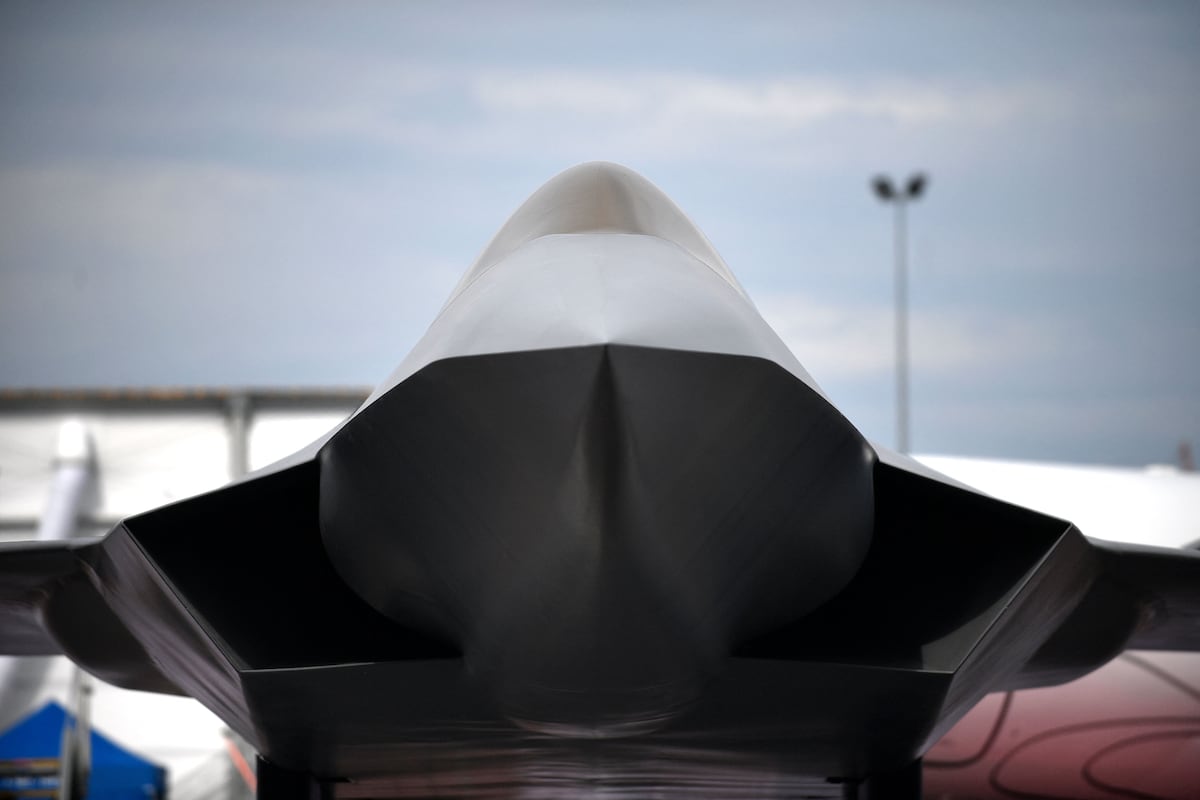
ROME — Reports of infighting between partners on the French-German-Spanish FCAS fighter program have been exaggerated and the platform will see the light of day with all members on board, a leading French air force official has said.
“There are differences but don’t believe all you are reading,” said Brig. Gen. Phillipe Suhr, the French Air Force point man for the program.
“We are still fully committed to this program with our partners and we will do our best to find a solution to move forward because we have to.
It is important to deliver in the 2040s,” he told reporters on the sidelines of the International Fighter conference in Rome.
Launched by France and Germany in 2017, with Spain subsequently signing up, the FCAS 6th-generation fighter is needed to replace France’s Rafales and Germany’s Eurofighters by 2040. But Germany and France have squabbled over control of the project, with French prime contractor Dassault pushing for a bigger stake .
Guillaume Faury, CEO of Airbus, which will contribute to Germany’s workshare, last month said Dassault should pull out if it was unsatisfied with its share.
“So if they’re not happy with what was decided and they don’t agree to continue in this setup, they are free to decide to move out of FCAS,” he said.
Suhr sought to play down the ruckus and said Dassault’s ambitions were more contained than reported. “When you read Dassault wants 80 percent, it is not reality,” he said.
As the continental FCAS program stalls, the parallel sixth generation GCAP fighter being developed by Italy, the UK and Japan appears to be making progress after the establishment of three industrial consortia to handle the work this autumn.
In a conference call with analysts on Wednesday, Italy’s lead contractor Leonardo said it will have booked over €1 billion in national contracts on the fighter program by December.
“Our competitors are slowing down,” CEO Roberto Cingolani told analysts.
Addressing the Rome International Fighter conference, one Italian military official provided insight on how Rome views GCAP as a chance to balance building sovereign technologies as well as sharing them with its U.K. and Japanese partners.
Col. Antonio Vivolo, the GCAP senior technical representative at the Italian defense ministry armaments office said that if nations were to keep abreast of fast changing, crucial technologies they needed a degree of national autonomy, even in partnerships like GCAP.
“The goal is not only to obtain a new fighter, the goal is to obtain and keep technological and industrial sovereignty so that when scenarios, threats and partners changes we can reconfigure our capability without renegotiating our freedom of action with a third party,” he said in his speech, which he cleared for publication.
“Without this depth of sovereignty, sixth-generation would remain a beautiful concept governed by someone else, and this was not an option,” he said.
At the same, he added, “By arriving at the table with a clear ability-based requirement set … We make ourselves a reliable, predictable and useful partner.”
Tom Kington is the Italy correspondent for Defense News.
罗马——一位法国空军高级官员表示,有关法德西三国未来空中作战系统(FCAS)战斗机项目合作伙伴之间发生内讧的报道被夸大了,该平台将在所有成员共同参与的情况下面世。
“虽然存在一些差异,但不要轻信你所读到的所有内容,”法国空军负责该项目的负责人菲利普·苏尔准将说道。
“我们仍然与合作伙伴全力投入到这个项目中,我们将尽最大努力找到解决方案,推动项目向前发展,因为我们必须这样做。”
“在 2040 年代取得成果至关重要,”他在罗马举行的国际战斗机会议间隙告诉记者。
由法国和德国于 2017 年启动,西班牙随后加入的 FCAS 第六代战斗机项目,旨在到 2040 年取代法国的阵风战斗机和德国的台风战斗机。但德国和法国一直在争夺该项目的控制权,法国主承包商达索公司力求获得更大的股份。
空客首席执行官纪尧姆·福里上个月表示,如果达索公司对其份额不满意,就应该退出。空客将为德国的工程分担工作做出贡献。
“所以,如果他们对已做出的决定不满意,并且不同意继续在这种安排下工作,他们可以自由决定离开FCAS,”他说。
苏尔试图淡化这场风波,并表示达索公司的野心远没有报道的那么大。“当你看到报道说达索公司想要收购80%的股份时,那并非事实,”他说。
随着欧洲大陆未来空中作战系统(FCAS)计划停滞不前,意大利、英国和日本正在并行开发的第六代GCAP战斗机在今年秋季成立了三个工业联盟来处理相关工作后,似乎取得了进展。
意大利主要承包商莱昂纳多公司周三在与分析师的电话会议上表示,到 12 月,该公司将在战斗机项目上获得超过 10 亿欧元的国内合同。
“我们的竞争对手正在放缓步伐,”首席执行官罗伯托·辛戈拉尼告诉分析师。
在罗马国际战斗机会议上,一位意大利军方官员阐述了罗马如何看待全球能力建设行动(GCAP),认为这是一个平衡自主技术研发与和英国、日本伙伴共享技术的机会。
意大利国防部军备办公室的 GCAP 高级技术代表 Antonio Vivolo 上校表示,如果各国想要跟上快速变化的关键技术,即使在像 GCAP 这样的伙伴关系中,也需要一定程度的国家自主权。
“我们的目标不仅是获得新型战斗机,更是获得并保持技术和工业主权,这样,当形势、威胁和合作伙伴发生变化时,我们就可以在不与第三方重新谈判行动自由的情况下重新配置我们的能力,”他在演讲中说道,该演讲已获准发表。
“如果没有这种深层次的主权,第六代将永远只是一个由他人统治的美好概念,而这绝不是一个可行的选择,”他说。
与此同时,他补充道:“通过提出一套清晰的、基于能力的要求……我们就能让自己成为一个可靠、可预测且有用的合作伙伴。”
汤姆·金顿是《防务新闻》驻意大利记者。