Does the AG share the view that a house arrest order is not capable of execution, there being no legal provision in Malaysia? — Hafiz Hassan总检察长是否也认为,由于马来西亚没有相关法律规定,软禁令无法执行?——哈菲兹·哈桑
SEPTEMBER 21 — Nine months to this day, High Court judge Alice Loke (as she then was) delivered her judgment dismissing a judicial review application by former prime minister...
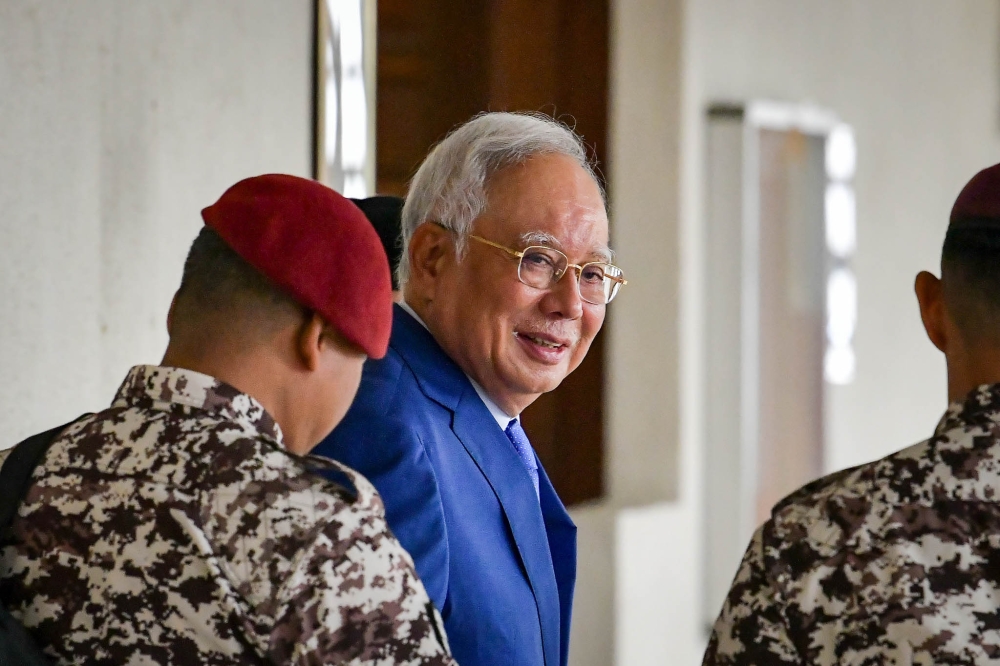
In a recent judgment, High Court judge Alice Loke dismissed former Prime Minister Dato' Sri Najib Razak's application for a judicial review seeking house arrest during his imprisonment.
Justice Loke emphasized that the exercise of the prerogative power of mercy by the Yang di-Pertuan Agong (YDPA) must adhere to the constitutional framework, as stipulated in Article 42 of the Federal Constitution.
The judge also noted the lack of legal provisions for house arrest in Malaysia, calling such an order unprecedented and unfeasible.
This judgment has sparked public debate over the Attorney General's stance on the matter.
SEPTEMBER 21 — Nine months to this day, High Court judge Alice Loke (as she then was) delivered her judgment dismissing a judicial review application by former prime minister Dato’ Sri Najib Razak seeking orders of mandamus to allow him to serve his imprisonment sentence under house arrest.
Concluding her judgment, the learned High Court judge said as follows:
“[T]he [Yang di-Pertuan Agong] is a constitutional monarch, and he exercises powers and functions in accordance with the provision of the Constitution. The exercise of the prerogative power of mercy is no exception. It must be exercised within the legal framework providing for safeguards and limits in the Constitution.”
Earlier in her judgment, the learned High Court judge considered Article 42 of the Federal Constitution as “essentially the prerogative of mercy” and the following as the essential features of the Article:
1. the YDPA has the power to grant pardons, reprieves and respite;
2. the Pardons Board for the Federal Territories shall comprise of the Attorney General, the Minister responsible for the Federal Territories of Kuala Lumpur, Putrajaya and Labuan and three other members appointed by the YDPA;
3. the Pardons Board tenders its advice to the YDPA for the purpose of exercising his powers of pardon;
4. before the Pardons Board tenders its advice, it shall consider any written opinion of the Attorney General; and
5. the Pardons Board must meet in the presence of and be presided over by the YDPA.
The learned High Court judge then referred to the case of The Attorney General of Malaysia v Dato’ Sri Mohd Najib bin Tun Hj Abdul Razak and another appeal [2025] where the Federal Court explained that the powers of clemency are subject to procedural limits in Article 42 of the Federal Constitution when exercising powers of pardon.
The apex court said:
“Article 42 of the Federal Constitution governs the royal prerogative of mercy, whereby the Yang di-Pertuan Agong (YDPA) is empowered to grant pardons, reprieves, and respites in respect of all offences committed in the Federal Territories of Kuala Lumpur, Labuan, and Putrajaya.
“The exercise of such clemency by the YDPA is not absolute. It is to be carried out in accordance with the constitutional limits prescribed by Article 42, particularly through the framework of advice and procedure embedded therein.
“Pursuant to Article 42(4)(b), the YDPA is required to act on the considered advice of the Pardons Board for the Federal Territories. His function in the clemency process is therefore inextricably tied to the deliberations and recommendations made by the Board established for that purpose.
“The Pardons Board for the Federal Territory of Kuala Lumpur is constituted under Article 42(5) of the Federal Constitution, and comprises the learned Attorney General, the Prime Minister [sic], and three other members appointed by the YDPA.
“Article 42(8) further mandates that any meeting of the Pardons Board must be held in the presence of the YDPA, who shall preside over its proceedings. This requirement is both procedural and constitutional in nature.”
“Any failure to adhere strictly to the procedural safeguards and substantive requirements under Article 42 will render the entire clemency process susceptible to constitutional challenge and judicial review.”
Now, in respect of a house arrest, the learned High Court judge said that a “house arrest order made in exercise of the powers of clemency is without precedent” and “fundamentally alters the nature of the imprisonment term”.
Significantly, the learned High Court judge was of the view that “a house arrest order is not capable of execution, there being no legal provision for such mechanism in Malaysia”.
Shamsul bin Bolhassan (with Ahmad Hanir bin Hambaly @ Arwi, Nurhafizza bt Azizan, Safiyyah bt Omar, Ainna Sherina bt Saipolamin and Zulkifli bin Sulaiman) from the Attorney General’s Chamber appeared for the respondents.
In that The Attorney General of Malaysia v Dato’ Sri Mohd Najib bin Tun Hj Abdul Razak and another appeal case, the Attorney General (AG) himself appeared before the Federal Court.
We can agree that the learned High Court judge’s views are obiter and therefore not the binding part of her judgment. But her views are now widely known by the public to the extent that calls have been made for the AG’ written opinion on Najib’s house arrest to be made public.
So, does the AG share the learned views of Justice Alice Loke?
* This is the personal opinion of the writer or publication and does not necessarily represent the views of Malay Mail.
Super AI is a systemic risk, but generative and agentic AI are not — Phar Kim Beng
An assault on the constitutional sovereignty of the Negeri Sembilan monarchy and the rule of law — Ten former presidents of the Malaysian Bar
The blue shirt I never wore — Ng Kwan Hoong
Sabah electricity reserve margin rises to 19pc, expected 26pc by year‑end, says Hajiji
‘Not true’, says Prisons Department as singer Yasin alleges ‘taiko’ bosses rule jail life
Ex‑farmers’ group manager faces 27 forged document charges in RM540,000 oil palm deals
在最近的一项判决中,高等法院法官艾丽斯·洛克驳回了前首相拿督斯里纳吉·拉扎克要求在服刑期间软禁的司法复核申请。
陆兆福法官强调,最高元首行使赦免特权必须遵守联邦宪法第 42 条规定的宪法框架。
法官还指出马来西亚没有关于居家监禁的法律规定,称这样的命令史无前例且不可行。
这一判决引发了公众对司法部长在该问题上的立场的辩论。
9 月 21 日——九个月后的今天,高等法院法官艾丽斯·洛克(当时是这个名字)作出判决,驳回了前首相拿督斯里纳吉·拉扎克提出的司法复核申请,该申请要求法院下达强制令,允许他居家监禁服刑。
高等法院法官在总结判决时说道:
“最高元首是立宪君主,他行使权力和职能须符合宪法规定。行使赦免特权也不例外,必须在宪法规定的保障和限制的法律框架内行使。”
这位博学的高等法院法官在其判决书中早先指出,《联邦宪法》第42条“本质上是赦免的特权”,并认为该条款具有以下基本特征:
1. 青少年司法保护局有权给予赦免、缓刑和暂缓执行;
2. 联邦直辖区赦免委员会由总检察长、吉隆坡、布城和纳闽联邦直辖区部长以及最高元首任命的其他三名成员组成;
3. 赦免委员会向YDPA提出建议,以便其行使赦免权;
4. 在赦免委员会提出建议之前,应当考虑司法部长的任何书面意见;
5. 赦免委员会必须在青年民主党人在场的情况下召开会议,并由青年民主党人主持会议。
这位博学的高等法院法官随后提到了马来西亚总检察长诉拿督斯里莫哈末纳吉本敦哈吉阿卜杜勒拉扎克及另一上诉案[2025],其中联邦法院解释说,在行使赦免权时,赦免权受到联邦宪法第 42 条规定的程序限制。
最高法院表示:
《联邦宪法》第 42 条规定了皇家赦免特权,最高元首有权对在吉隆坡、纳闽和布城联邦直辖区内犯下的所有罪行给予赦免、缓刑和暂缓执行。
“最高人民军行使这种赦免权并非绝对的。它必须按照宪法第42条规定的限制进行,特别是通过其中规定的咨询和程序框架进行。”
“根据第42(4)(b)条,最高元首必须根据联邦直辖区赦免委员会的审慎建议行事。因此,他在赦免程序中的职能与为此目的设立的委员会的审议和建议密不可分。”
“吉隆坡联邦直辖区赦免委员会是根据联邦宪法第 42(5) 条成立的,由博学的总检察长、首相和由最高元首任命的其他三名成员组成。
“第42(8)条进一步规定,赦免委员会的任何会议都必须在最高刑罚执行官在场的情况下举行,由最高刑罚执行官主持会议。这项要求既是程序性的,也是宪法性的。”
“任何未能严格遵守第 42 条规定的程序保障和实质性要求的行为,都将使整个赦免程序面临宪法挑战和司法审查。”
至于居家监禁,这位博学的高等法院法官表示,“行使赦免权作出的居家监禁令是史无前例的”,并且“从根本上改变了监禁期限的性质”。
值得注意的是,这位博学的高等法院法官认为“居家监禁令无法执行,因为马来西亚没有此类机制的法律规定”。
来自总检察长办公室的 Shamsul bin Bolhassan(与 Ahmad Hanir bin Hambaly @ Arwi、Nurhafizza bt Azizan、Safiyyah bt Omar、Ainna Sherina bt Saipolamin 和 Zulkifli bin Sulaiman)出庭作证。
在马来西亚总检察长诉拿督斯里莫哈末纳吉本敦哈吉阿卜杜勒拉扎克及另一上诉案件中,总检察长亲自出庭联邦法院。
我们可以一致认为,这位博学的高等法院法官的意见属于附带意见,因此不构成其判决的约束性部分。但她的意见如今已广为人知,以至于有人呼吁公开总检察长关于纳吉布软禁的书面意见。
那么,总检察长是否认同艾丽斯·洛克法官的精辟见解?
* 这是作者或刊物的个人观点,并不一定代表《马来邮报》的观点。
超级人工智能是一种系统性风险,但生成式人工智能和智能体人工智能则不然——Phar Kim Beng
对森美兰州君主制宪政主权和法治的攻击——马来西亚律师公会十位前任主席
我从未穿过的蓝色衬衫——Ng Kwan Hoong
沙巴电力储备率升至19%,预计到年底将达到26%,哈吉吉表示
监狱部门否认歌手亚辛指控“太鼓”老板掌控监狱生活的言论。
前农民团体经理因涉嫌伪造文件,面临27项指控,涉及金额达54万令吉的棕榈油交易。