First the coast guard, then an ICBM: China tests new, long-term ways to hold off rivals in Asia先是海警,后是洲际弹道导弹:中国测试新的、长期的应对亚洲竞争对手的方式
Experts say Beijing used both methods to try out new, attention-grabbing and long-term ways to deter others from challenging its territorial claims.
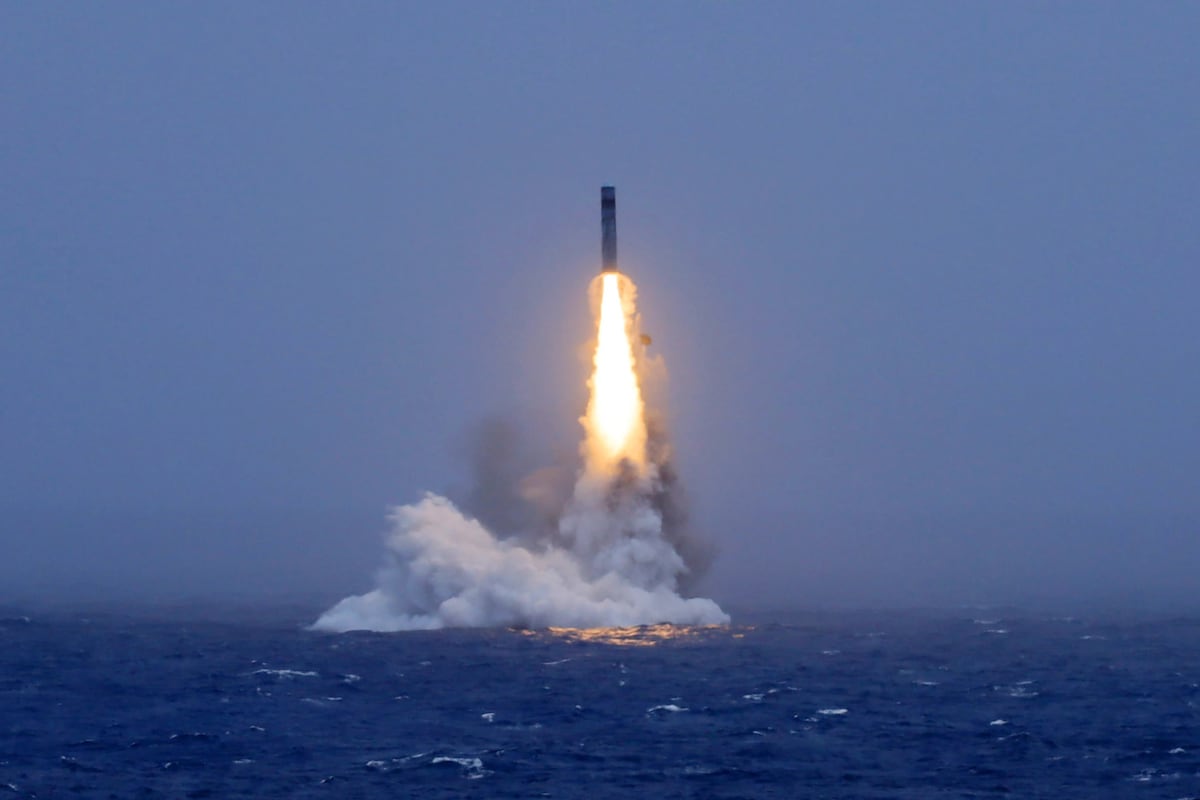
NEW TAIPEI CITY, Taiwan — China sent coast guard vessels to patrol the Pacific Ocean east of Taiwan in June and weeks later test-fired a submarine-launched ballistic missile from the South China Sea to the Pacific.
While the two maneuvers answered different security-related activities by U.S. allies in Asia, experts say China used both to try out new, attention-grabbing and long-term ways to deter others from challenging its territorial claims.
The Chinese Coast Guard vessels in waters east of Taiwan since May are meant as police activity rather than more provocative four years of sporadic naval or air force drills around the self-ruled island that Beijing claims as its own, analysts said. China has threatened to take Taiwan by force, if needed.
But a white-hulled vessel formation’s continued presence 54 nautical miles (100 kilometers) from Taiwan shows signs of becoming a long-term exercise – something that hasn’t been tried before – rather than a quick pass-through by armed forces, they said.
“That China uses the coast guard instead of the navy and air force is probably to reduce the threat profile of the exercises, so as to be able to claim restraint rather than escalating to the level of the formal military,” said Brian Hioe, a non-resident fellow at the Taiwan Research Hub of the University of Nottingham.
“Nevertheless, China increasingly integrates civilian and military forces, making it harder for other countries to respond to grey-zone activity,” Hioe said.
Large coast guard ships are designed for “longer deployments” than what naval vessels normally do, said Joshua Arostegui, chair of China studies and research director of the China Landpower Studies Center at the U.S. Army War College’s Strategic Studies Institute.
“That’s kind of the big takeaway,” Arostegui said.
The rotation between two vessel formations on July 4, China’s description of the mission as a sustained one and its stated intent to keep strengthening patrols “all point in one direction”, said Sophie Wushuang Yi, postdoctoral teaching fellow with Schwarzman College at Tsinghua University. That, she said, is “routine.”
Taiwan Coast Guard vessels are moored at Keelung Port, Taiwan, on July 8, 2026. China has signaled its intent to maintain a new coast guard patrol east of Taiwan. (I-Hwa Cheng / AFP via Getty Images)
Beijing’s Taiwan.cn website said on July 10 its coast guard was sustaining “routine law enforcement patrols” as the new vessel formation took over.
Taiwan’s Mainland Affairs Council, a government ministry, said on July 4 that the vessels were violating international law and “damaging regional stability”.
China’s initial patrols responded to maritime boundary negotiations between Japan and the Philippines, both of which are near Taiwan, experts said. They pointed to a Chinese government condemnation of the talks.
Taiwanese and Chinese coast guard units may find “confusion” along their respective routes if China keeps up its patrols, said Enrico Cau, an associate researcher at the Taiwan Strategy Research Association think tank.
Taiwan and Japan, maritime neighbors and historic de-facto allies, may respond with their own coast guards, Hioe said, while the United States could carry out “freedom of navigation” operations with other militaries in the Asia Pacific.
Those operations mean sailing warships through disputed or restricted international waters to indicate that Washington considers the channels open to all.
Meanwhile, the July 6 missile test, China’s first submarine-launched strategic missile into international open waters, drew statements of protest from Australia, Japan, New Zealand, the United States and some South Pacific island leaders.
The missile carried a simulated training warhead for 7,300 kilometers and likely overflew parts of the Philippines, the Washington-based Center for Strategic and International Studies said in July 7 commentary.
Though the test took place on the same day U.S. ally Australia signed a defense treaty with Fiji, analysts said Beijing set out mainly to warn multiple countries of what it could do in case of a nuclear attack in the disputed South China Sea.
“I don’t think it’s a new strategy as much as demonstrating its ability to have a nuclear triad basically,” Arostegui said. The triad includes land-based ICBMs, long-range bombers and submarine missiles, he said, with subs hard to detect and intercept.
The ballistic missile test specifically warned of what could happen if other countries build up military positions in the Indo-Pacific, Cau said.
“In particular it might be aimed at curbing any intention of regional powers harboring the ambition to either develop or host nuclear capabilities, Japan in primis,” he said.
Beijing also hoped the launch of its JL-2 or JL-3 ballistic missile would help test equipment and prove to other countries it has nuclear strike capability, the Center for Strategic and International Studies said.
It probably timed the sub launch for the 13th China-Russia Joint Sea 2026 exercise, “broadly consistent with China’s desire to portray Sino-Russian strategic alignment through coordinated military activities,” the think tank’s report says.
Expect more, Yi from the Schwarzman College said.
“I would expect such launches to become periodic but rare,” she said. “What the navy is proving, in my assessment, is that its sea-based deterrent is not merely symbolic but operational.”
The tests would be “consistent with the PLA-wide requirement of being ‘able to fight and win,’” she added.
China’s official Xinhua News Agency called the missile test part of an annual military training program and said the government had notified “relevant countries” in advance.
台湾新台北市——今年6月,中国派遣海警船在台湾以东的太平洋海域巡逻;几周后,中国从南海向太平洋试射了一枚潜射弹道导弹。
虽然这两项行动分别针对美国在亚洲的盟友采取的不同安全行动,但专家表示,中国利用这两项行动尝试新的、引人注目的、长期的手段来阻止其他国家挑战其领土主张。
分析人士指出,自五月以来,中国海警船在台湾东部海域的活动旨在执行警务任务,而非像过去四年那样,在北京声称拥有主权的自治岛屿附近进行零星的海军或空军演习,这种做法更具挑衅性。中国曾威胁,如有必要,将武力收复台湾。
他们表示,白色船体的舰艇编队持续出现在距离台湾 54 海里(100 公里)处,这表明这很可能是一次长期演习——这是以前从未尝试过的——而不是武装部队的快速通过。
“中国之所以使用海警而不是海军和空军,可能是为了降低演习的威胁程度,从而能够声称自己保持克制,而不是升级到正式军事层面,”诺丁汉大学台湾研究中心非常驻研究员Brian Hioe表示。
“然而,中国日益将文职力量和军事力量融合在一起,这使得其他国家更难应对灰色地带的活动,”Hioe说道。
美国陆军战争学院战略研究所中国研究主席兼中国陆军研究中心研究主任约书亚·阿罗斯特吉表示,大型海岸警卫队舰艇的设计目的是进行比海军舰艇通常进行的“更长时间的部署”。
“这算是最重要的一点吧,”阿罗斯特吉说。
清华大学苏世民书院博士后研究员易武双表示,7月4日两支舰艇编队的轮换、中国将此次任务描述为持续性任务以及其不断加强巡逻的意图“都指向同一个方向”。她说,这属于“例行公事”。
2026年7月8日,台湾海巡署船只停泊在台湾基隆港。中国已表示有意在台湾以东海域维持新的海巡巡逻。(图片来源:I-Hwa Cheng / AFP via Getty Images)
北京的台湾网7月10日报道称,随着新船队接手,其海警正在维持“例行执法巡逻”。
台湾陆委会(台湾政府部门)7月4日表示,这些船只违反国际法,“破坏地区稳定”。
专家表示,中国最初的巡逻行动是对日本和菲律宾之间海上边界谈判的回应,这两个国家都靠近台湾。他们指出,中国政府谴责了这些谈判。
台湾战略研究协会智库副研究员Enrico Cau表示,如果中国继续巡逻,台湾和中国的海巡队可能会在各自的航线上遇到“混乱”。
Hioe表示,台湾和日本作为海上邻国和历史上的事实盟友,可能会派出自己的海岸警卫队进行应对,而美国可能会与亚太地区的其他国家军队一起开展“航行自由”行动。
这些行动意味着派遣军舰通过有争议或受限的国际水域,以表明华盛顿认为这些航道对所有人开放。
与此同时,7月6日中国首次向国际公海发射潜射战略导弹的试验,引发了澳大利亚、日本、新西兰、美国和一些南太平洋岛国领导人的抗议声明。
总部位于华盛顿的战略与国际研究中心在7月7日的评论中表示,该导弹携带模拟训练弹头飞行了7300公里,很可能飞越了菲律宾的部分地区。
尽管此次试验与美国盟友澳大利亚和斐济签署防务条约是同一天进行的,但分析人士表示,北京此举主要是为了警告多个国家,如果南海争议地区遭到核攻击,中国将采取何种行动。
阿罗斯特吉说:“我认为这与其说是一种新战略,不如说是展示其拥有核三位一体能力的体现。”他表示,这三位一体包括陆基洲际弹道导弹、远程轰炸机和潜射导弹,其中潜艇难以探测和拦截。
考表示,这次弹道导弹试验明确地警告了如果其他国家在印太地区建立军事基地将会发生什么。
“尤其可能是为了遏制地区大国(尤其是日本)发展或拥有核能力的任何意图,”他说。
战略与国际研究中心表示,北京方面还希望通过发射巨浪-2或巨浪-3弹道导弹来测试设备,并向其他国家证明其拥有核打击能力。
该智库的报告称,此次潜艇下水很可能是为了配合第十三次中俄海上联合-2026演习,“这与中国希望通过协调的军事活动来展现中俄战略联盟的愿望基本一致”。
来自苏世民大学苏世民学院的易表示,期待更多。
“我预计此类发射活动会变得周期性但并不常见,”她说。“在我看来,海军正在证明的是,其海上威慑力量不仅仅是象征性的,而是切实可行的。”
她补充说,这些测试将“符合解放军‘能够战斗并取得胜利’的总体要求”。
中国官方新华社称此次导弹试验是年度军事训练计划的一部分,并表示政府已事先通知“有关国家”。