Alarm Bells Ring Across Europe As Security Situation With Russia Deteriorates At Accelerating Pace欧洲各地拉响警报,与俄罗斯的安全局势加速恶化
Russia is making some very concerning moves at a time when hybrid attacks are at an all-time high, stoking fear across Europe.
Published Sep 21, 2026 6:46 PM EDT
Across Europe, officials are issuing unprecedented warnings about a sharp escalation in Russian aggression and an even larger one that could soon come. As a result, they are scrambling to protect against the rapidly evolving threat Russia poses.
The dire messaging, growing louder by the day, is being delivered amid concerns about intensifying hybrid attacks that Russia is using to spread fear throughout the continent, fray the NATO alliance, and make it think twice about continuing support for Ukraine. Intel has increasingly pointed to the possibility that this could culminate in a much more severe operation, one that would be aimed to challenge NATO at its core.
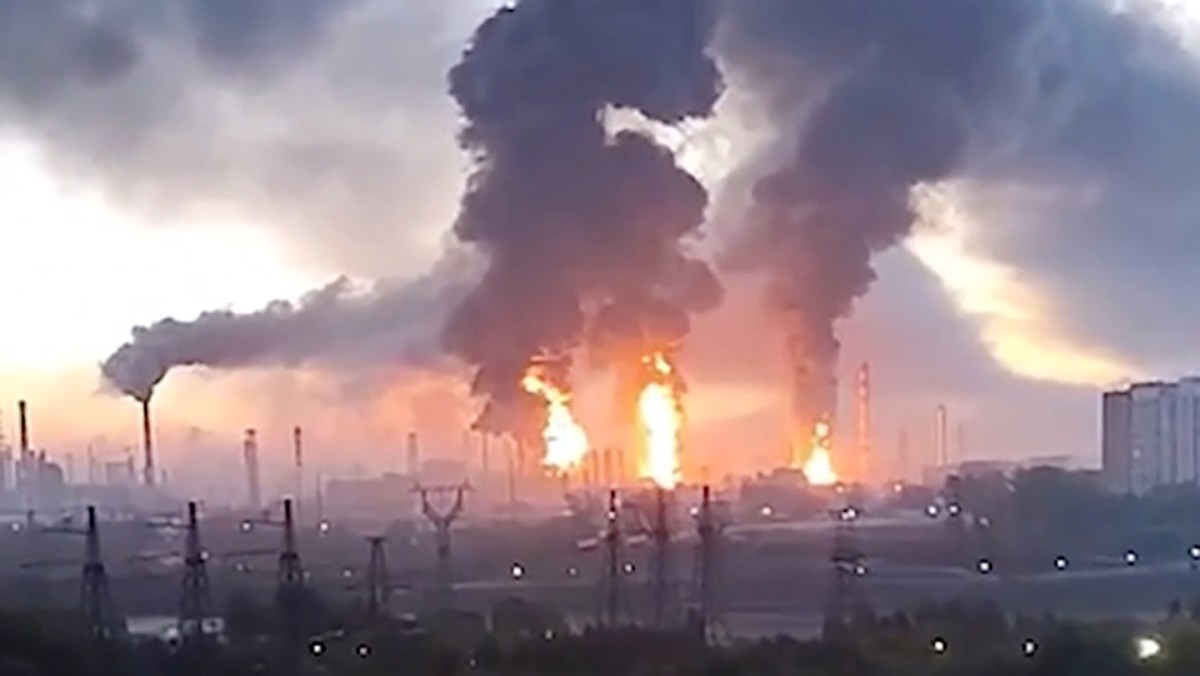
All this is taking place against the backdrop of the Russian full-scale invasion of Ukraine that shows no signs of abating. Kyiv just launched its largest drone attack on Moscow , which is burning on a near nightly basis amid ongoing strikes while Ukraine has introduced a new ballistic missile to its long-range arsenal . Russia for its part continues to try to advance on the ground in the east and south as it carries out daily airstrikes across Ukraine .
Our long-range responses had a very significant impact in the Moscow region last night. One of Russia’s key oil industry facilities and the aggressor’s logistics facility were hit. These are billions of dollars that sustain the war machine. The systems used included FP-1, RZ-100,… pic.twitter.com/ka5mlDSgb7 — Volodymyr Zelenskyy / Володимир Зеленський (@ZelenskyyUa) September 20, 2026
Our long-range responses had a very significant impact in the Moscow region last night. One of Russia’s key oil industry facilities and the aggressor’s logistics facility were hit. These are billions of dollars that sustain the war machine. The systems used included FP-1, RZ-100,… pic.twitter.com/ka5mlDSgb7
“There has definitely been an uptick” in Russian so-called hybrid warfare actions of late, a senior NATO military official told TWZ on Monday morning. “Despite its accusatory statements towards NATO, which remains a purely defensive alliance, Russia remains the aggressor. We see that clearly in Ukraine, where Russia is losing more than just the war it started. It therefore may incorrectly perceive the only way out is through increasing its hybrid campaign. That’s a losing proposition, because we are ready to respond, which we have shown.”
The official’s comments come after the shoot down last week of a suspected Russian drone that entered Lithuanian airspace from Belarus and in the wake of recent defensive actions by several European nations.
On Friday, French President Emmanuel Macron told reporters that his country had recently been targeted by Russian hybrid attacks. He ordered “the government to prepare a plan to protect our critical infrastructure” and the “most sensitive” defense industry and technology sites against drone and cyberattacks.”
Macron said the “intention behind it is to intimidate us and to derail the effort to support the Ukrainians. The consequence will be the opposite.”
France’s President Emmanuel Macron ordered the preparation of a “plan to protect our critical infrastructure” in the face of “Russian hybrid attacks.” (Photo by Thomas SAMSON / POOL / AFP) THOMAS SAMSON
In addition to Macron’s warnings, the French newspaper Le Monde reported that the French military was carrying out clandestine operations against Russia. However, the unnamed source cited offered no details and TWZ cannot independently verify that claim.
A day before Macron’s statements, Polish Prime Minister Donald Tusk warned in a speech to the Polish parliament that Russia is planning hybrid strikes with drones or rockets on European countries supporting Ukraine, including Poland.
The Polish leader offered an assessment about Moscow’s motives similar to Macron’s.
Russia will pretend the attacks are “accidental” in order to “paralyze or at least weaken the motivation of NATO countries” to rush to the defense of the member state coming under attack, The Associated Press noted.
“There is a real risk that drones or other types of projectiles will enter the territory of one or several countries on the eastern flank and even cause destruction,” Tusk cautioned. In July, a Russian AS-23 cruise missile crashed in Poland.
This video grab taken from footage of TVN Poland on July 30, 2026 shows the Polish army securing a large crater from a Russian missile that crashed in Poland. (Photo by various sources / AFP) –
In the face of these growing threats, officials in Lithuania are updating evacuation plans in case of a Russian attack.
“Poland is to be one of the evacuation destinations from the capital,” Žygimantas Solovjovas, head of the Civil Defense Department at Vilnius City Hall, told Polish Radio .
Evacuation should begin before a direct threat arises, Solovjovas stressed. “Vilnius residents should not assume that they will flee the city along an evacuation route while under fire,” Solovjovas explained, adding that in such a situation, one must seek shelter.
“One of the reasons for preparing this plan was to get residents accustomed to the idea that this should be a controlled process,” he noted. “If we allow chaos to ensue, the entire operation will be much more difficult.”
In Germany, where Defense Minister Boris Pistorius said Russia could attack by 2029, hospitals are preparing for a future influx of war-related casualties.
“In a report that gamed out potential scenarios should Russia invade NATO territory, the Bundeswehr calculated that as many as 1,000 wounded soldiers could arrive in Germany each day,” Bloomberg News reported last week . “As the country’s five military hospitals would quickly reach capacity — and the law requires that civilian hospitals help during wartime — the system would likely come under unprecedented strain, and could be forced to triage soldier and civilian care.”
As we noted last week , the alliance writ large is taking action against the growing Russian threats as well.
NATO’s air commander, U.S. Air Force Lt. Gen. Jason T. Hinds, told reporters, including from TWZ , last week that he was tasked with implementing two NATO air and missile defense plans. Hinds is also the Air Force’s top officer in Europe, serving as the commander of U.S. Air Forces in Europe/U.S. Air Forces Africa (USAFE).
Adding to the concerns about Moscow’s actions, Russia’s client state Belarus just wrapped up mechanized and tank battalion training adjacent to the Suwalki Gap. That’s the border between Poland and Lithuania that separates the Russian enclave of Kaliningrad from Belarus. It has long been considered a potential flashpoint for a war in Europe and the training exercise exacerbated concerns that NATO allies are not prepared for a Russian attack there.
The Suwalki Gap between Kaliningrad and Belarus is also the only land border between Poland and the Baltic states. (Google Earth)
Russia is also making some potentially concerning preparations.
The Defense Ministry is reportedly seeking “an additional 16,000 to 20,000 hospital beds for wounded soldiers in the Northwestern Federal District,” according to the Russian Volya Telegram channel . That district is located near the Baltics.
“Military hospitals have been struggling to cope with the influx of wounded since 2023, so the Ministry of Defense is increasingly using civilian hospitals (including maternity hospitals and specialized medical facilities) for its needs,” Volya stated. “Some of these hospitals are being completely repurposed for military use, but more often, civilian hospitals allocate a few departments to treat the wounded, while continuing to provide care for civilian patients in other departments.”
The expansion “will primarily affect regions within the Northwestern Federal District: Karelia, St. Petersburg, Leningrad and Novgorod regions, as well as Smolensk,” which are near the Baltics “and the Moscow regions.”
While Russia is framing this as a way to handle the influx of wounded from the ongoing conflict, Ukrainian analysts see this as a move to prepare for an expansion of hostilities into Europe .
🤔 Militarnyi: In the fall of 2026, the Russian Federation plans to add 16,000-20,000 military beds in civilian hospitals in the Northwestern Federal District, located near the Baltic states. pic.twitter.com/0sLMvoCxfC — MAKS 26 🇺🇦👀 (@Maks_NAFO_FELLA) September 15, 2026
🤔 Militarnyi: In the fall of 2026, the Russian Federation plans to add 16,000-20,000 military beds in civilian hospitals in the Northwestern Federal District, located near the Baltic states. pic.twitter.com/0sLMvoCxfC
In addition, the Border Service Directorate for St. Petersburg and the Leningrad Region announced that from September 16 to September 26, 2026, there would be a restriction on access to the border of the Slantsevsky and Kingiseppsky districts near the Estonian border.
“These measures aim to prevent violations regarding border regulations, migration laws, and the protection of aquatic biological resources,” the directorate claimed, according to Russian regional officials .
The new rules prohibit people from being on the shorelines or in small vessels along a portion of the Narva River and from hunting or carrying firearms in the border area. In addition, they forbid the “presence and movement of individuals and vehicles during hours of darkness outside of populated areas within the five-kilometer strip of territory along the state border in the Kingiseppsky and Slantsevsky districts.”
Obviously, the stated reasoning behind this was taken with great skepticism from neighboring Baltic NATO countries who are already on edge.
Russia's FSB imposes a nighttime curfew along the Estonian border near Narva, banning people and vehicles outside towns and villages within 5 km of the border in the Slantsy and Kingisepp districts from Sept 16–26 pic.twitter.com/8Ez8AvMXFy — Faytuks Network (@FaytuksNetwork) September 20, 2026
Russia's FSB imposes a nighttime curfew along the Estonian border near Narva, banning people and vehicles outside towns and villages within 5 km of the border in the Slantsy and Kingisepp districts from Sept 16–26 pic.twitter.com/8Ez8AvMXFy
Though Russia remains bogged down in its war on Ukraine and is suffering heavy losses of personnel and equipment, some European intelligence officials suggest Vladimir Putin could still carry out a small-scale invasion of NATO territory.
“It’s possible,” Michal Koudelka, the head of the Czech Republic’s BIS security service, told The Guardian about a potential Russian thrust into NATO. “It could involve a limited incursion, false-flag provocations, a massive influence campaign,” he told the publication, adding that this scenario could play out in a matter of “months, not years.”
While Russia has been carrying out a range of hybrid actions against Europe for years, including cyberattacks, drone incursions and sabotage, last month’s foiled attack on Germany’s Leipzig-Halle airport is seen in European intelligence circles as an inflection point.
As we previously reported , a drone discovered inside the secured area of Leipzig/Halle Airport during the night of August 4-5, was carrying approximately 1.3 pounds of explosives. It was found close to a Ukrainian-operated Antonov An-124 heavy cargo aircraft used to transport weapons to Ukraine. German authorities blamed Russia for that incident.
“To have an armed UAV drone sent into a busy airport in the middle of Europe … If you have attacks that could result in losses of life or losses of very critical infrastructure that have a huge implication for society, I think that is a gamechanger,” Thomas Nilsson, the head of Sweden’s military intelligence and security service, told The Guardian .
A Ukrainian Antonov AN-124 cargo plane is parked at Leipzig/Halle Airport after specialists from the Federal Police defused a drone equipped with an explosive device that German authorities blamed on Russia. (Photo by Hendrik Schmidt/picture alliance via Getty Images) picture alliance
It is unknown at this point whether Putin will decide to expand his hybrid actions against Europe to a more traditional conflict. However, as the attacks increase, officials across the continent are committing greater resources and planning to be prepared should that happen.
At the same time, the heat is only being turned up on Moscow as Ukraine accelerates its long range attacks. Now it has a whole new weapon, one that has been long in the works, to reach into Russian territory with while bypassing most air defenses.
Zelensky has officially unveiled the FP-7 Pelican ballistic missile and said it was used in the attack on Moscow. This is a monumental advance for Ukraine that has lacked modern ballistic missile capabilities since the war started. Still, Ukrainian media has raised doubts about whether the FP-7 – with an estimated operational range of 200-350 kilometers (124-217 miles) – can reach the Russian capital, which is about 450-500 kilometers (280-311 miles) from the Ukrainian border.
However, one expert suggested “that the ballistic weapon may have played an integral role within a coordinated, multi-axis combined strike,” according to the Kyiv Post .
Regardless, even if it can’t hit Moscow, it can hit plenty of other targets and it represents a major escalation in Ukraine’s weapons capabilities.
Ukrainian President Zelensky said that during an attack on Moscow, Ukraine used its Pelican FP-7 ballistic missile for the first time. pic.twitter.com/KqM9bqk9ur — Visegrád 24 (@visegrad24) September 20, 2026
Ukrainian President Zelensky said that during an attack on Moscow, Ukraine used its Pelican FP-7 ballistic missile for the first time. pic.twitter.com/KqM9bqk9ur
There is no avoiding the reality that the security situation in Europe is deteriorating, where exactly that leads is unclear apparently to everyone at the moment.
Contact the author: howard@twz.com
Comments couldn’t be loaded. Please refresh the page.
发布于美国东部时间2026年9月21日下午6:46
欧洲各地官员发出前所未有的警告,称俄罗斯的侵略行为正在急剧升级,而且更大规模的侵略可能很快就会到来。因此,他们正竭力防范俄罗斯构成的快速演变的威胁。
随着俄罗斯加强混合攻击以在非洲大陆散播恐惧、削弱北约联盟并迫使其重新考虑是否继续支持乌克兰,有关严峻的信息日益增多。情报部门也越来越多地指出,这最终可能导致一场更为严重的军事行动,其目标是从根本上挑战北约。
所有这一切都发生在俄罗斯全面入侵乌克兰的背景下,而且这场入侵丝毫没有减弱的迹象。基辅刚刚对莫斯科发动了迄今为止规模最大的无人机袭击,莫斯科几乎每晚都在持续不断的空袭中燃烧。与此同时,乌克兰已在其远程武器库中新增了一种弹道导弹。俄罗斯方面则继续试图在乌克兰东部和南部推进地面战,并每天对乌克兰进行空袭。
昨晚,我们的远程打击对莫斯科地区产生了非常显著的影响。俄罗斯一处重要的石油工业设施和侵略者的后勤设施遭到袭击。这些设施价值数十亿美元,是维持战争机器运转的关键。使用的武器系统包括FP-1、RZ-100…… pic.twitter.com/ka5mlDSgb7 — Volodymyr Zelenskyy / Володимир Зеленський (@ZelenskyyUa) September 20, 2026
昨晚,我们的远程打击行动在莫斯科地区产生了非常显著的影响。俄罗斯一处重要的石油工业设施和侵略者的后勤设施遭到袭击。这些设施价值数十亿美元,是维持战争机器运转的关键。使用的武器系统包括FP-1、RZ-100…… pic.twitter.com/ka5mlDSgb7
一位北约高级军事官员周一上午告诉TWZ,俄罗斯所谓的混合战争行动近期“确实有所增加”。“尽管俄罗斯对北约发表了指责性言论,而北约仍然是一个纯粹的防御性联盟,但俄罗斯仍然是侵略者。我们在乌克兰就清楚地看到了这一点,俄罗斯在那里不仅输掉了它发动的战争,还输掉了更多。因此,它可能错误地认为唯一的出路就是加大混合战争的力度。但这注定失败,因为我们已经做好了应对的准备,而且我们也已经证明了这一点。”
这位官员发表上述评论之前,上周一架疑似俄罗斯无人机从白俄罗斯进入立陶宛领空,被击落;此前几个欧洲国家也采取了防御行动。
周五,法国总统马克龙告诉记者,法国近期遭受了俄罗斯的混合攻击。他命令“政府制定计划,保护我们的关键基础设施”以及“最敏感的”国防工业和技术基地免受无人机和网络攻击。
马克龙表示,“其背后的意图是恐吓我们,破坏我们支持乌克兰的努力。但结果将恰恰相反。”
法国总统马克龙下令制定一项“保护关键基础设施的计划”,以应对“俄罗斯的混合攻击”。(图片来源:Thomas SAMSON / POOL / AFP)托马斯·萨姆森
除了马克龙的警告外,法国《世界报》报道称,法国军方正在对俄罗斯进行秘密行动。然而,该报道援引的匿名消息来源并未提供任何细节,TWZ也无法独立核实这一说法。
在马克龙发表声明的前一天,波兰总理唐纳德·图斯克在波兰议会发表讲话时警告说,俄罗斯正计划使用无人机或火箭对支持乌克兰的欧洲国家(包括波兰)发动混合打击。
这位波兰领导人对莫斯科的动机做出了与马克龙类似的评估。
美联社指出,俄罗斯将假装这些袭击是“意外”,目的是“瘫痪或至少削弱北约国家”迅速出兵保卫遭受攻击的成员国的积极性。
图斯克警告说:“无人机或其他类型的飞行物确实有可能进入东翼一个或多个国家的领土,甚至造成破坏。”今年7月,一枚俄罗斯AS-23巡航导弹在波兰坠毁。
这段视频截图来自波兰电视台(TVN Poland)2026年7月30日的画面,显示波兰军队正在保护一枚坠落在波兰境内的俄罗斯导弹留下的巨大弹坑。(图片来源:多家媒体/法新社)
面对这些日益增长的威胁,立陶宛官员正在更新疏散计划,以应对可能发生的俄罗斯袭击。
“波兰将成为首都的疏散目的地之一,”维尔纽斯市政府民防部门负责人Žygimantas Solovjovas告诉波兰广播电台。
索洛维约瓦斯强调,疏散工作应在直接威胁出现之前就开始。“维尔纽斯居民不应想当然地认为他们可以在枪林弹雨中沿着疏散路线逃离城市,”索洛维约瓦斯解释说,并补充道,在这种情况下,人们必须寻找掩体。
他指出:“制定这项计划的原因之一是让居民们习惯于这是一个可控的过程。如果我们放任混乱发生,整个行动将会更加困难。”
德国国防部长鲍里斯·皮斯托里乌斯表示,俄罗斯可能在 2029 年发动袭击。在德国,各医院正在为未来可能涌入的大量战争伤亡人员做准备。
据彭博新闻社上周报道,“德国联邦国防军在一份模拟俄罗斯入侵北约领土可能出现的各种情景的报告中计算得出,每天可能有多达1000名受伤士兵抵达德国。由于德国的五家军医院将很快达到饱和状态——而法律规定民用医院在战时必须提供援助——该系统可能会面临前所未有的压力,并可能被迫对士兵和平民的医疗救治进行分诊。”
正如我们上周指出的那样,整个联盟也在采取行动应对日益增长的俄罗斯威胁。
北约空军司令、美国空军中将杰森·T·欣兹上周告诉包括TWZ在内的记者,他受命执行两项北约防空和导弹防御计划。欣兹同时也是美国空军在欧洲的最高指挥官,担任美国驻欧洲空军/美国驻非洲空军(USAFE)司令。
令人们对莫斯科的行动更加担忧的是,俄罗斯的附庸国白俄罗斯刚刚在苏瓦乌基山口附近结束了机械化部队和坦克营的训练。苏瓦乌基山口是波兰和立陶宛的边界,将俄罗斯的飞地加里宁格勒与白俄罗斯分隔开来。长期以来,这里一直被视为欧洲潜在的战争爆发点,而此次训练演习加剧了人们对北约盟国尚未做好应对俄罗斯在该地区发动攻击准备的担忧。
苏瓦乌基山口位于加里宁格勒和白俄罗斯之间,也是波兰与波罗的海国家之间唯一的陆地边界。(谷歌地球)
俄罗斯也在进行一些可能令人担忧的准备工作。
据俄罗斯Volya Telegram频道报道,俄罗斯国防部正在寻求“在西北联邦区增设16000至20000张病床,用于收治受伤士兵”。该联邦区位于波罗的海沿岸国家附近。
“自2023年以来,军医院一直难以应对大量涌入的伤员,因此国防部越来越多地使用民用医院(包括妇产医院和专科医疗机构)来满足自身需求,”沃利亚表示。“其中一些医院被完全改造为军用医院,但更多情况下,民用医院会划出几个科室来治疗伤员,同时继续在其他科室为平民患者提供医疗服务。”
此次扩张“将主要影响西北联邦区内的地区:卡累利阿共和国、圣彼得堡、列宁格勒和诺夫哥罗德州,以及靠近波罗的海的斯摩棱斯克和莫斯科州”。
俄罗斯将此举视为应对持续冲突中涌入的伤员的一种方式,而乌克兰分析人士则认为这是为了准备将敌对行动扩大到欧洲。
🤔 军方消息:俄罗斯联邦计划于2026年秋季在位于波罗的海三国附近的西北联邦区民用医院增设16000至20000张军用床位。 pic.twitter.com/0sLMvoCxfC — MAKS 26 🇺🇦👀 (@Maks_NAFO_FELLA) September 15, 2026
🤔 米利塔尔尼:俄罗斯联邦计划于2026年秋季在位于波罗的海三国附近的西北联邦区民用医院增设16000至20000张军用床位。pic.twitter.com/0sLMvoCxfC
此外,圣彼得堡和列宁格勒州边防局宣布,从 2026 年 9 月 16 日至 26 日,将限制进入靠近爱沙尼亚边境的斯兰采夫斯基区和金吉谢普斯基区的边境。
据俄罗斯地方官员称,该局声称:“这些措施旨在防止违反边境法规、移民法和水生生物资源保护规定。”
新规禁止人们在纳尔瓦河部分河段的岸边或小型船只上活动,也禁止在边境地区狩猎或携带枪支。此外,新规还禁止“在金吉谢普斯基区和斯兰采夫斯基区沿国界线五公里宽的区域内,夜间在人口稠密区以外的区域出现和移动人员及车辆”。
显然,邻近的波罗的海北约国家对这一说法表示极大的怀疑,因为它们本就处于紧张状态。
俄罗斯联邦安全局(FSB)在纳尔瓦附近的爱沙尼亚边境实施夜间宵禁,禁止人员和车辆从9月16日至26日期间进入斯兰齐和金吉谢普地区边境5公里范围内的城镇和村庄。 pic.twitter.com/8Ez8AvMXFy — Faytuks Network (@FaytuksNetwork) September 20, 2026
俄罗斯联邦安全局(FSB)在纳尔瓦附近的爱沙尼亚边境实施夜间宵禁,禁止人员和车辆从9月16日至26日期间进入斯兰齐和金吉谢普地区边境5公里范围内的城镇和村庄。 pic.twitter.com/8Ez8AvMXFy
尽管俄罗斯仍深陷对乌克兰的战争泥潭,并遭受了人员和装备的重大损失,但一些欧洲情报官员认为,弗拉基米尔·普京仍有可能对北约领土进行小规模入侵。
捷克共和国安全局局长米哈尔·库德尔卡在接受《卫报》采访时表示,俄罗斯可能向北约渗透,“这并非不可能”。他告诉该报,“这可能包括有限的入侵、伪旗挑衅以及大规模的影响力行动”,并补充说,这种情况可能在“几个月内,而不是几年内”发生。
虽然俄罗斯多年来一直在对欧洲实施一系列混合行动,包括网络攻击、无人机入侵和破坏活动,但上个月挫败的对德国莱比锡-哈勒机场的袭击被欧洲情报界视为一个转折点。
正如我们此前报道,8月4日至5日夜间,一架无人机在莱比锡/哈勒机场安保区域内被发现,机上载有约1.3磅炸药。该无人机被发现时靠近一架乌克兰运营的安-124重型运输机,该飞机通常用于向乌克兰运送武器。德国当局指责俄罗斯应对此事件负责。
“将一架武装无人机派往欧洲中心繁忙的机场……如果袭击可能导致人员伤亡或对社会产生巨大影响的关键基础设施造成损失,我认为这将改变游戏规则,”瑞典军事情报和安全部门负责人托马斯·尼尔森告诉《卫报》。
一架乌克兰安东诺夫AN-124货机停在莱比锡/哈勒机场。此前,德国联邦警察的专家拆除了一架携带爆炸装置的无人机,德国当局指责俄罗斯所为。(图片由Hendrik Schmidt/picture alliance via Getty Images提供)
目前尚不清楚普京是否会将针对欧洲的混合行动扩大为更传统的冲突。然而,随着袭击事件的增加,欧洲各地的官员正在投入更多资源并制定计划,以应对可能发生的冲突。
与此同时,随着乌克兰加紧远程攻击,莫斯科面临的压力与日俱增。乌克兰现在拥有了一种全新的武器,这种武器研发已久,能够绕过大多数防空系统,直达俄罗斯境内。
泽连斯基正式公布了FP-7“鹈鹕”弹道导弹,并称其已用于对莫斯科的袭击。这对自战争爆发以来一直缺乏现代化弹道导弹能力的乌克兰来说,是一项里程碑式的进步。然而,乌克兰媒体对FP-7导弹能否有效打击距离乌克兰边境约450-500公里(280-311英里)的俄罗斯首都莫斯科表示怀疑,该导弹的射程估计为200-350公里(124-217英里)。
然而,据《基辅邮报》报道,一位专家认为“弹道武器可能在协调的多轴联合打击中发挥了不可或缺的作用”。
无论如何,即使它不能击中莫斯科,它也能击中许多其他目标,这代表着乌克兰武器能力的重大提升。
乌克兰总统泽连斯基表示,在对莫斯科的袭击中,乌克兰首次使用了其“鹈鹕”FP-7弹道导弹。 pic.twitter.com/KqM9bqk9ur — Visegrád 24 (@visegrad24) September 20, 2026
乌克兰总统泽连斯基表示,在对莫斯科的袭击中,乌克兰首次使用了其“鹈鹕”FP-7弹道导弹。 pic.twitter.com/KqM9bqk9ur
欧洲安全形势正在恶化,这是不争的事实,但目前看来,这种恶化究竟会将走向何方,似乎没有人能够预料。
联系作者:howard@twz.com
评论加载失败,请刷新页面。