ADM-160 Miniature Air Launched Decoy Wreckage A Reminder Of Ongoing Spying On Iran’s Air DefensesADM-160微型空射诱饵残骸提醒人们,对伊朗防空系统的间谍活动仍在继续。
The U.S. and Israel need to keep a close eye on the status of Iran's battered air defenses. Wreckage provides the clearest evidence yet that American forces are using ADM-160 decoys in the Iranian battlespace.
新闻视频
By Thomas Newdick , Tyler Rogoway
Published Sep 21, 2026 6:47 PM EDT
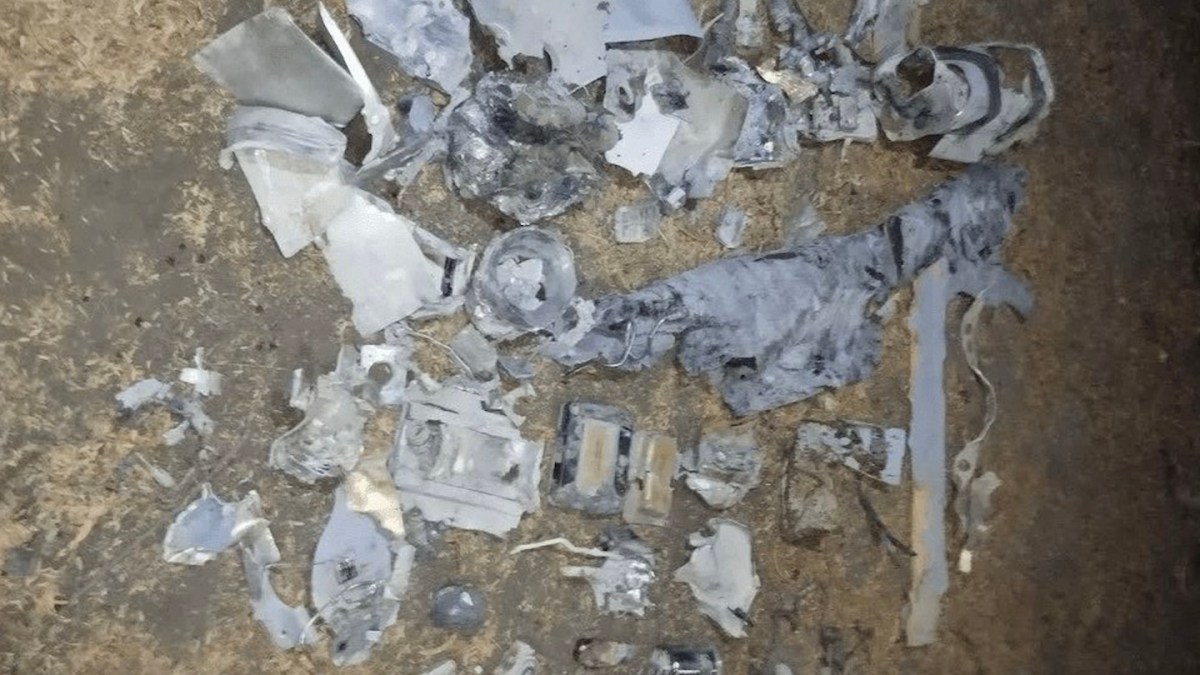
Remnants claimed to be photographed in Iran have been identified as belonging to a Raytheon ADM-160 Miniature Air-Launched Decoy (MALD). The wreckage was reportedly recovered after an Iranian interception that occurred earlier in the day, although the exact location and circumstances remain unconfirmed and there is reason for caution. Iranian state and military media have a long record of presenting unverified or exaggerated claims , especially during periods of conflict, and imagery released through those channels warrants independent scrutiny. Still, the MALD identification appears credible based on the visible wreckage, but its provenance, location, and the circumstances of its loss have not yet been independently established. MALDs were likely used at least in the opening stages of operation Epic Fury, as well.
With that being said, the showing off of the MALD wreckage, regardless of its original use case, is something of a reminder that U.S. and Israeli forces are continuing to evaluate Iran’s electronic order of battle, which can include probing activities that leverage deception and decoys to better understand the state of Iran’s air defenses and command and control architecture. This is critical information that needs to be constantly updated for contingency and future potential air campaign purposes.
Wreckage of the MALD. Iranian media
Iranian sources today reported the destruction of an Orbiter-type reconnaissance drone over the Strait of Hormuz, before the separate imagery emerged showing what appears to be the wreckage of a MALD. It is not yet clear whether the two reports refer to the same incident or separate losses.
A close-up of the wreckage of the MALD. Iranian media
The appearance of the wreckage could also shed a light on how the U.S. and Israel can conducting ongoing air operations against Iran, even if kinetic actions have largely slowed to a trickle.
15090 is the CAGE code for Raytheon, which is visible on the tail fins and other remnants. Source for images: https://t.co/weIo1Hh6RR pic.twitter.com/4LoBMChKZG — Trevor Ball (@Easybakeovensz) September 20, 2026
15090 is the CAGE code for Raytheon, which is visible on the tail fins and other remnants. Source for images: https://t.co/weIo1Hh6RR pic.twitter.com/4LoBMChKZG
MALD is an expendable store, launched from another aircraft. The ADM-160 family was developed to provide a flexible way of decoying and distracting an enemy’s air defenses, while also adding to the survivability of allied aircraft and standoff weapons. Raytheon won the U.S. Air Force development contract for the current-generation ADM-160B in 2003. The B design is significantly different from the initial A-model from Teledyne Ryan (later Northrop Grumman), the development of which had started in the late 1990s . The B also features a more powerful turbojet engine and possesses greater range.
MALDs being prepared for loading onto an aircraft. U.S. Air Force
The ADM-160B is approximately 6.5 feet long, has a wingspan of roughly 5.6 feet when deployed, and is powered by a small turbojet. It has an operational range of around 550 miles.
Rather than carrying a conventional warhead, the MALD carries equipment intended to reproduce the radar signature of specific aircraft or standoff weapons. It can therefore provide additional and often highly enticing tracks for an adversary’s radar operators and surface-to-air missile crews to respond to. It can be programmed to fly intricate routes to better emulate the target it is emulating and to provoke the attention of air defenders.
The related ADM-160C MALD-J adds an electronic warfare capability, allowing it to perform stand-in jamming and other forms of active electronic attacks against enemy air defense nodes. Further improved variants of the MALD, which the U.S. Navy has also been acquiring, have since been developed as you can read more about here .
The exact variant involved in today’s incident cannot be established from all publicly available imagery at this stage.
An ADM-160B under the wing of a U.S. Air Force B-52 bomber. U.S. Air Force
The possibility that the United States had used MALDs against Iran had already attracted considerable attention following Operation Midnight Hammer , the U.S. strike against Iranian nuclear facilities in June 2025.
During the operation, U.S. officials described a complex deception plan involving aircraft and other decoy measures designed to prevent Iran from determining the true direction and composition of the attack.
This strongly pointed to MALD as one likely component of that deception architecture.
The opening hours and days of Operation Epic Fury also likely saw MALD employments. ADM-160s have also been used extensively by Ukraine against Russia, primarily for provoking air defense systems into radiating and as penetration aids for cruise missiles.
In the Strait of Hormuz context, the MALD could serve a dual purpose. It could act in its primary role, as a defensive measure for allied aircraft and standoff weapons, drawing Iranian air defense systems away from it and toward the decoy. It can also be used more indepentely, triggering Iranian defenses and revealing their locations and operating characteristics, as well as the state of Iran’s command and control for those assets. Surveillance platforms, especially those in the air, can then soak up all that signals data. This can then be used to generate intelligence for future operations, and all without putting a person or an expensive piece of equipment at risk.
The unique nature of the current state of the Iran conflict would allow for MALD to be used in this unique manner. While kinetic actions have become sporadic, they are still occurring, so firing a decoy that looks like something much more threatening to Iranian air defenders would not be an unprecedented escalation.
An ADM-160 MALD in flight. Raytheon
Iran has characterized the incident as a shoot-down. If Iranian forces did successfully engage the MALD, that would represent a real air defense interception of a U.S. deception system, although these are expendable by design. It is equally possible that the MALD malfunctioned or just flew its route and ran out of fuel and crashed, as designed.
The wreckage also does not, by itself, identify the aircraft that launched the MALD.
The system has been integrated with a broad range of U.S. aircraft. In the course of U.S. operations against Iran, we have notably seen Air Force A-10C Thunderbolt II attack jets returning from theater with markings depicting MALD missions .
An A-10 with mission marks showing a mix of weapons used against Iranian targets. They include MALDs, Small Diameter Bombs, GBU-12 Paveways, Advanced Precision Kill Weapon System (APKWS) laser-guided rockets, AGM-65 Maverick air-to-surface missiles, and generic bombs that probably signify Joint Direct Attack Munitions (JDAMs). Andrew McKelvey
It is also worth noting that the MALD wreckage has appeared at the same time as reports of unusual, UAP-like objects over Iran, with videos and eyewitness accounts circulating online. Their authenticity and nature remain unclear.
A number of videos are circulating showing an unidentified object in the skies above Tehran, Iran, it’s not immediately clear what is being filmed. pic.twitter.com/bHNAQGFPNv — OSINTdefender (@sentdefender) September 21, 2026
A number of videos are circulating showing an unidentified object in the skies above Tehran, Iran, it’s not immediately clear what is being filmed. pic.twitter.com/bHNAQGFPNv
Such reports come amid an increasingly sophisticated use of low-end drones , decoys, and other forms of deception. These kinds of systems can be employed not only to stimulate adversary air defenses, but also to distract populations and probe how information moves out of a denied area. In such an environment, unusual aerial sightings should be viewed with caution — but not necessarily dismissed as irrelevant. We have been talking about how new forms of misdirection and guile will leverage relatively low-end technologies in future conflicts for many years now. While it isn’t clear if this light show in the sky over Iran was such an activity, it is certainly a reminder to keep that possibility in mind.
I don’t know what this is, or if it’s legit BUT remember we are in a new age of misdirection, decoy and guile. Specifically using low end drone technology. There are more ways to stimulate an enemy air defense system, distract a populous, assess the flow of public info from a… https://t.co/wW7YVlbayB — Tyler Rogoway (@Aviation_Intel) September 21, 2026
I don’t know what this is, or if it’s legit BUT remember we are in a new age of misdirection, decoy and guile. Specifically using low end drone technology. There are more ways to stimulate an enemy air defense system, distract a populous, assess the flow of public info from a… https://t.co/wW7YVlbayB
Meanwhile, the prospect of renewed U.S. strikes is increasingly being raised on both sides. Iran’s central military command said Sunday that it had received information that Washington was preparing to resume attacks, while President Donald Trump told Fox News that he was in a “deciding mode” and was considering further military action alongside economic pressure and a deal.
Trump had also told Axios last week that he was approaching a major decision on whether to resume large-scale military operations, with U.S. forces in the region being maintained at current levels through the end of the year.
Iranian officials have warned that a renewed U.S. attack would trigger retaliation against American forces and interests across the region. At the same time, Qatar and Pakistan are pursuing diplomatic efforts to restart negotiations.
This situation is exactly why keeping as detailed intelligence on the status of Iran’s air defense overlay would be so critical. Building a highly detailed electronic order of battle and maintaining it is critical to the effectiveness of future air operations. There is usually an observable burst of such activity prior to a major operation kicking off, as well. There are also many unseen assets that help with this, from those in space to those in the air and even those under the sea. There have been reports of Israel’s secretive RA-01 stealth flying wing drone being spotted over Iran and of course the U.S. has its own RQ-170 and RQ-180 aircraft, just to name a couple known penetrating assets that are likely highly capable of collecting this information.
Regardless, the U.S. and Israel will have a lot of ‘maintenance’ to do in order to roll back any air defense capabilities Iran has been able to reconstitute should hostilities break out in full again, and a lot crticial intelligence data will need to be up-to-date in order to support such an operation.
Contact the author: thomas@thewarzone.com
Comments couldn’t be loaded. Please refresh the page.
作者:托马斯·纽迪克、泰勒·罗戈威
发布于美国东部时间2026年9月21日下午6:47
据称在伊朗境内拍摄到的残骸已被确认为雷神公司ADM-160型微型空射诱饵弹(MALD)。据报道,这些残骸是在当天早些时候伊朗的一次拦截行动中被回收的,但确切的地点和情况尚未得到证实,因此有必要保持谨慎。伊朗官方媒体和军方媒体长期以来都有发布未经证实或夸大其词的说法,尤其是在冲突时期,因此通过这些渠道发布的图像需要进行独立审查。尽管如此,根据可见的残骸来看,MALD的身份似乎可信,但其来源、位置和丢失情况尚未得到独立证实。MALD很可能至少在“史诗狂怒行动”的初期阶段也被使用过。
尽管如此,无论MALD残骸最初的用途如何,展示这些残骸都提醒人们,美以军队仍在继续评估伊朗的电子作战系统,其中可能包括利用欺骗和诱饵进行侦察活动,以更好地了解伊朗的防空系统和指挥控制系统的状况。这些信息至关重要,需要不断更新,以应对突发事件和未来潜在的空袭行动。
MALD残骸。伊朗媒体
伊朗方面今天报道称,一架轨道式侦察无人机在霍尔木兹海峡上空被摧毁。随后,另一组图像显示,疑似一架多用途反潜无人机(MALD)的残骸。目前尚不清楚这两份报告指的是同一事件还是两起独立的损失。
MALD残骸特写。伊朗媒体
残骸的出现也可能揭示了美国和以色列如何继续对伊朗进行空袭行动,即使军事行动已经基本放缓。
15090 是雷神公司的 CAGE 代码,可以在尾翼和其他残骸上看到。图片来源:https://t.co/weIo1Hh6RR pic.twitter.com/4LoBMChKZG — Trevor Ball (@Easybakeovensz) September 20, 2026
15090是雷神公司的CAGE代码,可以在尾翼和其他残骸上看到。图片来源:https://t.co/weIo1Hh6RR pic.twitter.com/4LoBMChKZG
MALD(多用途防空导弹)是一种消耗性外挂物,由其他飞机发射。ADM-160系列导弹的研发目的是为了提供一种灵活的诱饵和干扰敌方防空系统的方式,同时提高盟军飞机和防区外武器的生存能力。雷神公司于2003年赢得了美国空军的ADM-160B型导弹的研发合同。B型导弹的设计与泰莱达因·瑞安公司(后被诺斯罗普·格鲁曼公司收购)于20世纪90年代末开始研发的A型导弹有显著区别。B型导弹还配备了动力更强劲的涡轮喷气发动机,并拥有更远的射程。
正在准备将多用途装载机装载到飞机上。美国空军
ADM-160B 长约 6.5 英尺,展开后的翼展约为 5.6 英尺,由一台小型涡轮喷气发动机提供动力,作战半径约为 550 英里。
与携带常规弹头不同,MALD搭载的设备旨在模拟特定飞机或防区外武器的雷达信号。因此,它可以为敌方雷达操作员和地对空导弹组提供额外的、往往极具诱惑力的跟踪目标。它还可以被编程执行复杂的飞行路线,以更好地模拟目标,并吸引防空部队的注意。
相关型号ADM-160C MALD-J增加了电子战能力,使其能够对敌方防空节点进行干扰和其他形式的主动电子攻击。美国海军也一直在采购MALD的进一步改进型,您可以在这里了解更多信息。
现阶段,根据所有公开图像,尚无法确定今天事件中涉及的具体变种。
一架美国空军B-52轰炸机机翼下挂载着一挺ADM-160B发动机。美国空军
在 2025 年 6 月美国对伊朗核设施发动“午夜铁锤行动”之后,美国可能对伊朗使用过大规模杀伤性武器的可能性已经引起了相当大的关注。
行动期间,美国官员描述了一项复杂的欺骗计划,该计划涉及飞机和其他诱饵措施,旨在防止伊朗确定袭击的真实方向和组成。
这有力地表明 MALD 很可能是该欺骗架构的一个组成部分。
“史诗狂怒行动”开始的几个小时和几天内,很可能也使用了MALD导弹。乌克兰也曾广泛使用ADM-160导弹攻击俄罗斯,主要用于诱使对方防空系统开火,以及作为巡航导弹的突防辅助手段。
在霍尔木兹海峡,MALD(多用途定向定向雷达)可以发挥双重作用。它的主要功能是作为盟军飞机和防区外武器的防御措施,将伊朗防空系统引离自身,转向诱饵。它还可以更独立地使用,触发伊朗的防御系统,暴露其位置和运行特性,以及伊朗对这些资产的指挥控制状态。监视平台,特别是空中监视平台,可以收集所有这些信号数据。这些数据可用于生成未来行动的情报,而且无需冒任何人员或昂贵设备的风险。
当前伊朗冲突的特殊性质使得导弹防御系统(MALD)能够以这种特殊方式使用。虽然实际军事行动已变得零星,但仍在发生,因此发射一枚看起来对伊朗防空部队更具威胁性的诱饵弹并非史无前例的冲突升级。
一架ADM-160 MALD正在飞行中。雷神公司
伊朗将此次事件定性为击落。如果伊朗军队确实成功击落了MALD,那将代表伊朗防空系统对美国欺骗系统的一次真正拦截,尽管这类系统按设计是消耗品。同样有可能的是,MALD发生故障,或者只是按计划飞行后燃料耗尽坠毁。
单凭残骸本身也无法确定发射 MALD 的飞机是哪架。
该系统已与多种美国飞机集成。在美军对伊朗的军事行动中,我们特别看到空军A-10C“雷电II”攻击机从战区返回时,机身涂有MALD任务的标志。
一架A-10攻击机,其任务标记显示曾使用多种武器攻击伊朗目标。这些武器包括多用途反坦克导弹(MALD)、小直径炸弹、GBU-12“铺路”反坦克导弹、先进精确杀伤武器系统(APKWS)激光制导火箭、AGM-65“小牛”空地导弹,以及可能代表联合直接攻击弹药(JDAM)的通用炸弹。安德鲁·麦克尔维
值得注意的是,MALD残骸的出现与伊朗上空出现类似不明空中现象(UAP)的异常物体的报道几乎同时发生,相关视频和目击者描述在网上流传。这些物体的真实性和性质目前尚不清楚。
网上流传着一些视频,显示伊朗德黑兰上空出现不明物体,目前尚不清楚视频拍摄的是什么。 pic.twitter.com/bHNAQGFPNv — OSINTdefender (@sentdefender) September 21, 2026
网上流传着一些视频,显示伊朗德黑兰上空出现不明物体,目前尚不清楚视频拍摄的是什么。pic.twitter.com/bHNAQGFPNv
此类报道出现之际,低端无人机、诱饵和其他欺骗手段的使用正日趋复杂。这类系统不仅可以用来干扰敌方防空系统,还可以用来分散民众注意力,并试探信息如何从禁区流出。在这种环境下,对于异常的空中目击事件,我们应该谨慎对待,但也不应完全忽视。多年来,我们一直在讨论,在未来的冲突中,新型的误导和欺骗手段将如何利用相对低端的技术。虽然目前尚不清楚伊朗上空的这次“灯光秀”是否属于此类活动,但这无疑提醒我们,应该牢记这种可能性。
我不知道这是什么,也不知道它是否属实,但请记住,我们正处于一个充满误导、诱饵和诡计的新时代。特别是利用低端无人机技术。现在有更多方法可以刺激敌方防空系统、分散民众注意力、评估公共信息的流动…… https://t.co/wW7YVlbayB — Tyler Rogoway (@Aviation_Intel) 2026年9月21日
我不知道这是什么,也不知道它是否属实,但请记住,我们正处于一个充满误导、诱饵和诡计的新时代。特别是利用低端无人机技术。现在有更多方法可以刺激敌方防空系统、分散民众注意力、评估公共信息的流动…… https://t.co/wW7YVlbayB
与此同时,双方都越来越倾向于认为美国可能再次发动空袭。伊朗中央军方周日表示,他们已收到情报,称华盛顿正准备恢复袭击;而美国总统唐纳德·特朗普在接受福克斯新闻采访时表示,他正处于“决策阶段”,正在考虑采取进一步的军事行动,同时辅以经济施压和达成协议。
特朗普上周也曾告诉 Axios,他即将就恢复大规模军事行动做出重大决定,美国在该地区的驻军规模将维持在目前的水平直至年底。
伊朗官员警告称,如果美国再次发动袭击,伊朗将对该地区美军和利益进行报复。与此同时,卡塔尔和巴基斯坦正积极开展外交努力,重启谈判。
正因如此,掌握伊朗防空系统态势的详细情报才显得至关重要。构建并维护高度精细的电子作战序列对于未来空袭行动的有效性至关重要。通常,在重大行动开始前,此类活动也会出现明显的爆发式增长。此外,还有许多不为人知的情报力量为此提供帮助,包括太空、空中甚至水下的情报力量。有报道称,以色列的秘密RA-01隐形飞翼无人机曾在伊朗上空出现,当然,美国也拥有RQ-170和RQ-180无人机,这只是众多已知渗透情报力量中的两种,它们很可能具备收集此类情报的能力。
无论如何,如果敌对行动再次全面爆发,美国和以色列将有很多“维护”工作要做,才能削弱伊朗重建的任何防空能力,而且为了支持这样的行动,许多关键的情报数据也需要保持最新状态。
联系作者:thomas@thewarzone.com
评论加载失败,请刷新页面。