If inflation is falling, why do Malaysians still feel food prices biting hard?如果通货膨胀正在下降,为什么马来西亚人仍然感到食品价格居高不下?
KUALA LUMPUR, Sept 22 — Malaysia’s inflation rate is slowing, yet the cost of a meal or a basket of groceries can still feel high for households.If inflation is falling, why do...
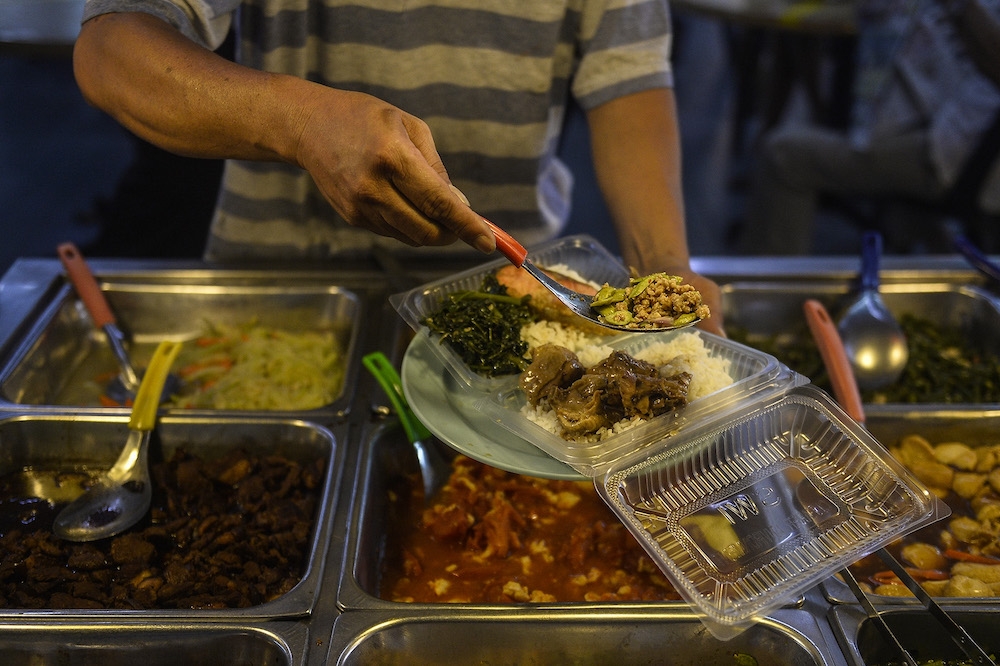
Despite a slowing inflation rate in Malaysia, households continue to feel the financial strain as food prices remain high.
The article clarifies that inflation measures the rate at which prices increase, not whether prices are low or high.
Consequently, even with reduced inflation rates, prices can continue to rise, albeit at a slower pace.
Various factors, such as ingredient costs, wages, rent, and external economic influences, contribute to the elevated prices of items like nasi lemak, affecting household budgets and purchasing power.
KUALA LUMPUR, Sept 22 — Malaysia’s inflation rate is slowing, yet the cost of a meal or a basket of groceries can still feel high for households.
If inflation is falling, why do a plate of nasi lemak, a basket of groceries or a meal at a restaurant still cost more than they did a year or two ago?
When someone says, “It is because of inflation”, what does that actually mean?
Inflation measures how quickly the overall prices of goods and services are rising, rather than whether prices themselves are high or low.
When inflation falls, prices can continue to increase — only at a slower pace.
Take a plate of nasi lemak that costs RM5.
If its price rises to RM5.50 the following year, that is a 10 per cent increase and if it then rises to RM5.61 the year after, the increase is about 2 per cent.
The nasi lemak still costs RM5.61, even though inflation has fallen from 10 per cent to 2 per cent.
What is inflation, how does it affect pricing?
To break it down, inflation is the rate at which the overall prices of goods and services increase over time.
It does not mean every product becomes more expensive by the same amount.
So, when someone says, “It’s inflation,” they are usually referring to a broader rise in prices.
Inflation itself, however, does not explain why a particular item has become more expensive.
For the nasi lemak, we need to look at its ingredients and other costs.
Did ingredients, wages, rent or other operating costs increase?
Those are possible drivers of a price increase, while inflation measures the broader movement across the economy.
Prices can still rise
According to the Department of Statistics Malaysia (DOSM), Malaysia’s headline inflation eased from 1.9 per cent in June to 1.8 per cent in July 2026.
The July figures also show why the 1.8 per cent rate should not be interpreted as every item becoming 1.8 per cent more expensive.
For example, DOSM found that 374 of the 573 items in the CPI basket recorded price increases in July, while another 157 items declined, and 42 remained unchanged.
Of the 374 items that increased, 367 recorded increases of 10 per cent or less.
DOSM also reported that annual inflation averaged 1.4 per cent in 2025, down from 1.8 per cent in 2024.
What is getting pricier?
The latest food data shows why it is useful to look beyond the headline figure.
DOSM reported that Food and Beverages inflation increased from 1.4 per cent in June to 1.8 per cent in July 2026, while the group rose 0.3 per cent month-on-month.
Meat prices increased 3.2 per cent year-on-year, with chicken recording a particularly strong increase, from RM10.25 per kg in 2025 to RM10.88 per kg in 2026.
Chicken inflation itself was 6.7 per cent.
As for food away from home, this increased 2.5 per cent, while food at home rose 1.2 per cent.
Other categories recorded smaller increases with fish and other seafood rose 1.1 per cent, fruits and nuts 1.1 per cent, vegetables 1 per cent, and milk and other dairy products and eggs 0.8 per cent.
Cereals and cereal products, as well as oils and fats, each increased 0.2 per cent.
Prices can also fall
Food prices do not always move upwards.
According to DOSM’s annual 2025 data, Food and Beverages inflation was 2.1 per cent, but several food-at-home categories recorded price declines.
Vegetables fell 4.4 per cent, milk and other dairy products and eggs fell 0.9 per cent, while meat and cereals and cereal products each fell 0.3 per cent.
A household buying more chicken or eating out regularly could therefore feel a stronger increase than one buying more vegetables or cereals.
What about our neighbours?
Malaysia’s experience is not unique.
Food prices can remain relatively contained when supply conditions are favourable, although individual items can still rise.
In Indonesia, Bank Indonesia reported that volatile-food inflation eased to 2.52 per cent year-on-year in July 2026, from 5.58 per cent in June.
This is partly due to harvests of chilli varieties and shallots, while also pointing to coordination between the central and regional governments to control food inflation.
Thailand provides another example, whereby its Trade Policy and Strategy Office reported that food and non-alcoholic beverage prices rose 0.98 per cent year-on-year in April 2026.
Prepared food and some fresh vegetables became more expensive, while several fruits and other food items recorded declines.
Harvests, supply, transport costs, global commodity prices and government measures can all affect what consumers pay.
So, what has been happening in Malaysia?
The moderation reflected factors including lower cost pressures and a stronger ringgit, which helped contain the cost of imported goods and inputs.
Bank Negara also pointed to lower global cost pressures and fuel prices as factors that helped keep inflation contained.
These factors can reduce some of the pressure on businesses and consumers.
However, they do not mean prices have returned to where they were before earlier increases.
Why meals stay expensive
The price of a plate of nasi lemak is not determined only by the cost of rice, coconut milk, anchovies or eggs.
The seller also has to pay for labour, rent, utilities, transportation, packaging and other operating expenses.
So even if the price of one ingredient falls, the final price paid by the customer does not necessarily fall by the same amount.
There can also be a time lag between a change in an input cost and the price consumers see.
Food prices are also influenced by costs beyond the stall or supermarket such as global commodity prices and movements in the ringgit, which can affect domestic costs.
What does it mean for households?
For households, falling inflation means prices are rising more slowly — it does not mean the nasi lemak has returned to RM5.
Falling inflation is not the same as falling prices, and it also does not erase previous price increases.
Bank Negara Malaysia (BNM) reported that between 2019 and 2024, Malaysia’s headline CPI increased 9.3 per cent, while nominal wages per worker increased by 7.2 per cent.
This does not mean every household experienced those exact changes, instead, it illustrates why households can continue to feel pressure even when the latest inflation rate is relatively low.
A period of lower inflation means prices are not rising as quickly.
So, when the headline inflation rate falls, the question is not simply whether prices are going down, it is also which are rising, which are falling, and whether household incomes are keeping pace.
That is why Malaysians hear inflation is falling yet still feel that their groceries, takeaway meals or favourite nasi lemak are expensive.
‘This is where we were born’: 9,000 Kampung Bahagia residents wait to rebuild five months after devastating fire
Malaysia’s ‘elephant whisperer’ leads push to save Sabah’s endangered Bornean elephants
Malaysia condemns Houthi attacks, stands in solidarity with Saudi Arabia
尽管马来西亚的通货膨胀率有所放缓,但由于食品价格居高不下,家庭仍然感受到经济压力。
文章澄清说,通货膨胀衡量的是物价上涨的速度,而不是物价的高低。
因此,即使通货膨胀率下降,物价仍可能继续上涨,尽管速度会放缓。
食材成本、工资、租金和外部经济影响等各种因素导致椰浆饭等食品价格上涨,影响家庭预算和购买力。
吉隆坡,9月22日讯——马来西亚的通货膨胀率正在放缓,但对家庭来说,一顿饭或一篮杂货的价格仍然可能很高。
如果通货膨胀下降,为什么一盘椰浆饭、一篮杂货或在餐馆吃一顿饭的价格仍然比一两年前贵?
当有人说“这是因为通货膨胀”时,这究竟是什么意思?
通货膨胀衡量的是商品和服务价格总体上涨的速度,而不是价格本身的高低。
当通货膨胀下降时,物价仍可能继续上涨——只是涨幅会放缓。
拿一盘售价5令吉的椰浆饭。
如果第二年价格上涨到 5.50 令吉,涨幅为 10%;如果第三年上涨到 5.61 令吉,涨幅约为 2%。
尽管通货膨胀率已从 10% 降至 2%,但椰浆饭的价格仍然为 5.61 令吉。
什么是通货膨胀?它如何影响物价?
简单来说,通货膨胀是指商品和服务总价格随时间推移而上涨的速度。
这并不意味着所有产品的价格都会上涨相同的幅度。
所以,当有人说“这是通货膨胀”时,他们通常指的是物价的整体上涨。
然而,通货膨胀本身并不能解释为什么某个特定商品的价格上涨了。
对于椰浆饭,我们需要查看它的配料和其他成本。
原材料、工资、租金或其他运营成本是否有所增加?
这些因素都可能导致价格上涨,而通货膨胀则衡量整个经济的整体走势。
价格仍有可能上涨
根据马来西亚统计局(DOSM)的数据,马来西亚整体通胀率从2026年6月的1.9%降至2026年7月的1.8%。
7 月份的数据也表明,1.8% 的增长率不应被解读为所有商品价格上涨 1.8%。
例如,DOSM发现,7月份CPI篮子中的573个商品中有374个价格上涨,另有157个商品价格下降,42个商品价格保持不变。
在374个增长项目中,有367个项目的增幅在10%以内。
DOSM 还报告称,2025 年年均通货膨胀率为 1.4%,低于 2024 年的 1.8%。
哪些东西的价格越来越贵?
最新的食品数据显示,除了主要数据之外,还需要进一步分析。
DOSM报告称,食品和饮料通胀率从2026年6月的1.4%上升至2026年7月的1.8%,而该集团环比增长0.3%。
肉类价格同比上涨 3.2%,其中鸡肉价格涨幅尤为显著,从 2025 年的每公斤 10.25 令吉上涨至 2026 年的每公斤 10.88 令吉。
鸡肉价格本身的通胀率为 6.7%。
外出就餐支出增长了 2.5%,而在家用餐支出增长了 1.2%。
其他类别增幅较小,其中鱼类和其他海鲜增长了 1.1%,水果和坚果增长了 1.1%,蔬菜增长了 1%,牛奶和其他乳制品以及鸡蛋增长了 0.8%。
谷物和谷物制品以及油脂的价格均上涨了0.2%。
价格也可能下跌
食品价格并非总是上涨的。
根据 DOSM 发布的 2025 年年度数据,食品和饮料的通货膨胀率为 2.1%,但几种家庭食品类别的价格有所下降。
蔬菜下降了 4.4%,牛奶和其他乳制品以及鸡蛋下降了 0.9%,而肉类和谷物及谷物制品均下降了 0.3%。
因此,购买更多鸡肉或经常外出就餐的家庭可能会比购买更多蔬菜或谷物的家庭感受到更强烈的涨幅。
我们的邻居呢?
马来西亚的经历并非个例。
当供应条件有利时,食品价格可以保持相对稳定,但个别商品的价格仍可能上涨。
印尼央行报告称,2026年7月,波动较大的食品通胀率同比下降至2.52%,而6月份为5.58%。
这部分是由于辣椒品种和红葱的收成,同时也表明中央和地方政府在控制食品通胀方面进行了协调。
泰国提供了另一个例子,其贸易政策和战略办公室报告称,2026 年 4 月食品和非酒精饮料价格同比上涨 0.98%。
加工食品和一些新鲜蔬菜的价格上涨,而几种水果和其他食品的价格则有所下降。
收成、供应、运输成本、全球大宗商品价格和政府措施都会影响消费者的支付价格。
那么,马来西亚究竟发生了什么?
这种缓和反映了成本压力降低和令吉走强等因素,这有助于控制进口商品和投入品的成本。
马来西亚国家银行还指出,全球成本压力和燃料价格的下降也是有助于控制通胀的因素。
这些因素可以减轻企业和消费者面临的部分压力。
但这并不意味着价格已经恢复到之前上涨之前的水平。
为什么餐饮价格居高不下
一盘椰浆饭的价格不仅仅取决于大米、椰奶、凤尾鱼或鸡蛋的成本。
卖方还需支付人工费、租金、水电费、运输费、包装费和其他运营费用。
因此,即使一种原料的价格下降,顾客最终支付的价格也不一定会下降相同的幅度。
投入成本的变化与消费者看到的价格之间也可能存在时间滞后。
食品价格还会受到摊位或超市以外的成本影响,例如全球大宗商品价格和令吉汇率波动,这些都会影响国内成本。
这对家庭意味着什么?
对于家庭而言,通货膨胀下降意味着物价上涨速度放缓——但这并不意味着椰浆饭的价格已经回到了 5 令吉。
通货膨胀下降并不等同于物价下跌,而且也不会抹去之前的价格上涨。
马来西亚国家银行(BNM)报告称,2019 年至 2024 年间,马来西亚总体消费者物价指数 (CPI) 上涨了 9.3%,而每位工人的名义工资上涨了 7.2%。
这并不意味着每个家庭都经历了这些完全相同的变化,而是说明了为什么即使最新的通货膨胀率相对较低,家庭仍然会感到压力。
通货膨胀率较低的时期意味着物价上涨速度不会那么快。
因此,当总体通胀率下降时,问题不仅仅是物价是否下降,还在于哪些物价上涨,哪些物价下跌,以及家庭收入是否跟上物价上涨的步伐。
这就是为什么马来西亚人虽然听说通货膨胀正在下降,但仍然觉得他们的食品杂货、外卖或最喜欢的椰浆饭很贵。
“这是我们的出生地”:9000名甘榜巴哈吉亚居民在毁灭性火灾五个月后等待重建家园
马来西亚“大象语者”带头拯救沙巴濒危婆罗洲象
马来西亚谴责胡塞武装的袭击,并与沙特阿拉伯站在一起。