‘This is where we were born’: 9,000 Kampung Bahagia residents wait to rebuild five months after devastating fire“这是我们的出生地”:9000名甘榜巴哈吉亚居民在毁灭性火灾五个月后等待重建家园
SANDAKAN, Sept 22 — Where a thousand wooden stilt houses once rose above the water, only blackened ruins remain. The floating village of Kampung Bahagia here was destroyed by a...
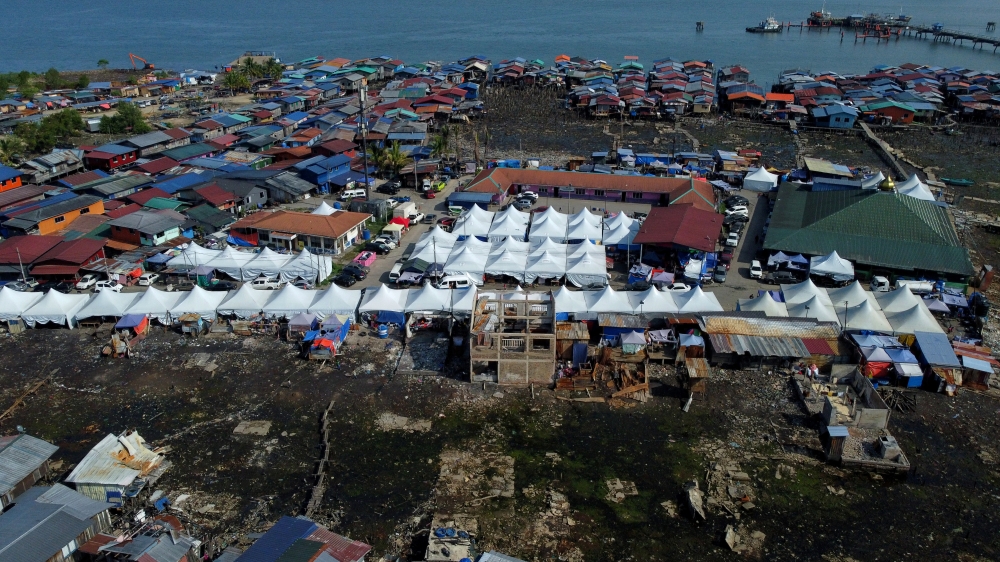
The floating village of Kampung Bahagia in Sandakan was devastated by a massive fire in April, displacing nearly 9,000 residents who are now living in temporary shelters.
Despite the difficult conditions, including lack of electricity and clean water, communal solidarity remains strong as the Sabah government, NGOs, and local committees work together towards rebuilding.
Efforts are being made to map out and prepare the site for new homes, with residents expressing a desire to rebuild in their ancestral village.
Financial and material support from various entities is helping to alleviate some of the immediate challenges faced by the community.
SANDAKAN, Sept 22 — Where a thousand wooden stilt houses once rose above the water, only blackened ruins remain. The floating village of Kampung Bahagia here was destroyed by a massive fire on April 19, leaving nearly 9,000 residents with nothing but the clothes on their backs.
Against a backdrop of the charred remnants, rows of tents with white canopies — donated by non-governmental organisations — and huts made of plywood line the roadside.
Behind the flimsy walls of those temporary dwellings, some 300 families are struggling to rebuild their lives while awaiting the completion of new housing in the area that had been their “paradise” before the tragedy occurred.
“I now live in a small tent with my seven family members, including three grandchildren. Life without a home is miserable, especially when we have to endure the heat and rain.
“At night, I cannot sleep peacefully because I worry about rain and strong winds. Whenever it rains, we all get wet, and so do our clothes and belongings,” 53-year-old Rohaida Absara told Bernama.
Rohaida’s family is among the 100 or so families who have been living in the tents since the tragedy, without electricity or a regular supply of clean water.
Whenever dark clouds gather overhead, her anxiety intensifies as she fears the tents could be blown away by strong winds, particularly at night. The families also have to endure scorching daytime heat, as well as the threat of wildlife.
“I never imagined that the house where my family and I had lived for decades would be engulfed by flames and destroyed in the blink of an eye,” she said, her voice filled with sadness.
Simang Damli, 31, who stays in a tent with three other families, said the overcrowded and uncomfortable conditions forced her to send five of her children to stay with relatives, while she remains in the tent with her one-month-old baby.
“Whenever it rains, I take my child to the mosque for shelter as I worry that the canopy will be blown away by the strong wind,” she said.
For now, those living in the temporary dwellings depend on water from a nearby hill as well as supplies delivered by water tankers operated by the Sabah Water Department. For electricity, they rely on power sources at the nearby mosque for basic needs such as charging their phones.
Despite the hardships, there is a glimmer of hope for the Kampung Bahagia residents. Bernama was informed that efforts are underway to enable them to rebuild their homes in the village.
Through efforts initiated by the recently formed Kampung Bahagia Village Development and Security Committee (JKKK), the Sabah state government, through the Sabah Lands and Surveys Department (JTU), is actively carrying out site surveying work.
“JTU is currently in the preliminary stage of preparing the site and mapping out the new settlement to facilitate the construction of houses,” said Kampung Bahagia village head Sharif Hashim Sharif Titing.
He said the majority of victims, who are Malaysian citizens, have made their wishes clear: they want to remain in Kampung Bahagia rather than be relocated elsewhere.
For the villagers, the settlement built over the water holds deep sentimental value as their ancestral home and the birthplace of generations of the community.
“The residents very much hope that the community separated by the fire can be reunited on the same site. This is where we were born and where all our memories are kept,” Sharif Hashim said.
He said this is also why residents were willing to stay in temporary structures in nearby areas despite having to live in difficult conditions.
“So far, about 50 tents have been set up by various NGOs, while around 200 small huts have been built by the fire victims themselves on privately owned land with permission (from the owner who has allowed them to reside there temporarily), including my own hut,” he said.
Despite the many shortcomings at the temporary settlement, the spirit of solidarity among Kampung Bahagia residents has remained strong through the establishment of the JKKK.
Its chairman Mohd Anuar Noah said the committee was formed specifically to monitor the welfare and safety of victims sheltering in the tents.
“The residents are exposed to various safety risks, particularly disturbances by animals such as stray dogs that frequently roam the area at night.
“That is why we have personnel conducting night patrols to ensure the tent area remains safe. Thankfully, there have been no untoward incidents so far,” he said.
In terms of health and sanitation, close cooperation among elected representatives, government agencies and NGOs has played an important role in preventing disease outbreaks.
Member of Parliament for Batu Sapi Datuk Khairul Firdaus Akbar Khan allocated emergency funds for the construction of basic toilets at the site, while Mercy Malaysia is also planning to add two more sanitation units for bathing and washing clothes.
Solid waste management is carried out regularly by the Sandakan Municipal Council to ensure rubbish is collected on schedule, complemented by residents’ own efforts to organise frequent communal clean-up activities.
Meanwhile, difficulties in obtaining clean water have been eased through water tanker deliveries by the state Water Department at least once every two days, following an official request by the Batu Sapi parliamentary constituency, while residents also share gravity-fed water from a nearby hill.
The concern shown by the country’s top leadership, through Prime Minister Datuk Seri Anwar Ibrahim’s visit with Sabah Chief Minister Datuk Seri Hajiji Noor shortly after the tragedy, also provided an early morale boost to the residents.
Financial assistance of RM1,500 for each affected family, RM300 in aid for schoolchildren, as well as free replacement of identification documents have helped ease some of the financial burden borne by the victims.
However, the swift rebuilding of their permanent homes will be the most meaningful step towards healing the wounds of Kampung Bahagia’s 9,000 residents. — Bernama
If inflation is falling, why do Malaysians still feel food prices biting hard?
Malaysia’s ‘elephant whisperer’ leads push to save Sabah’s endangered Bornean elephants
Malaysia condemns Houthi attacks, stands in solidarity with Saudi Arabia
位于山打根的水上村庄甘榜巴哈吉亚 (Kampung Bahagia) 在四月份遭遇了一场大火,导致近 9000 名居民流离失所,他们现在居住在临时住所中。
尽管面临诸多困难,包括缺乏电力和清洁用水,但社区团结依然强大,沙巴州政府、非政府组织和地方委员会共同努力进行重建。
目前正在努力规划和准备该地块以建造新房,居民们表示希望在祖籍村庄重建家园。
来自各方的财政和物资支持正在帮助缓解社区面临的一些紧迫挑战。
山打根,9月22日讯——曾经上千座木制高脚屋耸立于水面之上,如今只剩下焦黑的废墟。位于此地的水上村庄甘榜巴哈吉亚(Kampung Bahagia)于4月19日毁于一场大火,近9000名居民几乎一无所有,仅剩身上穿的衣服。
在烧焦的残骸背景下,路边排列着一排排带有白色顶篷的帐篷(由非政府组织捐赠)和用胶合板搭建的小屋。
在这些临时住所的简陋墙壁后面,大约 300 个家庭正在努力重建他们的生活,同时等待着这片曾经是他们“天堂”的地区新住房的建成。
“我现在和我的七个家人,包括三个孙子孙女,住在一个小帐篷里。没有家的生活很悲惨,尤其是在我们不得不忍受酷暑和暴雨的时候。”
“晚上我睡不好觉,因为我担心下雨刮大风。每次下雨,我们全家都会被淋湿,衣服和财物也会被弄湿,”53岁的罗海达·阿布萨拉告诉马新社。
罗海达一家是自灾难发生以来一直住在帐篷里的大约 100 个家庭之一,他们没有电,也没有稳定的清洁用水供应。
每当乌云密布,她就越发焦虑,担心帐篷会被强风吹走,尤其是在夜晚。这些家庭还要忍受白天的酷暑,以及野生动物的威胁。
“我从未想过,我和家人住了几十年的房子会在一瞬间被大火吞噬并摧毁,”她说道,声音里充满了悲伤。
31岁的西芒·达姆利和另外三个家庭住在一个帐篷里,她说,由于帐篷里人满为患,环境恶劣,她不得不把五个孩子送到亲戚家暂住,自己则和刚满月的婴儿留在帐篷里。
“每当下雨,我都会带孩子去清真寺避雨,因为我担心强风会把遮阳篷吹走,”她说。
目前,居住在临时住所的居民依靠附近山上的水源以及沙巴水务局运营的水罐车运送的水。电力方面,他们则依靠附近清真寺的电源来满足基本需求,例如给手机充电。
尽管面临诸多困难,甘榜巴哈吉亚的居民们仍看到了一线希望。据马新社报道,各方正在努力帮助他们在村里重建家园。
在最近成立的甘榜巴哈吉亚村发展与安全委员会(JKKK)的努力下,沙巴州政府通过沙巴土地与测量局(JTU)积极开展场地勘测工作。
“JTU目前正处于场地准备和新定居点规划的初步阶段,以便于房屋建设,”Kampung Bahagia村村长Sharif Hashim Sharif Titing说道。
他说,大多数受害者都是马来西亚公民,他们已经明确表达了自己的意愿:他们希望留在甘榜巴哈吉亚,而不是被安置到其他地方。
对于村民来说,建在水上的这处定居点具有深厚的情感价值,因为它是他们的祖居地,也是世世代代社区的诞生地。
“居民们非常希望被大火分隔的社区能够重新在原址团聚。这里是我们出生的地方,也是我们所有回忆的所在,”谢里夫·哈希姆说道。
他说,这也是为什么尽管生活条件艰苦,居民们仍然愿意住在附近地区的临时住所里的原因。
他说:“到目前为止,各个非政府组织已经搭建了大约 50 个帐篷,而火灾受害者自己则在私人土地上建造了大约 200 个小棚屋(得到了土地所有者的许可,允许他们暂时居住在那里),其中包括我自己的棚屋。”
尽管临时安置点存在诸多不足,但甘榜巴哈吉亚居民的团结精神通过成立JKKK组织得以保持。
其主席莫哈末·安努亚·诺亚表示,该委员会的成立专门是为了监督在帐篷中避难的受害者的福利和安全。
“居民们面临着各种安全风险,特别是流浪狗等动物经常在夜间出没,造成干扰。
“正因如此,我们安排了人员进行夜间巡逻,以确保帐篷区域的安全。值得庆幸的是,到目前为止还没有发生任何意外事件,”他说。
在卫生和公共卫生方面,民选代表、政府机构和非政府组织之间的密切合作在预防疾病爆发方面发挥了重要作用。
峇都沙比国会议员拿督凯鲁·菲尔道斯·阿克巴·汗拨款紧急资金,用于在该地点建造基本厕所,而马来西亚慈济基金会也计划增建两个用于洗澡和洗衣的卫生设施。
山打根市议会定期进行固体废物管理,以确保垃圾按时收集,同时居民也积极组织频繁的社区清洁活动。
与此同时,在巴都沙比国会选区正式提出请求后,州水务局至少每两天用运水车送水一次,缓解了当地居民获取清洁用水的困难;此外,居民们还可以共享附近山坡上的重力水。
国家最高领导层通过首相拿督斯里安华·易卜拉欣在悲剧发生后不久探望沙巴州首席部长拿督斯里哈吉吉·诺尔所表达的关切,也迅速提振了居民的士气。
政府向每个受灾家庭提供 1500 令吉的经济援助,向学童提供 300 令吉的援助,并免费补办身份证件,这些措施帮助减轻了受害者的一些经济负担。
然而,尽快重建他们的永久家园,才是抚平甘榜巴哈吉亚9000名居民创伤的最重要一步。——马新社
如果通货膨胀正在下降,为什么马来西亚人仍然感到食品价格居高不下?
马来西亚“大象语者”带头拯救沙巴濒危婆罗洲象
马来西亚谴责胡塞武装的袭击,并与沙特阿拉伯站在一起。