UK’s Starmer unveils $20 billion defense boost in long-delayed investment plan英国总理斯塔默公布了一项酝酿已久的200亿美元国防预算增资计划。
The Defence Investment Plan falls short of the £28 billion($37 billion) wanted by defense chiefs and represents a 5% increase in annual defense spending.
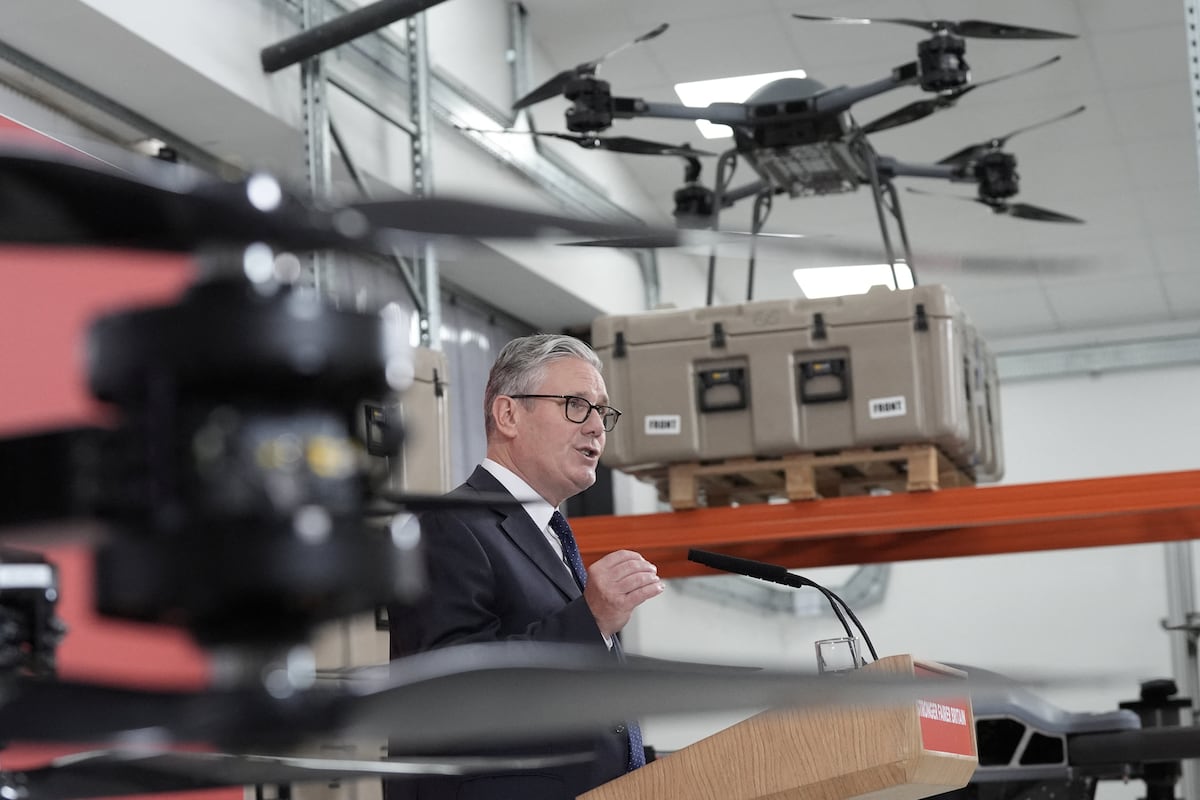
LONDON — Prime Minister Keir Starmer pledged on Tuesday to spend an extra £15 billion ($20 billion) to modernize Britain’s depleted armed forces in a long-delayed investment plan that is designed to prepare for the wars of the future and mark his legacy.
In what is most likely his last major policy announcement, Starmer said the increased spending over the next four years went further than a previous draft that prompted his ally, John Healey, to resign as defense minister in June. Healey had accused Starmer of failing to secure enough money to keep Britain safe.
Starmer’s Defence Investment Plan falls short of the £28 billion wanted by defense chiefs and represents a 5% increase in annual defense spending, which will reach £79 billion a year by 2029. He will take it to Ankara for a NATO meeting on July 7 to 8, where he will want to signal that Britain is on the path to meet its commitment to reach defense spending of 3.5% of GDP by 2035.
But with his expected successor, Andy Burnham, due to take power as soon as July 20, he acknowledged that new governments could “build” on his blueprint.
Some critics said the plan, delayed for more than nine months, was too little, too late, and a government document published after the speech showed the exact source of almost one-third of the extra funding was not defined and would have to be found by Starmer’s successor at the 2026 budget.
Plan will ‘strengthen Britain’s defense’
“When the world is arming and aggression is rising, the best way to avoid war is to prepare for it, the best way to defend is to deter — to have the strength to make your adversaries to think again before they act,” Starmer told an audience at a defense company in southern England.
Starmer said his blueprint would offer funding of £5 billion for investment in drones and autonomous weapons, create a hybrid navy and make the army more lethal, as part of a plan to make Britain war-ready, especially when military officials have warned that Russia could attack a NATO country as soon as 2030.
It would also strengthen Britain’s nuclear deterrent and bolster a program to build a next-generation stealth fighter jet for the Royal Air Force, Starmer said, adding that would create jobs and boost growth.
NATO Secretary General Mark Rutte also welcomed Britain’s plan, saying it was a “good step towards reaching the 3.5% of GDP on defense agreed in The Hague last year.”
Britain’s biggest defense company, BAE Systems, which has UK sales of more than £8 billion annually, said the plan provided clarity to the industry.
“The government’s commitment to increased defense spending is vital to sustaining the specialist skills across our industrial base critical to national security,” BAE CEO Charles Woodburn said.
With European nations under pressure from the United States to do more to defend themselves, NATO allies agreed to spend 5% of gross domestic product on defense by 2035, with 3.5% on core defense requirements and 1.5% on broader national security.
The new plan, Starmer said, would take Britain to 4.2% under that commitment.
While Britain is hoping to spend 3% of GDP on core defense by the next parliament expected in 2029, Germany plans to spend 3.7% of its GDP on defense by 2030 and France is aiming for 2.5%.
“By any measure this is a huge historic shift for our nation and a legacy in which I take pride,” he said. Asked if it was sufficient to deter a possible Russian attack, Starmer said: “Yes... I am confident in that.”
‘Cost-cutting by another name’
Defense chiefs have said there is a £28 billion funding gap over the next four years and, with the £15 billion uplift falling short of the total, critics say some equipment would not be bought or would be delayed, and there could be cuts to training, infrastructure maintenance and logistics.
“This is cost-cutting by another name, it’s not an investment plan, it’s sticking plasters,” said Tom Sharpe, a retired Royal Navy commander, adding that the plan for a hybrid navy was “chronically underfunded.”
Starmer defended the plan’s costings, and said much of the additional spending would come from reallocating spending from different departments.
“Some capital projects, for example, on roads and energy, which are important but not immediately vital, will no longer go ahead as planned,” he said.
A government document showed that £4 billion would come from cutting long-term public investment and a further £2.8 billion from cutting transport and energy projects over the next four years. An additional £4.7 billion over the same period was marked as “to be funded at Budget 2026.”
“This plan represents our best judgment for what the country needs to meet this moment, and it is a platform on which I know my successor will build,” Starmer said.
伦敦——英国首相基尔·斯塔默周二承诺,将额外投入 150 亿英镑(200 亿美元)用于英国衰弱的武装部队现代化建设。这项拖延已久的投资计划旨在为未来的战争做好准备,并以此作为他的政治遗产。
在很可能是他最后一次重大政策声明中,斯塔默表示,未来四年增加的国防开支比之前的草案幅度更大。此前的草案导致他的盟友约翰·希利于6月辞去国防大臣一职。希利曾指责斯塔默未能争取到足够的资金来保障英国的安全。
斯塔默的国防投资计划低于国防部长们希望的280亿英镑,仅相当于年度国防开支增加5%,到2029年将达到每年790亿英镑。他将于7月7日至8日前往安卡拉参加北约会议,届时他将向外界表明,英国正朝着实现到2035年国防开支占GDP 3.5%的承诺稳步迈进。
但由于他的继任者安迪·伯纳姆预计将于7月20日上任,他承认新政府可以“以”他的蓝图为基础进行“建设”。
一些批评人士表示,这项拖延了九个多月的计划力度不够,也为时已晚。演讲后公布的一份政府文件显示,近三分之一的额外资金的确切来源尚未确定,必须由斯塔默的继任者在 2026 年预算中找到。
该计划将“加强英国的国防”
“当世界各国都在备战,侵略行为日益增多时,避免战争的最好方法就是做好准备,最好的防御方法就是威慑——拥有让对手在行动前三思而后行的力量,”斯塔默在英格兰南部一家国防公司对听众说道。
斯塔默表示,他的计划将提供 50 亿英镑的资金用于投资无人机和自主武器,打造一支混合海军,并提高陆军的杀伤力,以此作为使英国做好战争准备的计划的一部分,尤其是在军方官员警告称俄罗斯最早可能在 2030 年攻击北约国家的情况下。
斯塔默表示,此举还将加强英国的核威慑力量,并支持为英国皇家空军建造下一代隐形战斗机的计划,他还补充说,这将创造就业机会并促进经济增长。
北约秘书长马克·吕特也对英国的计划表示欢迎,称这是“朝着去年在海牙达成的国防开支占国内生产总值3.5%的目标迈出的良好一步”。
英国最大的国防公司 BAE Systems(年销售额超过 80 亿英镑)表示,该计划为业界提供了清晰的方向。
“政府致力于增加国防开支,这对维持我们工业基础中对国家安全至关重要的专业技能至关重要,”英国航空航天系统公司(BAE Systems)首席执行官查尔斯·伍德伯恩表示。
由于美国向欧洲各国施压,要求它们加大自卫力度,北约盟国同意到 2035 年将国内生产总值的 5% 用于国防,其中 3.5% 用于核心国防需求,1.5% 用于更广泛的国家安全。
斯塔默表示,根据这项承诺,新计划将使英国的脱欧比例达到 4.2%。
英国希望在预计于 2029 年召开的下一届议会之前,将 GDP 的 3% 用于核心国防;德国计划到 2030 年将 GDP 的 3.7% 用于国防;法国的目标是 2.5%。
“无论从哪个角度来看,这对我们国家来说都是一次巨大的历史性转变,也是我引以为豪的一项成就,”他说。当被问及这是否足以阻止俄罗斯可能的袭击时,斯塔默说:“是的……我对此充满信心。”
“换个说法的成本削减”
国防部长表示,未来四年将出现 280 亿英镑的资金缺口,而 150 亿英镑的增拨资金不足以弥补缺口,批评人士称,一些装备将无法购买或延迟购买,并且可能会削减训练、基础设施维护和后勤方面的开支。
“这不过是换了个名字的削减成本,这不是投资计划,而是权宜之计,”退役皇家海军指挥官汤姆·夏普说道,并补充说,混合海军计划“长期资金不足”。
斯塔默为该计划的成本核算辩护,并表示大部分额外支出将来自不同部门的支出重新分配。
他说:“例如,一些重要的基础设施建设项目,如道路和能源项目,虽然重要但并非迫在眉睫,将不再按计划进行。”
一份政府文件显示,未来四年将削减40亿英镑的长期公共投资,另有28亿英镑将通过削减交通和能源项目获得。此外,同期还有47亿英镑的资金被列为“将在2026年预算中拨付”。
“这项计划代表了我们对国家当前形势的最佳判断,我知道我的继任者会以此为基础继续发展,”斯塔默说。