Wars shift focus from jets to weapons at giant Farnborough Airshow在范堡罗航展上,战争的焦点从喷气式飞机转向武器。
Spiraling security risks are expected to push defense to the forefront of Britain’s Farnborough Airshow next week.
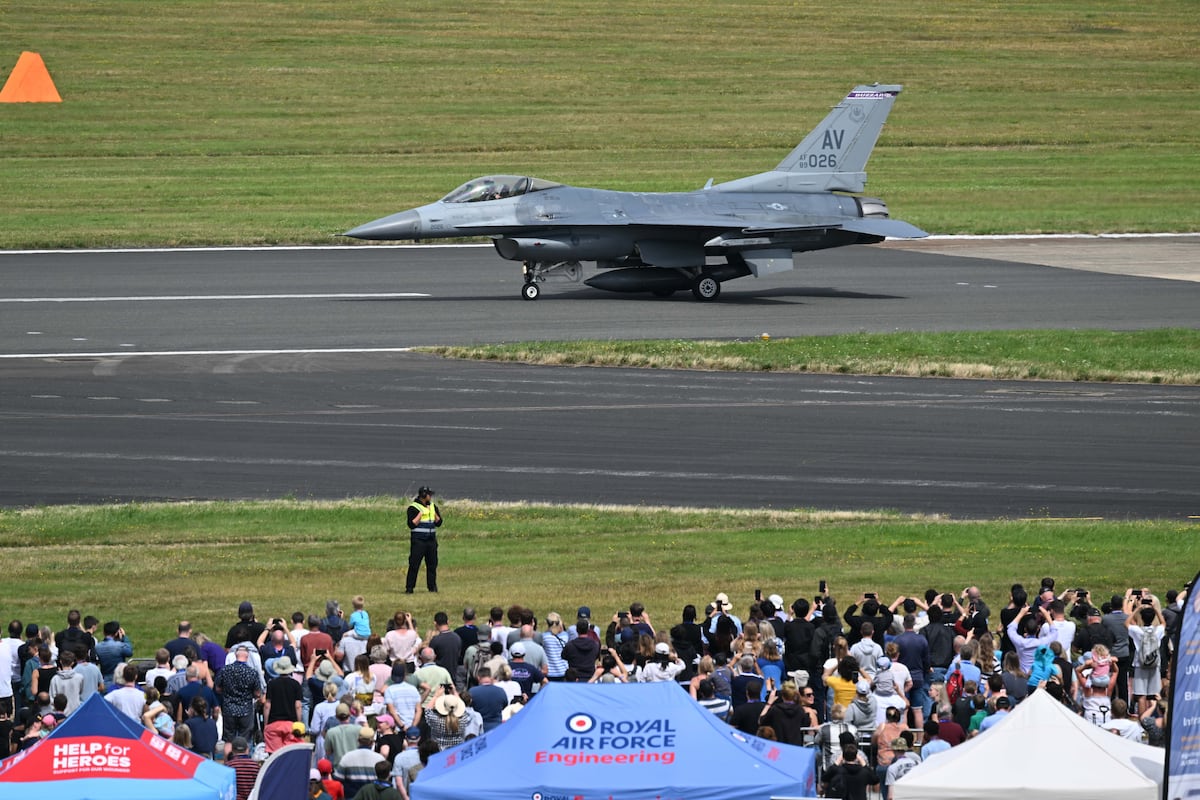
FARNBOROUGH, England, July 17 (Reuters) — Spiraling security risks are expected to push defense to the forefront of Britain’s Farnborough Airshow, as aerospace and arms makers struggle to keep pace with demand for weapons while cementing a fragile recovery in civil jet and engine production.
With the Ukraine war in its fifth year and a ceasefire in tatters in the Gulf, those risks are also likely to move the ritual contest between Boeing and Airbus for jetliner orders down the pecking order at the July 20 to 24 show.
“The global security environment is arguably more complex and volatile today than we have seen in many, many decades, and we are watching security threats evolve at a breakneck pace,” Air Chief Marshal Harv Smyth, head of the Royal Air Force, told an International Air Chiefs Conference ahead of the show.
Weapons makers enter their biennial bazaar witnessing the biggest rise in European defense spending since the Cold War but with unresolved questions about where and how it will be spent.
One of the industry’s most influential figures warned the shift to drones and AI systems could disrupt defense as much as SpaceX transformed the launch business, as wars in Ukraine and Iran expose the need for faster developments and mass production.
“I know both worlds and they couldn’t be further apart,” said ex-Airbus CEO Tom Enders, who is co-chairman of German defense startup Helsing and heads foreign policy think tank DGAP.
“We used to have a saying that traditional defense companies … would only pick up a pen if the government paid for it,” he said in an interview on the eve of the show.
“The younger companies are aggressive, not risk-averse. They spend their own money. Procurement agencies and armed forces increasingly understand that this is the way for a dynamic fast-moving industry,” said Enders, who also chairs tank maker KNDS.
While some new budgeted funds will be spent on today’s warplanes like the Lockheed Martin F-35 and the Eurofighter — both performing displays next week — startups like Helsing and U.S.-based Anduril are pushing AI-driven systems like uncrewed fighter cohorts, despite initial setbacks.
“Valuations are tilting in favor of the defense entrants but … most militaries are still spending the vast amount of their resources on manned platforms,” said Byron Callan, managing partner of research firm Capital Alpha.
Organizers said defense will represent half of the record 1,600 exhibitors at the show, up from 40% historically, with a sharp increase in AI, deep-tech and finance companies.
Commercial jet sales, supply chains
On the commercial side, Airbus and Boeing are expected to announce new orders and disclose customers behind previously booked deals.
But with delivery slots largely sold out well into the next decade, the usual scrum of media announcements is likely to attract less attention as investors focus instead on aircraft deliveries, where manufacturers generate most profits.
Air shows can still produce surprises, but industry sources said total deals may struggle to climb far above 300 aircraft, well below some pre-show forecasts of as many as 800 jets. The tally could also include deals that have already been announced.
Separately, Air China said it would order 55 Airbus jets.
“Winning orders is not the question. It’s not the relevant measuring stick that it used to be because of production capacity constraints,” said Jerrold Lundquist, managing director of advisory firm The Lundquist Group.
Aerospace has been wrestling with supply problems since COVID-19, especially for castings and forgings — critical parts made to exacting standards from molten or solid metal.
Fixing such issues is key to a repeatedly delayed target by Airbus to lift single-aisle jet output by about 25% to 75 a month in 2027. Boeing, looking to narrow a gap against its rival and put a floor under declining market share, has signaled it is studying production above currently targeted levels.
“The supply chain...has improved relative to where it was a year or two ago but (not) to the point where Airbus can pursue its goal of 75,” said manufacturing expert Kevin Michaels, managing director of AeroDynamic Advisory.
“And as Boeing raises rates, it’s surely going to cause issues there as well,” he added.
Delays in engines and interiors have also been among the most persistent supply-chain headaches. But the show will open on a more positive note from the world’s largest engine maker.
“I do think the supply chain has really turned the corner,” GE Aerospace CEO Larry Culp told Reuters. “(There is) more work to do.”
英国范堡罗,7 月 17 日(路透社)——不断攀升的安全风险预计将把国防推到英国范堡罗航展的首要位置,因为航空航天和武器制造商正努力跟上武器需求的步伐,同时巩固民用喷气式飞机和发动机生产脆弱的复苏。
乌克兰战争已进入第五年,海湾地区的停火协议也已破灭,这些风险也可能使波音和空客之间为争夺喷气式客机订单而进行的例行竞争在 7 月 20 日至 24 日的航展上排名下降。
“可以说,当今的全球安全环境比过去几十年更加复杂多变,我们正在目睹安全威胁以惊人的速度演变,”英国皇家空军司令哈维·史密斯空军上将在航展前举行的国际空军司令会议上表示。
武器制造商们进入两年一度的军火交易会,见证了冷战以来欧洲国防开支的最大增幅,但这些钱将花在哪里以及如何花仍然是个悬而未决的问题。
业内最具影响力的人物之一警告说,向无人机和人工智能系统的转变可能会像 SpaceX 改变发射业务一样,对国防造成颠覆性影响,因为乌克兰和伊朗的战争暴露了加快研发和大规模生产的必要性。
“我了解这两个世界,它们之间的差别再大不过了,”前空客首席执行官汤姆·恩德斯说道。他是德国国防初创公司 Helsing 的联合主席,也是外交政策智库 DGAP 的负责人。
“我们以前有句俗语,说传统的国防公司……只有在政府出钱的情况下才会拿起笔,”他在节目播出前夕接受采访时说道。
“年轻的公司积极进取,不惧风险。他们用自己的钱投资。采购机构和军队越来越明白,这才是充满活力、快速发展的行业应有的道路,”恩德斯说道,他同时也是坦克制造商KNDS的董事长。
虽然一些新的预算资金将用于洛克希德·马丁 F-35 和欧洲战斗机等当今的战机(这两款战机都将在下周进行表演),但像 Helsing 和美国 Anduril 这样的初创公司正在推动人工智能驱动的系统,例如无人战斗机群,尽管最初遇到了一些挫折。
“估值正向国防领域的新入局者倾斜,但是……大多数军队仍然将大量资源用于有人驾驶平台,”研究公司 Capital Alpha 的管理合伙人拜伦·卡兰 (Byron Callan) 表示。
组织者表示,国防企业将占展会1600家参展商的一半,创历史新高,而以往的占比为40%。人工智能、深度科技和金融公司的数量也将大幅增加。
商用飞机销售、供应链
在商业方面,预计空客和波音将宣布新的订单,并披露之前已预订订单背后的客户。
但由于未来十年内的交付名额基本都被预订一空,通常铺天盖地的媒体公告可能不会引起太多关注,因为投资者会将注意力集中在飞机交付上,因为制造商的大部分利润都来自飞机交付。
航展仍可能带来惊喜,但业内人士表示,成交总量可能难以超过300架飞机,远低于一些展前预测的800架。此外,最终成交量可能包含已宣布的交易。
另外,中国国际航空公司表示将订购55架空客飞机。
“赢得订单已经不是问题所在了。由于产能限制,它不再像以前那样是衡量成功的相关标准了,”咨询公司伦德奎斯特集团的总经理杰罗德·伦德奎斯特说。
自 COVID-19 疫情以来,航空航天业一直面临着供应问题,尤其是铸件和锻件——这些关键部件由熔融或固态金属制成,需要达到严格的标准。
解决这些问题是空客实现其一再推迟的目标的关键,空客的目标是到2027年将单通道喷气式飞机的产量提高约25%,达到每月75架。波音公司为了缩小与竞争对手的差距,并遏制不断下滑的市场份额,已表示正在研究在当前目标水平之上提高产量。
“供应链……相比一两年前有所改善,但(尚未)达到空客能够实现其75架飞机目标的程度,”航空动力咨询公司总经理、制造专家凯文·迈克尔斯表示。
“随着波音公司提高运费,这肯定也会在那里造成问题,”他补充道。
发动机和内饰的延误一直是供应链中最棘手的问题之一。但全球最大的发动机制造商将为此次展会带来一个更为积极的开端。
“我认为供应链确实已经扭转了局面,”通用电气航空航天公司首席执行官拉里·卡尔普告诉路透社。“(还有)更多工作要做。”