NATO drill sends divers, drones to sneak by underwater alarm sensors北约演习派出潜水员和无人机,试图绕过水下警报传感器。
Alliance officials are stepping up efforts to secure critical underwater infrastructure.
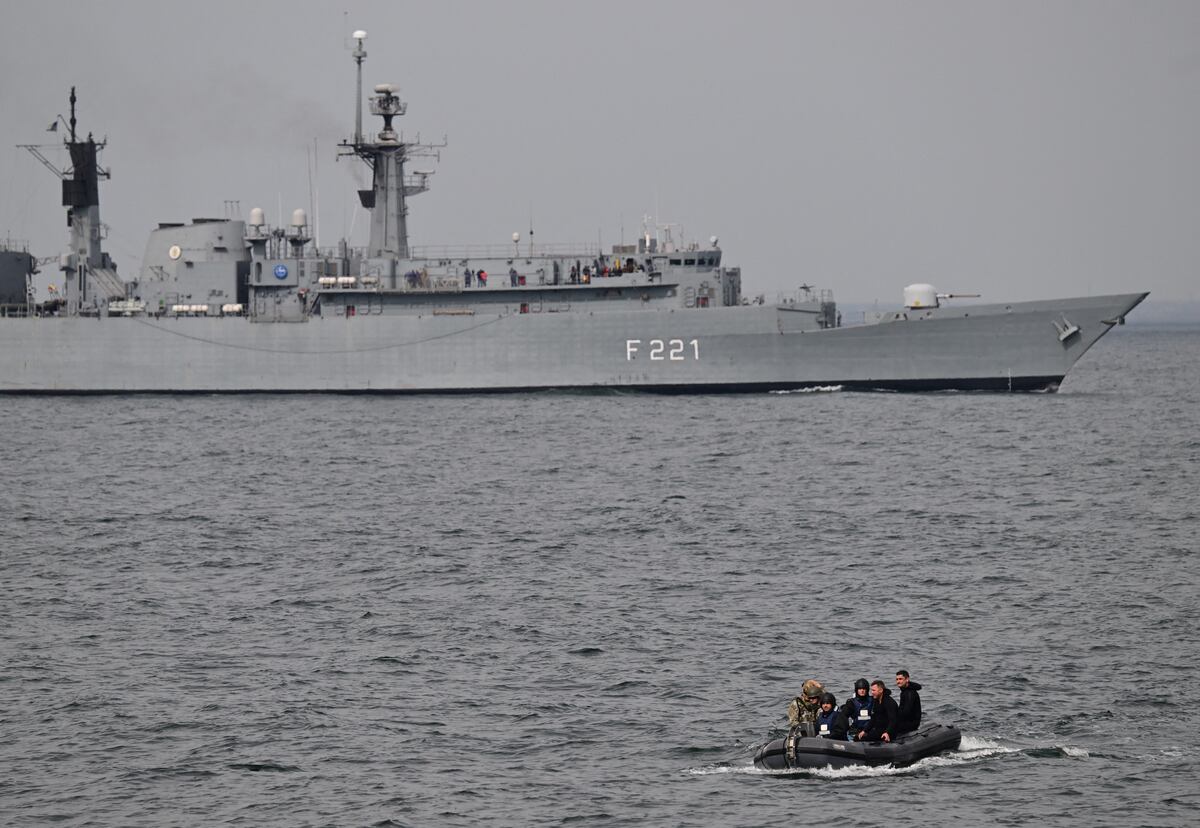
MILAN — NATO has tested a series of alliance-made underwater sensors, meant to protect critical infrastructure in the oceans, by sending divers and drones to sneak past them.
The experimentation event took place on Nov. 14 and was co-organized by Allied Special Operations Forces Command, or SOFCOM, and the NATO Centre for Maritime Research and Experimentation (CMRE) in La Spezia, Italy .
The test, held in the context of the first edition of Exercise Bold Machina 2024, consisted of running special forces teams fitted with different equipment, including diving propulsion devices, through detection systems to assess if they would be picked up and provide engineers with insight into signature variations.
Several companies provided a mix of sensors for the drill designed detect a variety of signals in the acoustic, magnetic, passive, and electric realms, officials said. Exercise organizers hooked up the readings to an augmented reality simulator in order to have analysts experience it directly.
The biggest challenge when it comes to forces signature management underwater, is the element of uncertainty.
“It’s not knowing if somebody knows, or if you’re being detected. … It is understanding that there is a system that has the capability to detect you, but that you know nothing about it and don’t know exactly what the capability is,” U.S. Navy Capt. Kurt Muhler, SOFCOM maritime development director, told Defense News in an interview.
Muhler noted that the war in Ukraine was a “driving force” behind Bold Machina, given the extent of the damage and destruction done to critical infrastructure by Russian bombardment on land and at sea.
“Russia is attacking Ukrainian infrastructure – why are they doing that? That’s almost a more viable target for them than the Ukrainian military is. … So that gives us some pause and reflection: how vulnerable are we?” he said. “If SOF can play a role in helping and proving this technology, that’s returning value for our nations and NATO.”
SOFCOM’s role is to deter in peacetime and defend in crisis against the alliance’s two main threats: Russia and terrorist organizations, according to NATO’s website.
The rapid proliferation of manned and unmanned underwater systems as well as the higher level of maritime activity have changed the operational landscape at sea, raising the intensity of competition over ocean spaces and introducing new types of threats.
According to Muhler, there is a lot of “political interest” in defending key underwater structures, as in many cases these are not owned or within the boundaries of any single nation, leading to a multinational approach when it comes to their protection.
“That political energy translates to resourcing the scientists, engineers and industry to come up with solutions. That’s the driving force for us to get in the water and have a seat at the table,” he said.
Elisabeth Gosselin-Malo was a Europe correspondent for Defense News. She covers a wide range of topics related to military procurement and international security, and specializes in reporting on the aviation sector. She is based in Milan, Italy.
米兰——北约测试了一系列由北约制造的水下传感器,这些传感器旨在保护海洋中的关键基础设施。测试方法是派遣潜水员和无人机悄悄潜入这些传感器附近进行检查。
此次试验活动于 11 月 14 日举行,由盟军特种作战部队司令部 (SOFCOM) 和位于意大利拉斯佩齐亚的北约海上研究与试验中心 (CMRE) 联合组织。
此次测试是在“大胆机器 2024”演习第一届的背景下进行的,测试内容包括让配备不同装备(包括潜水推进装置)的特种部队小组通过探测系统,以评估他们是否会被发现,并为工程师提供有关特征变化的见解。
官员表示,多家公司为此次演习提供了多种传感器,旨在探测声学、磁学、被动和电学领域的各种信号。演习组织者将这些读数连接到增强现实模拟器,以便分析人员能够直接体验演习过程。
水下力量特征管理面临的最大挑战是不确定性因素。
“关键在于你不知道是否有人知道你的行踪,或者你是否被侦测到……而是你明白有一个系统有能力侦测到你,但你对此一无所知,也不知道它究竟具备怎样的能力,”美国海军特种作战司令部海上发展主任库尔特·穆勒上校在接受《防务新闻》采访时表示。
穆勒指出,鉴于俄罗斯在陆地和海上轰炸对关键基础设施造成的破坏程度,乌克兰战争是《大胆的机器》背后的“驱动力”。
“俄罗斯正在攻击乌克兰的基础设施——他们为什么要这样做?对他们来说,这几乎比攻击乌克兰军队更有吸引力……这让我们不禁反思:我们究竟有多脆弱?”他说道。“如果特种部队能够在帮助和验证这项技术方面发挥作用,那将为我们的国家和北约带来价值。”
根据北约网站的说法,特种作战司令部 (SOFCOM) 的职责是在和平时期威慑和在危机时期防御联盟面临的两大主要威胁:俄罗斯和恐怖组织。
有人和无人水下系统的迅速扩散以及海上活动的日益频繁改变了海上作战格局,加剧了海洋空间的竞争,并引入了新的威胁类型。
穆勒表示,保护重要的水下设施具有很大的“政治意义”,因为在许多情况下,这些设施不属于任何单一国家所有或位于任何单一国家的领土范围内,因此在保护这些设施时需要采取多国合作的方式。
他说:“这种政治能量会转化为为科学家、工程师和产业界提供资源,让他们提出解决方案。这就是我们投身其中,争取参与决策的动力。”
伊丽莎白·戈斯林-马洛曾任《防务新闻》欧洲通讯员。她的报道涵盖军事采购和国际安全等广泛领域,尤其擅长航空领域的报道。她常驻意大利米兰。