Mixing caffeinated drinks to stay alert? CASE warns youth about excessive caffeine intake为了提神而混合饮用含咖啡因的饮料?CASE警告青少年过量摄入咖啡因的风险
A mixture of Monster, Red Bull and espresso contained nearly triple the recommended daily limit. Read more at straitstimes.com.
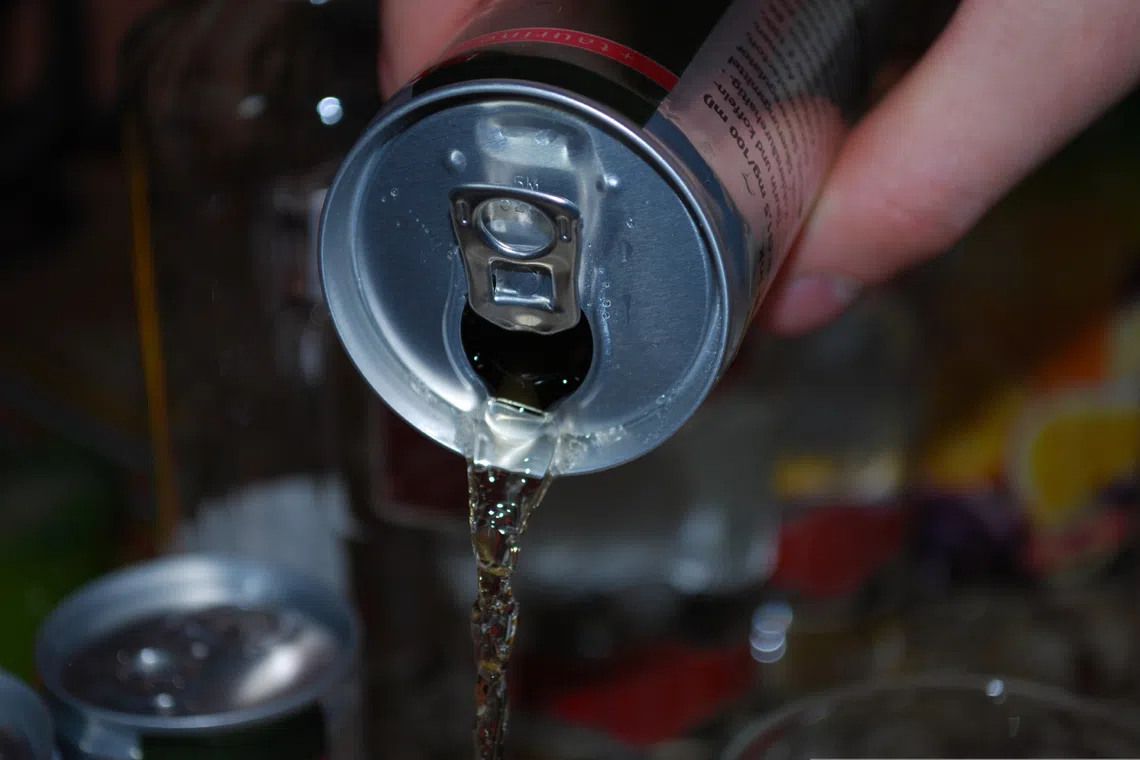
A mixture of Monster, Red Bull and espresso contained nearly triple the recommended daily limit for caffeine.
Published Sep 22, 2026, 05:15 PM
Updated Sep 22, 2026, 05:15 PM
CASE warns youth against mixing caffeinated drinks like matcha, coffee, and energy drinks as tests showed caffeine levels exceed recommended limits for ages 12 to 18.
The highest caffeine level found was 282.1mg in a mix of Monster, Red Bull, and espresso, nearly triple the recommended daily amount for adolescents.
CASE urges awareness of caffeine risks, advising youth and parents to monitor intake and avoid mixing drinks; the UK plans to ban high-caffeine energy drinks for under-16s from 2027.
SINGAPORE – Teens who drink matcha or coffee should avoid mixing these with energy drinks, warned Singapore’s consumer watchdog on Sept 22 , after its tests found that such concoctions could have excessive caffeine levels.
Tests by the Consumers Association of Singapore (CASE) of six combinations of common caffeinated drinks found that all of them went over the daily recommended limit for those aged 12 to 18.
Two of them which mixed two energy drinks with espresso contained “substantially higher” levels of caffeine, CASE said.
The highest caffeine level of 282.1mg per 350g serving was found in a mixture of energy drinks Monster and Red Bull, and espresso .
This is nearly triple the recommended maximum daily caffeine amount for adolescents, and equivalent to about three cups of brewed coffee .
The other four combinations, which included a single energy beverage, contained between 100.45mg and 106.4mg of caffeine per 350g serving.
Tests by the Consumers Association of Singapore mixed common caffeinated drinks like matcha, energy drinks, and espresso. PHOTO: CONSUMERS ASSOCIATION OF SINGAPORE
Tests by the Consumers Association of Singapore mixed common caffeinated drinks like matcha, energy drinks, and espresso.
PHOTO: CONSUMERS ASSOCIATION OF SINGAPORE
CASE warned that consuming high levels of caffeine may lead to symptoms such as headaches, rapid heart rate, anxiety, tremors and insomnia.
There is currently no internationally recognised guidance on daily caffeine intake, although the Health Promotion Board advises healthy adults to consume only up to 400mg of caffeine per day.
For those aged 12 to 18, the recommended limit is 100mg daily, a ccording to the American Academy of Pediatrics.
It is not recommended for children under the age of 12 to consume caffeine, even in minimal amounts, according to the KK Women’s and Children’s Hospital’s website.
In a statement on Sept 22 , CASE said the tests were done to provide consumers with objective information on caffeine levels in commonly mixed caffeinated drink combinations.
It is also hoping to raise consumer awareness of the risk of unintentionally consuming excessive amounts of caffeine.
This comes after local media reports of such actions raised concerns that young consumers may not fully realise how quickly caffeine intake can add up when different drinks are combined.
CASE president Melvin Yong said youth may turn to caffeinated drinks to stay alert as the exam period approaches.
“We urge youth and parents to be mindful of total caffeine intake and to avoid mixing multiple sources of caffeine in a single drink,” he said.
He advised consumers to check caffeine labels where available, monitor their daily caffeine intake, and seek medical advice if they experience persistent discomfort or sleep-related issues after consuming caffeinated drinks.
In September 2025, Yong, who is also the MP for Radin Mas SMC , had asked in Parliament if the Ministry of Health was studying overseas measures to restrict the sale of high-caffeine energy drinks to youth, and whether there had been studies done on the impact of such drinks on youth here.
The ministry replied that there were no local studies being conducted at the time.
In July, the British government said it would ban the sale of high-caffeine energy drinks to under-16s in England from April 2027 to protect children’s health and well-being.
Consumers Association of Singapore
Health and well-being
Monster能量饮料、红牛和浓缩咖啡的混合物所含的咖啡因含量几乎是每日推荐摄入量的三倍。
发布于 2026 年 9 月 22 日下午 5:15
更新于2026年9月22日下午5:15
CASE 警告青少年不要将抹茶、咖啡和能量饮料等含咖啡因的饮料混合饮用,因为测试表明,这些饮料中的咖啡因含量超过了 12 至 18 岁青少年建议的限量。
检测到的最高咖啡因含量为 282.1 毫克,存在于 Monster、红牛和浓缩咖啡的混合物中,几乎是青少年每日推荐摄入量的三倍。
CASE 呼吁人们提高对咖啡因风险的认识,建议青少年和家长监测咖啡因摄入量,避免混合饮料;英国计划从 2027 年起禁止 16 岁以下青少年饮用高咖啡因能量饮料。
新加坡——新加坡消费者监管机构9月22日警告称,喝抹茶或咖啡的青少年应避免将这些饮品与能量饮料混合饮用,此前该机构的测试发现,这种混合物可能含有过量的咖啡因。
新加坡消费者协会 (CASE) 对六种常见的含咖啡因饮料组合进行了测试,发现它们都超过了 12 至 18 岁人群每日推荐摄入量。
CASE表示,其中两款将两种能量饮料与浓缩咖啡混合的饮料含有“明显更高”的咖啡因含量。
在能量饮料 Monster 和 Red Bull 与浓缩咖啡的混合物中,每 350 克含有最高的咖啡因含量 282.1 毫克。
这几乎是青少年每日推荐最大咖啡因摄入量的三倍,相当于大约三杯冲泡咖啡。
其他四种组合,包括一种能量饮料,每 350 克含咖啡因 100.45 毫克至 106.4 毫克。
新加坡消费者协会进行的测试混合了常见的含咖啡因饮料,例如抹茶、能量饮料和浓缩咖啡。图片:新加坡消费者协会
新加坡消费者协会进行的测试混合了常见的含咖啡因饮料,如抹茶、能量饮料和浓缩咖啡。
照片:新加坡消费者协会
CASE警告称,摄入大量咖啡因可能导致头痛、心跳加速、焦虑、颤抖和失眠等症状。
目前国际上还没有关于每日咖啡因摄入量的公认指导意见,不过新加坡健康促进局建议健康成年人每天摄入的咖啡因不超过 400 毫克。
根据美国儿科学会的建议,对于 12 至 18 岁的青少年,每日推荐摄入量上限为 100 毫克。
根据KK妇女儿童医院的网站,不建议12岁以下的儿童摄入咖啡因,即使是极少量也不行。
CASE 在 9 月 22 日的一份声明中表示,进行这些测试是为了向消费者提供有关常见含咖啡因饮料组合中咖啡因含量的客观信息。
它还希望提高消费者对无意中摄入过量咖啡因风险的认识。
此前,当地媒体报道了此类行为,引发了人们的担忧,即年轻消费者可能没有充分意识到,当不同饮料混合饮用时,咖啡因摄入量会迅速累积。
CASE主席Melvin Yong表示,随着考试临近,年轻人可能会转向含咖啡因的饮料来保持清醒。
他说:“我们敦促青少年和家长注意咖啡因的总摄入量,避免在一杯饮料中混合多种咖啡因来源。”
他建议消费者查看咖啡因标签(如有),监测每日咖啡因摄入量,如果在饮用含咖啡因的饮料后出现持续不适或睡眠问题,应寻求医疗建议。
2025年9月,同时也是拉丁马士单选区国会议员的杨在国会质询卫生部是否正在研究海外限制向青少年销售高咖啡因能量饮料的措施,以及是否已对这类饮料对本地青少年的影响进行过研究。
该部回应称,当时没有进行任何本地研究。
今年 7 月,英国政府表示,为了保护儿童的健康和福祉,将从 2027 年 4 月起禁止在英格兰向 16 岁以下儿童出售高咖啡因能量饮料。
新加坡消费者协会
健康与福祉