At 74, she travels two hours to Changi Prison every week to counsel inmates: ‘I don’t want to give up on them’现年 74 岁的她每周都要花两个小时前往樟宜监狱为囚犯提供咨询:“我不想放弃他们。”
Choo Choy Lian has spent 15 years supporting inmates through the difficult process of rehabilitation. Even when some end up back in prison, the prison volunteer believes turning one’s life around takes patience, understanding and another chance.
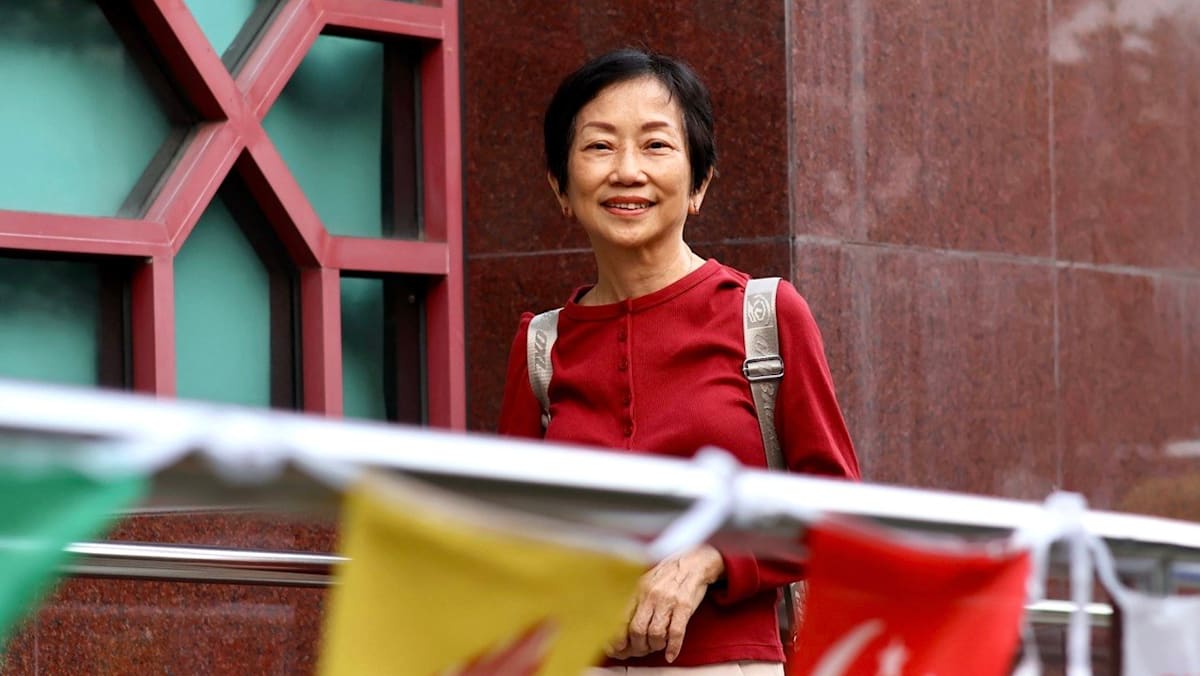
Choo Choy Lian has spent 15 years supporting inmates through the difficult process of rehabilitation. Even when some end up back in prison, the prison volunteer believes turning one’s life around takes patience, understanding and another chance.
Choo Choy Lian has been volunteering with inmates at Changi Prison for 15 years, making a two-hour commute every Sunday. (Photo: Eveline Gan)
This audio is generated by an AI tool.
Every Sunday before sunrise, 74-year-old Choo Choy Lian leaves her flat in the west of Singapore and makes a two-hour journey by public transport to the east. The Singapore Buddhist Federation (SBF) volunteer has done so for the past 15 years.
Waiting for her at her destination are some of society’s most marginalised people – inmates at Changi Prison. There, Choo conducts counselling sessions, meditates with them and tries to guide them towards self-reflection.
“I feel that if I didn’t go for the sessions, they’d miss out,” she told CNA Women.
While some may have reservations about working with inmates, the gentle, soft-spoken grandmother of two sees them simply as people who have lost their way in life.
Speaking in Mandarin during the interview, Choo said: “It never crossed my mind to be afraid of them. In my mind, we are all just regular human beings but... they took the wrong path.”
In July, Choo received the Long Service Award at the Singapore Prison Service Volunteer Awards Ceremony 2026, in recognition of her 15 years of service. The awards honour volunteers who support inmates and their families through rehabilitation and reintegration.
Choo receiving her Long Service Award at the Singapore Prison Service Volunteer Awards Ceremony 2026 in July. (Photo: Singapore Prison Service)
FROM CHINESE MEDICAL HALL TO PRISON VOLUNTEER
Choo’s volunteer work began after an encounter at a traditional Chinese medical hall, where she worked as an assistant measuring out and packing medication and herbs for customers.
One regular customer kept buying syringes. Sometimes, he would come in twice a day, offering different explanations for why he had to purchase such large quantities, Choo recalled.
“I felt that something wasn’t right,” she said. “Even for diabetics, they may inject insulin three times a day, at most. I wondered why he would need so many syringes.”
Observing the customer’s unsteady gait and pale complexion, Choo suspected that he might be struggling with drug addiction. Eventually, she told the customer to obtain the syringes from a polyclinic or a doctor.
The encounter left a lasting impression on her. She began wondering why some people veered off course in life, and if she could help them.
“It was this experience that made me think about how I could give back to society (after retirement). It drew me towards going into the prison and helping the inmates,” she said.
MAKING THE LONG JOURNEY TO CHANGI
After retirement, Choo threw herself into volunteering. The long commute to Changi Prison every week became part of her routine. During the journey, she often meditates quietly and mentally runs through what she should share with the inmates.
“I think about what’s suitable for them and prepare something simple to share that they can understand,” she explained.
After her encounter with a customer she suspected had a drug addiction, Choo started thinking about how she could help those who had veered off course in life. (Photo: Eveline Gan)
By the time she reaches the prison complex at around 8.30am and goes through security checks, she has already decided what to say. Each session lasts around two hours, after which she takes another two-hour commute home.
Over 15 years of weekly visits, Choo has observed certain patterns among the inmates. Emotional volatility is common, she said.
“Their emotions seem to be stronger, more volatile than most people’s. From there, you can understand that patience is needed to encourage them to gradually let go (of their misgivings).”
That is why Choo, who works with another volunteer, often begins the sessions with meditation and breathing exercises before moving on to religious teachings.
“I let them meditate first to help them cool down. While they’re meditating, I teach them some things about breathwork and how to relax. Most of them are quite smiley during the sessions,” she said.
Their emotions seem to be stronger, more volatile than most people’s.
Some of the inmates Choo has met grew up in unstable homes, with parents who struggled and were unable to provide much guidance when they were growing up. Others come from families that are better off financially, but are driven by greed or become fixated on certain things, which lead them down the wrong path, she said.
“My role is to accompany them as they grow, to hopefully help open up their hearts,” she said.
That means lending a listening ear or helping them channel their hurt and anger into self-reflection. She also reminds them that their actions affect people around them, including their parents and spouses.
“Usually I tell them, where you have fallen is where you must stand up again. Think about how to climb back up from there,” she said.
NOT GIVING UP EVEN WHEN THEY RE-OFFEND
Choo’s efforts do not always pay off. Some of her saddest memories are of inmates who are unable to reintegrate into society. Around her sixth year as a volunteer, Choo noticed some familiar faces that kept “going in and out of prison”.
“I kept seeing them turn up in my class again after they had been released. It made me so sad and heartbroken that they ended up consoling me,” she said.
“What comforted me a bit was that they knew they were wrong. They said they were too deeply addicted to these ‘polluted’ things, and couldn’t change overnight,” she added.
Choo says some of her saddest memories as a prison volunteer are of inmates who are unable to reintegrate into society. (Photo: Eveline Gan)
Choo believes the challenging part of rehabilitation begins after the inmates step back into society, and face day-to-day issues like housing, work or finances.
Some may be rejected by their family; others struggle to find employment. As such, some may seek out former friends and return to old social circles, and be tempted to return to their old ways, she added.
Outside of her Sunday sessions at Changi Prison, Choo and her fellow SBF volunteers continue to support ex-offenders by keeping in touch with them after their release. They have a chat group where they check in on one another, exchange updates and offer words of encouragement.
“We encourage them to face everything with patience, endurance, understanding and tolerance, to accept their situation. Turning one’s life around is a process,” she said.
Some former inmates eventually turned their lives around and went on to become volunteers at Changi Prison themselves, she added.
GIVING BACK AFTER RETIREMENT
At 74, Choo’s retirement schedule is packed with activities.
Choo attends classes at the Singapore Buddhist Federation in the evenings. (Photo: Eveline Gan)
By the time of this interview at 3pm, she had already attended four separate appointments, most of them revolving around helping others – “the kind of work that’s hard to quit”, she said with a smile.
Choo also volunteers at other charitable and humanitarian organisations. For example, she helps dispense medication at a clinic offering free Traditional Chinese Medicine services, portions meals for the elderly and serves as an elder befriender. It is her way of “giving back to society” after retirement.
She also attends classes at SBF in the evenings. Her friends often jokingly complain about not being able to get hold of her.
“Out of 10 friends, nine would tell me, ‘You must rest more, you’re very busy. It’s always hard to find you’,” she said with a laugh.
Her family has been supportive of her volunteer work. Instead of meeting on Sundays, they have shifted their family gatherings to Saturdays.
So, what keeps her going year after year? Choo believes everyone deserves a chance to turn their lives around.
She knows that there will come a day when she may not be physically able to make the two-hour journey to Changi. Until then, she has no plans to stop or slow down.
“I’ll keep going until I really can’t do it anymore. I don’t want to give up on them. I want them to turn back,” she said.
CNA Women is a section on CNA Lifestyle that seeks to inform, empower and inspire the modern woman. If you have women-related news, issues and ideas to share with us, email CNAWomen [at] mediacorp.com.sg .
A single handpicked story that we think you shouldn't miss. Just one a day.
朱彩莲(Choo Choy Lian)15年来一直致力于帮助服刑人员度过艰难的改造过程。即使有些人最终重返监狱,这位监狱志愿者也坚信,改变一个人的人生需要耐心、理解和再次给予机会。
朱彩莲已在樟宜监狱做义工15年,每周日都要花两个小时通勤。(照片:Eveline Gan)
这段音频是由人工智能工具生成的。
每周日日出前,74岁的朱彩莲都会离开她在新加坡西部的公寓,乘坐公共交通工具前往东部,全程需要两个小时。这位新加坡佛教总会(SBF)的义工已经坚持这样做了15年。
在目的地等待她的,是社会上一些最边缘化的人群——樟宜监狱的囚犯。在那里,朱女士为他们提供心理辅导,与他们一起冥想,并试图引导他们进行自我反思。
“我觉得如果我不去参加这些课程,他们就会错过很多机会,”她告诉 CNA Women。
虽然有些人可能对与囚犯共事有所保留,但这位温柔、说话轻声细语的两个孩子的祖母却认为他们只是迷失了人生方向的人。
在采访中,朱女士用普通话说:“我从来没想过要害怕他们。在我看来,我们都只是普通人,但是……他们走错了路。”
今年7月,朱女士在2026年新加坡监狱服务志愿者颁奖典礼上荣获长期服务奖,以表彰她15年的服务。该奖项旨在表彰那些在囚犯改造和重返社会过程中为囚犯及其家人提供支持的志愿者。
Choo女士于7月在新加坡监狱署2026年度志愿者颁奖典礼上获颁长期服务奖。(图片:新加坡监狱署)
从中国药馆到监狱志愿者
Choo的志愿工作始于她在一家传统中药店的一次偶遇,她在那里担任助理,负责为顾客称量和包装药品和草药。
一位常客不断购买注射器。有时,他一天会来两次,每次都会给出不同的理由解释他为什么必须购买这么多注射器,Choo回忆道。
“我觉得有些不对劲,”她说。“即使是糖尿病患者,一天最多也也就注射三次胰岛素。我很好奇他为什么需要这么多注射器。”
观察到顾客步履蹒跚、面色苍白,朱女士怀疑他可能正在与毒瘾作斗争。最终,她建议顾客去综合诊所或医生那里获取注射器。
这次偶遇给她留下了深刻的印象。她开始思考为什么有些人会在人生中偏离正轨,以及她是否能够帮助他们。
“正是这段经历让我开始思考(退休后)如何回馈社会。它促使我走进监狱,帮助狱友们,”她说。
前往樟宜的漫长旅程
退休后,朱女士全身心投入到志愿服务中。每周长途跋涉前往樟宜监狱成了她生活的一部分。在路上,她常常静静地冥想,并在脑海中反复思考应该和狱友们分享些什么。
“我会考虑什么内容适合他们,然后准备一些他们能够理解的简单内容来分享,”她解释说。
在遇到一位她怀疑有吸毒史的顾客后,秋女士开始思考如何帮助那些人生误入歧途的人。(图片:Eveline Gan)
她早上8点半左右到达监狱,通过安检后,就已经想好了要说什么。每次会面持续大约两个小时,之后她还要再花两个小时通勤回家。
在过去15年每周探访期间,Choo观察到囚犯们的一些行为模式。她说,情绪波动很常见。
“他们的情绪似乎比大多数人更强烈、更易变。由此可见,我们需要耐心引导他们逐渐放下(心中的疑虑)。”
因此,与另一位志愿者一起工作的 Choo 经常在进行宗教教义讲解之前,先进行冥想和呼吸练习。
“我先让他们冥想,帮助他们冷静下来。在他们冥想的时候,我会教他们一些呼吸技巧和放松方法。他们大多数人在冥想过程中都面带笑容,”她说。
他们的情绪似乎比大多数人更强烈、更不稳定。
楚女士表示,她遇到的一些囚犯成长于不稳定的家庭,父母生活拮据,无力在他们成长过程中给予太多指导。另一些囚犯则来自经济条件较好的家庭,但他们被贪婪驱使,或执着于某些事物,最终误入歧途。
“我的职责是陪伴他们成长,希望能帮助他们敞开心扉,”她说。
这意味着要耐心倾听,或者帮助他们将伤痛和愤怒转化为自我反省。她还会提醒他们,他们的行为会影响周围的人,包括他们的父母和配偶。
“我通常告诉他们,你跌倒的地方就是你必须重新站起来的地方。想想如何从那里重新爬起来,”她说。
即使他们再次犯罪也绝不放弃
Choo的努力并非总能得到回报。她最难过的记忆之一是那些无法重新融入社会的服刑人员。在她做志愿者的第六年左右,Choo注意到一些熟悉的面孔“频繁出入监狱”。
“他们获释后,我经常在我的课堂上看到他们。这让我非常难过和伤心,最后是他们安慰我,”她说。
“让我稍感安慰的是,他们知道自己错了。他们说自己对这些‘被污染的’东西上瘾太深了,不可能一夜之间改变,”她补充道。
Choo表示,她作为监狱志愿者最难过的回忆之一,就是看到一些服刑人员无法重新融入社会。(图片:Eveline Gan)
Choo认为,改造过程中最具挑战性的部分是从囚犯重返社会之后开始的,他们将面临住房、工作或财务等日常问题。
她补充说,有些人可能会被家人抛弃;有些人则难以找到工作。因此,有些人可能会重新联系以前的朋友,回到过去的社交圈,并可能受到诱惑,重蹈覆辙。
除了每周日在樟宜监狱的活动外,朱女士和她的SBF志愿者伙伴们还会继续支持刑满释放人员,与他们保持联系。他们建了一个聊天群,互相问候近况,分享彼此的近况,并给予鼓励。
“我们鼓励他们以耐心、毅力、理解和宽容的态度面对一切,接受自己的处境。改变人生是一个过程,”她说。
她补充说,一些前囚犯最终改过自新,成为樟宜监狱的志愿者。
退休后回馈社会
74岁的秋美贤退休后的活动安排得满满当当。
朱女士晚上会在新加坡佛教总会上课。(图片:Eveline Gan)
截至下午 3 点接受采访时,她已经参加了四个不同的预约,其中大部分都是关于帮助他人的——“这种工作很难放弃”,她笑着说。
Choo女士还积极参与其他慈善和人道主义组织的志愿服务。例如,她会在一家提供免费中医服务的诊所帮忙分发药物,为老年人分餐,并担任老年人陪伴员。这是她退休后“回馈社会”的方式。
她晚上还在SBF上课。她的朋友们经常开玩笑地抱怨联系不上她。
她笑着说:“我的十个朋友里,有九个会跟我说,‘你一定要多休息,你太忙了,总是很难找到你。’”
她的家人一直很支持她的志愿工作。他们把家庭聚会从周日改到了周六。
那么,是什么让她年复一年地坚持下去呢?秋认为每个人都应该有机会改变自己的人生。
她知道总有一天她可能无法独自完成前往樟宜机场的两个小时车程。但在那之前,她没有停下来或放慢脚步的打算。
“我会坚持下去,直到我真的坚持不下去为止。我不想放弃他们。我希望他们能回头,”她说。
CNA Women是CNA Lifestyle旗下的一个版块,旨在为现代女性提供信息、赋能和灵感。如果您有与女性相关的新闻、议题或想法想要与我们分享,请发送电子邮件至CNAWomen[at]mediacorp.com.sg。
每天一篇,我们精心挑选一篇您不容错过的精彩故事。