Asia-Pacific region can lead effort to tackle challenges facing aviation sector: Murali穆拉里:亚太地区可以引领应对航空业面临的挑战。
The Asia-Pacific leads global air traffic growth and must drive aviation’s future with sustainable investments and collaboration for greener, connected skies. Read more at straitstimes.com.
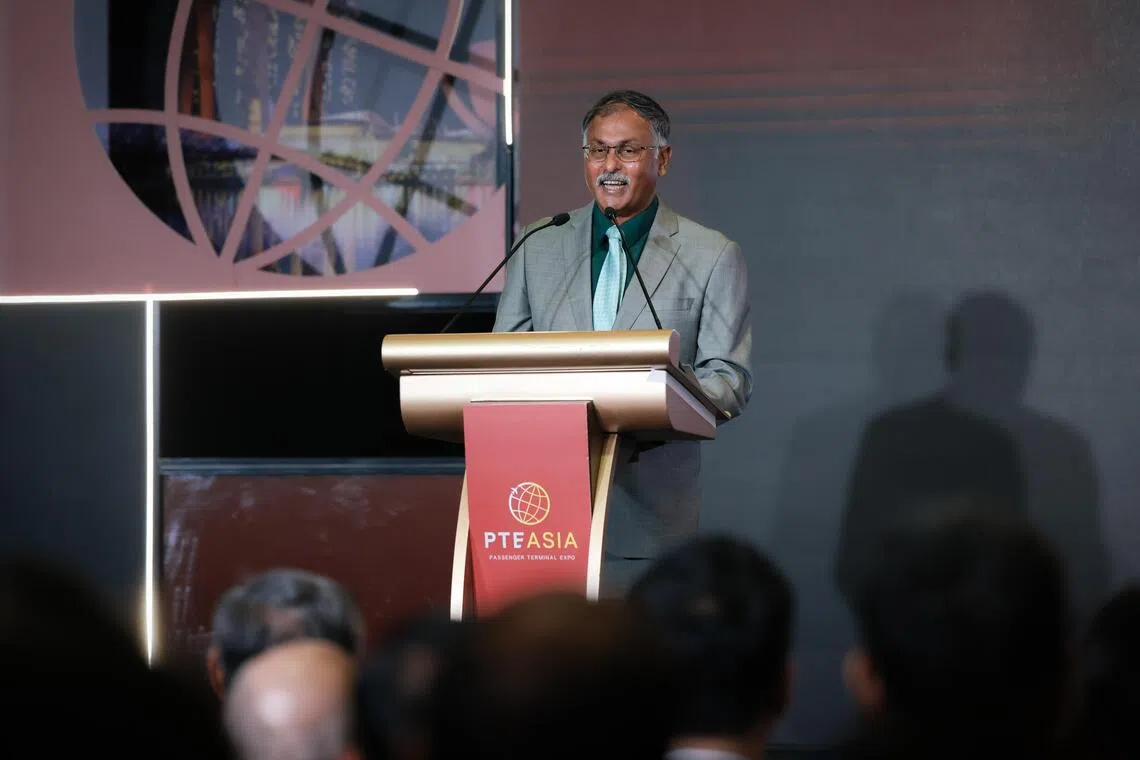
Senior Minister of State Transport Murali Pillai said achieving positive outcomes for the sector requires stakeholders to come together.
Published Sep 23, 2026, 12:10 PM
Updated Sep 23, 2026, 12:10 PM
The Asia-Pacific region leads global air traffic growth and must shape aviation's future.
The aviation sector faces challenges like labour shortages and sustainability pressures.
Sustainability is perhaps the “most consequential” challenge of this generation, said Senior Minister of State for Transport Murali Pillai.
SINGAPORE – The Asia-Pacific is the leading driver of growth for global air traffic, and it is key for the region to shape the future of the aviation industry, instead of adopting solutions from elsewhere.
Senior Minister of State for Transport Murali Pillai on Sept 23 added that it was foresight and sustained investments – with an eye on future growth – that led to the planned relocation of airports in places like Hong Kong and South Korea from the early 90s.
The decisions made then transformed their cities and the lives of their people.
As Asian economies became more connected and integrated with the world, airports such as Changi, Chek Lap Kok and Incheon became powerful portals for tourism, trade and investment, Murali added.
He said: “Looking back, these decisions look obvious. But in reality, they demanded vision, sustained investment, and the conviction that connectivity would create a new world that did not yet exist.”
The lesson is clear, he added. Airports are not just built for the traffic of their day, but for the growth still to come.
Murali was speaking at the inaugural Passenger Terminal Expo Asia at the Marina Bay Sands Expo and Convention Centre.
In his address, he touched on how Changi Airport developed from a single terminal in the 1980s into a major global air hub, operating four terminals with direct flights that connect to about 170 cities worldwide.
A new terminal – Terminal 5 – is slated to open in the mid-2030s. Designed to handle about 50 million passengers a year , it is expected to double the size of Changi Airport and increase annual passenger capacity from 90 million to 140 million.
Headwinds facing the aviation sector now include tighter labour markets, and passengers who now have higher expectations. The industry is also grappling with operational uncertainty amid an urgent push towards greater sustainability, Murali said.
Sustainability, he added, is perhaps the “most consequential” challenge of this generation, and although solutions such as sustainable aviation fuel and electric airside vehicles are available, their adoption is hampered by high costs .
Green jet fuel, for instance, is said to emit 80 per cent less in greenhouse gas emissions compared with conventional jet fuel, but costs three to five times more.
Murali said: “But standing still is not an option. Decarbonisation projects often require significant investment before their technologies mature and their commercial benefits are fully realised.
“Waiting for uncertainties to disappear would cost us valuable time.”
Positive outcomes, however, can only be achieved if different stakeholders come together, he added.
“We are in the business of connections, so we must all realise that none of this can be done by any single airport, airline or government. Bringing viable solutions to scale requires a coalition of willing partners.”
Aqil Hamzah is a transport journalist at The Straits Times. He is also interested in issues related to crime and technology.
Aviation/Aerospace sector
交通部国务部长穆拉利·皮莱表示,要为该行业取得积极成果,需要各利益相关方齐心协力。
发布于 2026 年 9 月 23 日下午 12:10
更新于2026年9月23日下午12:10
亚太地区引领全球航空运输量增长,并将塑造航空业的未来。
航空业面临着劳动力短缺和可持续发展压力等挑战。
交通部国务高级部长穆拉利·皮莱表示,可持续发展或许是这一代人面临的“最具决定性意义”的挑战。
新加坡——亚太地区是全球航空运输增长的主要驱动力,该地区必须塑造航空业的未来,而不是照搬其他地方的解决方案。
9月23日,交通部国务高级部长穆拉利·皮莱补充说,正是出于对未来增长的远见卓识和持续投资,才促成了从90年代初开始在香港和韩国等地规划搬迁机场。
当时做出的决定改变了他们的城市和人民的生活。
穆拉里补充说,随着亚洲经济体与世界的联系和融合日益紧密,樟宜机场、赤鱲角机场和仁川机场等机场已成为旅游、贸易和投资的强大门户。
他说:“现在回过头来看,这些决定似乎显而易见。但实际上,它们需要远见卓识、持续投资,以及对互联互通将创造一个前所未有的新世界的坚定信念。”
他补充说,教训很明确。机场的建设不仅要考虑当时的客流量,还要考虑未来的增长。
穆拉里是在滨海湾金沙会展中心举行的首届亚洲客运码头博览会上发表讲话的。
他在讲话中谈到了樟宜机场如何从 20 世纪 80 年代的一个单一航站楼发展成为一个主要的全球航空枢纽,运营着四个航站楼,有直飞航班连接到全球约 170 个城市。
新的航站楼——5号航站楼——预计将于2030年代中期开放。该航站楼设计年旅客吞吐量约为5000万人次,预计将使樟宜机场的规模扩大一倍,年旅客吞吐量从9000万人次增加到1.4亿人次。
穆拉里表示,航空业目前面临的不利因素包括劳动力市场趋紧以及乘客期望值提高。此外,在迫切需要提高可持续性的同时,该行业还面临着运营方面的不确定性。
他补充说,可持续性或许是这一代人面临的“最重大”的挑战,尽管可持续航空燃料和电动机场车辆等解决方案已经存在,但由于成本高昂,它们的普及受到阻碍。
例如,绿色航空燃料据说比传统航空燃料减少 80% 的温室气体排放,但价格却是传统航空燃料的三到五倍。
穆拉里说:“但原地踏步并非明智之举。脱碳项目通常需要大量投资,才能使其技术成熟并充分发挥商业效益。”
“等待不确定因素消失会浪费我们宝贵的时间。”
他补充说,只有不同的利益相关者齐心协力,才能取得积极的成果。
“我们从事的是连接业务,所以我们都必须认识到,任何单一机场、航空公司或政府都无法独自完成这一切。要将切实可行的解决方案推广到规模化,需要众多志同道合的合作伙伴组成联盟。”
阿基尔·哈姆扎是《海峡时报》的交通记者。他也对犯罪和科技相关议题感兴趣。
航空航天领域